🏛️ World’s Largest Temple · Egyptologist Guide · From Hurghada · Light & Sound Show · Daily
Karnak Temple Complex Luxor – Guided Tour of Ancient Wonders
📅 Updated: May 2026 | ⏱️ Full Day · From Hurghada | 💶 From €75 / person | ⭐ 4.9/5 Rated | 🏛️ Daily Departures
There is a moment inside the Great Hypostyle Hall of Karnak Temple — standing among 134 columns, each rising 21 metres above your head, every surface covered in hieroglyphic texts carved 3,300 years ago — when the scale of what ancient Egypt achieved becomes truly, physically comprehensible. Not from a photograph, not from a book, not from a film — but from standing inside it, craning your neck upward, and realising that the column in front of you is wider than you can stretch your arms around and taller than a six-storey building, and that there are 133 more exactly like it in the same room. Karnak Temple Complex is not simply the largest religious building ever constructed by human hands — it is the most overwhelming architectural experience available to any traveller on earth, and it is reachable from Hurghada in 3 hours.
The Karnak Temple Complex Luxor guided tour of ancient wonders from Hurghada combines the Great Hypostyle Hall, the sacred lake, the Avenue of Sphinxes, the obelisks of Hatshepsut, the innermost sanctuaries of Amun, and the other magnificent structures of this 100-hectare complex — accompanied by a licensed Egyptologist guide who decodes the hieroglyphic inscriptions, explains the theological significance of every image, and brings 2,000 years of continuous construction history to vivid life. Combined with Luxor Temple, the Valley of the Kings, and the West Bank monuments, this is the most complete ancient Egypt day trip available from the Red Sea coast.
🏛️ Why is Karnak Temple so famous? The Karnak Temple Complex is the largest religious site ever built — covering approximately 100 hectares (roughly the size of a small city) and incorporating constructions by more than 30 different pharaohs over a period of 2,000 years. Its Great Hypostyle Hall — 134 columns in 16 rows, covering 5,000 square metres — is the largest hypostyle hall in the history of architecture. The site also contains the world’s tallest ancient obelisks, some of the finest painted reliefs in Egypt, and the only known sacred lake built for religious ritual bathing in ancient Egyptian temples. What is the great temple complex of Karnak? It is simultaneously a monument, a theological encyclopedia, a political proclamation, and the most complete surviving record of New Kingdom Egyptian civilisation.
What Is Karnak Temple? History, Scale & Significance
Karnak Temple Complex — known in ancient Egyptian as Ipet-isut (The Most Select of Places) — is the world’s largest religious site. Located on the East Bank of the Nile at Luxor (ancient Thebes) in Upper Egypt, Karnak is not a single temple but a vast city of temples, sanctuaries, chapels, pylons, obelisks, and sacred lakes built over more than 2,000 years — from approximately 2000 BCE (Middle Kingdom) to 100 BCE (Ptolemaic period) — by over 30 successive pharaohs. Every generation of Egyptian rulers added to, expanded, and embellished the complex, making it the most architecturally complex and historically layered monument in the history of civilization.
The primary complex — the Precinct of Amun-Ra — covers approximately 61 of the site’s total 100 hectares and is dedicated to Amun-Ra, the supreme deity of the New Kingdom Egyptian pantheon. The Great Hypostyle Hall within this precinct is the largest columned hall ever constructed — 5,000 square metres of floor space, 134 columns in 16 rows, the two central rows reaching 21 metres in height, every surface covered in carved and painted hieroglyphic texts. This single room is consistently described by every first-time visitor as the most overwhelming interior architectural space they have ever entered.
| Detail |
Information |
| Location |
East Bank of the Nile, Luxor (ancient Thebes), 3 km north of Luxor Temple |
| Total area |
~100 hectares — approximately the size of a small city |
| Construction period |
c. 2000 BCE – 100 BCE (2,000+ years of continuous construction) |
| Number of builders |
30+ pharaohs — from Senusret I to Ptolemy III |
| Great Hypostyle Hall |
134 columns · 16 rows · 5,000 m² floor area · tallest columns: 21 metres |
| Primary deity |
Amun-Ra (King of the Gods) + Mut (his consort) + Khonsu (their son) |
| UNESCO status |
UNESCO World Heritage Site (part of Ancient Thebes — inscribed 1979) |
| Opening hours (2026) |
06:00 AM – 05:00/05:30 PM daily (Sound & Light Show in evenings) |
| Distance from Hurghada |
~260 km · approximately 3 hours by road |
📐 Scale That Defies Comprehension
To understand the scale of Karnak Temple Complex: the entire site is large enough to contain the cathedrals of Notre-Dame (Paris), St. Peter’s (Rome), and St. Paul’s (London) simultaneously — with room to spare. The Great Hypostyle Hall alone is larger than a football pitch. The obelisk of Hatshepsut — one of two she erected at Karnak — stands 29.5 metres high and weighs approximately 323 tonnes. When completed, it was the tallest structure in the world. This is the physical reality of what the ancient Egyptians built.
Top 10 Highlights of the Karnak Temple Complex Guided Tour
🏛️
1. Great Hypostyle Hall — The Most Overwhelming Room on Earth
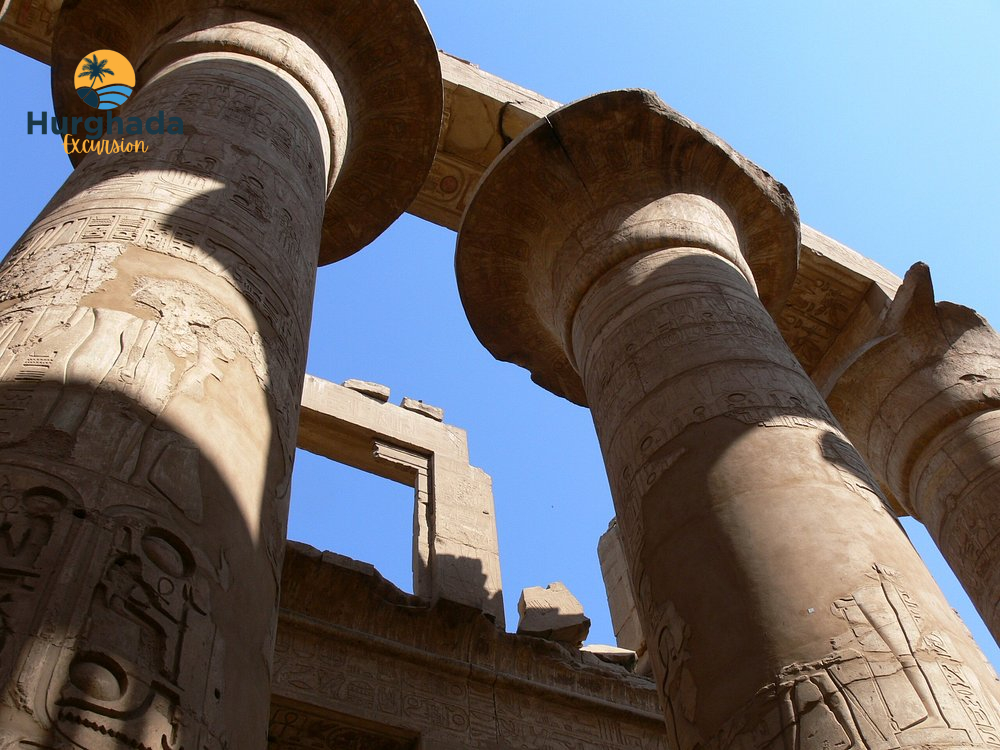
134 papyrus-form columns in 16 rows covering 5,000 square metres. The two central rows — 12 columns each, 21 metres high — are so wide you cannot reach around them with both arms. Every surface is covered in hieroglyphic texts and painted relief carvings of extraordinary quality. First-time visitors consistently fall silent upon entering. Nothing can prepare you.
🗼
2. Hatshepsut’s Obelisk — 29.5 Metres, 323 Tonnes
The surviving obelisk of Hatshepsut at Karnak stands 29.5 metres high and weighs 323 tonnes — still covered in the electrum (gold-silver alloy) at its pyramidion tip that once caught the first light of the Egyptian sunrise. When it was built around 1475 BCE, it was the tallest structure in the world. Your Egyptologist guide explains why Hatshepsut built two and what happened to the other one.
🦁
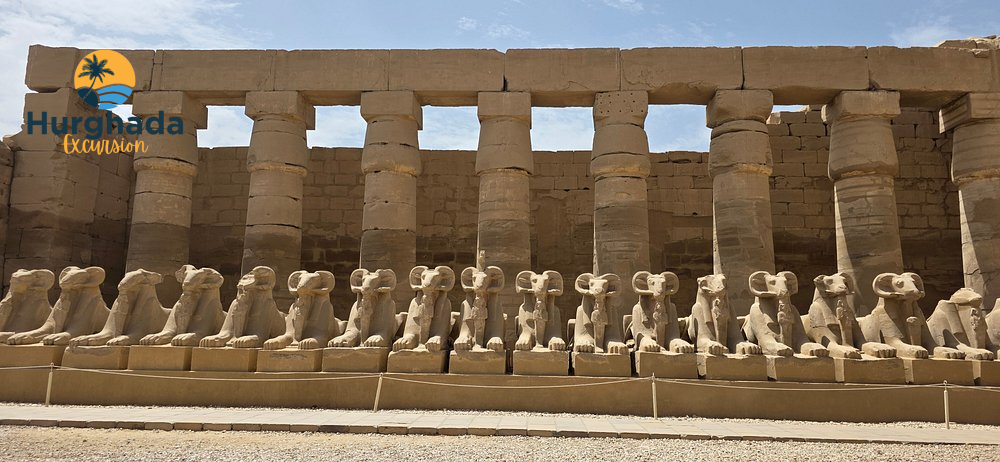
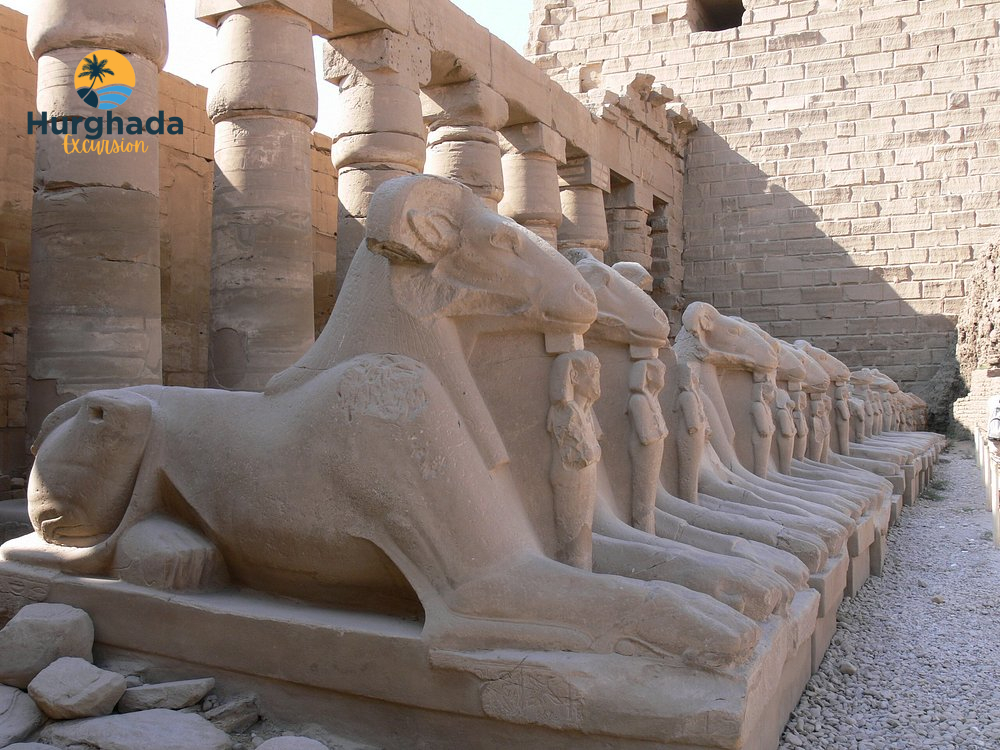
3. Avenue of Ram-Headed Sphinxes
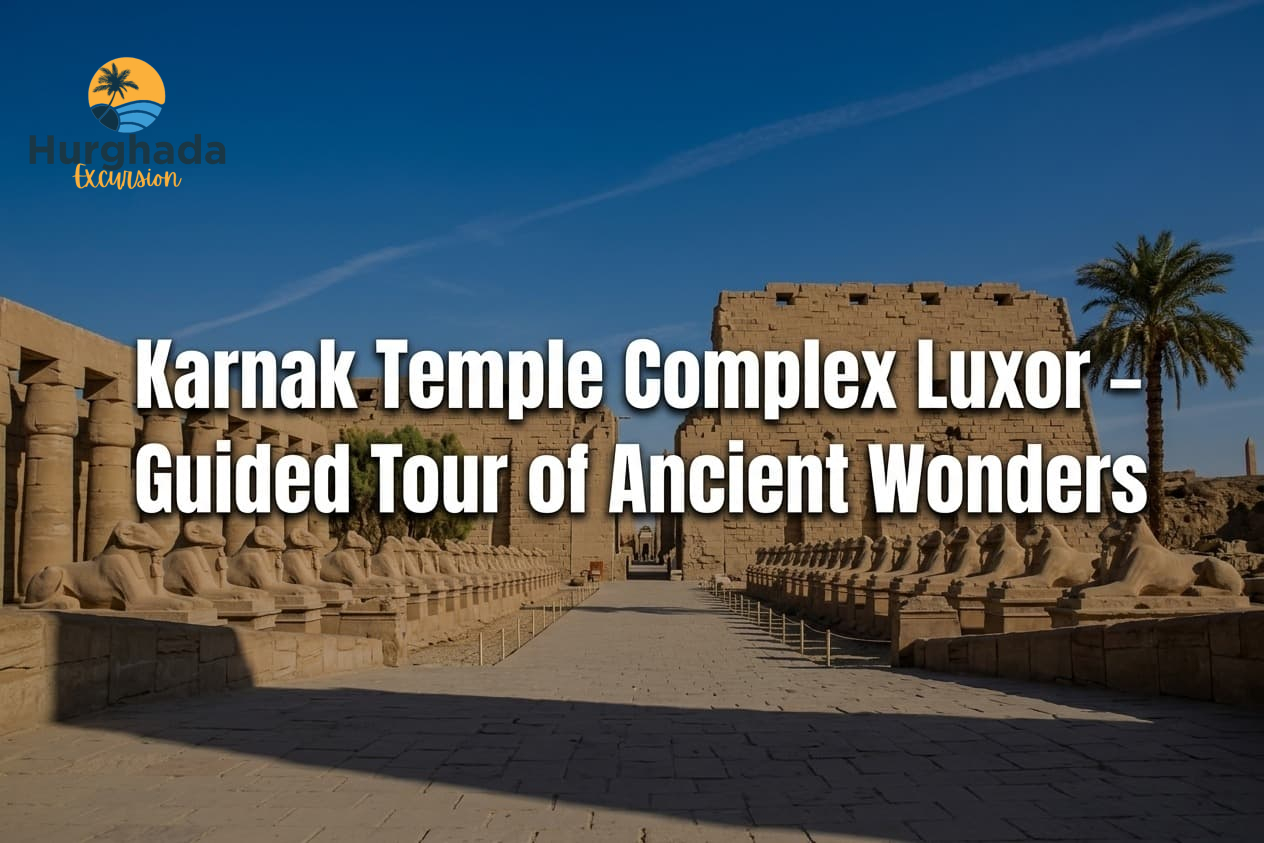
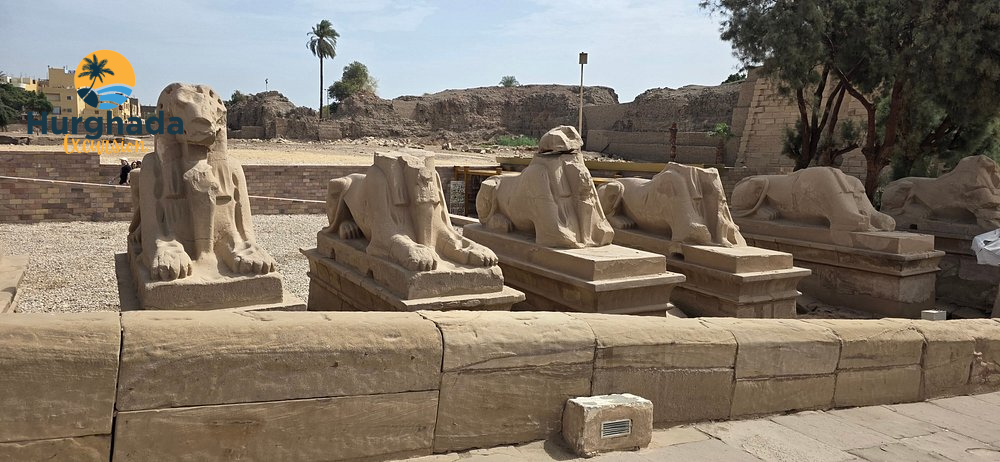
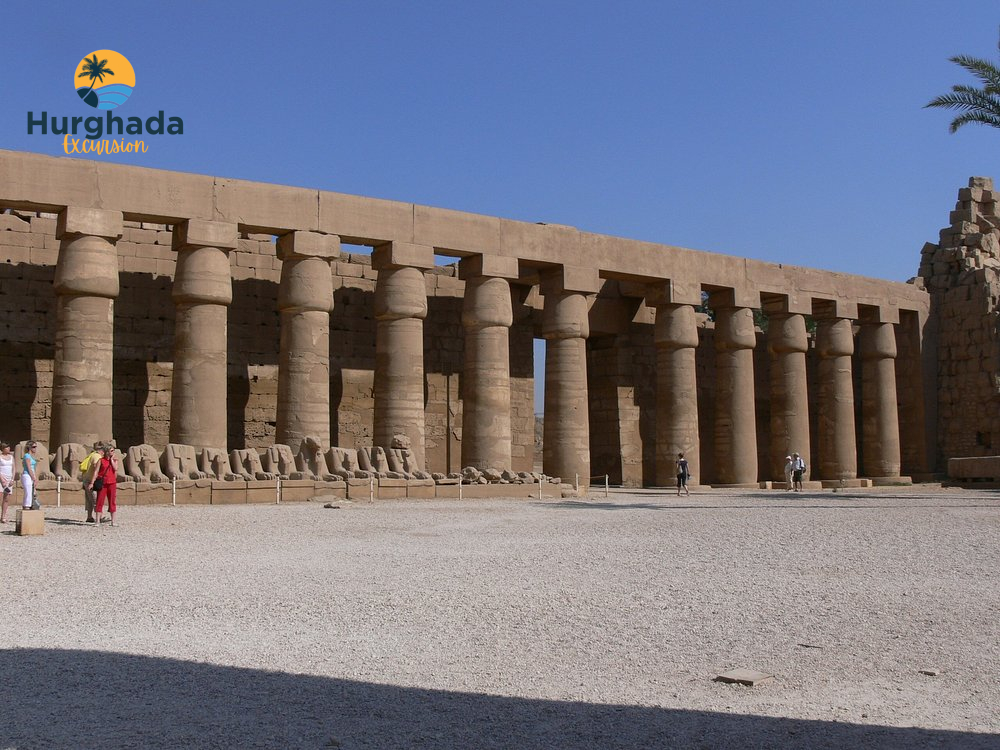
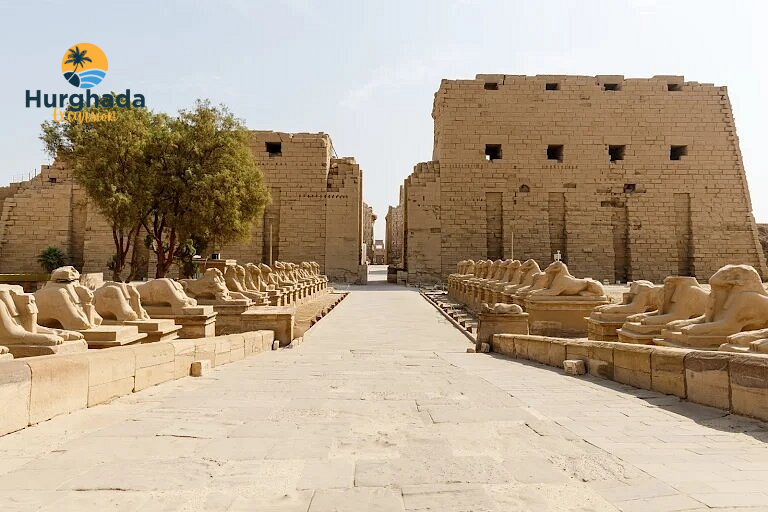
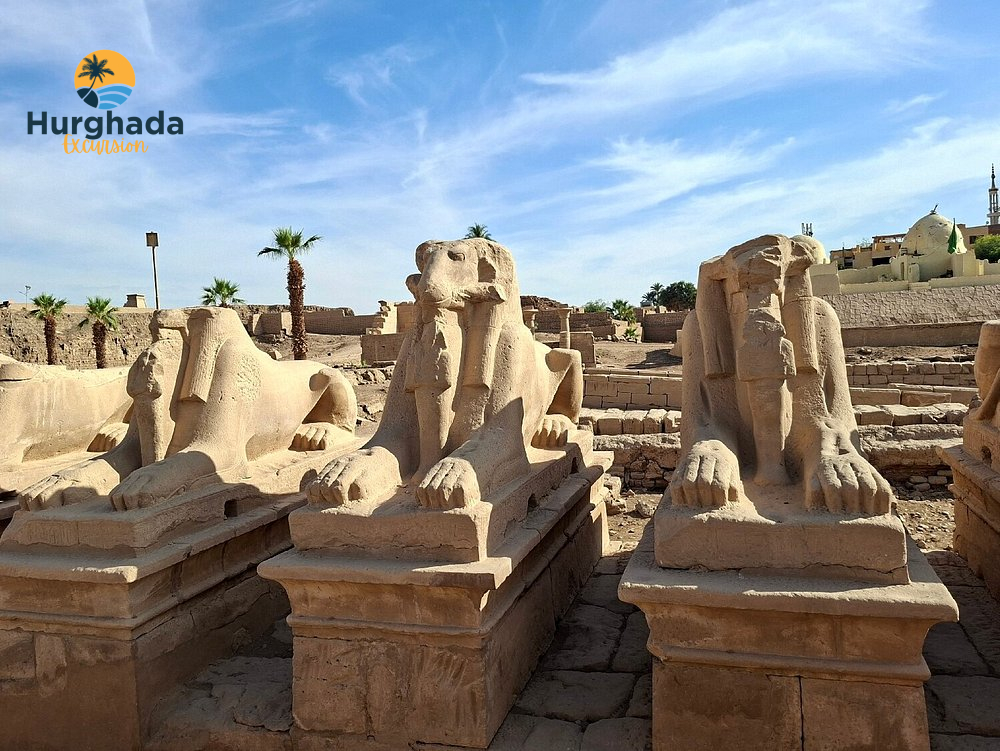
The ceremonial entrance to Karnak — a processional avenue lined with ram-headed sphinxes (rams being sacred to Amun), each protecting a small figure of the pharaoh between their paws. Originally, this avenue continued all the way south to Luxor Temple (3 km), lined with 1,350 human-headed sphinxes. The recent restoration of the complete Avenue of Sphinxes connecting both temples is one of Egypt’s most extraordinary archaeological achievements.
🌊
4. The Sacred Lake
The largest sacred lake of any Egyptian temple — 120 metres long by 77 metres wide, fed by underground channels from the Nile. The priests of Karnak bathed here before performing daily rituals and navigated it in sacred barques during religious festivals. The lake is overlooked by a colossal granite scarab beetle of Amenhotep III — walking around it seven times is said (by local tradition) to bring good fortune.
🏺
5. The Precinct of Amun-Ra — Main Temple
The central and largest precinct, dedicated to Amun-Ra, the king of the Egyptian gods. It contains the Great Hypostyle Hall, 10 pylons, multiple courts and sanctuaries, the obelisks of Thutmose I and Hatshepsut, the Festival Hall of Thutmose III, the Sacred Lake, and the White Chapel of Senusret I — one of the finest surviving examples of Middle Kingdom art.
⚔️
6. The Battle of Kadesh Relief — Ramesses II
The outer walls of Karnak’s pylons contain some of the largest and most dramatic battle reliefs in ancient Egyptian art — including Ramesses II’s record of the Battle of Kadesh against the Hittites (c. 1274 BCE), carved in monumental scale across the entire exterior face of the second pylon. The guide identifies the key figures and explains the political purpose of this ancient propaganda.
🌙
7. Karnak Sound & Light Show (Evening)
The legendary Karnak Sound & Light Show — held several evenings per week — illuminates the Great Hypostyle Hall and other structures with coloured light while a narrated history of Karnak fills the night air. Walking among the lit columns in darkness is one of the most atmospheric experiences available in all of Egypt. Duration: approximately 1 hour 15 minutes.
🎓
8. Licensed Egyptologist Guide
A government-licensed Egyptologist accompanies you through every section of the complex — reading hieroglyphic texts from the walls, explaining the mythology of each deity depicted, connecting the Karnak building programme to the political and religious history of Egypt, and answering every question with the authority of specialist academic training. The difference between Karnak with and without an Egyptologist guide is immeasurable.
🚶
9. The Complete Avenue of Sphinxes
Can you walk from Karnak to Luxor Temple? Yes — the recently restored 2.7 km Avenue of Sphinxes connecting Karnak Temple to Luxor Temple is now walkable. Originally lined with 1,350 sphinxes, the avenue was used for the annual Opet Festival procession. Walking part or all of this route — the guide leads the way — is one of the most remarkable pedestrian experiences available in Egypt.
📸
10. Extraordinary Photography Opportunities
The Great Hypostyle Hall in the early morning light — when the sun enters low through the clerestory windows and catches the dust motes between the columns — is one of the most photographed interior spaces in the world. At 06:30 AM before the crowds arrive, you can photograph this extraordinary space with almost no other visitors in frame.
Full Day Program — Hour by Hour from Hurghada to Return
Here is the complete program for the Karnak Temple Complex Luxor guided tour from Hurghada — including Karnak Temple, Luxor Temple, and the Avenue of Sphinxes. The full day is approximately 14–16 hours door to door.
04:00 – 05:00 · Hotel Pickup
🚐 Early Departure — Private Air-Conditioned Transfer to Luxor
Your private vehicle collects you from your hotel lobby at the confirmed time — typically 04:00–05:00 AM depending on your hotel’s location. The 260 km journey to Luxor takes approximately 3 hours across the Eastern Desert. The guide uses the road journey to deliver a comprehensive introduction to Luxor’s history, the Theban religious tradition, the significance of Amun-Ra, and the specific structures you will visit. Early departure is essential for arriving at Karnak before the main tourist groups — the difference between an 07:00 AM arrival and a 10:00 AM arrival in the Hypostyle Hall is the difference between a profound encounter and a crowded one.
What to bring: Hat (wide-brimmed — essential), sunscreen SPF 50, comfortable closed shoes (the Karnak site involves 2–3 km of walking on uneven stone), camera, credit/debit card (entrance fees are card-only at most Luxor sites as of 2026), water bottle, and light modest clothing (shoulders covered is respectful — not mandatory but appreciated).
05:00 – 07:00 · Desert Road Journey
🛣️ Road Journey Across the Eastern Desert — Approaching Luxor
The desert road between Hurghada and Luxor is one of the most beautiful drives in Egypt — crossing the limestone plateau of the Eastern Desert as the sun rises over the horizon. The guide points out the dramatic landscape changes as the desert gives way to the cultivated green strip of the Nile Valley at Luxor. A brief refreshment stop at the midpoint. Most guests arrive in Luxor with a genuine sense of anticipation from the guide’s historical introduction during the drive.
07:00 – 09:30 · MAIN EVENT — Karnak Temple
🏛️ Karnak Temple Complex — 2.5 Hours with Your Egyptologist Guide
Arrival at Karnak at approximately 07:00 AM — before the major tourist groups arrive. Entry tickets purchased at the gate (standard entry ~600 EGP/~€11 included in tour price). The guide leads the group through the complete principal sections of the complex in a carefully planned sequence that moves from the entrance to the inner sanctuaries.
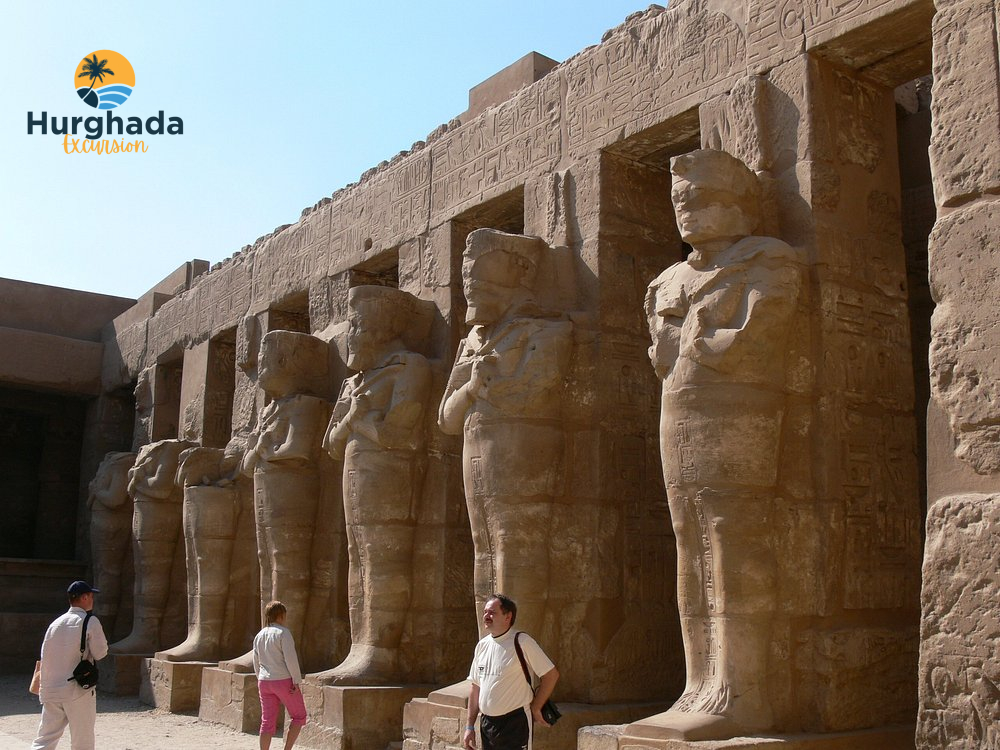
The guide’s route through Karnak: Avenue of Ram-Headed Sphinxes → First Pylon → Great Court → Ramesses II Statues → Great Hypostyle Hall (approximately 30 minutes here — the main event) → Obelisks of Thutmose I → Hatshepsut’s Obelisk → Festival Hall of Thutmose III → Sacred Lake → Granite Scarab Beetle → White Chapel of Senusret I → Open Air Museum (if time permits).
The guide provides comprehensive explanations at each stop: who built each structure, what it was used for, which specific religious texts are inscribed on each wall, and the extraordinary political history encoded in the additions and deletions that different pharaohs made to each other’s monuments. Karnak is simultaneously an architectural record and a political document — the guide reads both simultaneously.
Photography at Karnak: Photography is permitted throughout the site for personal use. The Great Hypostyle Hall at 07:00 AM offers the best photographic conditions of the day — the early sun enters through the clerestory windows and creates extraordinary light between the columns. From 09:00 AM onward, the light becomes harsh and the space fills rapidly with other visitors.
09:30 – 10:30 · Avenue of Sphinxes Walk
🦁 The Avenue of Sphinxes — Walking the Ancient Processional Route
After Karnak, the guide leads the group along part of the recently restored Avenue of Sphinxes — the 2.7 km processional route that originally connected Karnak Temple to Luxor Temple. First created c. 1400 BCE and completed under Nectanebo I in the 30th Dynasty (c. 380–362 BCE), the avenue was lined with 1,350 ram-headed sphinxes (at the Karnak end) transitioning to human-headed sphinxes (at the Luxor end). The route was used annually for the Opet Festival — a magnificent procession in which the statues of Amun, Mut, and Khonsu were carried from Karnak to Luxor Temple in sacred barques.
The fully restored avenue was reopened to the public in 2021 after a multi-decade archaeological and restoration programme. Walking along it — even a section of it — is the most atmospherically complete way to connect the two great temples of Luxor’s East Bank.
10:30 – 12:00 · Luxor Temple
⛪ Luxor Temple — The Temple of the Rejuvenation of Kingship
Luxor Temple stands at the southern end of the Avenue of Sphinxes, on the Nile embankment in the heart of modern Luxor city. Unlike Karnak — which grew organically over 2,000 years — Luxor Temple was built primarily by two pharaohs: Amenhotep III (who built the inner sanctuary and colonnade, c. 1390–1352 BCE) and Ramesses II (who added the magnificent pylon entrance, twin obelisks, and colossal statues, c. 1279–1213 BCE). The result is one of the most harmoniously designed temples in Egypt — coherent, elegant, and deeply beautiful.
What is the difference between Karnak Temple and Luxor Temple? Karnak was the principal religious centre of Thebes — the permanent home of the god Amun, built and expanded over 2,000 years by every pharaoh who wanted to demonstrate their piety and power. Luxor Temple was the venue for a specific annual ceremony — the Opet Festival — during which the divine essence of Amun temporarily united with the king to renew the pharaoh’s divine authority. Karnak is about the god; Luxor Temple is about the king’s relationship with the god.
Luxor temple how much time? Approximately 1–1.5 hours is sufficient with a guide. The Colonnade of Amenhotep III, the Great Court of Ramesses II, the inner sanctuary, and the remarkable integration of a Coptic church and later a Roman military garrison into the temple complex all reward extended exploration. Entrance: ~500 EGP (~€9) — included in the tour price.
12:00 – 13:00 · Lunch
🍽️ Lunch at a Luxor Restaurant
A full lunch at a well-regarded Luxor restaurant — Egyptian cuisine with unlimited soft drinks, served in air-conditioned comfort. Grilled chicken, kofta, rice, salads, hummus, fresh bread, and seasonal fruit. The guide accompanies the group and handles the ordering. An essential mid-day break — the combination of the early departure, the morning walking, and the Luxor heat requires proper nutrition and rest before the afternoon.
13:00 – 14:30 · Optional West Bank Visit
🏺 Optional Extension — Valley of the Kings & West Bank (Full Day Package)
For the combined Luxor full-day tour (our most popular package), the afternoon is spent on the West Bank of the Nile — the Valley of the Kings, Temple of Hatshepsut, and Colossi of Memnon. This requires booking the full Luxor day tour rather than the East Bank-only option. For guests who want only Karnak and Luxor Temple, the afternoon is free time in Luxor for personal exploration before the return journey to Hurghada.
14:30 – 17:30 · Return to Hurghada
🛣️ Return Drive — Arrive Hotel ~17:30–18:00
The return journey departs Luxor in the early-to-mid afternoon, arriving back in Hurghada at approximately 17:30–18:00 PM — leaving a full evening ahead. The guide is available for questions and conversation throughout the return journey. Most guests arrive home energised and wanting to tell everyone what they saw.
The Great Sections of Karnak — Complete Visitor Map
The Karnak Temple Complex is divided into four main precincts. The Precinct of Amun-Ra is the largest and the focus of the guided tour. Here is the complete guide to what you will see:
⭐ The Main Attraction
Great Hypostyle Hall
134 columns · 5,000 m² · Built by Seti I and completed by Ramesses II. The two central rows of 12 columns each reach 21 metres in height (wider than you can embrace). The outer 122 columns are 13 metres high. Every surface — walls, columns, architraves — is covered in hieroglyphic inscriptions and painted reliefs. When the hall was roofed, this space was entirely in magnificent darkness broken only by clerestory windows. One of the defining architectural experiences of any human lifetime.
Ceremonial Entrance
First Pylon & Great Court
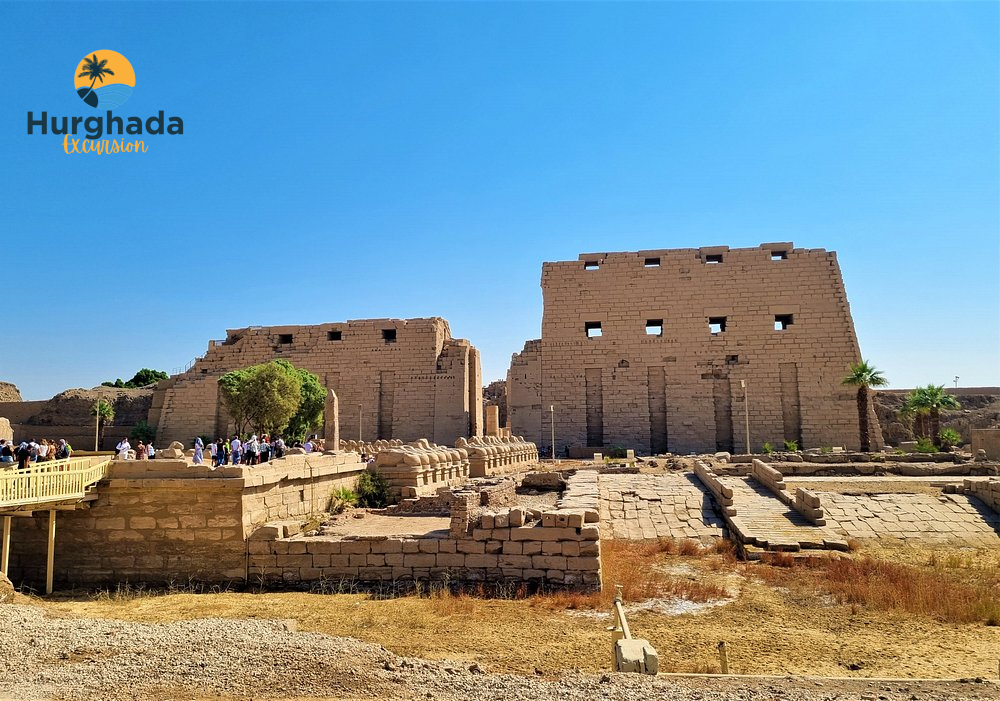
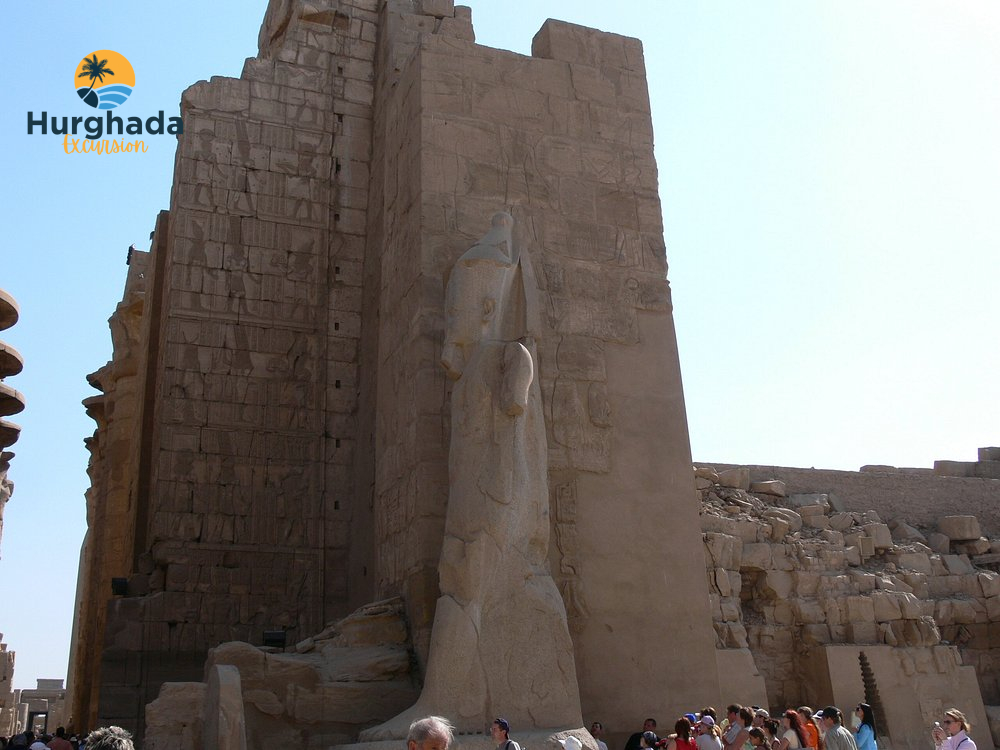
The main entrance to Karnak — the First Pylon was never fully completed and remains the largest pylon in Egypt (113 metres wide). Through it lies the Great Court — an enormous open courtyard that would have been flooded with the Opet Festival procession annually. The court contains the smaller Kiosk of Taharka and the remaining columns of the Temple of Ramesses III.
Most Spectacular Object
Obelisks of Hatshepsut & Thutmose I
Hatshepsut erected two obelisks between the fourth and fifth pylons — one still stands at 29.5 metres, its pyramidion still bearing traces of electrum (gold-silver alloy). She recorded in text that she covered them from top to bottom in electrum “like the sunrise.” Thutmose I’s obelisk also survives at 21 metres — one of the oldest obelisks in the world still standing in its original location.
Hidden Gem
Festival Hall of Thutmose III
At the far eastern end of the Amun precinct, Thutmose III (Egypt’s most militarily successful pharaoh, who campaigned from Sudan to Syria) built a remarkable festival hall with unusual “tent pole” columns imitating the poles of a military campaign tent. The hall’s Botanical Garden reliefs — showing exotic plants, animals, and birds brought back from his Asian campaigns — are among the most unusual and charming images in Egyptian art.
Most Atmospheric
Sacred Lake & Scarab Beetle
The Sacred Lake (120m x 77m) was used for ritual bathing by the priests of Amun and for navigating the sacred barques during festivals. At its northwestern corner stands a colossal granite scarab beetle of Amenhotep III — walking around it seven times is a beloved local tradition. In the early morning, the reflection of the pylons in the still lake surface is one of the most photographed scenes in all of Egypt.
Oldest Structure
White Chapel of Senusret I
The oldest and finest surviving example of Middle Kingdom Egyptian architecture at Karnak — a small alabaster way-station chapel built c. 1950 BCE by Senusret I, discovered dismantled inside the Third Pylon and reconstructed in the Open Air Museum. The quality of its raised relief carving is extraordinary — among the finest work of any period of Egyptian art.
Who Built Karnak Temple? History of 30 Pharaohs
Who built Karnak Temple? No single pharaoh — it was the collective building project of more than 30 successive rulers over 2,000 years. Here are the most significant contributors and what they added:
👑
Senusret I (c. 1971–1926 BCE)
The earliest significant builder at Karnak — erected the original Middle Kingdom sanctuary and the exquisite White Chapel, now reconstructed in the Open Air Museum. The White Chapel represents the finest surviving example of Middle Kingdom relief carving anywhere in Egypt.
🏺
Thutmose I (c. 1504–1492 BCE)
First builder of the outermost pylons (4th and 5th) and the first obelisks at Karnak. One of Thutmose I’s obelisks still stands — 21 metres high, one of the oldest surviving obelisks in the world. His daughter Hatshepsut would later add the most famous obelisks of all at the same location.
👸
Hatshepsut (c. 1479–1458 BCE)
Egypt’s most powerful female pharaoh erected two 29.5-metre obelisks at Karnak — the tallest in the world at the time — and adorned them with electrum. Her stepson Thutmose III later attempted to wall them in (to hide her, not destroy them) — meaning they actually survived better than most. The surviving obelisk is still the world’s tallest ancient obelisk standing in its original location.
⚔️
Thutmose III (c. 1458–1425 BCE)
Egypt’s greatest warrior pharaoh — campaigned from Sudan to Syria and won 17 military campaigns. At Karnak he built the Festival Hall (with its extraordinary tent-pole columns and Botanical Garden reliefs), expanded the inner sanctuaries, and recorded his military victories in extraordinary detail on the walls. The most prolific builder of the New Kingdom at Karnak.
🎨
Seti I (c. 1294–1279 BCE)
Seti I began the construction of the Great Hypostyle Hall — the most ambitious architectural project at Karnak. He decorated the northern half of the hall in delicate painted sunk relief of extraordinary quality. His work here was completed by his son Ramesses II, who decorated the southern half in raised relief at a slightly lower artistic standard but with dramatic energy.
🦅
Ramesses II (c. 1279–1213 BCE)
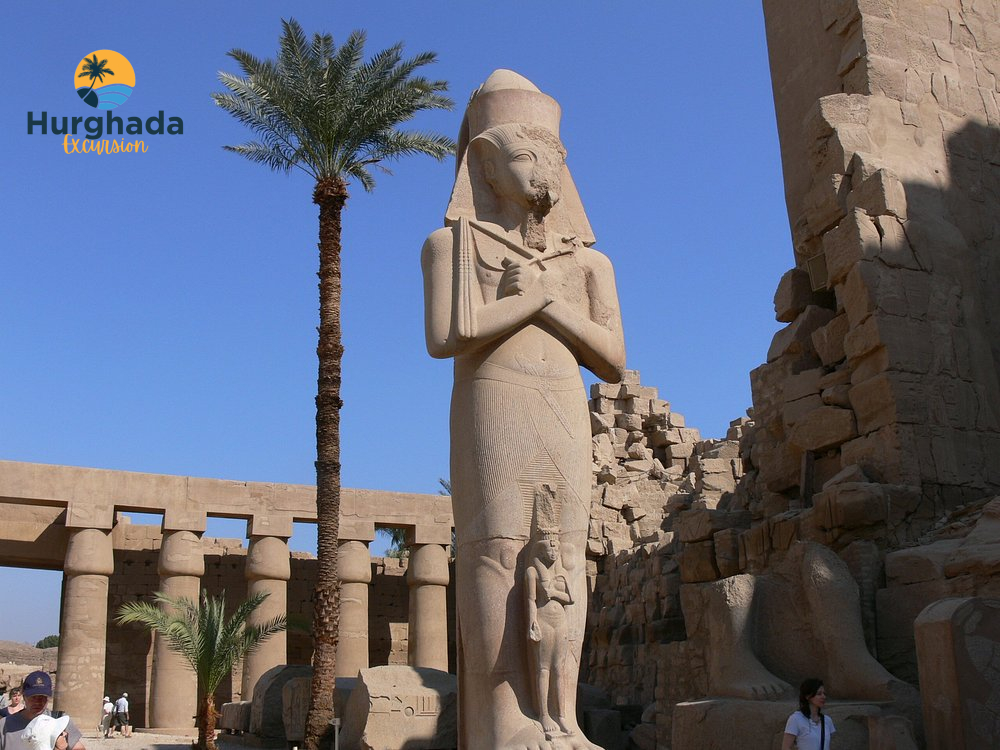
Completed the Great Hypostyle Hall, erected the colossal statues in the Great Court, added the Battle of Kadesh reliefs to the exterior pylons, and generally left his name on every accessible surface at Karnak. The guide will explain how Egyptologists distinguish Ramesses II’s characteristic “quick” carving style from the finer work of his father Seti I.
Karnak vs Luxor Temple — What Is the Difference?
What is the difference between Karnak Temple and Luxor Temple? This is the most commonly asked question by first-time Luxor visitors — and the answer reveals the extraordinary sophistication of ancient Egyptian religious thinking:
| Feature |
Karnak Temple |
Luxor Temple |
| Size |
~100 hectares — world’s largest religious site |
~4 hectares — smaller, more coherent |
| Construction |
30+ pharaohs over 2,000 years |
Primarily 2 pharaohs — more harmonious design |
| Primary deity |
Amun-Ra (god’s permanent home) |
Amun (visited annually for the Opet Festival) |
| Purpose |
Permanent cult centre of the state religion |
Annual festival of royal rejuvenation (Opet) |
| Connection |
Connected by the 2.7 km Avenue of Sphinxes — now fully restored and walkable |
| Best time to visit |
Morning (07:00–09:00 AM) for best light and fewest crowds |
Morning or evening (open until 20:00 — beautiful at dusk) |
🚶 Can you walk from Karnak to Luxor Temple? Yes — the recently restored Avenue of Sphinxes connecting both temples (2.7 km) is now fully walkable and is one of the most remarkable pedestrian routes in Egypt. Originally lined with 1,350 sphinxes and used for the annual Opet Festival procession, the complete avenue was reopened in 2021 after decades of archaeological excavation and restoration. Our Karnak Temple Complex guided tour includes a walk along part of this extraordinary route as part of the connection between the two temples.
Karnak Sound & Light Show — Evening Experience
The Karnak Sound and Light Show is one of the most atmospheric evening experiences available in Egypt — walking through the illuminated Hypostyle Hall and sacred lake at night while a narrated history of the temple fills the darkness. Held several evenings per week in English and other languages, the show lasts approximately 1 hour 15 minutes and transforms the daylight experience of Karnak into something genuinely different.
🌙
Hypostyle Hall at Night
Walking among 134 illuminated columns in darkness — golden and blue lights catching the hieroglyphic carvings and casting dramatic shadows across the ancient stone — is a fundamentally different experience from the daytime visit. Many guests describe the Sound and Light Show version of the Hypostyle Hall as even more moving than the morning version.
💡
Illuminated Sacred Lake
The audience watches the finale section of the show from the grandstands beside the Sacred Lake — the pylons and obelisks reflected in the water, lit in changing colours, while the narration reaches its conclusion. The reflection of the lit Hatshepsut obelisk in the still lake water is one of the most spectacular sights in Luxor.
🎭
Show Details
Duration: ~75 minutes. Held several evenings per week — check current schedule at booking. Available in English, French, German, Arabic, Japanese, Italian, and Spanish. Ticket price: ~150 EGP (~€3) per person. Included as an option in extended Luxor tour packages. Additional cost if added to standard day tour.
Karnak Temple Tickets 2026 — Official Prices
Karnak Temple Complex Luxor tickets 2026 official prices — all fees payable by credit/debit card at the site:
| Site / Ticket |
Price (EGP) |
Approx. EUR |
Notes |
| Karnak Temple (Adult) |
600 EGP |
~€11 |
Included in tour price · Open 06:00–05:30 PM |
| Karnak Temple (Student) |
300 EGP |
~€6 |
Valid student ID required at gate |
| Luxor Temple (Adult) |
500 EGP |
~€9 |
Included in tour price · Open 06:00–20:00 PM |
| Temple of Mut |
200 EGP |
~€4 |
Separate precinct — optional add-on |
| Karnak Sound & Light Show |
~150 EGP |
~€3 |
Evening show · Several nights per week |
| Luxor Pass (Silver/Gold) |
~$100 / $200 USD |
~€93 / €185 |
Multi-site pass — for independent travellers spending 3+ days in Luxor |
💳 Luxor Pass — Is It Worth It?
The Luxor Pass provides unlimited entry to all Luxor sites (Silver: all sites except Valley of the Kings tombs and premium add-ons; Gold: includes Valley of the Kings). For guests on a day trip from Hurghada visiting 2–4 sites, the individual tickets included in our tour price represent better value than purchasing the Luxor Pass. The Luxor Pass is more economical for independent travellers spending 3+ days in Luxor visiting multiple sites per day.
Karnak Temple Tour Price from Hurghada 2026
Karnak Temple Complex Luxor Tour from Hurghada — From
€75
per adult · Full day · Karnak + Luxor Temple + Avenue of Sphinxes
✓ Private Vehicle · ✓ Egyptologist Guide · ✓ All Entry Tickets · ✓ Lunch · ✓ Water
Combined Luxor Day Tour (+ Valley of the Kings & West Bank): from €90 · Children 4–11: 50% discount
✅ Included in the Karnak Temple Tour from Hurghada
✓ Private air-conditioned vehicle transfer: Hurghada – Luxor – Hurghada (260 km each way)
✓ Licensed Egyptologist guide for the full day
✓ Karnak Temple Complex entrance ticket (~600 EGP per adult)
✓ Luxor Temple entrance ticket (~500 EGP per adult)
✓ Walk along the Avenue of Sphinxes between both temples
✓ Full lunch at a Luxor restaurant (Egyptian menu, soft drinks included)
✓ Bottled water throughout · Free cancellation 48 hours before
Best Time to Visit Karnak Temple from Hurghada
| Season |
Luxor Temp |
Hypostyle Hall Light |
Crowds |
Verdict |
| Oct – Nov |
28–36°C |
Excellent (lower sun angle) |
Moderate |
Excellent |
| Dec – Feb |
15–25°C |
Best of year · warm golden morning |
High (peak season) |
Best photography · early start essential |
| Mar – May |
25–38°C |
Very good |
Moderate |
Very Good |
| Jun – Sep |
40–50°C |
Harsh midday light |
Very low |
Demanding — extremely early start (05:00 AM) required |
Suitable for Families & All Ages?
The Karnak Temple Complex guided tour is suitable for most family groups — the main walking sections are on flat paved surfaces and the experience is primarily visual and intellectual rather than physically demanding. Specific considerations:
✓ Children aged 8+ are well-suited — the scale of the Hypostyle Hall columns (each one wider than you can embrace with both arms) produces an immediate, visceral sense of wonder in children of all interests.
✓ The guide tailors the explanation for children — stories of gods, pharaohs, and hieroglyphic puzzles rather than academic history when younger guests are in the group.
✓ The walking at Karnak is on mostly flat paved paths — significantly more accessible than the Valley of the Kings or Hatshepsut Temple for elderly guests or those with mild mobility limitations.
✕ Young children under 6 may find the 04:00 AM departure and the 3-hour drive challenging. Strollers are impractical on Karnak’s uneven ancient stone paths. The summer heat (Jun–Sep) is genuinely challenging for very young children — the Oct–Mar season is strongly preferred for family visits.
10 Expert Tips for Your Karnak Temple Complex Visit
Tip 1 — Enter the Great Hypostyle Hall before 09:00 AM. The Hypostyle Hall from 07:00–08:30 AM — when the early morning sun enters through the clerestory windows at a low angle, catching the dust motes between the columns and creating horizontal shafts of golden light — is one of the most beautiful interior spaces on earth. After 09:30 AM, the harsh overhead sun and increasing crowds completely change the experience. The 04:00 AM departure from Hurghada exists precisely to achieve this morning window.
Tip 2 — Ask the guide to explain the difference between Seti I’s decoration and Ramesses II’s decoration in the Hypostyle Hall. The northern half of the hall (Seti I’s work) is in sunk relief of extraordinary delicacy — the figures are finely detailed, the hieroglyphics are elegant, and the painting traces still visible are of remarkable quality. The southern half (Ramesses II’s work) is in raised relief — more dramatic and easier to photograph, but significantly less fine in artistry. This difference is the most eloquent demonstration available at Karnak of how artistic quality varied between reigns.
Tip 3 — Walk around the Sacred Lake granite scarab beetle seven times. The colossal granite scarab beetle of Amenhotep III beside the Sacred Lake is the subject of one of the most enduring folk traditions at Karnak: walking around it seven times is said to bring good fortune in love. Your guide will mention this, the group will laugh — and then almost everyone will do it anyway. It takes about 2 minutes and is one of those genuinely joyful Karnak moments.
Tip 4 — Look at the colour traces on the columns and walls of the Hypostyle Hall. Most visitors focus on the scale and the hieroglyphic carvings — fewer look carefully at the surface of the columns for traces of the original paint. In protected corners and on ceilings throughout the hall, vivid patches of blue, red, yellow, and green paint survive from over 3,000 years ago. The guide will point these out — they transform your understanding of what the hall would have looked like when completed and in use.
Tip 5 — Explore the Open Air Museum. Included in the Karnak entry ticket but often skipped by tour groups in a hurry, the Open Air Museum contains some of the finest pieces from Karnak’s history — including the exquisite White Chapel of Senusret I (c. 1950 BCE), one of the most beautiful carved alabaster structures in Egypt. Ask the guide to include it in the route if time allows.
Tip 6 — Don’t miss the Festival Hall of Thutmose III — the most unusual room at Karnak. Most visitors see the Hypostyle Hall and the Sacred Lake and miss the eastern end of the Amun precinct entirely. The Festival Hall of Thutmose III — with its unique tent-pole columns and extraordinary Botanical Garden reliefs showing exotic plants and animals from his Asian campaigns — is one of the most idiosyncratic and fascinating spaces at Karnak, and consistently missed by visitors who run out of time.
Tip 7 — Add Luxor Temple to the same day — never visit one without the other. Karnak and Luxor Temple are connected by the Avenue of Sphinxes and were used together as part of the same annual religious festival. Visiting both on the same day gives the complete picture of how the two temples functioned as a theological and ceremonial unit. Our tour includes both — and the walk between them along part of the avenue is one of the most atmospheric experiences of the entire day.
Tip 8 — Bring a wide-angle lens or use your phone’s panorama mode for the Hypostyle Hall. Standard smartphone cameras cannot capture the full scale of the Hypostyle Hall in a single frame. The panorama mode is specifically useful here — sweeping from one side of the hall to the other captures something of the visual overwhelming quality of the space. From the second and third row back from the central aisle, looking toward the sanctuary, the composition of columns receding to darkness is the defining photograph of any Karnak visit.
Tip 9 — Consider the combined Valley of the Kings and Karnak day tour for the complete Luxor experience. The best Karnak Temple Complex Luxor guided tour from Hurghada combines Karnak Temple (East Bank morning) with the Valley of the Kings, Hatshepsut Temple, and Colossi of Memnon (West Bank afternoon). This comprehensive package covers all of ancient Luxor’s principal monuments in a single extraordinary day. It is a long day — 14–16 hours — but virtually every guest who does it describes it as the most extraordinary single day of their life.
Tip 10 — Consider the Karnak Sound and Light Show for a Luxor overnight stay. If you are considering a one-night overnight stay in Luxor (which gives you a more relaxed pace and reduces the very early departure necessity), the Karnak Sound and Light Show provides an extraordinarily atmospheric evening experience that complements the morning visit perfectly. Walking the Hypostyle Hall by day and then by night, lit by coloured floodlights, are two genuinely different and equally moving experiences of the same space.
Real Reviews from Travellers
★★★★★
“I have visited temples and ancient sites all over the world — the Karnak Hypostyle Hall stopped me in my tracks in a way that nothing else has. I literally couldn’t speak for the first few minutes. The scale is completely incomprehensible until you are standing inside it. Our Egyptologist guide was exceptional — I learned more in 2.5 hours than in years of reading about Egypt. Do not miss this.”
Michael R. — Edinburgh · March 2026
★★★★★
“The early 4am start was hard but SO worth it. We had the Hypostyle Hall almost entirely to ourselves for the first hour — the morning light through the ancient clerestory windows was extraordinary. The guide decoded the hieroglyphics from the walls and told us the exact stories they contained. Karnak has to be seen to be believed. One of the truly great experiences of my life.”
Sarah & Tom K. — London · February 2026
★★★★★
“A Grand Tour of Luxor’s greatest monuments — Karnak was the absolute highlight. The guide was spectacular. We did the combined tour (Karnak, Luxor Temple, Valley of the Kings, Hatshepsut) and it was a genuinely life-changing day. I have been recommending this to everyone I know who visits Hurghada. It is the single best thing you can do from the Red Sea.”
Caroline & David L. — Manchester · January 2026
Frequently Asked Questions
What is the great temple complex of Karnak?
What is the great temple complex of Karnak? The Karnak Temple Complex is the largest religious site ever built — covering approximately 100 hectares at Luxor, Egypt. Constructed over 2,000 years by more than 30 pharaohs (c. 2000 BCE – 100 BCE), it is dedicated primarily to Amun-Ra, king of the Egyptian gods. Its Great Hypostyle Hall — 134 massive columns in 16 rows covering 5,000 square metres — is the largest hypostyle hall in the history of architecture. The complex is a UNESCO World Heritage Site and the most visited monument in Egypt after the Giza Pyramids.
Why is Karnak Temple so famous?
Why is Karnak Temple so famous? Karnak is famous primarily for its scale — it is the largest religious complex ever built by any human civilisation, and its Great Hypostyle Hall is the most overwhelming interior architectural space in the ancient world. It is also famous for the quality of its hieroglyphic inscriptions (which constitute an invaluable historical record), the beauty of its obelisks (particularly Hatshepsut’s 29.5-metre surviving obelisk), and the extraordinary density of monuments added by 30+ pharaohs — making it simultaneously a temple, an encyclopedia, and a 2,000-year architectural diary of ancient Egyptian civilisation.
What is the difference between Karnak Temple and Luxor Temple?
What is the difference between Karnak Temple and Luxor Temple? Karnak was the permanent cult centre of the god Amun-Ra — the largest and most sacred religious precinct in ancient Egypt, built by 30+ pharaohs over 2,000 years, covering 100 hectares. Luxor Temple was built primarily by 2 pharaohs (Amenhotep III and Ramesses II) and served a specific purpose: the annual Opet Festival, during which Amun’s divine essence temporarily united with the pharaoh to renew royal authority. The two temples were connected by the 2.7 km Avenue of Sphinxes, now fully restored and walkable. Karnak is about the god’s permanent home; Luxor Temple is about the king’s annual divine renewal.
Can you walk from Karnak Temple to Luxor Temple?
Can you walk from Karnak to Luxor Temple? Yes — the 2.7 km Avenue of Sphinxes connecting both temples was fully restored and reopened in 2021. Originally lined with 1,350 sphinxes (ram-headed near Karnak, human-headed near Luxor Temple), the avenue was used annually for the Opet Festival procession. Walking the complete avenue takes approximately 30–40 minutes at a comfortable pace. Our Karnak Temple guided tour includes a walk along a section of this extraordinary route as part of the connection between both temples.
What is the Karnak Temple Complex Luxor tour price from Hurghada?
The Karnak Temple Complex Luxor guided tour price from Hurghada starts from €75 per adult. This includes private air-conditioned vehicle transfer (260 km each way), licensed Egyptologist guide for the full day, Karnak Temple entry ticket (~600 EGP), Luxor Temple entry ticket (~500 EGP), Avenue of Sphinxes walk, lunch, and bottled water. Children 4–11: 50% discount. The combined tour with Valley of the Kings and West Bank monuments starts from €90 per adult.
What are the Karnak Temple opening hours in 2026?
Karnak Temple opening hours in 2026: Open daily from 06:00 AM to 05:00–05:30 PM (hours may vary slightly seasonally). The Karnak Sound and Light Show takes place several evenings per week after the regular closing time — check current schedule at booking. Luxor Temple (3 km south, connected by the Avenue of Sphinxes) is open daily from 06:00 AM to 08:00 PM — one of the few major Egyptian monuments accessible in the evening.
Book Your Karnak Temple Complex Luxor Tour Today
From €75 per person · Private vehicle from Hurghada · Egyptologist guide · Karnak + Luxor Temple + Avenue of Sphinxes · All entry tickets · Lunch · Free cancellation 48 hours before.
🏛️ Book Now — From €75
The Karnak Temple Complex Luxor guided tour from Hurghada delivers the single most architecturally overwhelming experience available to any traveller in the world. No photograph, no film, no description — including this one — can prepare you for the physical reality of the Great Hypostyle Hall. The moment of entering it for the first time, looking up at 21-metre columns that narrow to a point of light somewhere above your head, surrounded by 3,300-year-old hieroglyphic texts that your guide can read aloud from the walls — this is what Egypt does to you. This is what Karnak does to you. It is completely, permanently unforgettable.
Book your Karnak Temple guided tour today with Hurghada Excursion — early departure, private vehicle, licensed Egyptologist, and the most complete ancient Egypt experience available from the Red Sea coast.