🏺 Private Tour · Theban Necropolis · 8 Sites · Egyptologist Guide · From Hurghada
West Bank Tombs & Mortuary Temples Luxor – Private Guided Tour
📅 Updated: May 2026 | ⏱️ Full Day · 8 Hours on the West Bank | 💶 From €75 / person | ⭐ 4.9/5 Rated | 🏺 Daily Departures
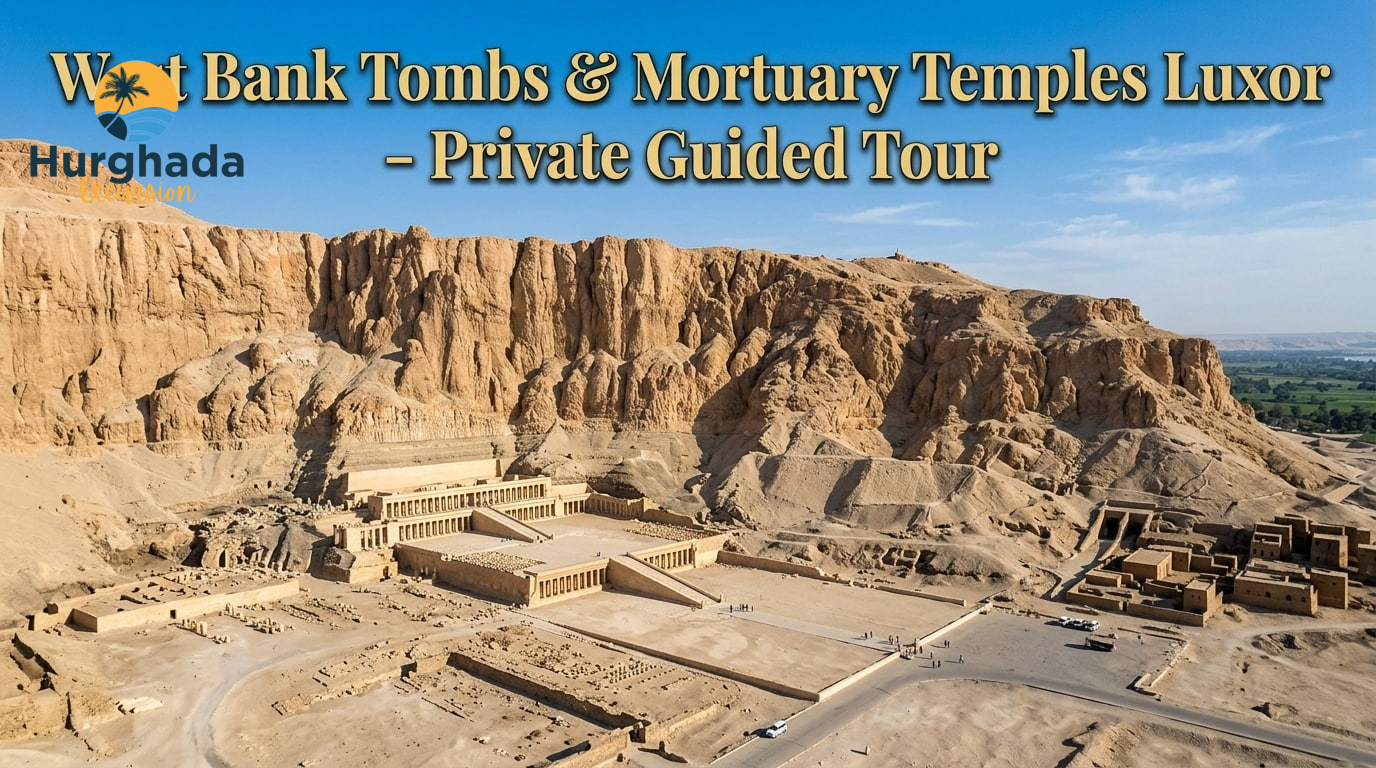
The West Bank of Luxor is the most concentrated landscape of ancient royal burial and mortuary architecture on earth — a 10 km strip of Nile floodplain, limestone cliff, and desert plateau that the ancient Egyptians consecrated for over 500 years as the kingdom of the dead. On this side of the river, the pharaohs of the New Kingdom cut their tombs deep into the mountains, built their mortuary temples at the desert edge, and buried their queens, nobles, and the workers who served them all across the hillsides. What to see in Luxor West Bank? The Valley of the Kings with its 63 royal tombs, the Valley of the Queens where Nefertari was buried in the most elaborately painted tomb in Egypt, the three-tiered mortuary temple of Hatshepsut carved into the cliff face, the magnificent military temple of Ramesses III at Medinet Habu, the toppled giants of the Ramesseum, the Tombs of the Nobles with their extraordinary scenes of everyday Egyptian life, the artisan village of Deir el-Medina, and the solitary grandeur of the Colossi of Memnon.
The West Bank tombs and mortuary temples Luxor private guided tour brings all of these sites together in a single, expertly managed full day — led by a licensed Egyptologist who decodes the hieroglyphic inscriptions, identifies the pharaohs and gods depicted, and brings the extraordinary human stories of these monuments to vivid life. Unlike group tours that rush between the major sites, this private guided tour moves entirely at your group’s pace — with the flexibility to spend longer at the sites that move you most and the guide’s undivided attention throughout the day.
🏺 Who is buried in Luxor? The West Bank of Luxor (ancient Thebes) contains the tombs of most of the great pharaohs of the New Kingdom — including Tutankhamun (the boy king whose intact tomb was discovered in 1922), Ramesses II (the Great, Egypt’s most prolific builder), Seti I (whose tomb is the most beautifully decorated in the valley), Thutmose III (Egypt’s greatest military commander), and Hatshepsut (the female pharaoh who ruled as king for over 20 years). Their queens — including Nefertari, beloved wife of Ramesses II, buried in the Valley of the Queens — and hundreds of nobles and artisans who served the royal court are also buried across the Theban hillsides. No single day can cover all of them — but our expert guide selects the most significant and visually spectacular sites open on your visit day.
What Is the Theban Necropolis? The West Bank Explained
The Theban Necropolis — the collective name for all the royal and non-royal cemeteries, mortuary temples, and burial complexes on the West Bank of Luxor — is the largest and most historically significant funerary landscape in the world. It was used continuously from the Middle Kingdom (c. 2055 BCE) through the New Kingdom (1550–1070 BCE) and beyond, accumulating over 1,000 years of burials across multiple distinct zones — each serving a different social class and purpose within the ancient Egyptian funerary system.
Why the West Bank? The ancient Egyptians associated the West — the direction of the setting sun — with death and the realm of Osiris, god of the underworld. The East Bank was the land of the living; the West Bank was the land of the dead. This cosmological division explains why all the major royal tombs, mortuary temples, and private cemeteries are on the western side of the Nile, while the great cult temples (Karnak, Luxor Temple) are on the eastern side.
| Zone |
Contents |
Who Was Buried Here |
| Valley of the Kings |
63 rock-cut tombs |
New Kingdom pharaohs (Thutmose I – Ramesses XI) |
| Valley of the Queens |
91 tombs |
Queens, princes & princesses — including Nefertari (most spectacular tomb) |
| Tombs of the Nobles |
400+ private tombs |
High officials, priests, scribes — extraordinary daily life scenes |
| Deir el-Medina |
Village + artisan tombs |
The workers who built the royal tombs — the best-documented community in the ancient world |
| Mortuary Temple Row |
8+ major temples |
The cult of each pharaoh’s spirit — Hatshepsut, Ramesses II (Ramesseum), Ramesses III (Medinet Habu) |
| Colossi of Memnon |
Two 18m statues |
Remnants of Amenhotep III’s mortuary temple — largest on the West Bank when standing |
🌍 UNESCO World Heritage Site
The entire Theban Necropolis — together with the East Bank temples — forms the UNESCO World Heritage Site of Ancient Thebes with its Necropolis, inscribed in 1979. This designation recognises the West Bank as one of the most significant and irreplaceable cultural landscapes in human history. The valley, the temples, and the hillside tombs together represent the most complete record of ancient Egyptian funerary belief, royal ideology, and daily life that survives anywhere in the world.
Top 10 Highlights of the West Bank Private Guided Tour
👑
1. Valley of the Kings — Entering Royal Tombs
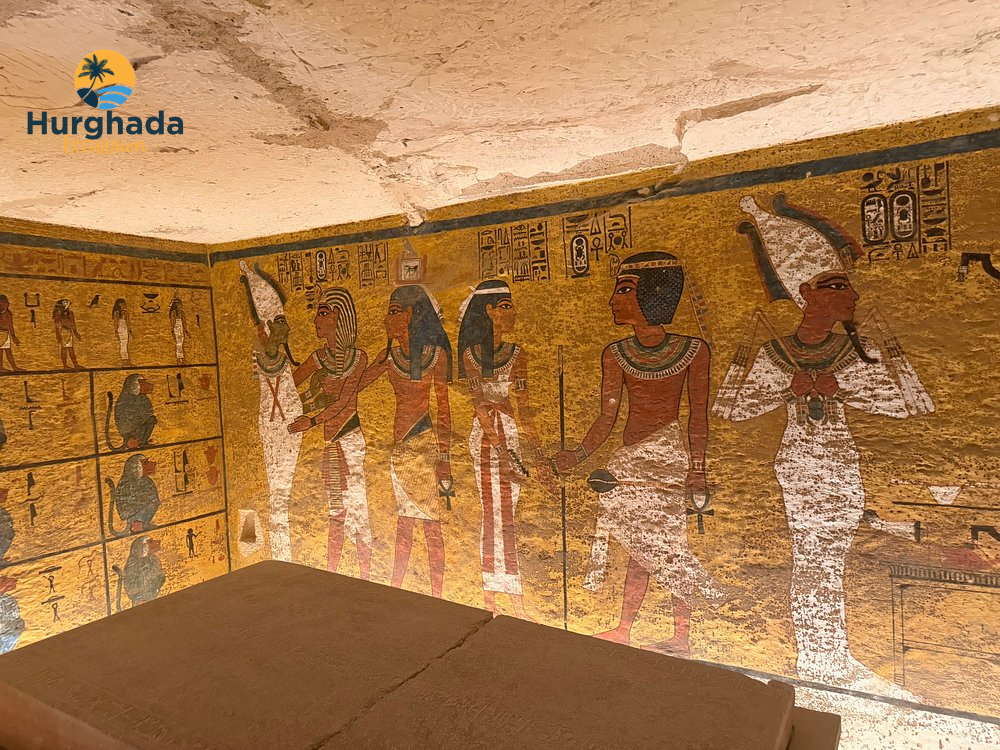
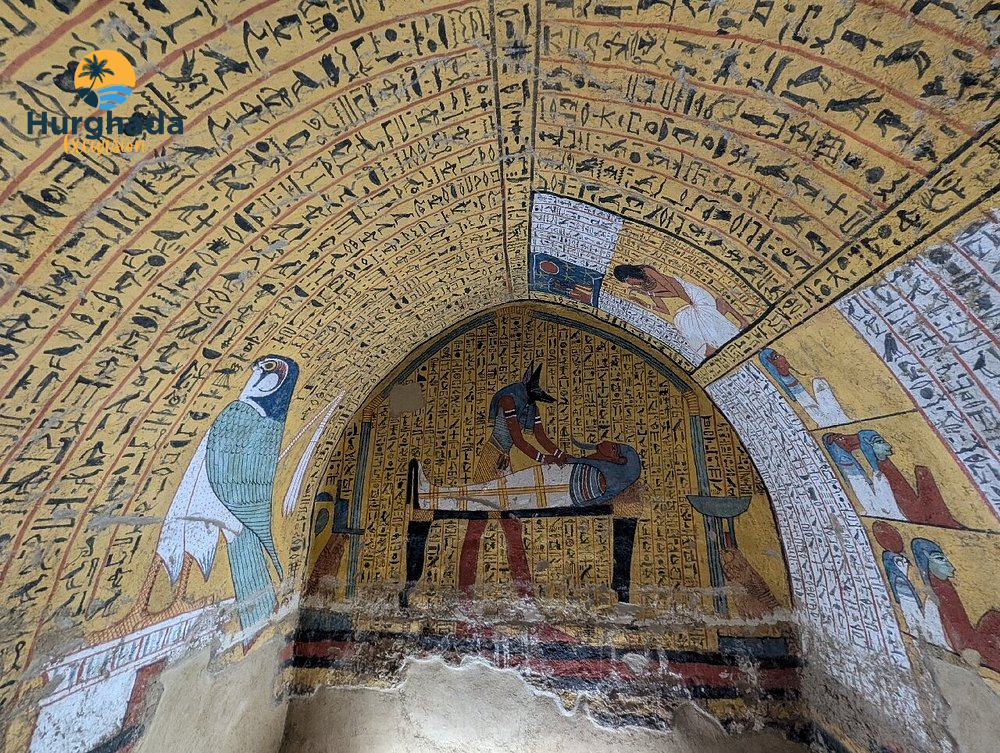
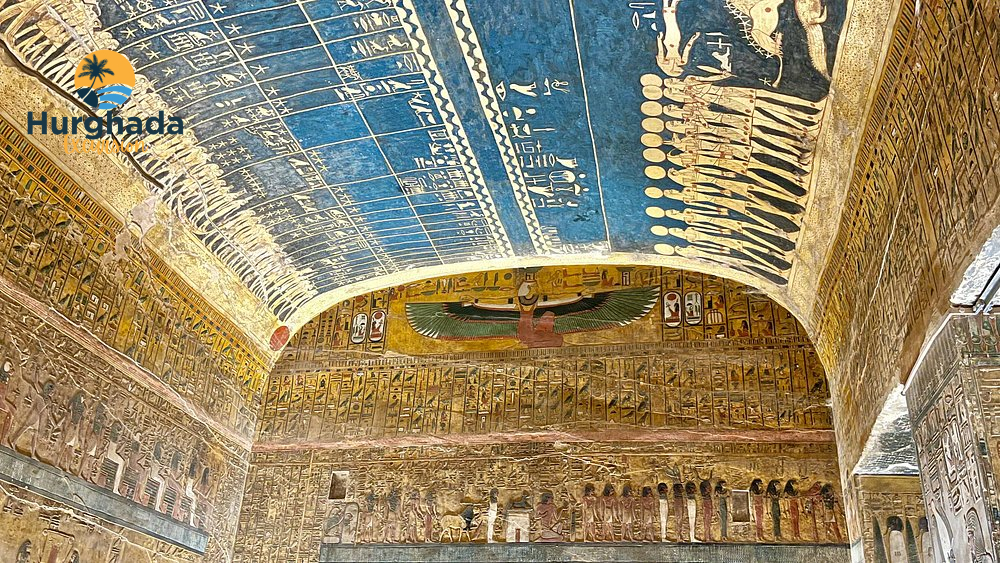
Descending into the rock-cut tomb of a pharaoh who ruled 3,300 years ago — the painted walls glowing with colours that have barely faded, the hieroglyphic texts mapping the journey to resurrection, the sarcophagus still in its granite chamber. Nothing else in the world provides this encounter with ancient royalty.
👸
2. Hatshepsut Temple — Female Pharaoh’s Masterpiece
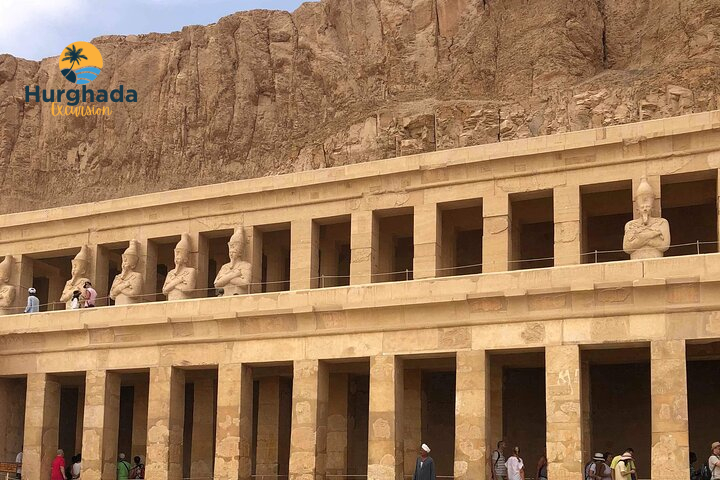
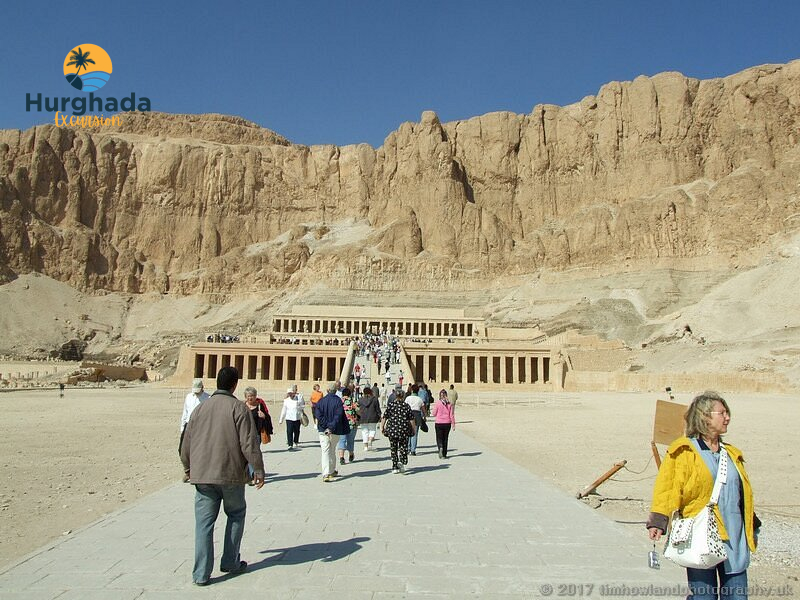
The three-tiered mortuary temple of Hatshepsut — the most powerful female ruler in Egyptian history — built into the limestone cliff at Deir el-Bahari. The extraordinary colonnaded terraces, the Punt expedition reliefs, and the guide’s explanation of Hatshepsut’s story make this the most compelling single monument on the West Bank for many guests.
🏰
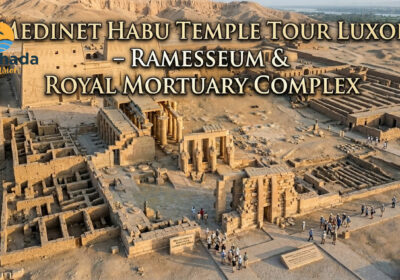
3. Medinet Habu — Most Complete Mortuary Temple
The mortuary temple of Ramesses III at Medinet Habu — one of the best-preserved and most completely decorated temples in Egypt, with deep relief carvings in vivid colours depicting Ramesses III’s military campaigns, religious festivals, and daily life. Significantly quieter than the Valley of the Kings and dramatically beautiful.
🎨
4. Tombs of the Nobles — Scenes of Real Egyptian Life
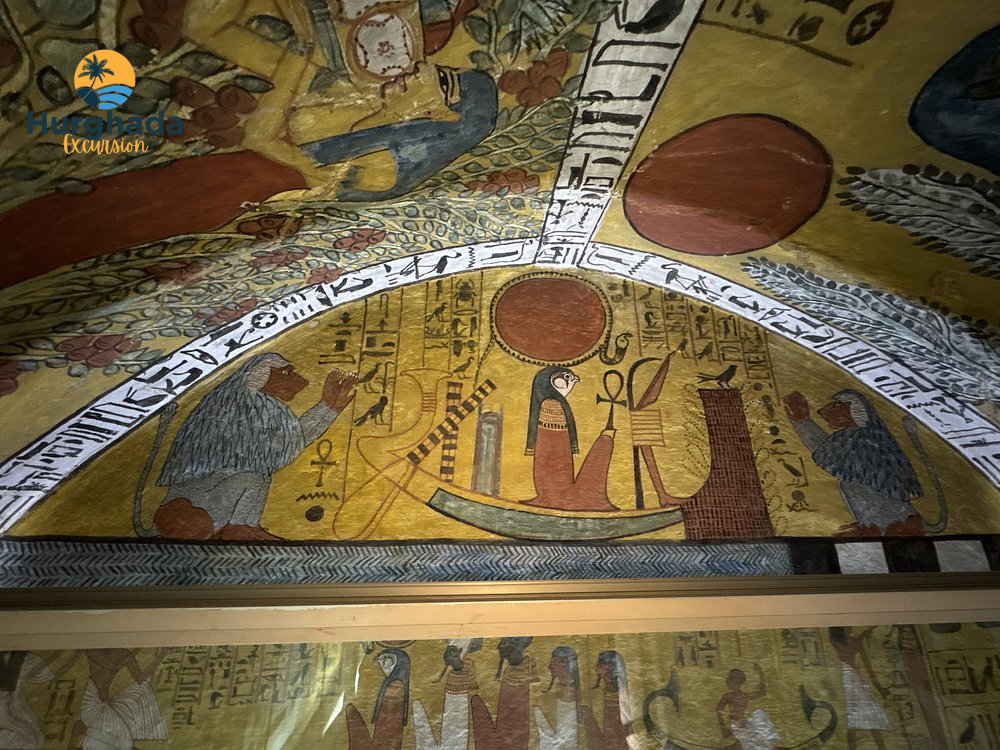
The private tombs of Luxor’s high officials on the hillsides above the West Bank plain are decorated not with religious texts but with extraordinary scenes of daily life — farming, fishing, feasting, hunting, music, and family scenes painted in vivid colour. The most human and accessible tomb paintings in all of Egypt.
🔨
5. Deir el-Medina — The Workers’ Village
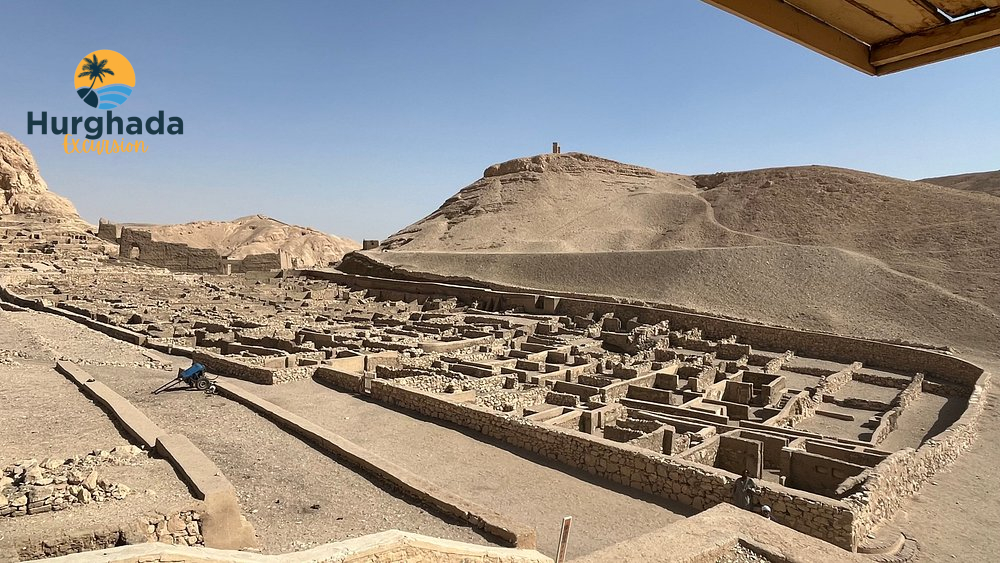
The village and tombs of the royal tomb-builders — the most extensively documented workers’ community in the ancient world. Their tombs are small but exquisitely decorated, their ostraca (writing tablets) preserve love poems, work records, complaints, and even the world’s first recorded labour strike. A profoundly human counterpoint to the royal grandeur elsewhere on the West Bank.
🗿
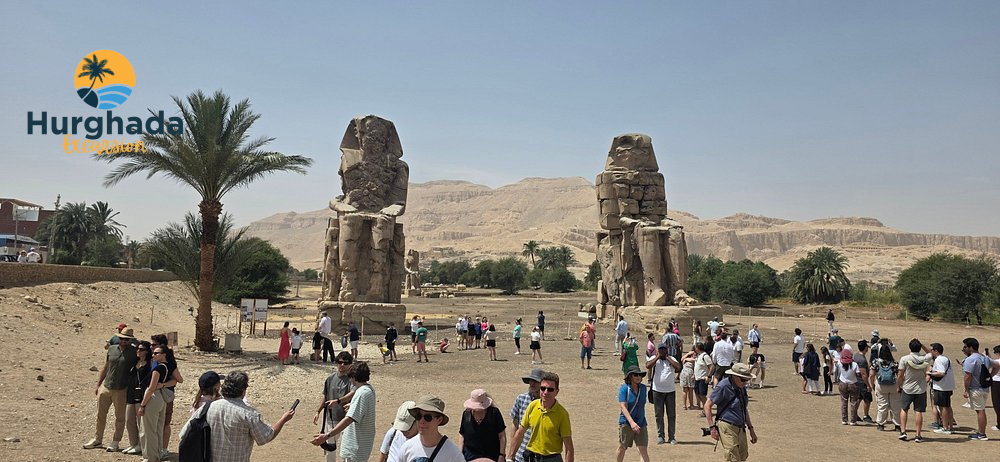
6. Colossi of Memnon — Guardian Giants
Two 18-metre quartzite seated statues of Amenhotep III standing alone on the West Bank plain — among the oldest surviving free-standing monumental sculptures in the world. The guide explains why the ancient Greeks called them Memnon, and the curious phenomenon of the ancient “singing” statues that attracted tourists even in Roman times.
💔
7. Valley of the Queens — Nefertari’s Tomb
The Valley of the Queens contains 91 tombs including that of Nefertari — beloved wife of Ramesses II — whose tomb is widely considered the most beautifully decorated in the entire Theban Necropolis. A separate premium ticket is required, but the quality of the painting inside is extraordinary. The guide can confirm availability on your visit day.
🏚️
8. The Ramesseum — Fallen Giant of Ramesses II
The mortuary temple of Ramesses II — now partially ruined but containing one of the most dramatic sights on the West Bank: the enormous toppled granite colossus of Ramesses II, its 57-tonne torso lying face-up on the ground, which inspired Percy Bysshe Shelley’s famous poem “Ozymandias.” The surviving sections contain fine painted reliefs.
🎓
9. Private Egyptologist Guide — Your Personal Expert
A government-licensed Egyptologist whose undivided attention is entirely on your group — decoding hieroglyphic texts, identifying gods and pharaohs, answering every question with specialist authority, and adjusting the day’s pace to your group’s interests and energy. The difference between the West Bank with and without a private Egyptologist is immeasurable.
⛵
10. Nile Boat Crossing — The Ancient Journey
The traditional motorboat crossing of the Nile from the East Bank to the West Bank — experiencing the ancient transition from the land of the living to the land of the dead — is one of the most atmospheric travel moments in Egypt. The early morning Nile, with the West Bank cliffs rising from the mist ahead, is the perfect beginning to a day in the Theban Necropolis.
Full Day Program — Hour by Hour from Pickup to Return
Here is the complete, step-by-step West Bank Luxor private tour itinerary — every stop detailed from hotel pickup to final hotel drop-off:
04:00 – 07:30 · Pre-Dawn Departure & Road Transfer
🚐 Private Vehicle Transfer from Hurghada to Luxor
Pickup from your Hurghada hotel at approximately 04:00–05:00 AM. The 260 km road journey takes approximately 3 hours, arriving in Luxor at 07:00–07:30 AM. The guide uses the journey to introduce the West Bank — the history of the Theban Necropolis, the key pharaohs buried there, what to expect at each site, and how to read the hieroglyphic funerary texts you will encounter inside the tombs. A brief refreshment stop at the midpoint.
What to bring: Closed shoes with good grip (tomb floors are slightly sloped and uneven), hat, sunscreen SPF 50, credit/debit card (all West Bank entry fees are card-only as of 2026 — no cash), camera, water bottle, and light modest clothing. The guide carries a portable torch for the darker tomb sections.
07:30 – 08:00 · Arrival & Nile Crossing
⛵ Crossing the Nile to the Land of the Dead
Arrival at the Luxor East Bank embankment and a brief motorboat crossing to the West Bank — 5–10 minutes across the early morning Nile. A West Bank vehicle meets the group on the opposite bank and transfers everyone to the first stop.
08:00 – 08:15 · First Stop
🗿 Colossi of Memnon — Photography & Guide Introduction
A brief (15 minutes) but photogenic stop at the Colossi of Memnon on the roadside — the two 18-metre granite seated statues of Amenhotep III that have guarded the entrance to the West Bank for 3,400 years. The guide delivers the introduction to the West Bank landscape from here, with the limestone cliffs of the necropolis visible in the background. Excellent photography in the morning light.
08:15 – 09:30 · Second Stop
🏛️ Temple of Hatshepsut — Deir el-Bahari
The most architecturally beautiful site on the West Bank — the three-tiered mortuary temple of Hatshepsut, cut into and built against the limestone cliff at Deir el-Bahari. Arriving early (before 09:30 AM) means the group visits before the main tour buses arrive and the space is accessible. The guide delivers the complete story of Hatshepsut — her 20-year reign as pharaoh, the Punt expedition reliefs, and how her stepson Thutmose III systematically tried to erase her from history after her death. Entry: ~440 EGP (~€8) — included in tour price.
09:30 – 12:00 · THE MAIN EVENT
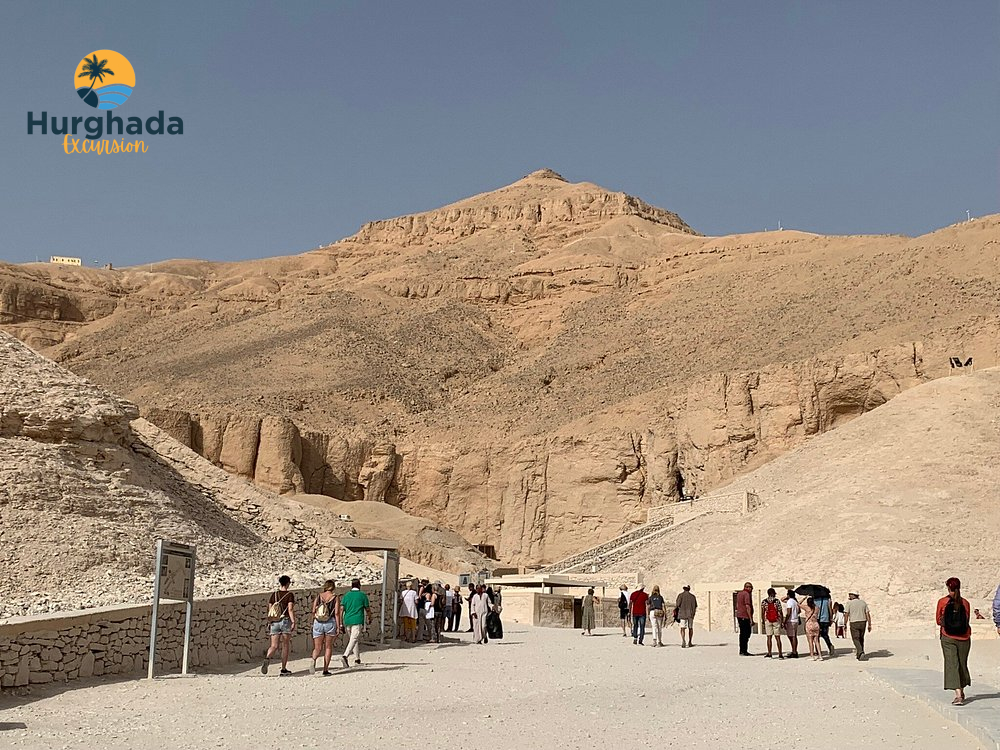
🏺 Valley of the Kings — 3 Royal Tombs + Optional Premium Tombs
The centrepiece of the West Bank tour — 2.5 hours in the Valley of the Kings with your private guide. Standard entry (~750 EGP/~€14 — included) permits 3 tomb visits from the open list. The guide selects the best combination of open tombs based on your interests and the day’s conditions, and recommends which premium add-on tombs (Tutankhamun ~700 EGP, Seti I ~2,000 EGP, Ramesses V & VI ~220 EGP) offer the best value.
The private tour advantage: the guide can spend as long as needed inside each tomb — explaining every painted wall section, reading the hieroglyphic texts, and answering questions without the time pressure of a group tour. Guests consistently spend 30–45 minutes inside each tomb rather than the 10–15 minutes typical of a group visit.
12:00 – 13:00 · Lunch
🍽️ Lunch at a West Bank or Luxor Restaurant
A full lunch break — either at a West Bank restaurant with views of the agricultural fields and distant cliffs, or with a Nile crossing to the East Bank and lunch at a city restaurant, depending on the afternoon itinerary. Egyptian cuisine with unlimited soft drinks. The guide accompanies the group throughout.
13:00 – 15:00 · Afternoon West Bank Sites
🏯 Medinet Habu · Deir el-Medina · Tombs of the Nobles
The afternoon covers the remaining West Bank highlights — the specific combination depending on your group’s interests as confirmed with the guide:
1 Medinet Habu (Ramesses III temple) — for the finest preserved military reliefs and vivid painted decoration (~450 EGP/~€8)
2 Deir el-Medina (Artisans’ Village + tombs) — for the human story of the tomb builders (~500 EGP/~€9)
3 Tombs of the Nobles (selected from the Sheikh Abd al-Qurna or Khokha groups) — for vivid everyday life paintings unlike any royal tomb (~200–300 EGP/~€4–6)
15:00 – 18:00 · Return to Hurghada
🛣️ Return Drive — Arrive Hurghada ~18:00 PM
The return drive departs Luxor in the mid-afternoon — arriving back in Hurghada at approximately 18:00 PM with a full evening ahead. Most guests sleep during the return journey. The guide is available throughout for questions and conversation — many of the best discussions about what you saw happen on the journey home.
Complete Site Guide — Every West Bank Monument
What to see in Luxor West Bank — here is the complete guide to every monument on the Theban Necropolis:
⭐ Most Important · Included
Valley of the Kings
63 royal tombs of New Kingdom pharaohs. Standard entry ~750 EGP includes 3 tomb visits. Premium add-ons: Tutankhamun (KV62, ~700 EGP), Seti I (KV17, ~2,000 EGP), Ramesses V & VI (KV9, ~220 EGP). Electric tram ~20 EGP. Hours: 06:00–17:00 daily.
⭐⭐ Most Beautiful · Included
Temple of Hatshepsut (Deir el-Bahari)
Three-tiered mortuary temple of Egypt’s most powerful female pharaoh. ~440 EGP (~€8). One of the finest architectural achievements in Egypt — particularly spectacular in morning light. The Punt expedition reliefs and the divine birth cycle are extraordinary.
Best Preserved · Included
Medinet Habu — Temple of Ramesses III
The most complete mortuary temple in Luxor — still standing to full height with vivid painted reliefs. ~450 EGP (~€8). Extraordinary military battle scenes (the Sea Peoples wars), the royal palace, and the beautiful painted ceilings of the inner sanctuary make this a highlight many guests describe as the best surprise of the day.
Most Unique · Included
Deir el-Medina — Artisans’ Village & Tombs
The excavated remains of the village where the royal tomb builders lived, plus their exquisitely decorated tombs. ~500 EGP (~€9). The tombs here have the finest painting quality of any non-royal tomb in Luxor — the artists who painted the royal tombs saved their finest work for their own. The most humanly engaging site on the West Bank.
Hidden Gem · Included
Tombs of the Nobles
400+ private tombs scattered across the hillsides — most visitors skip them, making them one of the least crowded and most rewarding sites on the West Bank. ~200–300 EGP per group. The paintings here show fishing, farming, feasting, hunting, music, and family scenes — the most vivid record of everyday New Kingdom Egyptian life available anywhere.
Premium Add-On · Nefertari’s Tomb
Valley of the Queens — Tomb of Nefertari (QV66)
The most elaborately painted tomb in the entire Theban Necropolis — the burial chamber of Nefertari, beloved wife of Ramesses II. The painting quality surpasses even the finest royal tombs in the Valley of the Kings. Entry: ~2,500 EGP (~€46). Visitor numbers strictly limited — advance booking essential. Confirm availability with the guide.
Atmospheric Ruin · Included
The Ramesseum — Mortuary Temple of Ramesses II
The mortuary temple of Egypt’s most famous pharaoh — now partially ruined but containing the famous fallen granite colossus of Ramesses II (57 tonnes, the inspiration for “Ozymandias”). The surviving sections contain fine reliefs of the Battle of Kadesh. ~150 EGP (~€3). Less visited than the main sites — ideal for guests who appreciate atmospheric ruins.
Free Entry · Photo Stop
Colossi of Memnon
Free entry. Two 18-metre granite statues of Amenhotep III — visible from the road and from the balloon. The guide explains the Greek legend of Memnon and the ancient phenomenon of the statues “singing” at sunrise (a structural crack that vibrated in the morning air, later repaired by a Roman emperor). A brief but photogenic stop.
The Pharaohs — Who Was Buried Here & Their Stories
Who is buried in Luxor? The greatest rulers of Egypt’s New Kingdom — a 500-year period of unprecedented power, artistic achievement, and military expansion. Here are the most significant pharaohs buried on the West Bank:
👑
Tutankhamun (KV62)
The boy king who died aged ~19, ruling only 10 years. His significance in history is entirely due to the extraordinary preservation of his intact tomb — over 5,000 objects including the famous gold death mask, now in the Grand Egyptian Museum. His mummy remains in the tomb.
⚔️
Thutmose III (KV34)
Egypt’s greatest military commander — campaigned from Sudan to Syria and won 17 campaigns in 20 years. Often called the “Napoleon of Egypt.” His tomb has a distinctive oval burial chamber with painted stick figures on a cream background — one of the most unusual in the valley.
🎨
Seti I (KV17)
Father of Ramesses II and patron of the finest artists in Egyptian history. His tomb (137m long) contains the most accomplished painting and sunk-relief carving anywhere in Egypt. The astronomical ceiling of the burial chamber is considered the finest ancient ceiling painting in the world. Premium ticket required.
🦅
Ramesses II (KV7)
Egypt’s most prolific builder and longest-reigning pharaoh (66 years). His tomb was the largest in the valley but was severely damaged by flooding. The Ramesseum (his mortuary temple) and his commemorative temples throughout Egypt are a better record of his extraordinary reign.
🌟
Ramesses III (KV11)
The last great warrior pharaoh — who defeated the Sea Peoples and the Libyans in massive battles, recorded in vivid detail at Medinet Habu. His tomb (KV11) is one of the longest and most accessible in the valley, with extraordinary side chambers showing painted scenes of musical instruments and daily life.
⭐
Amenhotep III (WV22)
The pharaoh who built the Colossi of Memnon and the massive mortuary temple they originally fronted. His reign (c. 1390–1352 BCE) was the cultural apex of the New Kingdom — a period of extraordinary artistic achievement, wealth, and diplomatic sophistication. His tomb is in the Western Valley, less visited but accessible.
Hatshepsut — The Fat Female Pharaoh Mystery Solved
Who was the fat female pharaoh? This question, which appears frequently in searches about Luxor, refers to Queen Hatshepsut — and specifically to the popular myth that she was obese, based on a misidentification of a fragment of a canopic jar lid found in 2007. The full story, explained by your guide at Hatshepsut’s temple, is considerably more fascinating than the myth:
👸 Hatshepsut — The Real Story
Hatshepsut (r. c. 1479–1458 BCE) was the fifth pharaoh of the Eighteenth Dynasty and one of ancient Egypt’s most successful rulers. She came to power as regent for her young stepson Thutmose III and gradually assumed the full pharaonic titles — wearing the double crown and even the traditional false beard of kingship. She ruled as a male pharaoh in all official representations for approximately 20 years.
In 2007, archaeologist Zahi Hawass identified a tooth found in a canopic jar in the tomb of Hatshepsut’s nurse as belonging to Hatshepsut herself. DNA testing and the tooth’s characteristics suggested she may have been overweight and diabetic at the time of her death. This gave rise to the “fat female pharaoh” popular narrative. However, the identification remains disputed, and her temple at Deir el-Bahari — with its elegant painted reliefs of a slender, graceful female figure — represents how she chose to be remembered.
What is not disputed is that Hatshepsut was one of the greatest rulers in Egyptian history — her building programme (Karnak’s Red Chapel, the two obelisks, Deir el-Bahari) was unequalled in scale for her era, her Punt expedition brought back living trees and exotic goods from East Africa, and her reign was a period of extraordinary prosperity and peace. Your guide at her temple tells this complete and remarkable story.
Are There Pyramids in Luxor? The Al-Qurn Natural Pyramid
Are there pyramids in Luxor? There are no built pyramids in Luxor — the New Kingdom pharaohs deliberately abandoned pyramid construction (the last royal pyramid was built c. 1570 BCE). However, there is something arguably more extraordinary: a natural mountain.
⛰️ Al-Qurn — The Natural Pyramid of Luxor: The limestone mountain that towers above the Valley of the Kings — known as Al-Qurn (The Horn) — has the perfect pyramidal shape of an Egyptian pyramid and dominates the entire West Bank skyline. Many Egyptologists believe this natural pyramid was one of the primary reasons the New Kingdom pharaohs chose this valley for their secret tombs: they wanted the protective power of a pyramid form above their burials without the visibility that had made the Old Kingdom pyramids such effective targets for tomb robbers. From the hot air balloon or from the top of the Hatshepsut Temple terraces, the perfect pyramid profile of Al-Qurn over the Valley of the Kings is one of the most extraordinary natural-architectural coincidences in the history of human settlement.
West Bank Tombs & Temples Ticket Prices 2026
| Site |
Ticket (EGP) |
Approx. EUR |
Status |
| Valley of the Kings (3 tombs) |
750 EGP |
~€14 |
Included in tour price |
| Tutankhamun (KV62) |
700 EGP |
~€13 |
Premium add-on (paid on site) |
| Seti I (KV17) |
2,000 EGP |
~€38 |
Premium add-on · Most beautiful tomb |
| Ramesses V & VI (KV9) |
220 EGP |
~€4 |
Best value premium add-on |
| Temple of Hatshepsut |
440 EGP |
~€8 |
Included in tour price |
| Medinet Habu |
450 EGP |
~€8 |
Included in tour price |
| Deir el-Medina |
500 EGP |
~€9 |
Included in tour price |
| Nefertari’s Tomb (QV66) |
~2,500 EGP |
~€46 |
Premium add-on · Most beautiful tomb in Egypt |
| Luxor Pass (Premium) |
~$200 USD |
~€185 |
Includes all sites + Seti I + Nefertari · Worth it for 3+ day visitors |
West Bank Private Tour Price from Hurghada 2026
West Bank Tombs & Mortuary Temples Private Tour — From
€75
per adult · Full day · Private Egyptologist guide · 6+ West Bank sites
✓ Private Vehicle · ✓ Egyptologist Guide · ✓ All Standard Entry Fees · ✓ Lunch · ✓ Nile Crossing
Children 4–11: 50% discount · Premium tomb tickets extra (paid on site by card) · Combined East+West Bank: from €90
✅ Included in the Tour Price
✓ Private air-conditioned vehicle: Hurghada – Luxor – Hurghada (260 km each way)
✓ Licensed Egyptologist guide for the full day
✓ Valley of the Kings standard entry (3 tombs, ~750 EGP) + electric tram
✓ Temple of Hatshepsut entry (~440 EGP)
✓ Medinet Habu and/or Deir el-Medina entry (guide selects based on your interests)
✓ Nile crossing (motorboat) East Bank ↔ West Bank
✓ Full lunch at a Luxor restaurant · Bottled water · Free cancellation 48 hours before
Theban Necropolis Map — West Bank vs East Bank Luxor
Understanding the geographic layout of Luxor is essential for planning your visit. Here is a complete tourist map of Luxor Egypt in text form:
| East Bank Luxor (Land of the Living) |
West Bank Luxor (Land of the Dead) |
| Karnak Temple Complex |
Valley of the Kings (63 royal tombs) |
| Luxor Temple (Nile-front) |
Valley of the Queens (91 tombs, incl. Nefertari) |
| Luxor Museum |
Temple of Hatshepsut (Deir el-Bahari) |
| Luxor Corniche (Nile promenade) |
Medinet Habu (Ramesses III temple) |
| Avenue of Sphinxes (to Karnak) |
Ramesseum (Ramesses II mortuary temple) |
| Hotels, restaurants, markets |
Tombs of the Nobles (400+ private tombs) |
| Train station, airport (15km) |
Deir el-Medina + Colossi of Memnon |
Best Time to Visit the Luxor West Bank
| Season |
Temp (Daytime) |
Tomb Conditions |
Crowds |
Verdict |
| Oct – Nov |
28–36°C |
Cool inside · Warm outside |
Moderate |
Excellent |
| Dec – Feb |
18–26°C |
Ideal |
High (peak season) |
Best — early arrival essential |
| Mar – May |
26–38°C |
Good · Morning essential |
Moderate |
Very Good |
| Jun – Sep |
42–50°C |
Extremely hot outside · cool in tombs |
Very low |
Demanding — very early start essential |
10 Expert Tips for Your West Bank Private Guided Tour
Tip 1 — Arrive at the Valley of the Kings before 09:00 AM. The valley is busiest between 10:00 AM and 13:00 PM. Arriving before 09:00 AM with a private guide gives you the most significant tombs to yourself for the first hour. The difference between standing alone in a 3,300-year-old royal tomb and standing in it with 30 strangers is not trivial — it is the difference between an experience and a queue.
Tip 2 — Ask the guide to explain the difference between the royal tombs and the artisan tombs at Deir el-Medina. The royal tombs of the Valley of the Kings are dominated by religious texts and cosmic imagery. The artisan tombs of Deir el-Medina are decorated with everyday scenes — the same artists who painted the pharaohs’ journeys to the afterlife depicted their own families fishing, feasting, and playing music. The human contrast between the two is one of the most powerful insights available anywhere in Egypt.
Tip 3 — Allocate at least 45 minutes for Medinet Habu — most tours rush it. Medinet Habu (Ramesses III’s mortuary temple) is significantly less crowded than the Valley of the Kings and equally impressive. The coloured relief carvings are exceptionally well-preserved, the gate towers contain intimate painted chambers showing the pharaoh’s private life, and the scale of the complex is overwhelming when experienced without rushing. Many guests who were reluctant to visit it describe it as the highlight of the day.
Tip 4 — Bring a credit or debit card — most West Bank sites are now card-only. As of 2026, the majority of West Bank entrance ticket offices accept only card payments. The standard entry fees for the included sites are covered in the tour price. Premium tomb tickets (Tutankhamun, Seti I, Nefertari) must be paid by your card on-site. Notify your bank before travel and bring a backup card if possible.
Tip 5 — Visit the Tombs of the Nobles — virtually no other tour operator includes them. The private tombs on the hillsides above Sheikh Abd al-Qurna are visited by approximately 5% of West Bank tourists — yet they contain the most vivid and accessible paintings in all of Luxor. Scenes of banquets, hunting in the marshes, grape harvests, and musicians playing instruments are painted with extraordinary technical quality and human warmth. Your private guide can include these without time pressure.
Tip 6 — The fallen colossus of the Ramesseum is worth 20 minutes. The 57-tonne granite torso of Ramesses II lying face-up on the Ramesseum floor is one of the most dramatically melancholy sights in Egypt — and the source of Percy Bysshe Shelley’s most famous poem (“My name is Ozymandias, king of kings…”). The guide recites the poem standing in front of the fallen statue. Most guests find this unexpectedly moving.
Tip 7 — Add Nefertari’s Tomb if your budget allows (~€46 extra). The most beautifully painted tomb in Egypt — Nefertari’s burial chamber in the Valley of the Queens — is on a completely different artistic level from any other tomb in Luxor. The blue, white, and gold figures of the gods and the queen are painted with a delicacy and quality that 3,300 years have barely touched. Visitor numbers are strictly limited. If your guide can confirm availability, add it.
Tip 8 — Watch for the natural pyramid of Al-Qurn above the Valley of the Kings. The perfect pyramidal mountain that towers above the valley is not accidental — the guide explains why the ancient Egyptians are believed to have chosen this valley specifically because its natural pyramid provided the same protective power as the built pyramids without their visibility. Seeing it from the valley floor (or from the Hatshepsut temple terrace) is a moment of genuine architectural and geological revelation.
Tip 9 — This tour combines beautifully with the Luxor Temple sunset tour on a different day. The West Bank private tour covers the ancient funerary landscape — the tombs, the mortuary temples, the necropolis. The Luxor Temple sunset tour covers the living cult temples of the East Bank at their most atmospheric. Together, they provide the complete picture of how ancient Thebes functioned as both a city of the living and a kingdom of the dead. Book both during your Hurghada stay.
Tip 10 — Tell the guide which pharaoh’s story interests you most before departing Hurghada. The guide has 3 hours of road time to tailor the day’s narrative to your specific interests. If Hatshepsut’s story captivates you, the guide can deliver an extended Deir el-Bahari visit with more time on the Punt reliefs and divine birth cycle. If Tutankhamun’s discovery is what brought you to Egypt, the guide can structure the valley visit around Howard Carter’s excavation story. The private tour’s defining advantage is this personalisation — use it.
Real Reviews from Travellers
★★★★★
“A brilliant day. Our guide was outstanding — knowledgeable, passionate, and brilliant at making the history feel alive and relevant. Medinet Habu was the surprise of the day for me — I had not expected it to be so spectacular. The Valley of the Kings in the early morning before the crowds arrived was genuinely extraordinary. One of the best days of my life.”
David W. — London · March 2026
★★★★★
“Visiting the Tombs of the Nobles was the hidden highlight — our guide insisted we include them and I’m so glad he did. The paintings of everyday Egyptian life were extraordinarily vivid and human in a way the royal tombs simply are not. Hatshepsut’s temple at dawn, alone with the guide before any other tourists arrived, was breath-taking. Perfect private tour.”
Caroline & James K. — Edinburgh · January 2026
★★★★★
“We took our children (12 and 15) and our guide pitched the entire day perfectly — the Tutankhamun story for our younger one, the Hatshepsut mystery for our older one, Deir el-Medina for me (the most human site I’ve ever visited), and Medinet Habu for my husband the architect. The guide read the hieroglyphics from the walls of the tomb as we stood inside them. It will never leave us.”
Sarah T. — Manchester · February 2026
Frequently Asked Questions
Who is buried in Luxor West Bank?
Who is buried in Luxor? The West Bank of Luxor (Theban Necropolis) contains the tombs of most of the great New Kingdom pharaohs — including Tutankhamun, Ramesses II, Seti I, Thutmose III, Hatshepsut, Amenhotep III, and Ramesses III in the Valley of the Kings; Nefertari and other queens in the Valley of the Queens; and hundreds of high officials, nobles, priests, and the artisans who built the royal tombs in the hillside cemeteries. The complete Theban Necropolis contains over 550 tombs spanning 1,000+ years of burials.
What to see in Luxor West Bank?
What to see in Luxor West Bank — the must-visit sites in priority order: (1) Valley of the Kings (63 royal tombs — standard entry includes 3); (2) Temple of Hatshepsut at Deir el-Bahari; (3) Medinet Habu (Ramesses III mortuary temple); (4) Deir el-Medina (artisans’ village and tombs); (5) Tombs of the Nobles; (6) Colossi of Memnon (free entry, quick photo stop); (7) The Ramesseum. Optional premium: Nefertari’s Tomb in the Valley of the Queens, and Seti I or Tutankhamun in the Valley of the Kings.
Who was the fat female pharaoh?
Who was the fat female pharaoh? This refers to Hatshepsut (r. c. 1479–1458 BCE) — Egypt’s most powerful female ruler. In 2007, a tooth identified (controversially) as hers suggested she may have been overweight and diabetic. However, the identification remains disputed, and her official temple reliefs depict a slender, elegant figure. Regardless of her physical appearance, Hatshepsut was one of the greatest rulers in Egyptian history — her building programme, her Punt expedition, and her 20-year reign as pharaoh make her one of the most fascinating figures of the ancient world. Her mortuary temple at Deir el-Bahari on the Luxor West Bank is her defining monument.
Are there pyramids in Luxor?
Are there pyramids in Luxor? There are no built pyramids in Luxor — the New Kingdom pharaohs who are buried here deliberately abandoned pyramid construction and chose secret rock-cut tombs instead. However, the natural mountain above the Valley of the Kings — Al-Qurn (The Horn) — has a perfect pyramidal profile that dominates the West Bank skyline. Many Egyptologists believe the pharaohs chose this valley specifically because this natural pyramid provided the same protective symbolism as the built pyramids without the visibility that had made Old Kingdom pyramids such effective targets for tomb robbers. This extraordinary natural-architectural relationship is one of the most fascinating facts about the Theban Necropolis.
What is the West Bank Luxor private tour price from Hurghada?
The West Bank tombs and mortuary temples Luxor private guided tour price from Hurghada starts from €75 per adult. This includes private air-conditioned vehicle transfer (260 km each way), licensed Egyptologist guide for the full day, Valley of the Kings standard entry (3 tombs), Temple of Hatshepsut entry, afternoon West Bank site entries, Nile crossing, lunch, and bottled water. Premium tomb tickets (Tutankhamun, Seti I, Nefertari) are additional and paid on-site by card. Children 4–11 receive a 50% discount.
Book Your West Bank Luxor Private Guided Tour Today
From €75 per person · Private vehicle from Hurghada · Egyptologist guide all day · Valley of the Kings · Hatshepsut Temple · Medinet Habu · Deir el-Medina · All entry tickets · Lunch · Free cancellation 48 hours before.
🏺 Book Now — From €75
The West Bank tombs and mortuary temples of Luxor constitute the most extraordinary funerary landscape in human history — a 10 km strip of Nile floodplain and limestone desert where the most powerful rulers of the ancient world buried themselves, their queens, their officials, and the workers who served them all, for over 1,000 years. The Valley of the Kings is its most famous address, but the temple of Hatshepsut, the artisan village of Deir el-Medina, the military reliefs of Medinet Habu, and the vivid everyday life paintings of the Nobles’ tombs are equally extraordinary — and together they tell the complete story of New Kingdom Egyptian civilisation in a way that no museum or book can replicate.
Book your West Bank private guided tour today with Hurghada Excursion — a licensed Egyptologist, a private vehicle, full flexibility, and the most complete day in ancient Luxor available from the Red Sea coast.