🏺 Step Pyramid · UNESCO Heritage · Imhotep · Archaeologist Guide · From Hurghada · Daily
Saqqara Step Pyramid – UNESCO World Heritage Tour with Archaeologist
📅 Updated: May 2026 | ⏱️ Full Day from Hurghada (Flight + Road) | 💶 From €100 / person | ⭐ 4.9/5 Rated | 🏺 Daily Departures
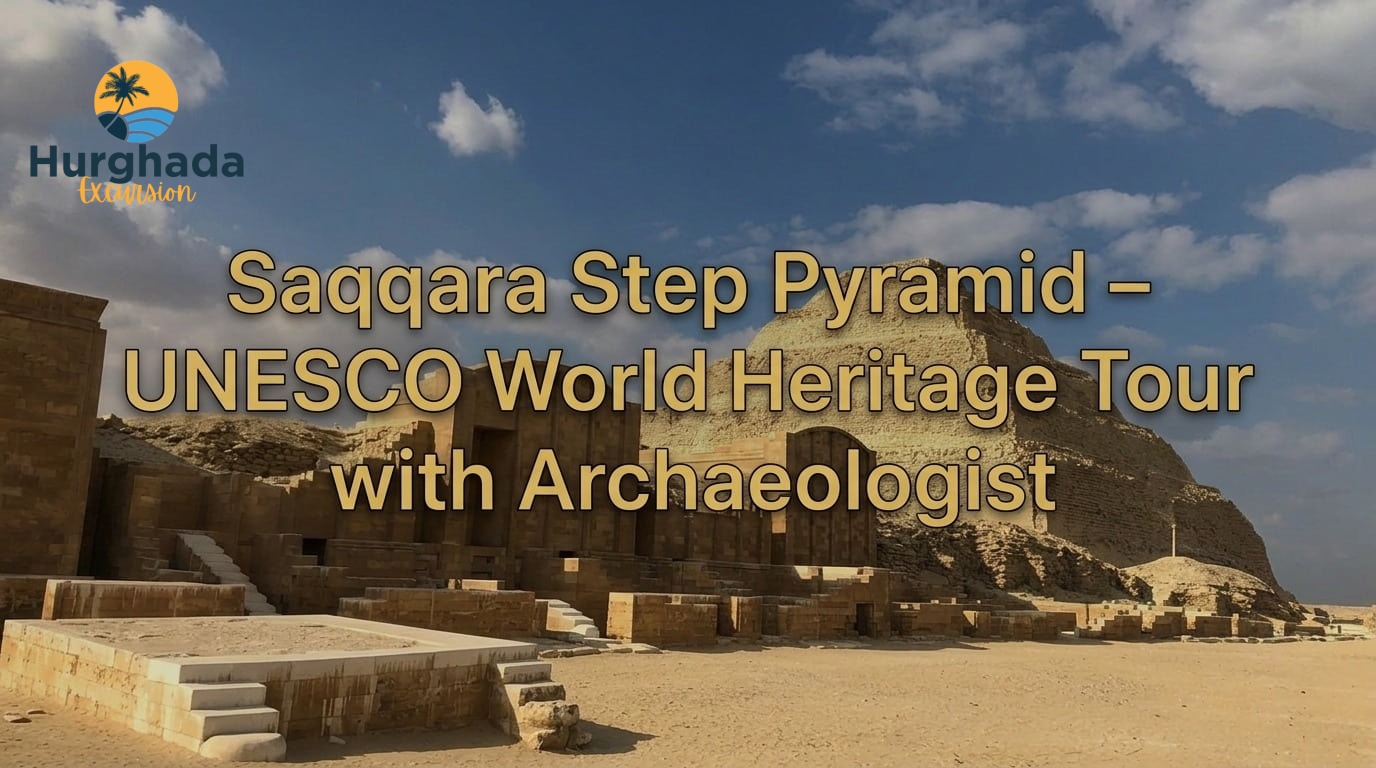
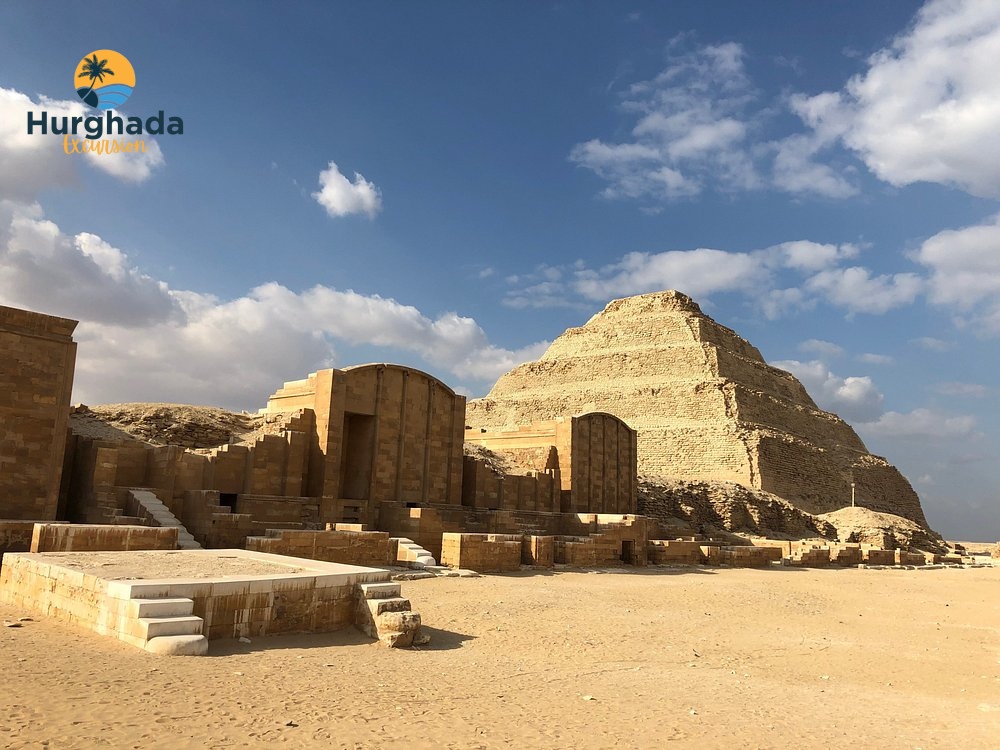
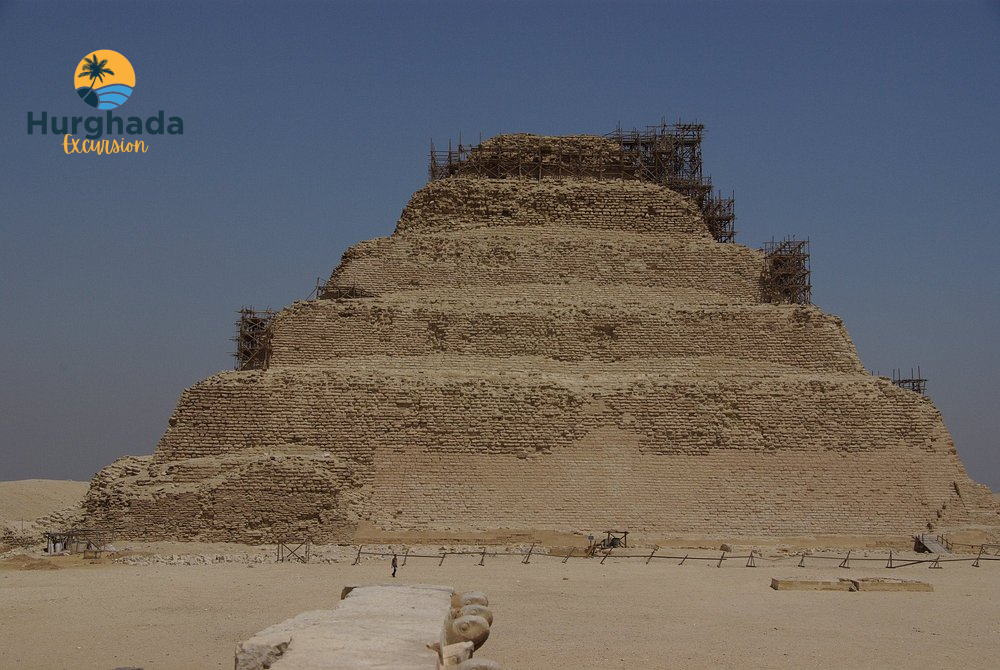
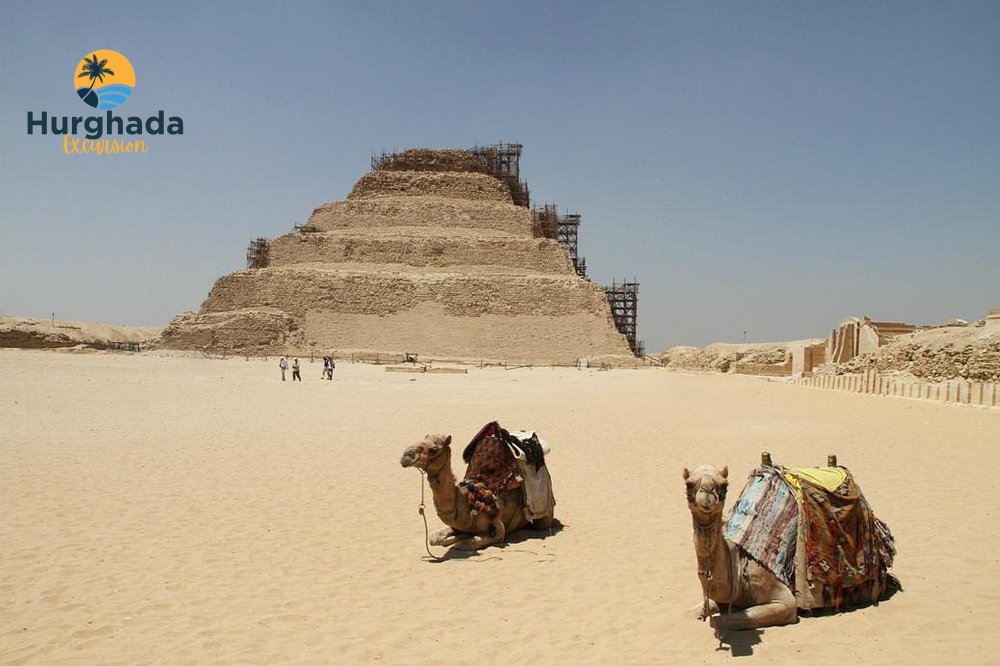
Before the Great Pyramid of Giza. Before Stonehenge. Before the Bronze Age had properly begun — there was a man named Imhotep. An architect, physician, priest, and polymath who served the pharaoh Djoser of the Third Dynasty around 2650 BCE, and who conceived and built the world’s first large-scale stone structure: a six-tiered pyramid rising 62 metres above the desert at Saqqara, 27 km south of Cairo. The Step Pyramid of Djoser at Saqqara is the oldest stone monument on earth — the first time that human beings attempted to build in cut stone on a monumental scale — and it is the architectural ancestor of every pyramid, obelisk, and stone temple that followed it in Egypt for the next 3,000 years. Standing before it is not merely standing before an ancient monument. It is standing at the beginning of stone architecture.
The Saqqara Step Pyramid UNESCO World Heritage tour with archaeologist from Hurghada provides the most complete and most expert-guided experience of the Saqqara necropolis available — combining the Step Pyramid complex of Djoser (including the recently reopened interior), the extraordinary painted mastaba tombs of the Old Kingdom nobles, the Pyramid of Teti (with its inscribed Pyramid Texts — the oldest religious texts in the world), the Serapeum (the extraordinary underground galleries of sacred Apis bull burials), and the Imhotep Museum — all guided by a specialist Egyptologist who brings the extraordinary story of Egypt’s first architect and Egypt’s first stone monument to vivid life.
🏺 What is special about Saqqara? The Saqqara necropolis is special for four reasons that distinguish it from every other ancient site in Egypt: (1) It contains the oldest stone monument in the world — the Step Pyramid of Djoser, built c. 2650 BCE, 4,676 years old; (2) It houses the oldest religious texts ever discovered — the Pyramid Texts inscribed inside the Pyramid of Teti (c. 2345 BCE), the prototype of all subsequent Egyptian religious literature; (3) The underground Serapeum galleries, where colossal granite sarcophagi of the sacred Apis bulls are housed in one of the most dramatic underground spaces in Egypt; and (4) The Imhotep Museum — dedicated to the architect of the Step Pyramid, one of the first named individuals in human history, who was deified after his death and became the patron god of medicine and architecture.
What Is the Saqqara Step Pyramid? History, Age & Facts
The Step Pyramid of Saqqara — formally the Pyramid of Djoser — is a six-tiered stepped pyramid built at the Saqqara necropolis, approximately 27 km south of Cairo, during the Third Dynasty of the Old Kingdom, around 2650 BCE. It was designed by the architect Imhotep for the pharaoh Djoser and represents the world’s oldest stone monument on a monumental scale — the moment when human beings first cut stone into blocks and stacked them at height.
| Fact |
Detail |
| Pharaoh |
Djoser — Third Dynasty, Old Kingdom |
| Architect |
Imhotep — first named architect in history |
| Built |
c. 2650 BCE — 4,676 years ago |
| Saqqara step pyramid height |
62.5 metres — six tiers of decreasing size |
| Base dimensions |
121 m (north–south) × 109 m (east–west) |
| Material |
Tura limestone (small blocks) — first large-scale stone construction in history |
| Location |
Saqqara necropolis, 27 km south of Cairo · on the west bank of the Nile |
| UNESCO status |
Part of the Memphis and its Necropolis UNESCO World Heritage Site (inscribed 1979) |
| Interior access |
Re-opened in 2020 after 14-year restoration · accessible with premium ticket |
⚡ Why Saqqara Matters More Than the Great Pyramids
The Great Pyramids of Giza are more famous and more immediately overwhelming. But the Saqqara Step Pyramid is more historically significant — because it came first. The 900 years between Saqqara and the Great Pyramid (2650 BCE to 2560 BCE) represent the entire developmental arc from the first stone block to the most precisely engineered stone structure in history. Without Saqqara, there is no Giza. Without Imhotep, there is no Khufu. The Step Pyramid is not a primitive ancestor of the Great Pyramid — it is an extraordinary achievement in its own right, built by a man who had never seen a stone pyramid because no stone pyramid had ever existed. He invented the form from scratch.
Top 10 Highlights of the Saqqara UNESCO World Heritage Tour
🏺
1. First Sight of the Step Pyramid — The World’s Oldest
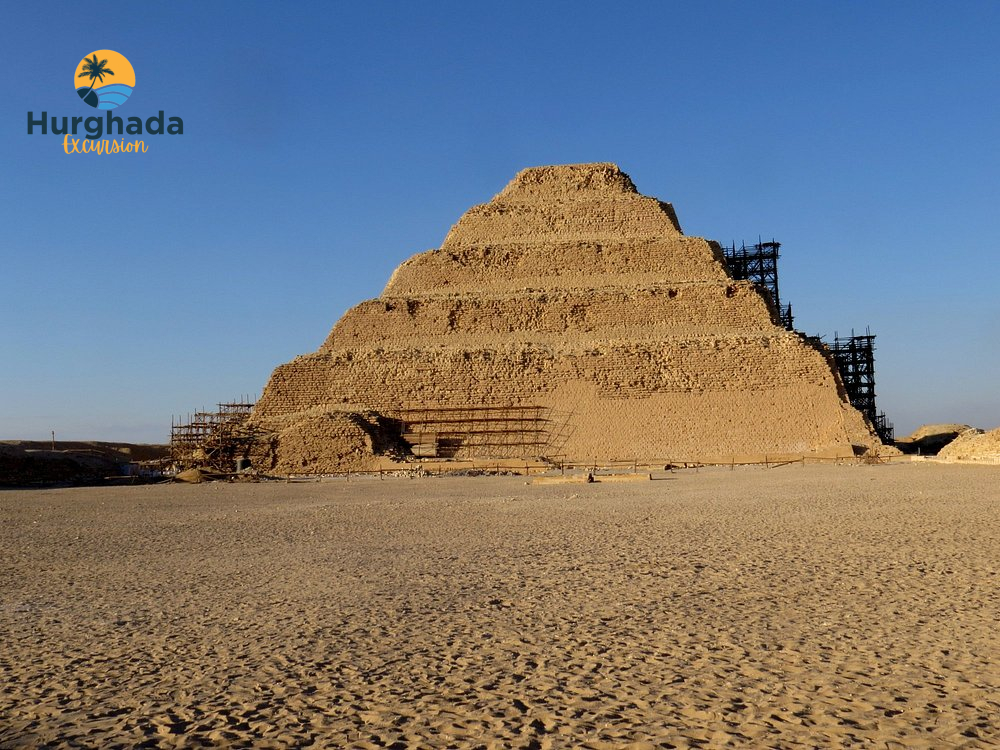
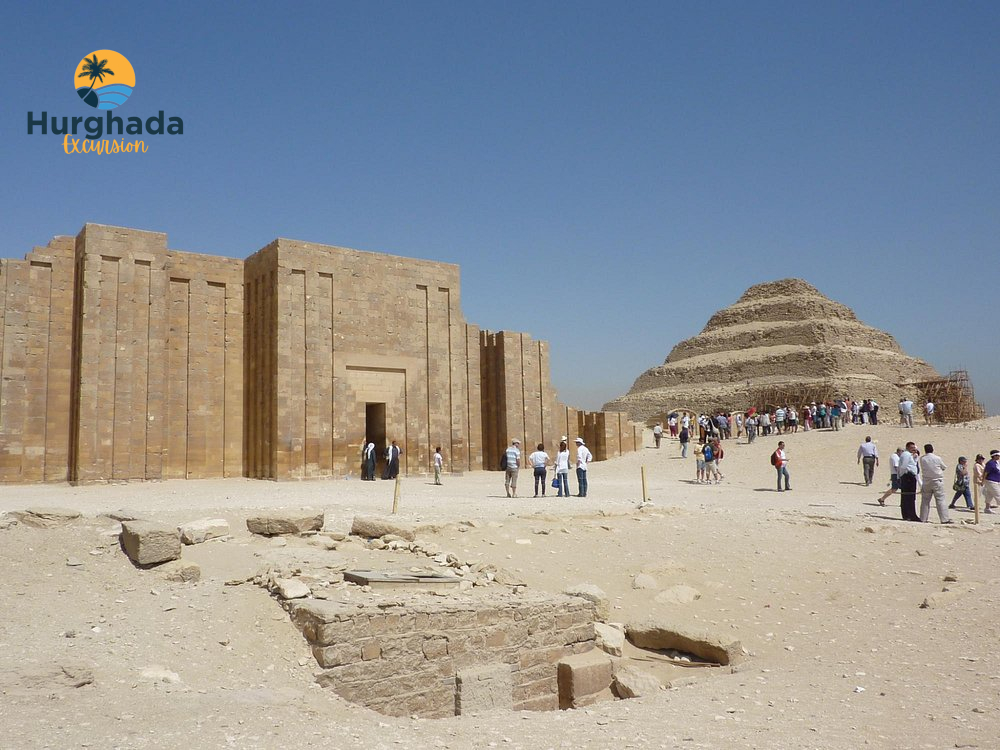
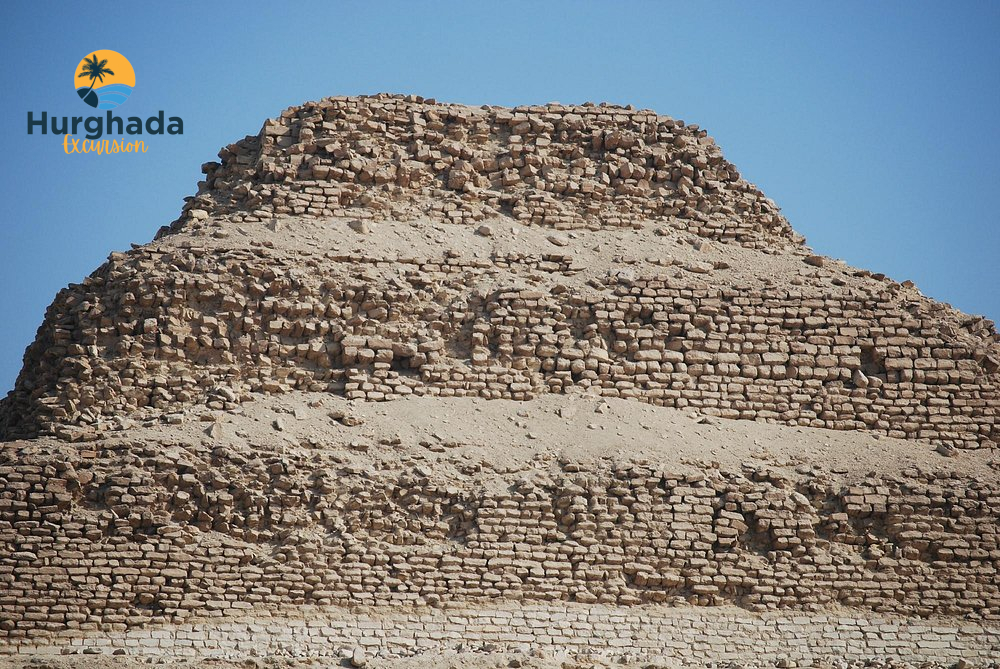
The Step Pyramid rises from the desert plateau in six distinctive tiers — the world’s oldest monumental stone structure, visible from kilometres away against the Saqqara sky. Unlike the smooth-sided Giza pyramids, the stepped profile is immediately and distinctively ancient — more raw, more experimental, and in many ways more astonishing precisely because it was the first.
🏛️
2. The Djoser Funerary Complex — Egypt’s First Stone City
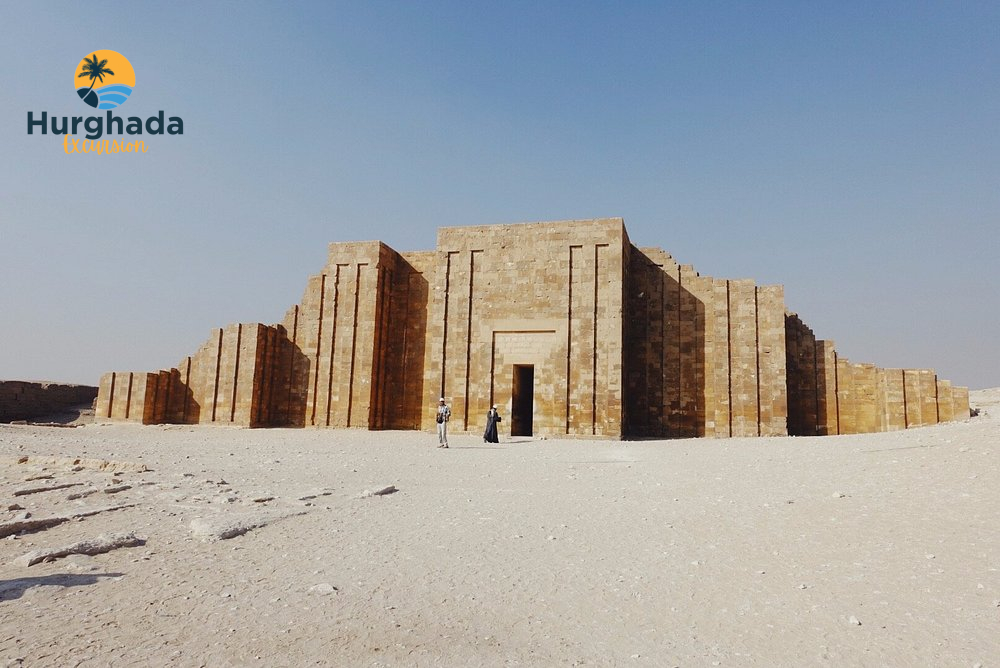
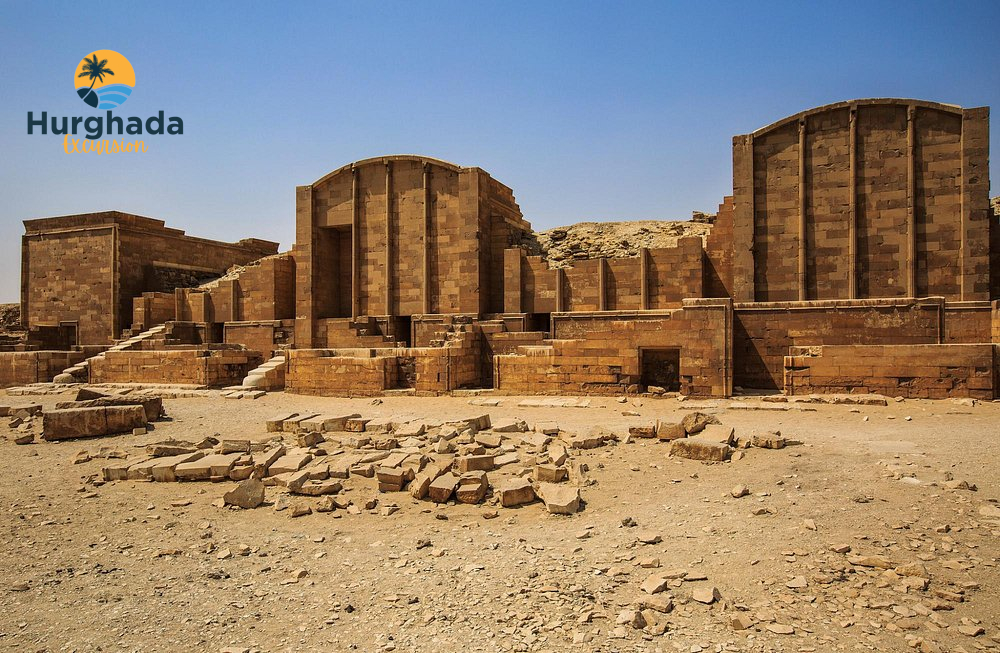
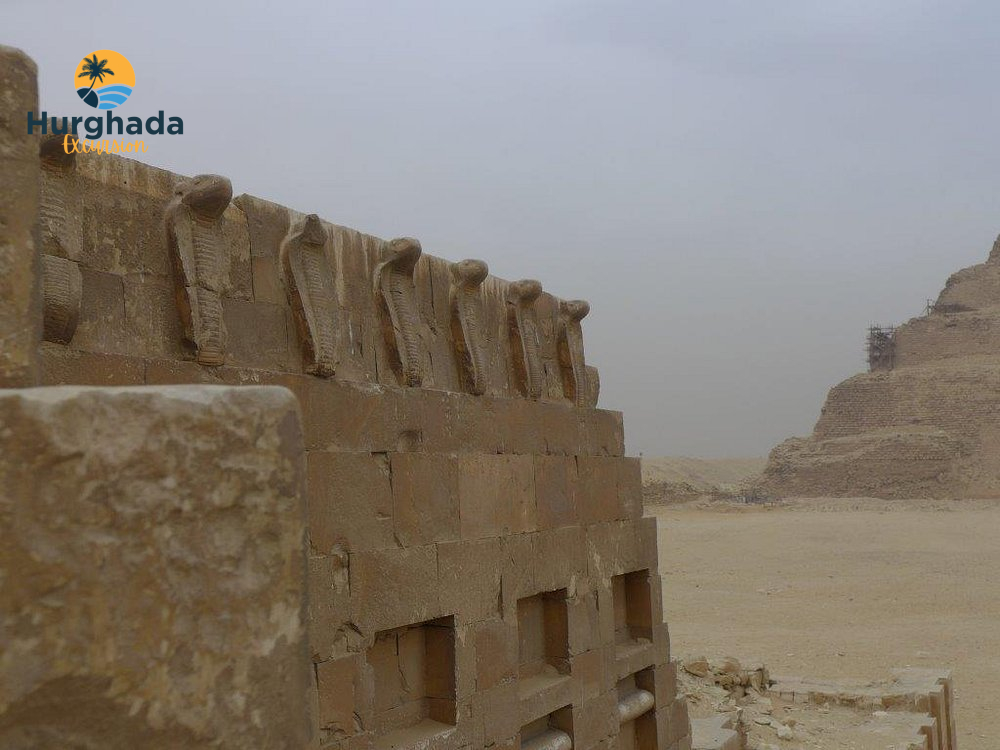
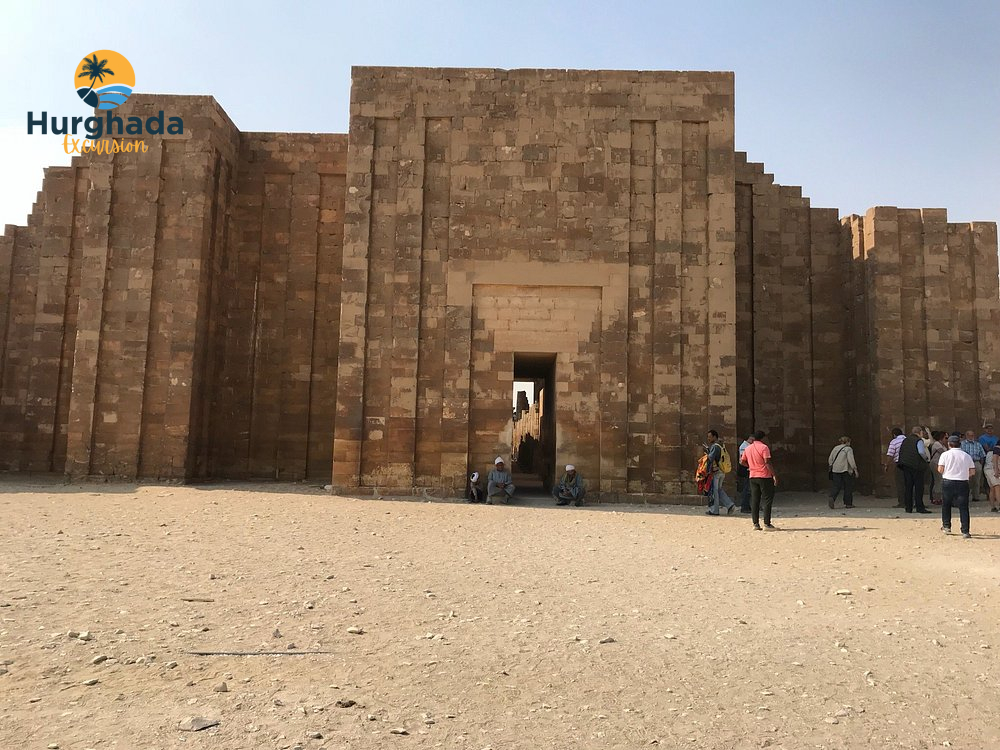
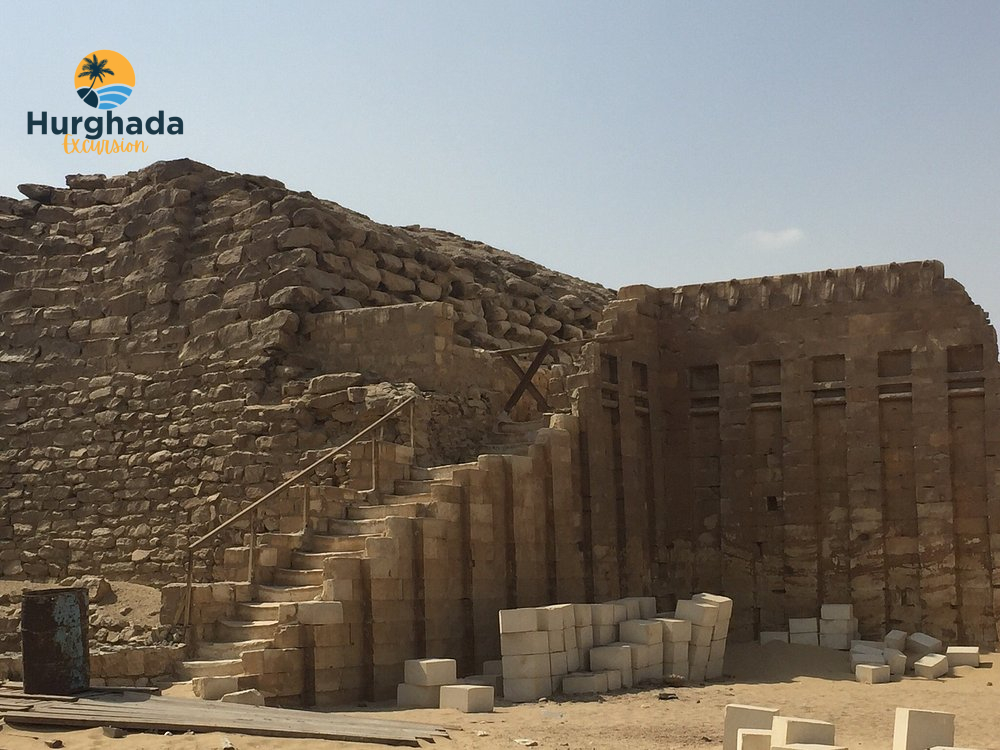
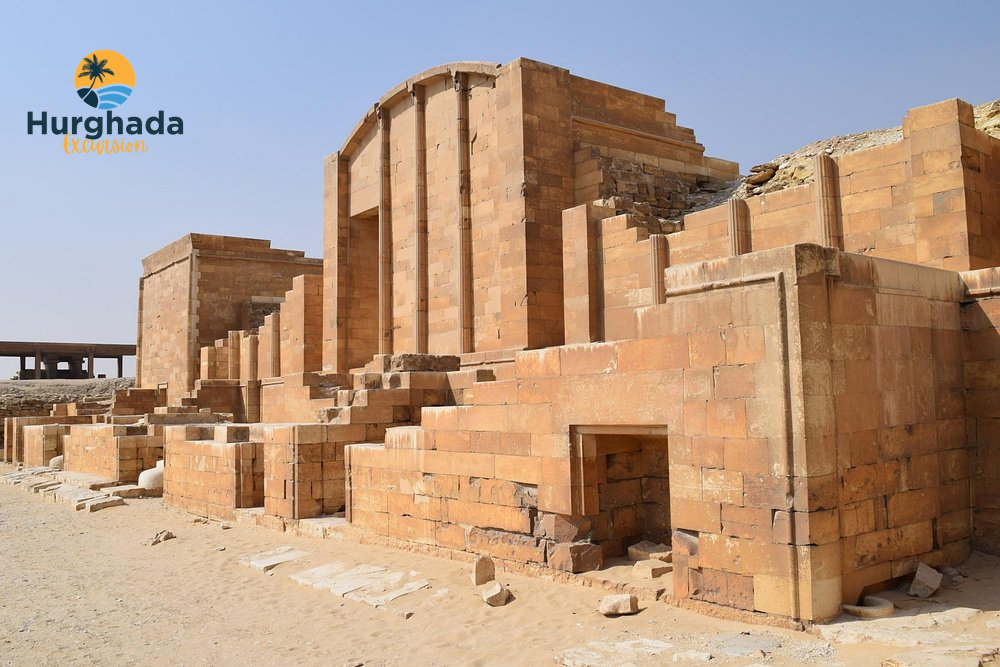
The pyramid stands within a massive enclosure wall (554m × 277m) representing a miniature city of the Egyptian afterlife — with false palace facades, ceremonial courtyards, chapels, and processional routes all built in stone for the first time. The restored enclosure wall and the reconstructed colonnade entrance are extraordinary examples of how Imhotep translated existing mud-brick architecture into stone.
🕳️
3. Inside the Step Pyramid — The Restored Interior
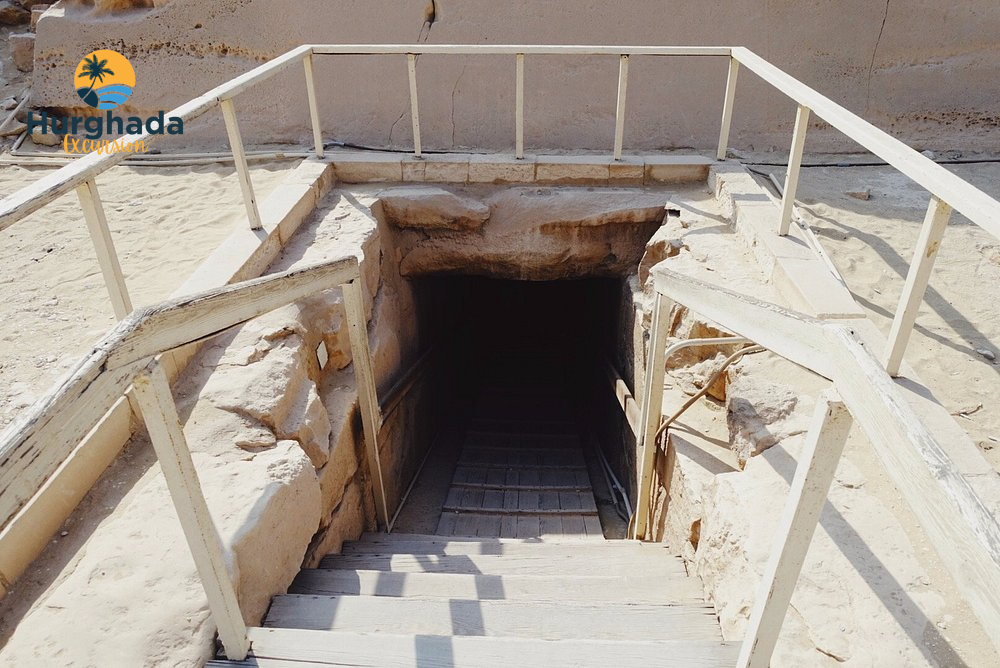
Re-opened in 2020 after a 14-year restoration project, the interior of the Step Pyramid is accessible to visitors with a premium ticket — descending into the subterranean galleries, the burial shaft, and the blue faience-tiled chambers beneath the pyramid. The restoration is a remarkable achievement of modern conservation archaeology. Premium ticket required.
📜
4. Pyramid Texts — The World’s Oldest Religious Texts
The Pyramid of Teti (c. 2345 BCE) at Saqqara contains the first inscribed Pyramid Texts — 283 spells written in hieroglyphs across the interior walls, designed to protect the pharaoh’s soul on its journey to the afterlife. These texts are the oldest religious corpus ever discovered, predating the Vedas, the Torah, and the Iliad by 1,000+ years. The guide reads selected passages aloud in the burial chamber.
🐂
5. The Serapeum — Underground Sacred Bull Galleries
One of the most dramatic underground spaces in Egypt — the vast subterranean galleries where the mummified Apis bulls (sacred to the god Ptah and worshipped as living incarnations of divine power) were buried in colossal granite sarcophagi up to 70 tonnes each. The scale of the underground vaults and the size of the sarcophagi are completely unexpected — genuinely one of the most extraordinary sites in Saqqara.
🎨
6. The Painted Mastaba Tombs — Vivid Old Kingdom Art
The nobles’ mastaba tombs at Saqqara (particularly Ti, Mereruka, and Kagemni) contain the finest surviving paintings of Old Kingdom daily life — butchering, fishing, farming, music, and craftsmanship scenes of extraordinary vividness and quality. These 4,300-year-old paintings are better preserved and more detailed than almost any contemporary work from the same era found anywhere in Egypt.
🏛️
7. The Imhotep Museum
The museum at the Saqqara site entrance is dedicated to Imhotep — the architect of the Step Pyramid, the first physician whose name is recorded, and the only non-royal Egyptian to be deified as a god. Housing selected objects from the Saqqara necropolis (including faience tiles from the pyramid interior, 3rd Dynasty statues, and the extraordinary collection of medical instruments from the Imhotep cult period), the museum provides the essential context for the site visit.
🏺
8. Recent Discoveries — Saqqara’s Ongoing Excavations
Saqqara is one of the most actively excavated sites in Egypt — new discoveries announced annually since 2018 include hundreds of sealed painted wooden coffins (2020), a 4,300-year-old intact mummy (2022), a new 4,000-year-old tomb with vivid wall paintings (2023), and the ongoing excavation of the New Kingdom necropolis beneath the desert sand. The guide delivers the latest news from the active excavation zones.
🌅
9. Desert Landscape & Panoramic Views
The Saqqara plateau stands at the edge of the Western Desert — with the agricultural Nile Valley visible to the east and the endless desert extending west. From the plateau near the pyramid, the Great Pyramids of Giza are visible 27 km to the north on a clear day. The landscape — where cultivated green meets bone-white desert — provides one of the finest desert panoramas in Egypt.
🎓
10. Specialist Archaeologist Guide
Unlike most Luxor sites (covered by licensed Egyptologists), the full complexity of Saqqara — spanning 3,000 years of burial history, multiple pyramids, the Serapeum, the mastaba tombs, and the ongoing excavations — is best experienced with a specialist guide who knows the site’s ongoing archaeological context. Our Saqqara guide includes Egyptologists with specific Saqqara expertise and, on selected tours, working archaeologists from active excavation projects.
Complete Day Program — Hour by Hour from Hurghada
The Saqqara Step Pyramid UNESCO tour from Hurghada is typically combined with the Great Pyramids of Giza and/or the Grand Egyptian Museum for a complete Cairo day by flight. Here is the dedicated Saqqara programme:
✈️ FROM HURGHADA BY FLIGHT (Recommended · Full Day)
Depart Hurghada ~06:00 AM · 45-min flight to Cairo · Transfer to Saqqara: 45 min · Arrive Saqqara ~08:30 AM · Full Saqqara programme (08:30–14:00) · Optional: Giza Pyramids (14:00–17:00) or GEM (14:00–17:00) · Return flight to Hurghada ~19:00–20:00 PM
08:30 – 09:00 · Saqqara Arrival
🏺 Imhotep Museum & Site Orientation
Arrival at the Saqqara site entrance. Tickets purchased (included in tour price, card-only). The guide leads the group through the Imhotep Museum first — 30 minutes covering the key objects (faience tiles from the pyramid interior, 3rd Dynasty statuary, objects from ongoing excavations) and the complete story of Imhotep: his architectural revolution, his medical knowledge, his deification. This context makes the pyramid visit infinitely richer.
Can tourists visit Saqqara? Yes — Saqqara is fully open to tourists and is one of the most rewarding sites in Egypt. The site is significantly less crowded than Giza — even in peak season, the Step Pyramid complex, the Serapeum, and the mastaba tombs are visited by relatively few tourists at any one time, making it possible to experience genuinely quiet encounters with 4,600-year-old monuments.
09:00 – 10:30 · THE MAIN EVENT
🏺 The Step Pyramid Complex — The World’s First Stone Monument
The centrepiece of the tour — entering the Djoser complex enclosure through the restored colonnade entrance (a 40-column processional corridor, the first stone colonnade in history) and approaching the Step Pyramid across the ceremonial courtyard. The guide delivers the complete story: how Imhotep began with a flat mastaba and progressively stacked six mastabas of decreasing size to create the world’s first pyramid, the engineering challenges he solved at each stage, the religious significance of the stepped form (connecting earth to sky), and the archaeological history of the complex’s excavation since 1821.
The programme includes: circumnavigation of the pyramid base (a 15-minute walk), the South Court ceremonial area (with the carved boundaries of the Heb-Sed festival race course), the House of the South and House of the North (with their engaged columns — another architectural first), the Serdab (the sealed chamber containing the seated statue of Djoser — the original is in the Egyptian Museum, a replica sits in the original position), and the pyramid interior (with premium ticket).
10:30 – 11:15 · The Serapeum
🐂 The Serapeum — Underground Galleries of the Sacred Apis Bulls
The most dramatically unexpected site at Saqqara — vast underground galleries excavated into the bedrock, lined with side chambers each housing a colossal granite sarcophagus containing the mummified remains of a sacred Apis bull. The largest sarcophagi weigh up to 70 tonnes and are cut from single blocks of granite, transported from Aswan and lowered into their chambers before the ceiling was sealed. The sheer scale of the underground space — dark, cool, and echoing — combined with the colossal stone boxes in their alcoves produces an experience unlike anything else in Egypt.
The guide explains the Apis bull theology: each Apis was selected at birth by specific physical criteria (black coat with white forehead diamond, white forehead mark, specific tongue marking), was worshipped as a living god throughout its life, and was mummified and buried with full royal ceremony at death. The Serapeum operated from the 18th Dynasty through the Roman period — over 1,500 years of continuous sacred bull burials.
11:15 – 12:30 · Mastaba Tombs & Pyramid of Teti
🎨 Painted Mastabas · Pyramid Texts · Ongoing Excavation Zones
The guide leads the group through the selected mastaba tombs — Ti, Mereruka, or Kagemni, depending on access and the group’s interests. These Old Kingdom nobles’ tombs contain the finest surviving paintings from the 4th–6th Dynasties — scenes of boat-building, cattle herding, fishing, music-making, and grain harvesting in vivid colour and with extraordinary observation of detail (the guide identifies the specific fish species being caught in the net scenes).
The Pyramid of Teti (c. 2345 BCE) — a modest exterior that deteriorated into a rubble mound but contains the extraordinary Pyramid Texts inscribed on its interior walls. The guide descends with the group into the burial chamber and reads selected spells from the walls — including Spell 216 (the Cannibal Hymn, one of the oldest and most dramatic religious texts surviving from any civilisation) — in the chamber where they were first written 4,370 years ago.
12:30 – 14:00 · Lunch & Continue
🍽️ Lunch near Saqqara → Optional Giza or GEM Afternoon
Lunch at a restaurant near Saqqara or on the road toward Giza (27 km north). The afternoon is available for an optional Great Pyramids of Giza visit (~1.5 hours), Grand Egyptian Museum visit (~2.5 hours), or both (on longer day itineraries). Return to Cairo Airport for the evening flight to Hurghada.
The Step Pyramid of Djoser — The World’s First Stone Monument
What is the stepped pyramid at Saqqara? Here is the complete architectural and historical account:
The Architectural Revolution
From Mud Brick to Limestone
Before Imhotep, all Egyptian royal tombs were mastabas — flat-topped rectangular mud-brick platforms. Imhotep’s genius was to build Djoser’s mastaba in limestone rather than mud-brick (a revolutionary material choice), then to stack five more progressively smaller mastabas on top, creating the stepped pyramid form. This single conceptual leap — building upward in stone — changed the direction of Egyptian architecture for 3,000 years.
The Six Steps
Why Six Tiers?
The six steps of the pyramid are believed to represent a staircase to heaven — the pharaoh ascending in death to join the gods in the sky. Each step is slightly smaller than the one below, creating the characteristic profile that is immediately distinct from the smooth-sided later pyramids. The six-step form was never repeated after Djoser — his successors’ pyramids either collapsed or were modified into the true pyramid form.
The First Stone Columns
Architectural Firsts at Every Turn
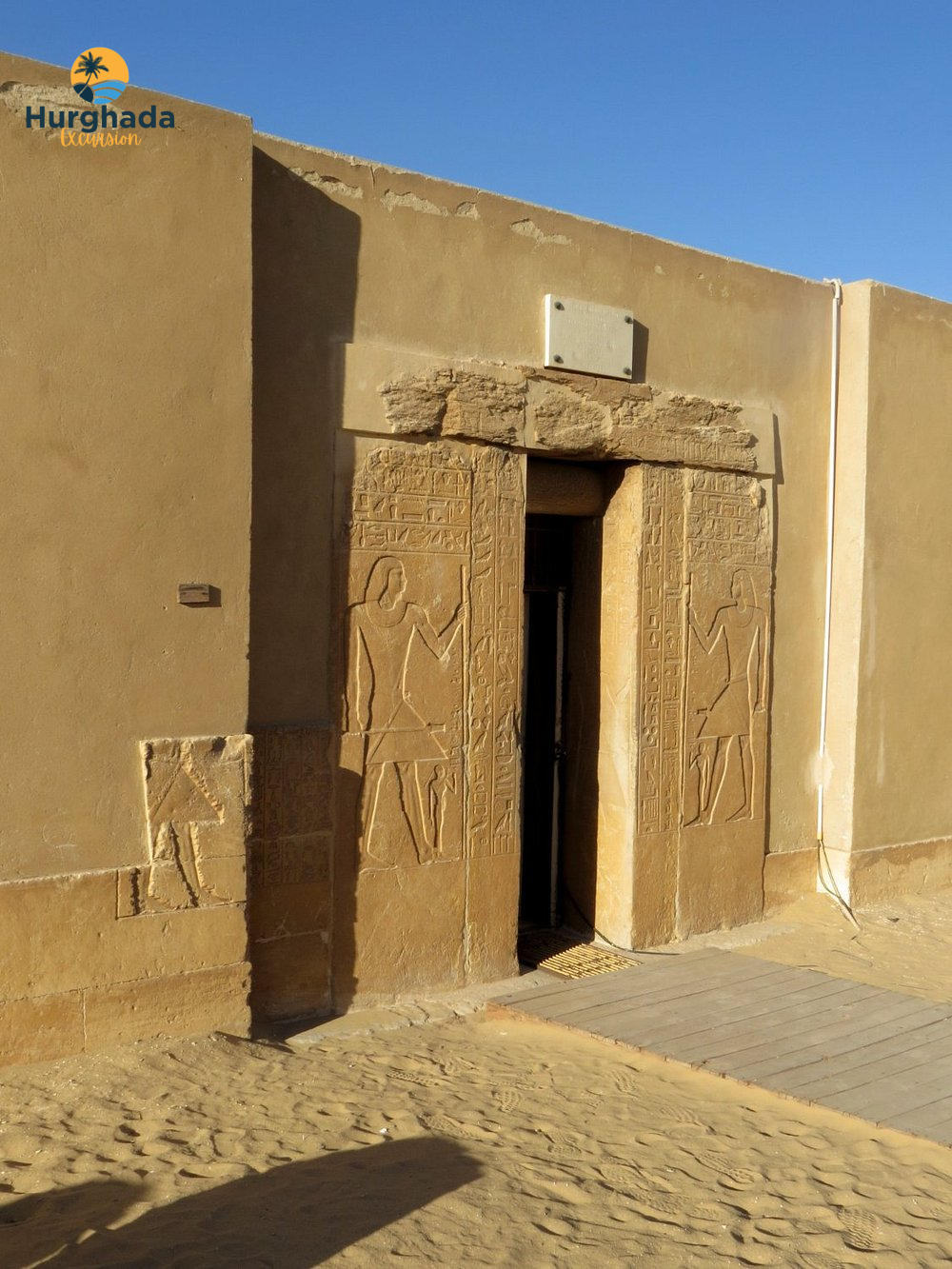
The Djoser complex contains multiple architectural firsts beyond the pyramid itself: the first stone columns (the entrance colonnade — 40 engaged columns, never freestanding because Imhotep was uncertain whether stone would support itself without a wall); the first carved stone cornice; the first stone door (still hinged and functional, carved in limestone to represent an open wooden door); and the first stone drainage system. Imhotep was not building in an established tradition — he was inventing one.
The Heb-Sed Court
A City for the Dead King’s Eternity
The Djoser enclosure was designed as a miniature eternal city — with fake palace facades (solid stone, no interiors), the Heb-Sed festival court (where the pharaoh would run a ritual race in death to demonstrate his fitness to rule for eternity), the South Court’s carved boundary markers, and the Serdab chamber containing the seated statue of Djoser looking through a peephole at the eternal north stars.
What Is Inside the Step Pyramid?
What is inside the Step Pyramid? Can you go inside the Saqqara pyramid? Here is the complete guide to the Step Pyramid interior:
🏺 The Step Pyramid Interior — After 14 Years of Restoration
The interior of the Step Pyramid of Djoser was closed for restoration from 2006 until 2020 — a 14-year conservation project that stabilised the internal passages, cleaned the faience-tiled chambers, and made the underground galleries accessible for the first time in decades. It is now open to visitors with a premium ticket.
The Burial Shaft: A vertical shaft approximately 28 metres deep beneath the pyramid, at the bottom of which is the granite burial chamber of Djoser. The mummy of Djoser was found in fragments inside the original chamber — only a mummified foot and some skeletal fragments survive. The granite sarcophagus, sealed with a granite plug, required enormous engineering skill to install.
The Blue Faience Chambers: Eleven chambers at the bottom of the shaft were lined with blue-green faience tiles (glazed ceramic) representing the reed-mat walls of the pharaoh’s palace — one of the most visually extraordinary spaces in Egyptian archaeology, where the walls literally glow with 4,600-year-old turquoise ceramic craftsmanship. Three carved limestone reliefs of Djoser performing ritual acts are set into these walls.
Access conditions: The interior requires descending the original access passage (slightly cramped) and navigating the underground galleries. Not suitable for guests with severe claustrophobia. The premium interior ticket is approximately 300–400 EGP additional — well worth it for those able to access the space.
🏺
Who Is Buried in the Step Pyramid?
Who is buried in the Step Pyramid? The Step Pyramid was built for the pharaoh Djoser (also spelled Zoser or Netseriket), Third Dynasty ruler c. 2668–2649 BCE. His fragmentary remains were found in the burial chamber when it was excavated in modern times. Additionally, the subterranean galleries beneath the pyramid contain the remains of multiple family members — including 11 shaft tombs for members of the royal family.
🔢
The Pyramid’s Development Stages
Imhotep built the Step Pyramid in at least six stages — beginning with a square mastaba (M1), then extending it to a rectangular mastaba (M2), then extending again (M3), then beginning to build upward with three steps (P1), then adding a fourth step (P2), then completing the six-step final form (P3). Archaeological analysis of the construction phases shows how the design evolved as the project progressed.
Imhotep — The World’s First Named Architect & Physician
Imhotep (active c. 2650 BCE) is one of the most remarkable individuals in the history of human civilisation. Here is the complete portrait:
🏛️
First Named Architect
Imhotep is the first architect in history whose name is recorded — his titles inscribed on the base of a statue of Djoser found at the site include “Chancellor of the King of Lower Egypt, First after the King of Upper Egypt, Administrator of the Great Palace, Hereditary Lord, High Priest of Heliopolis, Builder, Sculptor.” He held an extraordinary range of roles, including the highest priestly and administrative offices.
🏥
First Named Physician
Imhotep is also credited with writing the earliest medical texts in Egyptian history — the Edwin Smith Papyrus (though this may be a later copy of his work) presents rational, anatomical diagnoses and treatments for 48 types of injury and illness without reference to supernatural causes. This rational medical approach predated Hippocrates by 2,000 years and led to Imhotep’s later identification by the Greeks with Asclepius, their own god of medicine.
⭐
Deified After Death
Imhotep is one of only two non-royal Egyptians ever to be deified — elevated to the status of a god after death. During the New Kingdom (approximately 1,200 years after his death), he was worshipped as a god of medicine and wisdom; in the Late Period, his cult spread throughout the Mediterranean world. The Greeks identified him with Asclepius. His temple at Saqqara became a healing sanctuary visited by the sick.
❓
His Tomb — Still Undiscovered
Despite decades of searching, the tomb of Imhotep himself has never been found. It is believed to be somewhere in the Saqqara necropolis — perhaps in the desert west of the Step Pyramid complex. Its discovery would rank among the greatest finds in Egyptian archaeology. The guide discusses the ongoing search theories during the site visit.
The Complete Saqqara Necropolis — All Sites on the Tour
Saqqara is not one site — it is a 7 km necropolis containing monuments from virtually every period of Egyptian history. Here is the complete guide:
| Site |
Period |
Significance |
Tour Status |
| Step Pyramid of Djoser |
3rd Dynasty (~2650 BCE) |
World’s oldest stone monument |
Included — main focus |
| The Serapeum |
18th Dynasty–Roman |
Sacred Apis bull burial galleries |
Included |
| Mastaba of Ti |
5th Dynasty (~2400 BCE) |
Finest painted daily life scenes |
Included |
| Pyramid of Teti + Pyramid Texts |
6th Dynasty (~2345 BCE) |
Oldest religious texts in the world |
Included |
| Mastaba of Mereruka |
6th Dynasty (~2340 BCE) |
Largest Old Kingdom mastaba (32 rooms) |
Included (alternate to Ti) |
| Imhotep Museum |
Site Museum |
Objects from site + Imhotep context |
Included |
| Red Pyramid of Dahshur (optional) |
4th Dynasty (~2590 BCE) |
First true smooth pyramid · 10km south |
Optional extension (+1.5h) |
The Serapeum — Underground Galleries of the Sacred Apis Bulls
The Saqqara Serapeum is one of the most extraordinary and least anticipated sites in Egypt — a vast underground complex that completely surprises even well-informed travellers. Here is the complete guide:
🐂
Who Were the Apis Bulls?
The Apis bull was a sacred animal worshipped as a living manifestation of the god Ptah (and later Osiris) — selected at birth by specific physical markings, housed in a palace in Memphis, worshipped as a divine king throughout its life, and buried with full royal ceremony upon death. A new Apis was selected when the old one died. The bull cult operated from the Early Dynastic period through the Roman era — 3,000+ years of continuous sacred bull worship.
🗿
The Granite Sarcophagi
Each Apis bull was buried in a colossal granite sarcophagus — typically 3.8m × 2.3m × 2.3m (approximately the size of a small car), weighing 60–70 tonnes, cut from single blocks of Aswan granite, transported 800 km from the quarries, and lowered into the underground chambers before the ceiling was sealed. Twenty-four such sarcophagi survive in the accessible galleries, their lids still bearing the weight marks of the ancient cranes used to seal them.
🔦
The Underground Experience
The accessible Serapeum galleries run approximately 200 metres underground — electric lighting installed but atmospheric in its amber glow, the ceiling of the main gallery carved from solid rock, the individual chamber alcoves each housing a sarcophagus of breathtaking scale. The temperature underground is approximately 20°C regardless of the exterior desert heat. The experience is genuinely unique — nothing else in Egypt provides this combination of scale, darkness, and cold stone.
The Painted Mastaba Tombs — New & Old Discoveries
⭐ Finest Old Kingdom Painting
Mastaba of Ti (c. 2400 BCE)
The tomb of Ti, a royal hairdresser who rose to become one of the most powerful officials of the 5th Dynasty, contains the finest and most varied scenes of daily life from the Old Kingdom. Scenes of hippopotamus hunting in the papyrus marshes, boat-building workshops, cattle herding, grain processing, and music-making are painted with extraordinary technical quality and observational detail. Particularly celebrated: the papyrus marsh hippo hunt scene, where the herds of hippo and the attacking hunters are painted with individual character and movement.
Largest Mastaba Complex
Mastaba of Mereruka (c. 2340 BCE)
The tomb of the vizier Mereruka is the largest private mastaba complex at Saqqara — 32 decorated rooms covering an enormous area. The quality of the painting is extraordinary, the variety of scenes is unsurpassed, and the surviving entrance hall contains the finest surviving raised-relief carving from the 6th Dynasty. The tomb complex also includes subsidiary tombs for Mereruka’s wife and son.
Recent Discoveries 2018–2024
New Tombs & Coffin Caches
Since 2018, the Saqqara excavations have produced some of the most dramatic archaeological discoveries in decades: 250+ sealed painted wooden coffins (2020), a 4,300-year-old intact mummy wrapped in gold leaf (2022), multiple new tombs with vivid wall paintings, and the ongoing excavation of a New Kingdom necropolis. The guide discusses the latest findings and points out the active excavation zones during the site visit.
Saqqara Entry Fee 2026 & Opening Hours
How much is entry to the Saqqara pyramids? Here is the complete 2026 pricing:
| Site / Ticket |
Price (EGP) |
Approx. EUR |
Notes |
| Saqqara Site Entry (Adult) |
~450 EGP |
~€8 |
Included in tour · Open 08:00–17:00 daily |
| Step Pyramid Interior |
~300–400 EGP |
~€6–7 |
Premium · re-opened 2020 · highly recommended |
| Serapeum |
~100–150 EGP |
~€2–3 |
Included in tour |
| Mastaba of Ti / Mereruka |
~100–150 EGP |
~€2–3 |
Included in tour · guide selects best available |
| Red Pyramid of Dahshur (optional) |
~300 EGP |
~€6 |
Optional extension · 10 km south |
Tour Price from Hurghada 2026 — What’s Included
Saqqara Step Pyramid UNESCO Tour from Hurghada — From
€100
per adult · By flight · Step Pyramid + Serapeum + Mastabas + Pyramid Texts + Imhotep Museum
✓ Flights · ✓ Transfers · ✓ All Entry Tickets · ✓ Archaeologist Guide · ✓ Lunch
Children 4–11: 50% discount · Step Pyramid interior: ~€7 extra · Combined Saqqara + Giza: from €120
✅ Included
✓ Return flights Hurghada – Cairo – Hurghada (45 min each way)
✓ Cairo Airport–Saqqara private transfers (45 min)
✓ Saqqara site entry (~450 EGP), Serapeum, Mastaba of Ti, Pyramid of Teti (all included)
✓ Specialist Egyptologist / Archaeologist guide for the full day
✓ Full lunch · Bottled water · Free cancellation 48 hours before
Combining Saqqara with the Great Pyramids & GEM
Saqqara (27 km south of Cairo) and the Great Pyramids of Giza (13 km south of Cairo) are on the same road. Combining both in a single Cairo day from Hurghada provides the complete arc of Egyptian pyramid architecture — from the first stone monument to the most perfectly engineered:
🏺
Morning — Saqqara First (08:30–12:30)
Visit Saqqara in the morning when energy is highest and the site is at its quietest. Step Pyramid complex, Serapeum, Mastaba of Ti, Pyramid of Teti. Drive to Giza after lunch — 40 min north.
🏺
Afternoon — Great Pyramids (14:00–17:00)
The Great Pyramids and Sphinx in the afternoon — seeing the smooth-sided 4th Dynasty pyramids immediately after the stepped 3rd Dynasty prototype creates the most powerful architectural comparison in Egypt. The guide connects the two sites explicitly.
📚
The Complete Story
Saqqara (2650 BCE) → Giza (2560–2500 BCE): 90 years of architectural evolution from the world’s first stone pyramid to the world’s most perfectly engineered pyramid. The guide delivers this narrative arc across both sites, creating a complete educational experience unavailable on any single-site visit.
💶
Combined Tour Price
The combined Saqqara + Great Pyramids tour from Hurghada costs from €120 per adult by flight. Adding the Grand Egyptian Museum (GEM) for a three-site complete Cairo day: from €130 per adult. The most comprehensive ancient Egypt experience available from Hurghada in a single day.
10 Expert Tips for Your Saqqara UNESCO Tour
Tip 1 — Visit the Imhotep Museum before the Step Pyramid, not after. Most visitors go directly to the Step Pyramid and then the museum. The correct order is museum first — 30 minutes in the Imhotep Museum provides the complete biographical and architectural story of Imhotep, the construction sequence of the pyramid, and the context for the faience tile chambers and the Heb-Sed court. The pyramid then makes complete sense rather than being simply an impressive stone structure.
Tip 2 — Enter the Step Pyramid interior — it re-opened in 2020 after 14 years and is extraordinary. The blue faience chambers beneath the Step Pyramid — walls lined with 4,600-year-old turquoise glazed ceramic tiles, lit by amber electric lighting in the narrow underground passages — are one of the most beautiful and most unexpected spaces in Egyptian archaeology. The premium ticket (~€7 extra) represents outstanding value for this unique underground experience.
Tip 3 — The Serapeum is the biggest surprise at Saqqara — allocate adequate time. Most visitors read “underground galleries of sacred bull burials” and expect something modest. What they find is a vast, rock-cut tunnel system housing colossal granite sarcophagi of 70 tonnes each, in a space of genuine dramatic power. Allow at least 45 minutes. The guide explains the Apis bull theology and reads the inscriptions on the sarcophagi walls.
Tip 4 — Ask the guide to read Pyramid Texts aloud in the burial chamber of Teti. The Pyramid of Teti exterior looks like a rubble mound — unimpressive from the outside. Inside, the burial chamber walls are covered from floor to ceiling with the world’s oldest religious texts. The guide reads selected passages aloud in the chamber — including the extraordinary Cannibal Hymn (Utterance 273-274) — while you stand in the space where they were inscribed 4,370 years ago. One of the most remarkable oral reading experiences available anywhere in Egypt.
Tip 5 — Ask about the recent discoveries — Saqqara is the most actively excavated site in Egypt. Since 2018, Saqqara has produced annual major discoveries — hundreds of sealed painted coffins, a gold-leaf-wrapped mummy, multiple new tombs, ongoing New Kingdom necropolis excavation. The guide knows which zones are currently being excavated and can point them out from accessible viewpoints. Being in Saqqara while active archaeology is happening 100 metres away is a genuinely unusual privilege.
Tip 6 — Saqqara is significantly less crowded than Giza — use this. The Step Pyramid receives perhaps 5–10% of the daily visitors that the Giza plateau does. On most mornings, the entire Step Pyramid complex — the largest 3rd Dynasty monument in the world — can be explored virtually alone. This solitude in a 4,600-year-old stone complex is one of the most genuinely atmospheric experiences available in Egypt. Arrive at opening time (08:00) for the best conditions.
Tip 7 — The view toward Giza from the Step Pyramid plateau is extraordinary. On a clear morning, standing on the desert plateau beside the Step Pyramid, the Great Pyramids of Giza are visible 27 km to the north — their familiar smooth-sided profiles visible on the horizon. The guide uses this view to deliver the architectural comparison: the stepped prototype here, the perfected form there, the 90-year evolution between them visible simultaneously in a single look north.
Tip 8 — Look at the mastaba paintings in close detail — use the guide’s torch. The painted mastaba tombs at Saqqara have extraordinary micro-details — the individual faces of the musicians, the specific species of fish being caught in the net scenes, the different cattle being herded (the guide identifies the breeds). The tomb lighting is supplemented by the guide’s torch for wall sections where the available light is insufficient. Close examination reveals details invisible in photographs.
Tip 9 — Combine with the Red Pyramid of Dahshur for the complete pyramid evolution narrative. The Red Pyramid of Dahshur — 10 km south of Saqqara, built by Sneferu (father of Khufu) around 2590 BCE — is the world’s first successful true pyramid (smooth-sided). Combining Saqqara (stepped pyramid, 2650 BCE), Dahshur (first true pyramid, 2590 BCE), and Giza (the perfected form, 2560 BCE) gives the complete 90-year evolution of pyramid architecture in a single day.
Tip 10 — Saqqara is the site that most guests who visit it say should have been first on their Egypt itinerary. The Great Pyramids of Giza are the famous ones. But Saqqara is the beginning of everything — the first stone monument, the oldest religious texts, the extraordinary Serapeum, the finest Old Kingdom painted tombs, and the story of Imhotep, who began with a flat mud-brick platform and invented an architectural tradition that lasted 3,000 years. Guests who visit Saqqara consistently say it completely changed their understanding of what ancient Egypt was. That is what the best archaeological sites do.
Real Reviews from Travellers
★★★★★
“Saqqara was the revelation of our entire Egypt trip. We had done the Giza pyramids the day before and were expecting something smaller and less impressive. Instead — the Serapeum alone justifies the journey. The scale of the granite sarcophagi is completely beyond comprehension until you stand beside them. The guide reading the Pyramid Texts in the Teti burial chamber will stay with me for the rest of my life.”
Dr. James W. — Oxford · March 2026
★★★★★
“I visited Giza first and Saqqara second and the guide’s comparison — showing how Imhotep’s 2650 BCE experiment became the Great Pyramid 90 years later — made everything at Giza make sense for the first time. The Step Pyramid interior (just re-opened) was extraordinary — the blue faience tiles at the bottom of the burial shaft are one of the most beautiful things I have seen. Do not skip this site.”
Caroline K. — Edinburgh · February 2026
★★★★★
“The mastaba of Ti was the surprise of the day — I had not expected paintings from 4,300 years ago to be this vivid, this detailed, and this humanly engaging. The hippo hunt scene with each individual hippo having its own character — the guide identified all the species of fish, birds, and marsh plants. Then the Serapeum — those granite sarcophagi in the dark underground galleries. Genuinely one of the finest archaeology sites I have visited anywhere.”
Sarah T. — London · January 2026
Frequently Asked Questions
Can tourists visit Saqqara?
Can tourists visit Saqqara? Yes — Saqqara is fully open to tourists in 2026 and is one of the most rewarding sites in Egypt. The site is open 08:00 AM – 05:00 PM daily. It is significantly less crowded than the Giza pyramids, making it possible to experience genuinely quiet encounters with 4,600-year-old monuments. The Step Pyramid interior was re-opened in 2020 after a 14-year restoration and is accessible with a premium ticket.
What is inside the Step Pyramid at Saqqara?
What is inside the Step Pyramid? The interior contains a 28-metre vertical burial shaft leading to the granite burial chamber of Djoser (the mummy was found in fragments — only a foot survives), eleven underground chambers for royal family members, and most extraordinarily, a series of rooms lined with blue-green faience ceramic tiles representing the reed-mat walls of the pharaoh’s palace. Three carved limestone reliefs of Djoser performing ritual acts are also preserved in the faience chamber area. The interior was restored over 14 years and re-opened in 2020.
How much is entry to the Saqqara pyramids?
How much is entry to the Saqqara pyramids? The standard Saqqara site entry ticket is approximately 450 EGP (~€8) per adult. The Step Pyramid interior requires a separate premium ticket of approximately 300–400 EGP (~€6–7). The Serapeum costs approximately 100–150 EGP additional. The Mastaba of Ti is approximately 100–150 EGP. All of these tickets are included in our tour package from Hurghada. Payment is by card only at most Saqqara ticket offices.
What is special about Saqqara?
What is special about Saqqara? Four things make Saqqara unique among all Egyptian sites: (1) The Step Pyramid of Djoser (c. 2650 BCE) — the world’s oldest monumental stone structure, built by Imhotep (the first named architect in history); (2) The Pyramid Texts in the Pyramid of Teti — the oldest religious texts ever discovered; (3) The Serapeum — extraordinary underground galleries housing colossal granite sarcophagi of the sacred Apis bulls; (4) The site is one of the most actively excavated in Egypt, with major new discoveries announced annually.
Who is buried in the Step Pyramid at Saqqara?
Who is buried in the Step Pyramid? The Step Pyramid was built as the tomb of the pharaoh Djoser (Third Dynasty, c. 2668–2649 BCE). His fragmentary remains (a mummified foot and skeletal fragments) were found in the granite burial chamber at the bottom of the central shaft. The subterranean galleries beneath the pyramid also contain the remains of multiple royal family members in subsidiary shafts. The architect Imhotep’s tomb — believed to be nearby in the Saqqara necropolis — has never been found.
Book Your Saqqara Step Pyramid UNESCO Tour Today
From €100 per person by flight · World’s Oldest Stone Monument · Step Pyramid Interior · Serapeum · Mastaba Paintings · Pyramid Texts · Archaeologist Guide · All Tickets · Lunch · Free Cancellation.
🏺 Book Now — From €100
The Saqqara Step Pyramid UNESCO World Heritage tour with archaeologist provides what no other site in Egypt can — a face-to-face encounter with the very beginning of stone architecture, guided by a specialist who understands both what Imhotep achieved and why it matters. The Step Pyramid is 4,676 years old. It was built by a man who had never seen a stone pyramid because no stone pyramid had ever existed. He had no prototype, no blueprint, no precedent. He invented the form from scratch — and everything that came after it, from the Great Pyramid of Giza to every stone monument built in every civilisation that learned from Egypt, began with this six-tiered structure rising above the desert at Saqqara.
Book your Saqqara UNESCO tour today with Hurghada Excursion — private flights, archaeologist guide, all entry tickets, and the most complete encounter with the world’s oldest stone monument available from the Red Sea coast.