🏺 Memphis · Dahshur · Red Pyramid · Bent Pyramid · Ancient Capitals · UNESCO · From Hurghada
Memphis & Dahshur Ancient Capitals – Guided Tour from Cairo
📅 Updated: May 2026 | ⏱️ Full Day from Hurghada (Flight) | 💶 From €100 / person | ⭐ 4.9/5 Rated | 🏺 Daily Departures
Everyone knows the Great Pyramids of Giza. Fewer know the story of how those pyramids came to exist — the century of architectural experimentation, engineering failure, and triumphant innovation that produced the world’s most perfect stone structures. That story begins at Dahshur, a necropolis 10 km south of Saqqara where the pharaoh Sneferu — father of Khufu, builder of Giza — built two extraordinary pyramids in a single reign: the Bent Pyramid (a monument that literally changed shape halfway through construction as engineers solved a structural crisis in real time) and the Red Pyramid (the world’s first successful true pyramid, completed around 2590 BCE — the architectural prototype for everything that came after it). Understanding Dahshur is understanding how the Great Pyramid became possible. And just 12 km northeast of Dahshur lies the site of Memphis — the ancient capital that Egypt’s pharaohs founded at the moment of their country’s unification, the greatest city in the ancient world for over 2,000 years, where Ramesses II built his greatest monuments and where the culture that produced the pyramids, the temples, and the arts of ancient Egypt was born and sustained.
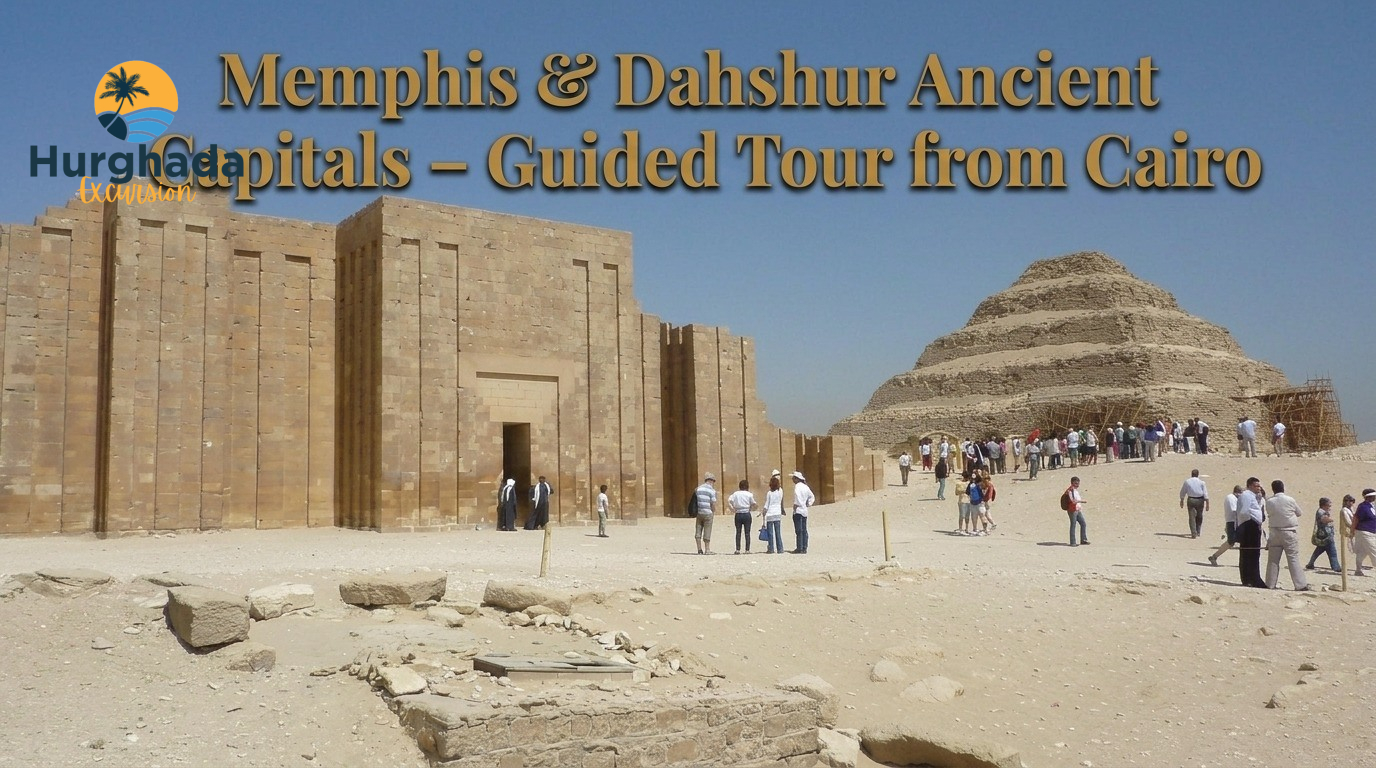
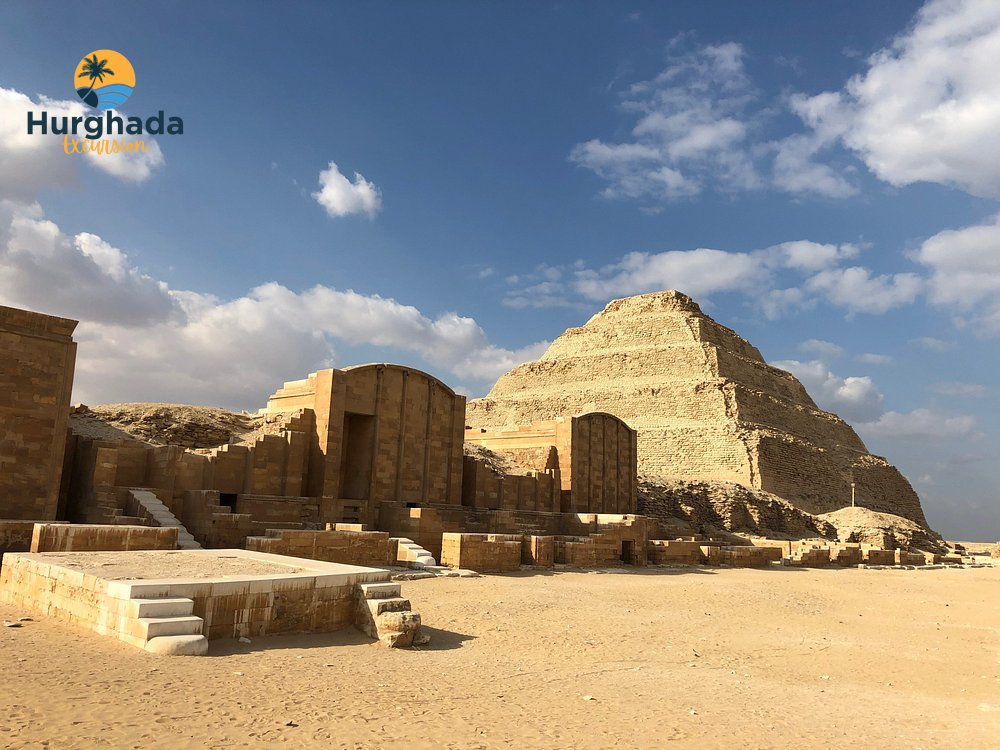
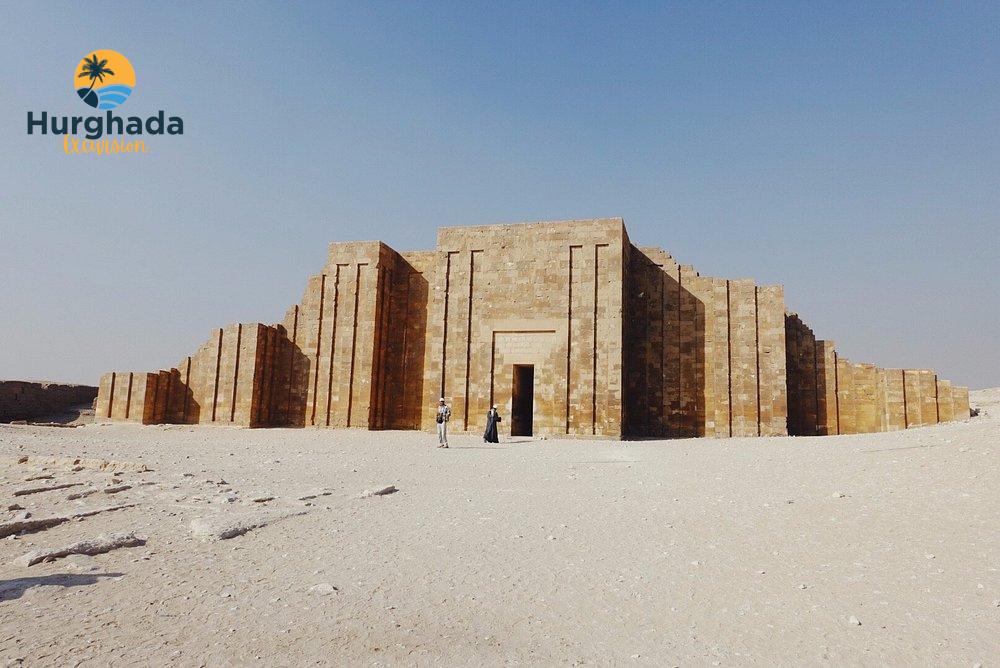
The Memphis and Dahshur ancient capitals guided tour from Cairo provides the most complete and most archaeologically compelling pyramid experience in Egypt — combining the Dahshur pyramid complex (the Bent Pyramid and the Red Pyramid, with their entrances open for interior visits), the Memphis open-air museum (the fallen Ramesses II colossus, the Alabaster Sphinx, the royal workshop remains), and — in the premium combined programme — the Saqqara Step Pyramid UNESCO complex, creating the complete chronological arc of Egyptian pyramid architecture in a single extraordinary day: from the world’s first stone monument at Saqqara (2650 BCE) through Sneferu’s engineering revolution at Dahshur (2600–2590 BCE) to the perfected form at Giza (2560 BCE).
🏺 Memphis and Its Necropolis — UNESCO World Heritage Site: The “Memphis and Its Necropolis — the Pyramid Fields from Giza to Dahshur” is a single UNESCO World Heritage Site inscribed in 1979 — covering the complete pyramid zone south of Cairo: Giza, Abusir, Saqqara, and Dahshur. Together these sites contain the most concentrated collection of ancient Egyptian royal funerary architecture in the world: over 20 major pyramids, hundreds of mastaba tombs, the Great Sphinx, the Step Pyramid of Djoser, the Bent Pyramid, and the Red Pyramid — all built within a 35 km radius between approximately 2650 and 1800 BCE. The Memphis site itself (the ancient capital) is approximately 3 km south of Saqqara, in the modern village of Mit Rahina. What is Memphis Egypt called now? The site of ancient Memphis corresponds to the modern village of Mit Rahina, approximately 20 km south of central Cairo.
Memphis & Dahshur — History, Significance & UNESCO Status
The relationship between Memphis and Dahshur is the relationship between a great city and its royal cemetery — between the living capital of a civilisation and the eternal monuments its rulers built on the desert edge above it. Understanding both together gives the most complete picture of the Old Kingdom available at any ancient site in Egypt.
| Site |
Ancient Name |
Founded |
Significance |
| Memphis |
Inbu-Hedj (White Walls) / Men-nefer |
c. 3100 BCE by Menes/Narmer |
First capital of unified Egypt · seat of pharaonic power 2,500+ years |
| Dahshur Necropolis |
Djed-Sneferu (Sneferu Endures) |
c. 2600–2580 BCE (Sneferu) |
Bent Pyramid + Red Pyramid · first successful true pyramid |
| Red Pyramid |
Sneferu Appears in Glory |
c. 2590 BCE |
World’s first successful true pyramid · third largest in Egypt |
| Bent Pyramid |
Sneferu Appears to the South |
c. 2600–2580 BCE |
Only pyramid to retain full original limestone casing · unique bent profile |
| UNESCO Status |
“Memphis and Its Necropolis — the Pyramid Fields from Giza to Dahshur” · inscribed 1979 |
🏛️ What were the two capitals of ancient Egypt?
Ancient Egypt had several capitals across its 3,000-year history. The two most important were Memphis (modern Mit Rahina) — the capital of unified Egypt from c. 3100 BCE, seat of the pharaohs during the Old Kingdom — and Thebes (modern Luxor) — the capital of the New Kingdom pharaohs (c. 1550–1070 BCE). Memphis served as Egypt’s administrative capital for over 2,000 years; Thebes as its religious and royal capital for over 500 years.
🏺 Did Memphis have pyramids?
Did Memphis have pyramids? Memphis itself was the city; the pyramid cemeteries were built on the desert plateau above it. The pyramid zone associated with Memphis spans Giza (north), Abusir, Saqqara, and Dahshur (south) — all within 20 km of the ancient city. Memphis was the city of the living; the pyramid plateaus were the cities of the dead, built directly above the capital they served.
Top 10 Highlights of the Memphis & Dahshur Ancient Capitals Tour
🏺
1. The Red Pyramid — Enter the World’s First True Pyramid
The Red Pyramid at Dahshur is Egypt’s third largest pyramid and the world’s first successful true pyramid — built by Sneferu c. 2590 BCE and the direct architectural predecessor of the Giza pyramids. Uniquely, the Red Pyramid’s interior is fully accessible without premium ticket — descending a 63-metre descending passage to three corbelled chambers. Almost no other tourists at Dahshur means the Red Pyramid interior visit is a genuinely solitary encounter with a 4,600-year-old burial complex.
📐
2. The Bent Pyramid — Egypt’s Greatest Engineering Story
The Bent Pyramid is one of the most extraordinary monuments in Egypt — its unique double-angle profile (54° at the base, changing to 43° halfway up) the permanent visible record of an engineering crisis resolved in real time 4,600 years ago. It is also the best-preserved pyramid exterior in Egypt — retaining over 90% of its original Tura limestone casing in pristine condition. Both of its entrances (north and west) are accessible, providing two interior route options.
🔇
3. No Tourists — The Pyramids Entirely to Yourself
Dahshur receives perhaps 2% of the visitors that Giza receives daily. On most mornings, the entire Dahshur plateau — two massive pyramids, a small pyramid of Amenemhat II, the ruins of Sneferu’s valley temple, and the open desert — can be explored with no other visitors present. For guests who want the Giza experience but without the crowds, Dahshur provides a more powerful and more authentic encounter with ancient pyramid architecture.
👑
4. Memphis Open-Air Museum — Ramesses II Colossus
The site of ancient Memphis (modern Mit Rahina) is now an open-air museum containing the finest accessible objects from Egypt’s greatest ancient capital — including the 10-metre fallen limestone colossus of Ramesses II (the finest surviving royal colossus in Egypt after the Abu Simbel statues), the smaller pink granite standing Ramesses, the Alabaster Sphinx (the largest surviving alabaster statue in the world), and architectural fragments from the temples and palaces of Egypt’s most celebrated pharaoh.
🗿
5. The Alabaster Sphinx — World’s Largest Alabaster Sculpture
Standing in the outdoor section of the Memphis open-air museum, the Alabaster Sphinx (c. 1400 BCE, 18th Dynasty) is the largest surviving alabaster statue in the world — 4.3 metres high, 8 metres long, carved from a single block of travertine calcite. Significantly smaller than the Great Sphinx at Giza but extraordinarily beautiful in the quality of its stone and the delicacy of its carving. No face damage — the features are perfectly preserved.
📚
6. The Complete Pyramid Evolution Story
Standing at the Red Pyramid and looking north toward Giza (both visible simultaneously on a clear day), the guide delivers the complete architectural evolution narrative: Djoser’s Saqqara Step Pyramid (2650 BCE) → the Meidum Pyramid collapse (2590 BCE) → the Bent Pyramid engineering correction (2580 BCE) → the Red Pyramid success (2590 BCE) → Khufu’s Great Pyramid (2560 BCE). The 90-year story of how humanity learned to build the world’s greatest monuments, visible in a single panoramic look.
🌅
7. The Dahshur Desert Landscape
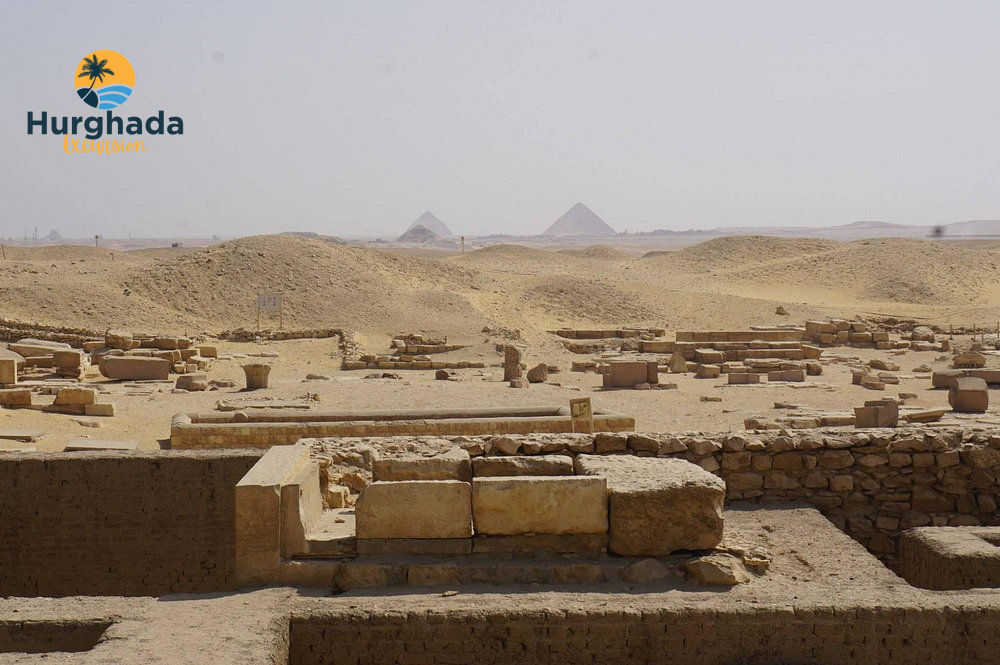
Dahshur sits at the edge of the Western Desert plateau — the agricultural green of the Nile Valley visible to the east, the endless sand-coloured desert stretching west. In the early morning, the two pyramids rise from this landscape in complete isolation — no hotels, no souvenir stalls, no tourist buses — creating a desert landscape encounter with ancient architecture that is completely impossible at Giza and only partially achievable at Saqqara.
🏛️
8. Sneferu’s Valley Temple & Satellite Pyramid
Adjacent to the Bent Pyramid, the remains of Sneferu’s valley temple (the best-preserved valley temple from the 4th Dynasty) and his satellite pyramid (a smaller subsidiary pyramid associated with the king’s cult) are accessible on the tour. The valley temple reliefs — some still retaining traces of their original colour — show Sneferu in a range of ritual activities and remain some of the finest 4th Dynasty relief work accessible outside of Cairo’s museums.
🎓
9. Expert Egyptologist Guide
The Memphis and Dahshur tour requires a guide with specific expertise in 4th Dynasty architecture and pyramid construction theory — the Bent Pyramid’s structural crisis, Sneferu’s role as the pivotal figure in Egyptian pyramid development, and the significance of Memphis as both an administrative centre and a theological concept. Our Egyptologist guides specialise in this period and deliver the most academically current theories on pyramid construction and royal ideology.
🔢
10. Combining with Saqqara — The Complete Pyramid Arc
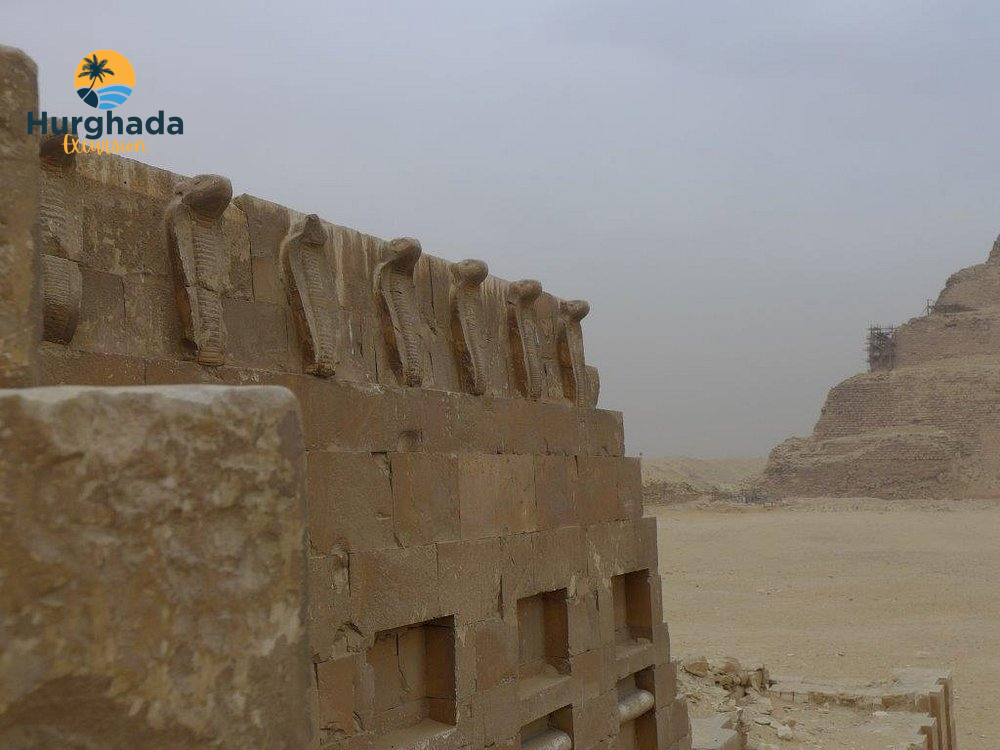
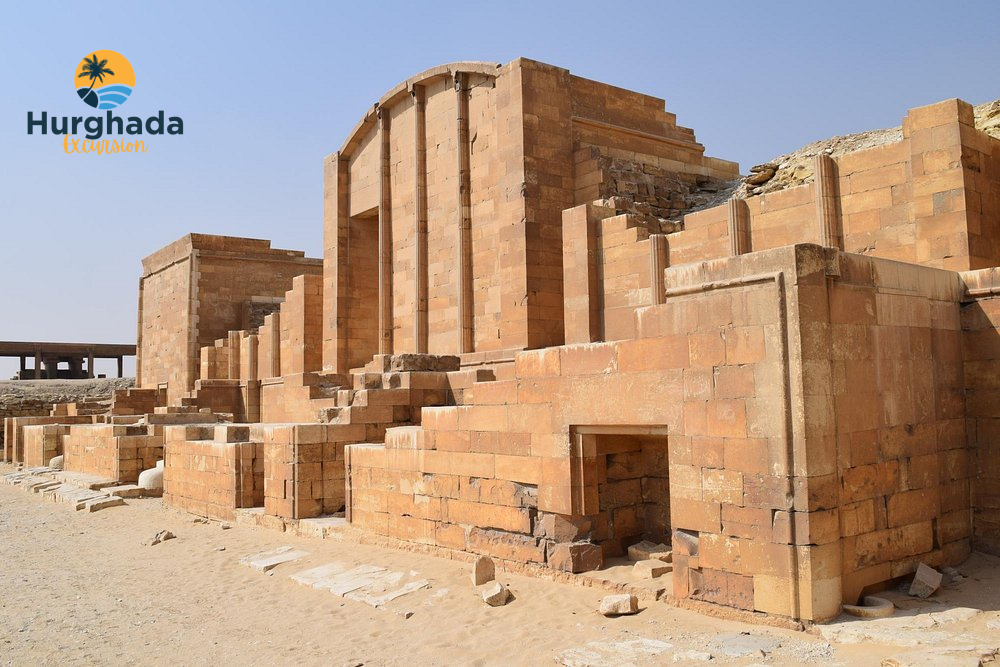
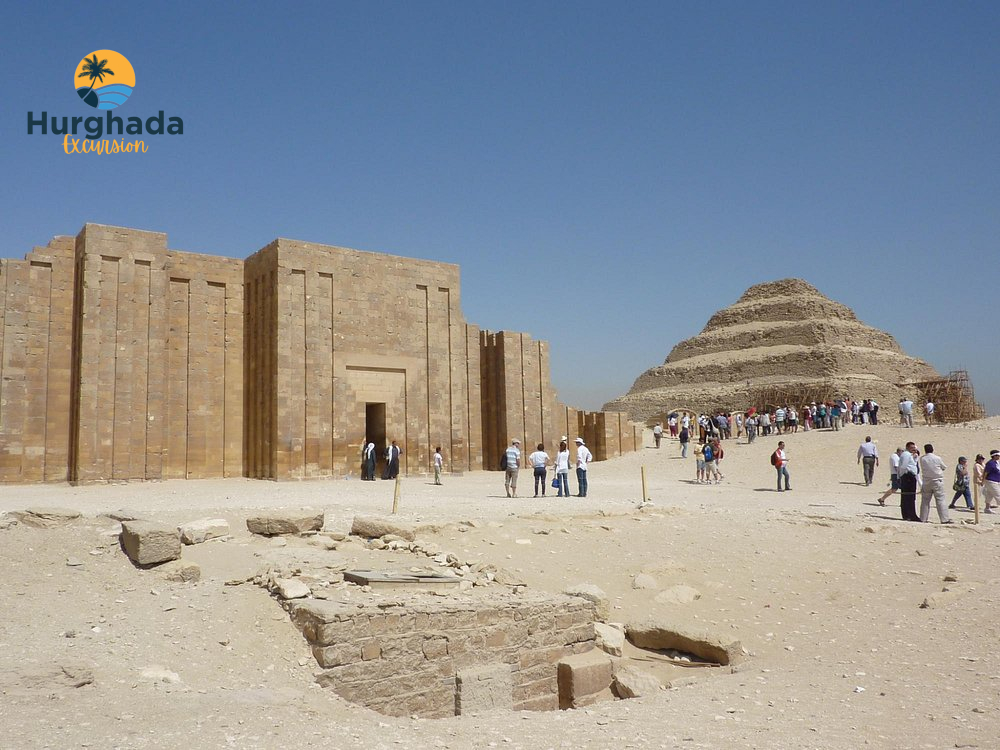
The premium combined programme adds Saqqara to the Memphis and Dahshur tour — visiting the Step Pyramid complex, the Serapeum, and the Imhotep Museum before or after Dahshur. This combination provides the complete chronological sequence: Saqqara (2650 BCE, first stone monument) → Dahshur (2600–2590 BCE, first true pyramid) — the most complete single-day encounter with the 60-year story of Egypt’s architectural revolution available anywhere.
Complete Day Program — Professional Tour Itinerary
Here is the complete Memphis and Dahshur guided tour itinerary — the professional, hour-by-hour programme from Hurghada arrival to return:
✈️ MEMPHIS + DAHSHUR FROM HURGHADA (By Flight · Full Day)
Depart Hurghada ~06:00 AM · 45-min flight · Transfer to Dahshur ~08:15 AM · Dahshur programme (08:30–12:00) · Memphis Open-Air Museum (12:30–13:30) · Lunch (13:30–14:30) · Optional: Saqqara (14:30–17:00) OR Giza (14:30–17:00) · Return flight ~19:00 PM · Arrive Hurghada ~20:00 PM
STOP 1 · 08:30 – 09:00 · Dahshur Arrival
🏺 Dahshur Necropolis — Arrival & Orientation
Arrival at the Dahshur necropolis entrance — tickets purchased at the site office (~300 EGP per adult, included in tour price). The guide delivers the orientation from the plateau edge: the two Sneferu pyramids visible simultaneously — the Bent Pyramid to the south (more intact exterior), the Red Pyramid to the north (larger, interior accessible) — and the context of Sneferu’s unprecedented building programme, which produced more pyramid volume in a single reign than any subsequent pharaoh.
Dahshur map orientation: The Bent Pyramid stands approximately 2 km south of the Dahshur entrance; the Red Pyramid approximately 1.5 km north of the Bent Pyramid. The two pyramids are separated by approximately 3.5 km of open desert plateau. The tour visits the Bent Pyramid first (exterior), then drives to the Red Pyramid (interior visit), maximising the architectural comparison.
STOP 2 · 09:00 – 10:30 · The Bent Pyramid
📐 The Bent Pyramid — Engineering Crisis Preserved in Stone
The first major stop — the Bent Pyramid, approached across open desert on foot from the vehicle drop-off point. The guide begins the architectural analysis at a distance, where the distinctive double-angle profile is most clearly visible: the lower section at 54° inclination, changing sharply at approximately half height to 43° inclination. The guide delivers the complete construction crisis narrative: why the angle was changed, what the structural problems were that forced the change, and why this pyramid represents the single most important recorded moment in the development of ancient Egyptian engineering.
Close approach to the Bent Pyramid base — where the extraordinary quality of the original Tura limestone casing becomes immediately apparent. The Bent Pyramid retains more of its original smooth white casing than any other pyramid in Egypt — approximately 90% of the original exterior still covers the lower sections, with the characteristic polished finish that all pyramids once had. The guide shows the original casing at eye level — touching actual 4,600-year-old polished limestone.
Bent Pyramid interior visit (optional): Both the north entrance (leading to two corbelled burial chambers) and the west entrance (connecting to the same chamber system via a different passage) can be entered with the guide. The interior passages are narrow and require crouching but are not as extreme as the Great Pyramid at Giza. The corbelled ceiling of the main chamber is one of the finest examples of Old Kingdom pyramid engineering accessible to visitors.
Valley Temple of Sneferu: A 10-minute walk east from the Bent Pyramid base, the remains of Sneferu’s valley temple — the best-preserved valley temple from the 4th Dynasty — contain some of the oldest standing wall reliefs in Egypt. The guide identifies the scenes and reads selected hieroglyphic captions.
STOP 3 · 10:30 – 12:00 · The Red Pyramid
🏺 The Red Pyramid — Inside the World’s First True Pyramid
The drive north across the plateau to the Red Pyramid — the guide continues the architectural narrative in the vehicle, explaining how Sneferu, after the Bent Pyramid’s structural compromise, began an entirely new pyramid (the Red Pyramid) using the lessons learned and at the corrected angle of 43°. The result was the world’s first successful true pyramid — a monument that would serve as the direct model for Khufu’s Great Pyramid 30 years later.
Exterior approach — the Red Pyramid appears more massive than the Bent Pyramid because of its shallower angle. Its rose-red colour (from the weathered Tura limestone and the granite accents) is most visible in morning light. The guide explains the name: in ancient Egyptian the pyramid was “Sneferu Appears in Glory” — the “Red Pyramid” is a modern designation from the red-tinged limestone visible after centuries of weathering.
Red Pyramid interior — the complete accessible route: Descending passage (63 metres long, 27° incline — requires crouching but manageable for most visitors) → first antechamber (corbelled ceiling, approximately 12 metres high) → second antechamber → burial chamber (14 metres high corbelled ceiling — one of the most impressive spaces in any Egyptian pyramid, accessible without premium ticket). The guide delivers the complete spatial analysis in each chamber.
Red Pyramid practical notes: The interior descent requires reasonable fitness (63 metres of crouched walking on a 27° slope). The chambers have strong odour from poor ventilation — some visitors find it intense. Bring a torch (the guide has one). The return ascent is harder than the descent — allow 30 minutes total for the interior visit. Not suitable for guests with severe claustrophobia or respiratory conditions. The interior visit is included at no extra charge with the standard Dahshur entry ticket.
STOP 4 · 12:30 – 13:30 · Memphis Open-Air Museum
🗿 Memphis — Ancient Capital & Ramesses II Colossus
A 20-minute drive north to the site of ancient Memphis (modern Mit Rahina). The Memphis open-air museum is a small but extraordinary collection — centred on the 10-metre fallen limestone colossus of Ramesses II (c. 1250 BCE), which lies on its back in a purpose-built protective structure. The guide delivers the complete Memphis story: its founding by Menes/Narmer at the moment of Egypt’s unification (c. 3100 BCE), its role as Egypt’s capital for over 2,000 years, and its progressive decline after the capital moved south to Thebes and then north to Alexandria.
Key objects at the Memphis museum: the Ramesses II limestone colossus (10 metres long lying on its back, the finest royal colossus in Egypt after Abu Simbel), the smaller pink granite Ramesses II standing statue (4 metres, face perfectly preserved), the Alabaster Sphinx (18th Dynasty, 8 metres long, the world’s largest surviving alabaster sculpture), the calcite embalming table of the Apis bulls (the slab on which the sacred bulls were mummified before burial in the Serapeum at Saqqara), and scattered architectural fragments from the now-vanished temples of Ptah.
What happened to the Egyptian city of Memphis? The guide delivers the story of Memphis’s decline: the progressive silting of the Nile channel that once passed its western edge (leaving the city increasingly isolated from its river), the transfer of administrative functions to Alexandria after 332 BCE, the rise of Fustat (Old Cairo) as the Arab administrative capital, and the final abandonment of the Memphis site in the medieval period. Today the city that was once the greatest metropolis in the ancient world exists only in scattered foundation stones beneath the agricultural fields of Mit Rahina.
13:30 – 14:30 · Lunch · Optional Afternoon
🍽️ Lunch · Optional Saqqara or Giza Extension
Lunch at a restaurant near Memphis/Saqqara or on the road to the optional afternoon site. For the combined Memphis, Dahshur, and Saqqara tour: the afternoon (14:30–17:00) visits the Saqqara necropolis — Step Pyramid, Serapeum, mastaba tombs, and Pyramid of Teti. For the Memphis, Dahshur, and Giza combination: the afternoon visits the Giza plateau — pyramids and Sphinx. Return to Cairo Airport for the evening flight to Hurghada.
The Dahshur Pyramid Complex — Red & Bent Pyramids
The Dahshur necropolis is one of the most archaeologically significant sites in Egypt — containing two of the most important pyramids ever built, both constructed by the same pharaoh in a single reign. Here is the complete overview:
The Pioneer Pharaoh
Sneferu’s Building Programme
Pharaoh Sneferu (c. 2613–2589 BCE) is the most prolific pyramid builder in Egyptian history — he built more pyramid volume in a single reign than any other pharaoh, including his son Khufu. At Meidum (100 km south) he attempted a stepped pyramid conversion that partially collapsed. At Dahshur he built the Bent Pyramid (whose construction angle had to be reduced midway) and then the Red Pyramid (Egypt’s first successful true pyramid). Three pyramids in one reign — an extraordinary record.
The Numbers
Dahshur Pyramid Dimensions
Bent Pyramid: base 188 m × 188 m · original height 105 m · lower angle 54.27°, upper angle 43.36° · retains most original limestone casing of any pyramid in Egypt. Red Pyramid: base 220 m × 220 m · height 104 m (originally 105 m) · angle 43.36° (same as Bent Pyramid’s upper section) · 3rd largest pyramid in Egypt after Khufu and Khafre at Giza.
The Red Pyramid — World’s First True Pyramid
🔴
Why Is It Called the Red Pyramid?
The Red Pyramid’s ancient name was “Sneferu Appears in Glory” — the “Red Pyramid” is a modern descriptive name for the rose-red colour of the weathered local limestone visible on its surface today. In its original state, the Red Pyramid was cased in white Tura limestone (mostly quarried for construction in later centuries) and would have appeared identical in colour to the Giza pyramids.
📏
Why Is It the First True Pyramid?
Previous attempts at true pyramids — including the Bent Pyramid and the Meidum Pyramid — either compromised their design (Bent) or partially collapsed (Meidum). The Red Pyramid, built entirely at the proven 43° angle from base to apex, was the first pyramid to achieve and maintain the smooth-sided true pyramid form throughout its construction. Its completion c. 2590 BCE demonstrated that a true pyramid was buildable — and Khufu began work on the Great Pyramid approximately 25 years later.
🕳️
Inside the Red Pyramid
The Red Pyramid’s interior is fully accessible with the standard site entry ticket. Descending passage (63m, 27° angle, low ceiling — crouching required) → first antechamber (corbelled ceiling, 12m high) → second antechamber → burial chamber (14m high corbelled ceiling — the finest pyramid chamber accessible without premium tickets in Egypt). Some of Sneferu’s skeletal remains were found here in 1950, though the identification is disputed.
The Bent Pyramid — Egypt’s Most Visible Engineering Mistake
The Bent Pyramid is one of the most fascinating monuments in Egypt — not despite its apparent “mistake” but because of it. Here is the complete analysis:
📐 Why Did the Bent Pyramid Change Angle?
Construction of the Bent Pyramid began at approximately 54° — a steep angle similar to that used at Saqqara and Meidum. At approximately half of the planned height, the engineers appear to have become aware of serious structural concerns: the limestone blocks were under extreme compression stress, and cracks were developing in the internal chambers. In response, the builders made a dramatic decision — to reduce the angle from 54° to 43° for the remaining height, reducing the load on the lower sections and allowing completion.
The visible result — the pyramid’s distinctive “bent” profile where the two angles meet — is a permanent record of this engineering crisis and its resolution, visible from kilometres away across the desert. The guide stands at the Bent Pyramid and delivers this complete account of the engineering crisis, the decision-making process, and its consequences for Egyptian architecture.
The most remarkable aspect: Rather than abandoning or demolishing the compromised Bent Pyramid, Sneferu completed it and built the Red Pyramid as a separate, correctly designed project. The Bent Pyramid was not a failure — it was a learning experience that directly produced the world’s first successful true pyramid. The guide delivers this as one of the most important single lessons in the history of engineering innovation.
🏆
Best-Preserved Exterior of Any Pyramid
The Bent Pyramid retains approximately 90% of its original Tura limestone casing — the smooth, polished white surface that all ancient Egyptian pyramids originally displayed. No other pyramid in Egypt (not even the Giza pyramids, which retain casing only at their summits) preserves its original exterior to this degree. Touching the original 4,600-year-old casing stones at the Bent Pyramid base is one of the most direct physical connections with ancient Egyptian craftsmanship available at any site.
🚪
Two Entrances — Unique in Egypt
The Bent Pyramid is unique in Egyptian pyramid history in having two entrances: the standard north entrance and a west entrance — thought to be associated with two different construction phases corresponding to the two angles. Both entrances lead to the same internal chamber system via different passages. The interior visit allows access to the corbelled chambers, which are better preserved than the Red Pyramid’s because of the longer protection of the intact exterior casing.
Ancient Memphis — The First Capital of Unified Egypt
Did Cairo used to be Memphis? No — but the two cities are connected by approximately 20 km of the Nile valley. Here is the complete Memphis story:
The Beginning
Memphis & the Unification of Egypt
Memphis was founded by the pharaoh Menes (also identified with Narmer) at the moment of Egypt’s unification approximately 3100 BCE — deliberately positioned at the boundary between Upper Egypt (the Nile Valley) and Lower Egypt (the Delta), symbolically uniting both kingdoms in a single capital. The original name was Inbu-Hedj (White Walls) — referring to the white-painted fortification walls of the first royal palace. The name Memphis comes from the Greek rendering of Men-nefer (the name of Pepi I’s pyramid nearby).
At Its Peak
Memphis at Its Greatest
By the New Kingdom (c. 1550 BCE), Memphis was probably the largest city in the world — the administrative capital of Egypt’s empire stretching from Sudan to Syria, with a population estimated at 30,000–100,000 (extraordinary for the ancient world). The city’s central feature was the great Temple of Ptah — one of the largest temples in Egypt, now entirely vanished. Ramesses II built his greatest monuments here, including the 10-metre colossus whose fallen limestone remains are the centrepiece of the open-air museum today.
The Decline
What Happened to Memphis?
What happened to the Egyptian city of Memphis? Memphis declined progressively from the founding of Alexandria in 332 BCE (which replaced it as the administrative capital) through the Arab conquest (641 CE, which established Fustat/Cairo as the new capital) to the complete abandonment of the site in the medieval period. The final cause was ecological: the progressive migration of the Nile channel westward cut Memphis off from its river, eliminating both its commercial purpose and its water supply. The stone of its temples was quarried for medieval Cairo’s buildings.
Combined Tour Option — Memphis, Saqqara & Dahshur
The private day tour: Saqqara, Memphis, and Dahshur is the most historically comprehensive single-day pyramid tour in Egypt — visiting all three sites of the Memphis necropolis zone in chronological sequence:
1️⃣
Saqqara (08:30–11:30)
2650 BCE. Step Pyramid of Djoser — world’s oldest stone monument. Imhotep Museum. Serapeum. Mastaba of Ti. Pyramid of Teti (Pyramid Texts — oldest religious texts in the world). Three hours at the site that started everything.
2️⃣
Memphis (12:00–13:00)
3100–332 BCE. The ancient capital itself — Ramesses II colossus, Alabaster Sphinx, Apis bull embalming table, and the story of Memphis’s 2,500-year career as Egypt’s greatest city. One hour that puts everything else in geographic context.
3️⃣
Dahshur (14:00–17:00)
2600–2590 BCE. Bent Pyramid (engineering crisis preserved in stone, best-preserved exterior casing) and Red Pyramid (first successful true pyramid, interior visit included). The architectural bridge between Saqqara and Giza.
🔑
The Complete Story
Visiting these three sites in sequence gives the complete 1,000-year story of Egyptian monumental architecture — from Imhotep’s first stone blocks to Sneferu’s first true pyramid — all within 30 km of each other. No other combination of sites in Egypt delivers this narrative arc so completely. Combined tour price from Hurghada: from €100 per adult (all sites, guide, flight, transfers).
Pharaoh Sneferu — Egypt’s Greatest Experimental Builder
👑
Who Was Sneferu?
Sneferu (r. c. 2613–2589 BCE) was the first pharaoh of the 4th Dynasty — the founding father of the most architecturally ambitious period in Egyptian history. Father of Khufu (who built the Great Pyramid), he was a prolific builder whose three pyramid projects (Meidum, Bent, Red) collectively represent more stone volume than any subsequent pharaoh achieved. He is remembered in ancient Egyptian tradition as a just and beloved ruler — a rarity in a tradition that emphasised royal power over royal character.
🔢
Sneferu’s Three Pyramids
Meidum Pyramid (100 km south): Sneferu began this earlier step pyramid as a conversion to a true pyramid — the conversion caused a partial outer casing collapse, possibly during his reign. Bent Pyramid (Dahshur): Begun at 54°, reduced to 43° at half height due to structural crisis — completed but with a compromised profile. Red Pyramid (Dahshur): Built entirely at 43° from base to apex — the world’s first successful true pyramid.
🧬
Father of the Great Pyramid
Without Sneferu’s experimental programme, the Great Pyramid of Khufu would never have been built. Every technical lesson learned from the Meidum collapse, from the Bent Pyramid’s structural crisis, and from the Red Pyramid’s successful construction was inherited by Khufu’s engineers. The Great Pyramid is the product of one generation of inherited architectural knowledge — and that generation’s teacher was Sneferu’s three failed and one successful pyramid projects.
Dahshur & Memphis Entry Fees 2026
| Site |
Price (EGP) |
Approx. EUR |
Notes |
| Dahshur Necropolis (Adult) |
~300 EGP |
~€6 |
Included · Bent Pyramid + Red Pyramid + Red Pyramid interior · Open 08:00–17:00 |
| Red Pyramid Interior |
Included in Dahshur ticket |
No extra charge |
Full interior access — unique in Egypt |
| Bent Pyramid Interior |
~100–150 EGP (if extra) |
~€2–3 |
May require separate ticket — confirm on site |
| Memphis Open-Air Museum |
~200 EGP |
~€4 |
Included · Ramesses II colossus + Alabaster Sphinx · Open 09:00–17:00 |
| Saqqara (optional addition) |
~450 EGP |
~€8 |
Step Pyramid + Serapeum + mastabas + Pyramid of Teti |
Tour Price from Hurghada 2026 — What’s Included
Memphis & Dahshur Ancient Capitals Tour from Hurghada — From
€100
per adult · By flight · Dahshur (Bent + Red Pyramids) + Memphis + optional Saqqara
✓ Return Flights · ✓ All Transfers · ✓ All Entry Tickets · ✓ Egyptologist Guide · ✓ Lunch
Children 4–11: 50% discount · Adding Saqqara: no additional charge (time permitting) · Adding Giza: from €110
✅ Included
✓ Return flights Hurghada – Cairo – Hurghada (45 min each way)
✓ All transfers (airport – Dahshur – Memphis – optional Saqqara/Giza – airport)
✓ Dahshur entry + Red Pyramid interior + Bent Pyramid exterior and interior
✓ Memphis open-air museum entry (Ramesses II colossus + Alabaster Sphinx)
✓ Licensed Egyptologist guide for the complete day
✓ Full lunch · Bottled water · Free cancellation 48 hours before
Dahshur vs Giza — Why Dahshur Is Different
| Feature |
Dahshur |
Giza |
| Daily visitors |
~200–500 (estimated) |
~10,000–15,000 |
| Pyramid interior access |
Free with entry — Red Pyramid fully accessible |
~€18 extra premium ticket |
| Original casing surviving |
~90% on Bent Pyramid |
Only at the apex of Khafre |
| Vendor presence |
Minimal |
Persistent — guide management needed |
| Archaeological significance |
Critical — first true pyramid · engineering history |
Critical — perfected pyramid form |
| Best for |
Architecture history · solitude · photography |
Scale · Sphinx · world-famous experience |
10 Expert Tips for Your Memphis & Dahshur Tour
Tip 1 — Visit the Bent Pyramid exterior before entering the Red Pyramid interior. The logical sequence is Bent Pyramid (exterior study — the guide’s architectural analysis is delivered here, with the double-angle profile visible as the context for the entire construction story) then Red Pyramid (interior visit — experiencing the completed result after understanding the engineering journey). Reversing the sequence misses the narrative logic that makes both sites more comprehensible.
Tip 2 — The Red Pyramid interior is free — and unlike the Great Pyramid, almost no one else is there. The Red Pyramid’s interior is fully accessible with the standard Dahshur entry ticket — no premium surcharge, no limited daily numbers, and almost no other visitors. On most mornings, your group descends the 63-metre passage and explores the three corbelled chambers entirely alone. This is one of the most extraordinary and most solitary ancient pyramid interior experiences available in Egypt — at a fraction of the cost and a fraction of the crowds of the Great Pyramid at Giza.
Tip 3 — Touch the original limestone casing of the Bent Pyramid — it is 4,600 years old and you are probably the first tourist to touch it today. The lower sections of the Bent Pyramid’s south and east faces retain their original polished Tura limestone casing in extraordinary condition. At most sites in Egypt, touching the ancient stonework is prohibited. At the Bent Pyramid, the casing blocks are at ground level and accessible. Place your hand on the 4,600-year-old polished limestone and imagine the craftsman who placed it.
Tip 4 — At the Red Pyramid, look north from the summit area toward Giza. On a clear day from the Dahshur plateau, the three Great Pyramids of Giza are visible 27 km to the north — and the Saqqara Step Pyramid is visible 10 km to the north-northeast. Standing between these visible monuments and having the guide explain the 60-year architectural evolution they represent — with all three stages visible simultaneously — is the single most powerful demonstration of the pyramid story available anywhere.
Tip 5 — Prepare physically for the Red Pyramid descent — it is more demanding than the Great Pyramid. The Red Pyramid’s entrance passage is 63 metres long at a 27° incline, requiring sustained crouching throughout. The descent is tiring; the ascent (against gravity at the same angle, with the crouching posture maintained) is more demanding. Wear comfortable shoes with good grip. Do not wear sandals or slippers. Allow 30–40 minutes for the complete interior visit including the chamber exploration and the ascent.
Tip 6 — Ask the guide to explain the smell inside the Red Pyramid. The Red Pyramid’s interior has a distinctive and persistent ammonia-like odour — explained by bat guano accumulated in the upper chambers over centuries, combined with poor ventilation. The guide acknowledges this at the entrance and provides context. The odour is unpleasant but harmless and dissipates within minutes of exiting. Some visitors prefer to carry a light cloth to cover the nose during the descent.
Tip 7 — The Memphis Ramesses II colossus is the finest royal statue in the accessible Memphis area — spend 20 minutes on it. The fallen limestone colossus of Ramesses II at the Memphis open-air museum is a genuinely extraordinary object — 10 metres long, the face perfectly preserved, the inscriptions still legible. Most visitors spend 5 minutes at it and move on. The guide delivers the complete Ramesses II narrative at the colossus — his 66-year reign, his building programme, his battle of Kadesh propaganda, and his extraordinary self-presentation as a living god. Allow the full 20 minutes.
Tip 8 — Combine Memphis and Dahshur with Saqqara rather than with Giza. Both combination options are offered (Dahshur + Memphis + Saqqara, or Dahshur + Memphis + Giza). The Saqqara combination is archaeologically more coherent — visiting the three sites of the Memphis pyramid zone in their natural relationship to each other and in chronological order. The Giza combination is more visually dramatic. For guests who have already visited Giza, the Saqqara combination provides the genuinely new experience.
Tip 9 — Dahshur in the morning, Memphis at midday. The Dahshur plateau in early morning (08:30–10:30 AM) is at its most photogenic — the Red Pyramid’s rose-red limestone in raking morning light, the Bent Pyramid’s white casing gleaming. Memphis is best visited at midday when the overhead sun illuminates the fallen colossus of Ramesses II from directly above, eliminating shadows and revealing the quality of the limestone carving. The guide plans the route with this timing in mind.
Tip 10 — Dahshur is the site that changes how you understand the Great Pyramid. Most visitors to Giza look at the Great Pyramid of Khufu and see a finished, perfected product — a monument so completely realised that it appears to have sprung into existence complete. Visiting Dahshur first shows you the 60 years of trial, error, crisis, and innovation that preceded it — the Bent Pyramid’s structural compromise, the Red Pyramid’s first successful solution. After Dahshur, the Great Pyramid becomes not a miracle but a culmination — the product of systematic learning and extraordinary human persistence. The visit to Giza after Dahshur is a fundamentally different and more profound experience.
Real Reviews from Travellers
★★★★★
“The Bent Pyramid and Red Pyramid were the most surprising sites of our entire Egypt trip. We had visited Giza the day before — and the Dahshur experience was completely different. No tourists, no vendors, the original white limestone casing of the Bent Pyramid touching distance away, and a free interior visit to the Red Pyramid that was more atmospheric than the Great Pyramid interior. The guide’s story of Sneferu’s engineering crisis was the most compelling architectural narrative I have heard at any historic site.”
Prof. James W. (architect) — Edinburgh · March 2026
★★★★★
“We combined Saqqara, Memphis, and Dahshur in one day and it was the best decision of our Egypt holiday. The complete pyramid story — from Djoser’s first stone blocks to Sneferu’s first true pyramid — all in one day, all within 30 km, all in chronological order. The guide connected every site to the next one in a single continuous narrative. After this day, the Great Pyramid makes completely different sense.”
Caroline & David K. — London · February 2026
★★★★★
“The Memphis Ramesses colossus was one of the finest sculptures I have seen in my life — and I have visited the Louvre, the Vatican, and the British Museum. The fallen 10-metre limestone statue, the face perfectly preserved at eye level, the guide reading the cartouches — genuinely extraordinary. And the Dahshur pyramids entirely to ourselves in the morning light. This is Egypt without the crowds, without the tourism infrastructure, and without the compromise.”
Dr. Sarah T. — Oxford · January 2026
Frequently Asked Questions
What were the two capitals of ancient Egypt?
What were the two capitals of ancient Egypt? The two most important ancient Egyptian capitals were Memphis (modern Mit Rahina, 20 km south of Cairo) — the capital of unified Egypt from c. 3100 BCE through the Old Kingdom and much of the Middle Kingdom, the seat of the pharaohs who built the pyramids — and Thebes (modern Luxor) — the capital of the New Kingdom pharaohs (c. 1550–1070 BCE), who built the temples of Karnak and Luxor and were buried in the Valley of the Kings.
Did Memphis have pyramids?
Did Memphis have pyramids? Memphis was the living city — the pyramids were built on the desert plateau above and to the west of the city, serving as the eternal funerary monuments of the pharaohs who ruled from Memphis. The pyramid zone associated with Memphis stretches 35 km from Giza (north) through Abusir, Saqqara, and Dahshur (south) — containing over 20 major pyramids. Memphis was the city of the living; the pyramid plateau was the city of the dead.
What is Memphis Egypt called now?
What is Memphis Egypt called now? The site of ancient Memphis is now occupied by the modern village of Mit Rahina, approximately 20 km south of central Cairo in Giza Governorate. The Memphis open-air museum is located within Mit Rahina. Did Cairo used to be Memphis? No — Cairo (founded as Fustat by the Arab general Amr ibn al-As in 641 CE) was a new city built approximately 20 km north of the Memphis site. The two are separate geographic locations on the same stretch of the Nile valley.
What is the Memphis and Dahshur tour price from Hurghada?
The Memphis and Dahshur ancient capitals guided tour from Hurghada starts from €100 per adult by flight. This includes return flights (45 min each way), all transfers, Dahshur entry (Bent Pyramid + Red Pyramid with free interior access), Memphis open-air museum entry (Ramesses II colossus + Alabaster Sphinx), licensed Egyptologist guide, lunch, and water. Adding Saqqara or Giza to the itinerary: from €100 per adult (same price, time permitting within the day). Children 4–11 receive a 50% discount.
Book Your Memphis & Dahshur Ancient Capitals Tour Today
From €100 per person by flight · Bent Pyramid + Red Pyramid (free interior) · Memphis Ramesses II Colossus + Alabaster Sphinx · Optional Saqqara · Egyptologist Guide · All Tickets · Lunch · Free Cancellation.
🏺 Book Now — From €100
The Memphis and Dahshur ancient capitals guided tour is the most archaeologically compelling pyramid experience in Egypt for anyone who wants to understand not just what the pyramids are but how they came to exist — the century of engineering experimentation, structural crisis, and cumulative learning that produced them. The Bent Pyramid’s visible angle change is the most legible engineering story in the ancient world: a problem identified, a solution applied, the result permanently readable in stone 4,600 years later. The Red Pyramid’s free interior access makes it the most accessible authentic pyramid chamber experience in Egypt. The Memphis Ramesses II colossus is the finest fallen royal statue on earth. And the combination of all three sites — with almost no other tourists present — gives a quality of encounter with ancient Egypt that no famous site, however magnificent, can provide.
Book your Memphis and Dahshur tour today with Hurghada Excursion — return flights, Egyptologist guide, all entry fees, and the most architecturally significant pyramid experience available from the Red Sea coast.