🗿 Colossi of Memnon · Valley of Nobles · Walking Tour · From Hurghada · Daily
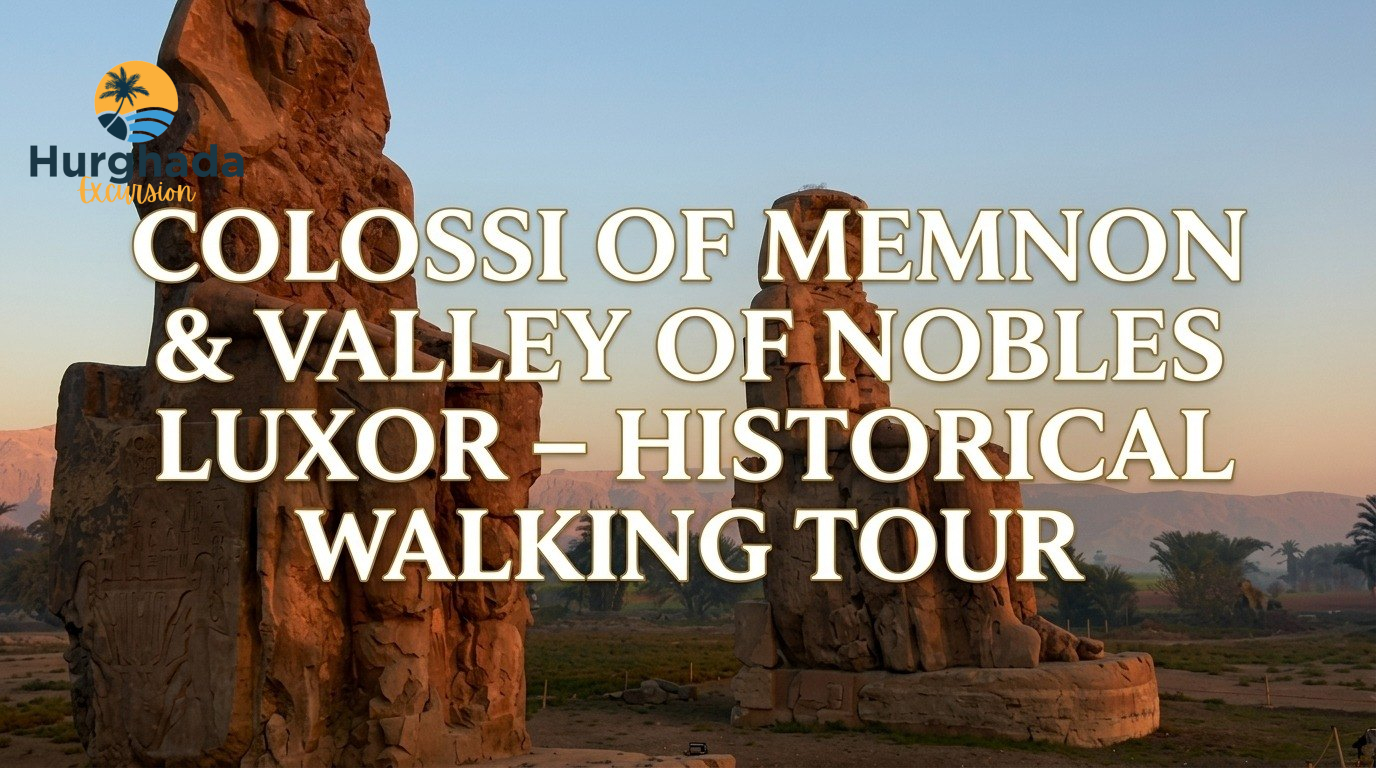
Colossi of Memnon & Valley of Nobles Luxor – Historical Walking Tour
📅 Updated: May 2026 | ⏱️ Half-Day Walking Tour · 3–4 Hours | 💶 From €75 / person | ⭐ 4.8/5 Rated | 🗿 Daily Departures
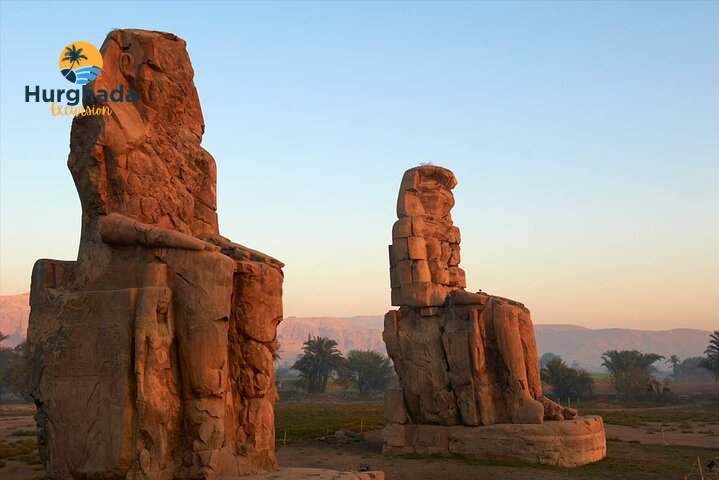
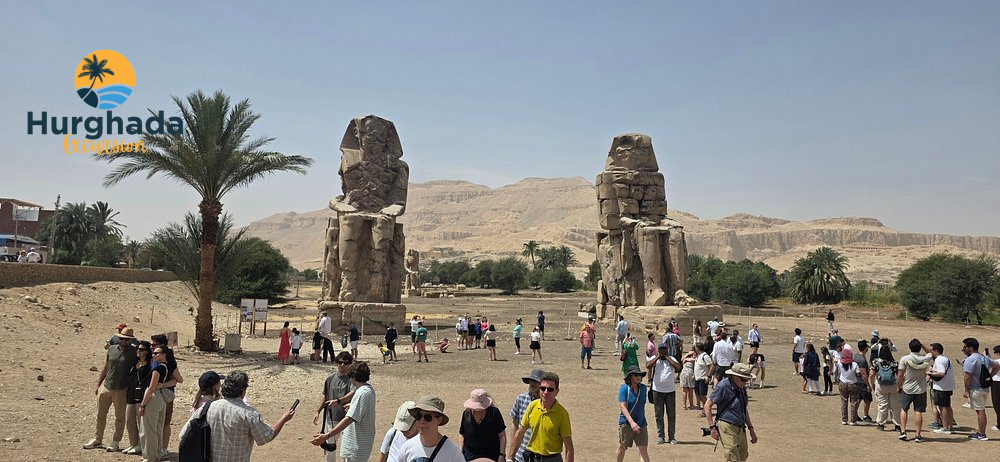
Colossi of Memnon & Valley of Nobles Luxor – Historical Walking Tour – They have stood on this plain for 3,400 years. Two quartzite giants, seated and serene, facing east toward the rising sun across the Nile Valley — each one 18 metres tall, each weighing approximately 720 tonnes, each cut from a single quartzite block transported over 675 kilometres from the quarries of Gebel el-Ahmar near Cairo. The Colossi of Memnon are among the oldest, largest, and most immediately breathtaking free-standing sculptures in the history of human civilisation — and they stand in an open field on the Luxor West Bank, accessible to every visitor, rising from the Egyptian landscape with an authority that makes them feel less like objects and more like presences.
The Colossi of Memnon and Valley of Nobles Luxor historical walking tour combines the iconic statues with the most undervisited and arguably most humanly engaging monuments on the entire West Bank — the Tombs of the Nobles, where the high officials, priests, scribes, and administrators of the New Kingdom decorated their hillside tombs not with cosmic religious texts but with vivid, colourful, joyful scenes from everyday Egyptian life. Walking between the Colossi and the Noble tombs in the morning light, with a licensed Egyptologist guide explaining every image and answering every question, is one of the most complete and most authentic Luxor experiences available to any traveller.
🗿 Where are the Colossi of Memnon and how old are they? The Colossi of Memnon are located on the West Bank of the Nile at Luxor (ancient Thebes), approximately 1 km west of the Nile embankment, on the road leading toward Hatshepsut Temple and the Valley of the Kings. They were built by the pharaoh Amenhotep III around 1350 BCE — making them approximately 3,370 years old. They originally stood at the entrance to Amenhotep III’s vast mortuary temple — at the time the largest temple in Egypt — which has since been almost entirely destroyed by flood and stone-robbing. The Colossi are the only surviving elements of what was once the most ambitious royal building project of the New Kingdom.
What Are the Colossi of Memnon? Story, History & Facts
The Colossi of Memnon are two massive quartzite seated statues of the ancient Egyptian pharaoh Amenhotep III (r. c. 1390–1352 BCE) — built to guard the entrance to his enormous mortuary temple on the West Bank of Luxor. Each statue depicts the pharaoh seated on a throne, hands resting on his knees, gazing eastward across the Nile toward the rising sun. The statues are accompanied by smaller standing figures carved at the sides of the thrones — Amenhotep III’s mother Mutemwia and his wife Tiye — and by elaborate relief carvings of the Nile god Hapy on the throne bases, representing the unification of Upper and Lower Egypt.
| Fact |
Detail |
| Pharaoh depicted |
Amenhotep III — Eighteenth Dynasty New Kingdom pharaoh |
| Built |
c. 1350 BCE — approximately 3,370 years ago |
| Height |
18 metres (each statue) · ~21m including bases |
| Weight |
~720 tonnes each — quartzite quarried 675 km away at Gebel el-Ahmar |
| Original purpose |
Entrance pylons to Amenhotep III’s mortuary temple — the largest in Egypt at the time |
| Location |
West Bank of Luxor · 1 km west of the Nile · free to view from roadside |
| Entrance fee |
Free — no ticket required to view from the road or the designated viewpoint area |
| Opening times |
Accessible at any time from the road · Viewpoint open from sunrise to sunset |
📐 Scale That Defies Comprehension
To understand the physical reality of the Colossi of Memnon: each statue is as tall as a six-storey building. Each weighs approximately the same as 120 adult male elephants. The quartzite from which they were carved was transported 675 km from the quarries near Cairo — before the invention of the wheel in Egypt, using Nile boats and human labour alone. When they were completed, they were the largest free-standing sculptures in the world. They have stood in this exact location for 3,370 years. No other ancient monuments in the world combine accessibility (free to view, no ticket, open all day), scale, and age in the same extraordinary way.
Top 10 Highlights of the Historical Walking Tour
🗿
1. Standing Before the Colossi at Sunrise
Arriving at the Colossi of Memnon before 08:00 AM — when the morning sun rises behind you and illuminates the statues’ faces in warm gold — is one of the most breathtaking photographic and experiential moments in Luxor. The statues face east, designed to catch exactly this light. Standing before them at sunrise as Amenhotep III intended is genuinely moving.
🎨
2. Noble Tomb Paintings — Egypt’s Most Human Art
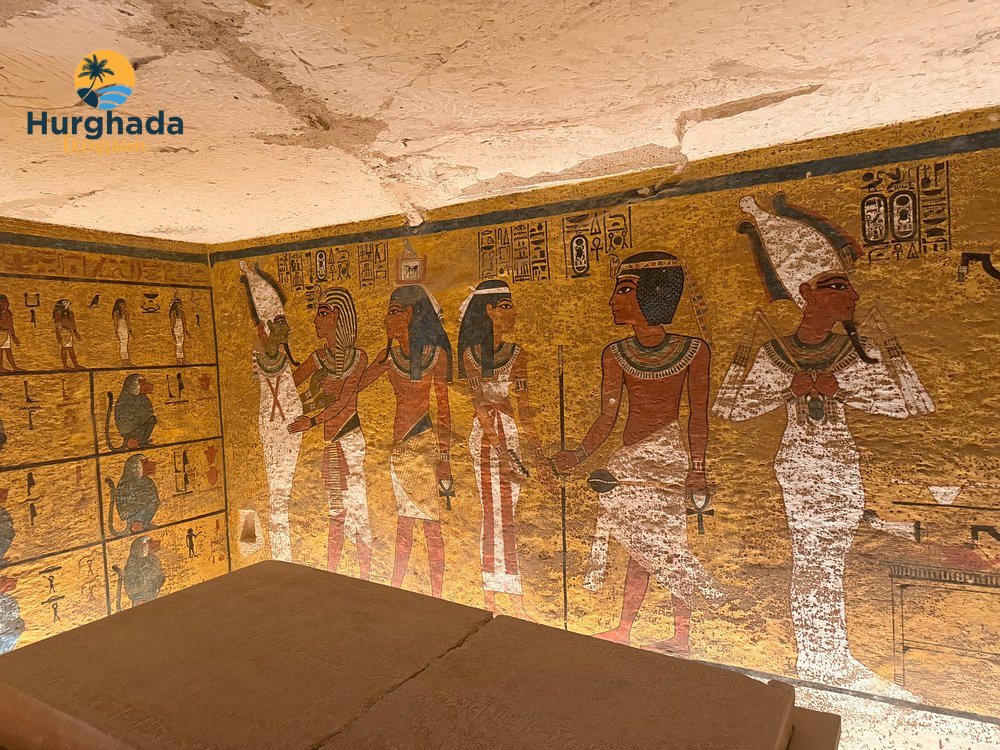
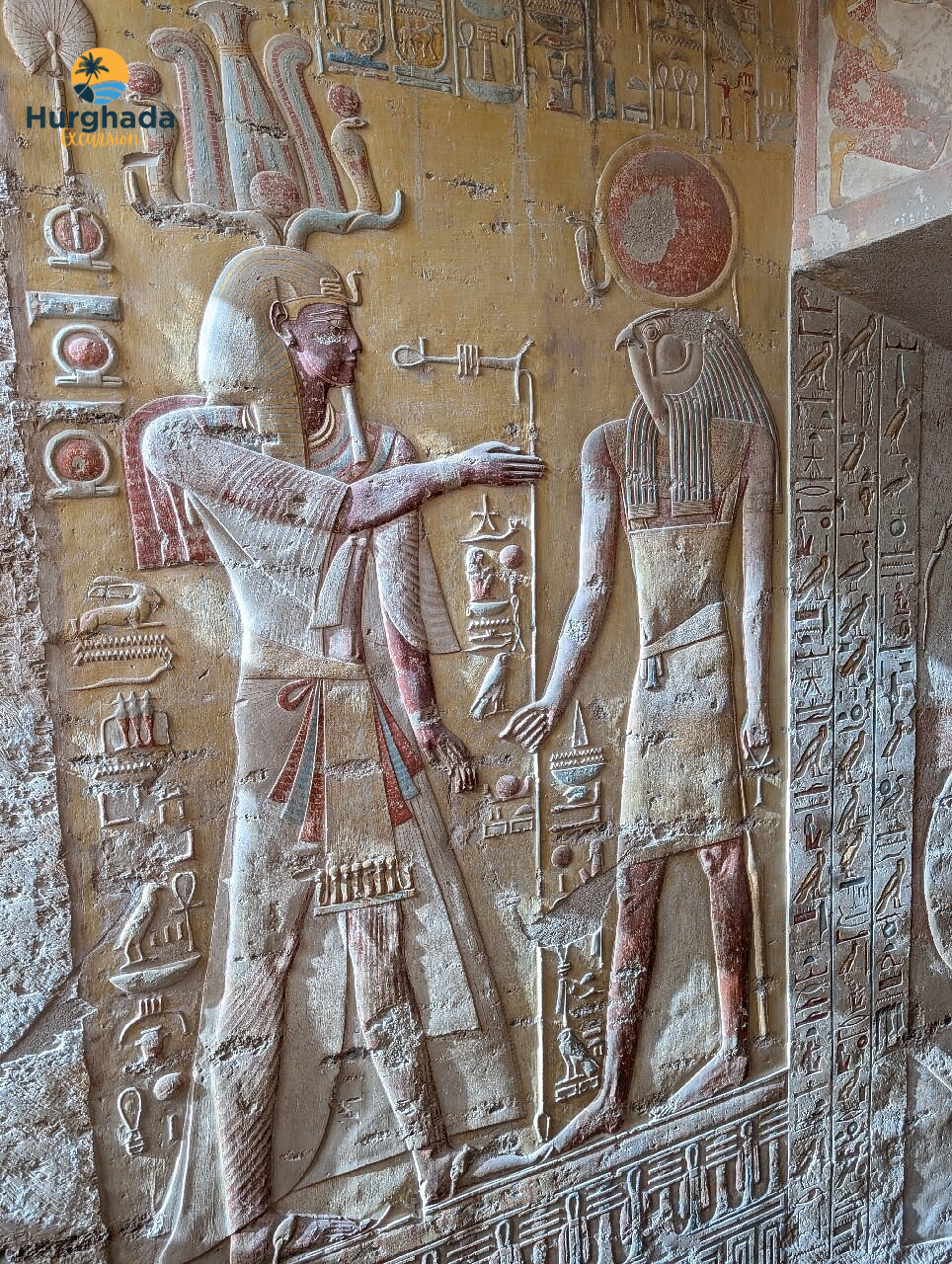
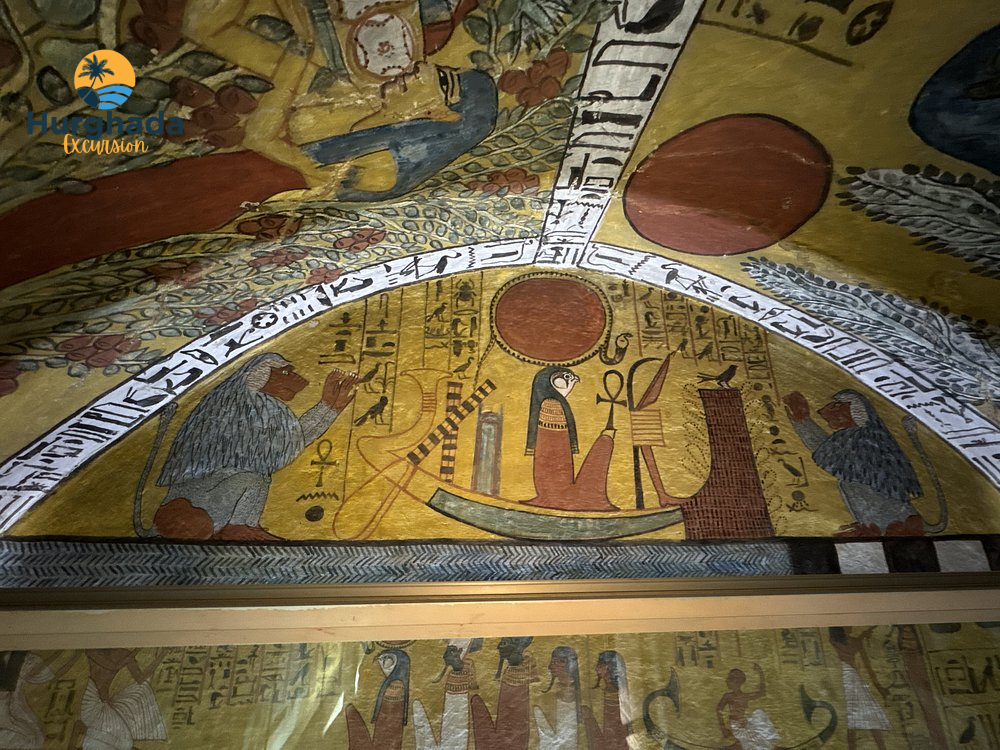
The painted tombs of the Nobles contain the most vivid, colourful, and humanly accessible ancient Egyptian paintings available anywhere — scenes of banquets, grape harvests, fishing, hunting, music, dancing, and family life. These are not cosmic religious texts but real glimpses of how educated Egyptians lived 3,300 years ago.
📖
3. The Singing Statues Legend
The guide delivers the complete story of the Colossi’s most extraordinary historical period — when Roman tourists travelled from across the ancient world to hear the northern statue “sing” at sunrise. Emperors visited. Poets wrote. The phenomenon attracted 2,000 years of pilgrimage. The guide explains both the scientific explanation and the ancient mythological context.
🦺
4. The Hapy Relief Carvings on the Throne Bases
At the base of each throne, elaborate relief carvings of Hapy — the god of the Nile flood — show him binding the papyrus and lotus plants of Upper and Lower Egypt. This symbolism of unity is among the most important in Egyptian royal iconography, and the guide decodes it in detail at close range at the statue bases.
🗺️
5. The West Bank Panorama
Standing at the Colossi with the guide, looking north toward Hatshepsut Temple and the Valley of the Kings ridge, south toward Medinet Habu, and east toward the Nile and Karnak — the complete West Bank geography becomes readable. This panoramic orientation from the Colossi is the best introduction to the spatial organisation of the Theban Necropolis.
🌾
6. Walking Through the Agricultural Plain
The walking section of this tour moves through the cultivated fields between the Colossi and the Noble tomb hillsides — sugar cane, wheat fields, and date palms worked by local farmers using the same seasonal rhythms as their ancestors. The agricultural landscape itself is an extraordinary living museum of the Nile Valley economy.
🎓
7. Egyptologist Guide — Dedicated to Your Group
A licensed Egyptologist whose undivided attention is on your group throughout the walking tour — explaining every painted scene, reading hieroglyphic cartouches from the tomb walls, answering every question, and connecting the specific officials buried in the Noble tombs to the pharaohs they served and the events they participated in.
🌅
8. The Hillside View from the Noble Tombs
The Noble tomb clusters are set into the Sheikh Abd al-Qurna hillside — accessible by short walks up stone paths from the agricultural plain below. From the hillside, the complete West Bank panorama is visible: the Colossi below, the Valley of the Kings ridge above, the Nile beyond, and the entire agricultural plain of ancient Thebes spread before you.
🏠
9. Encounter with Local West Bank Life
The walking route passes through the actual working community of the Luxor West Bank — children going to school, farmers on donkeys, women carrying produce, the smell of freshly baked bread from a village bakery. This genuine encounter with everyday Egyptian rural life is one of the most unexpectedly affecting experiences of any Luxor walking tour.
📸
10. Extraordinary Photography Opportunities
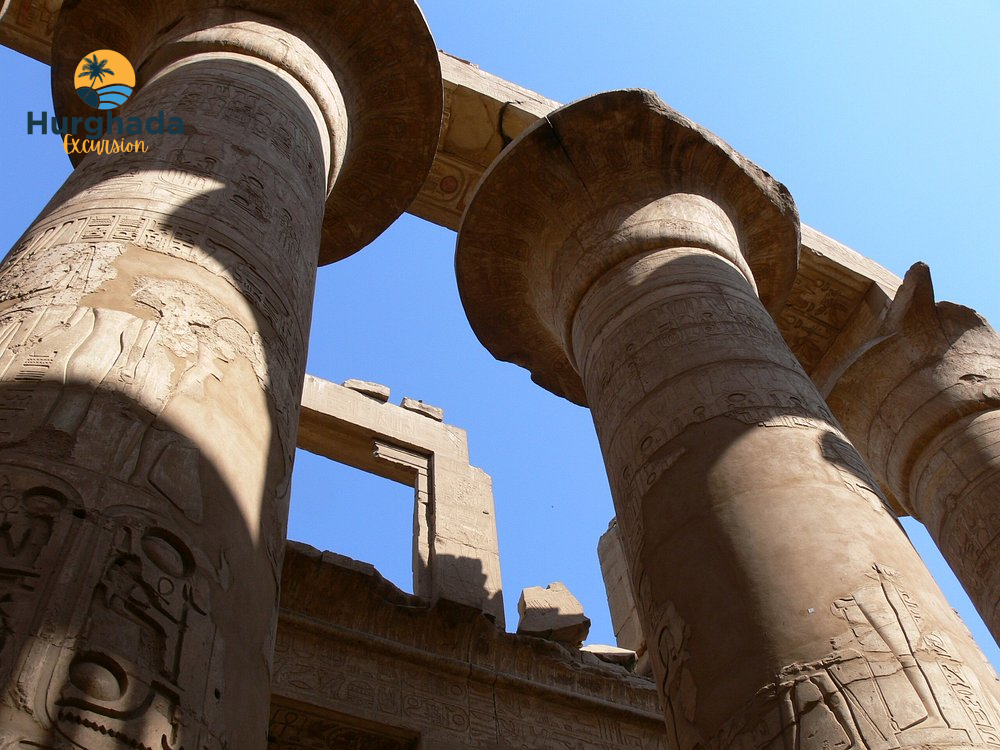
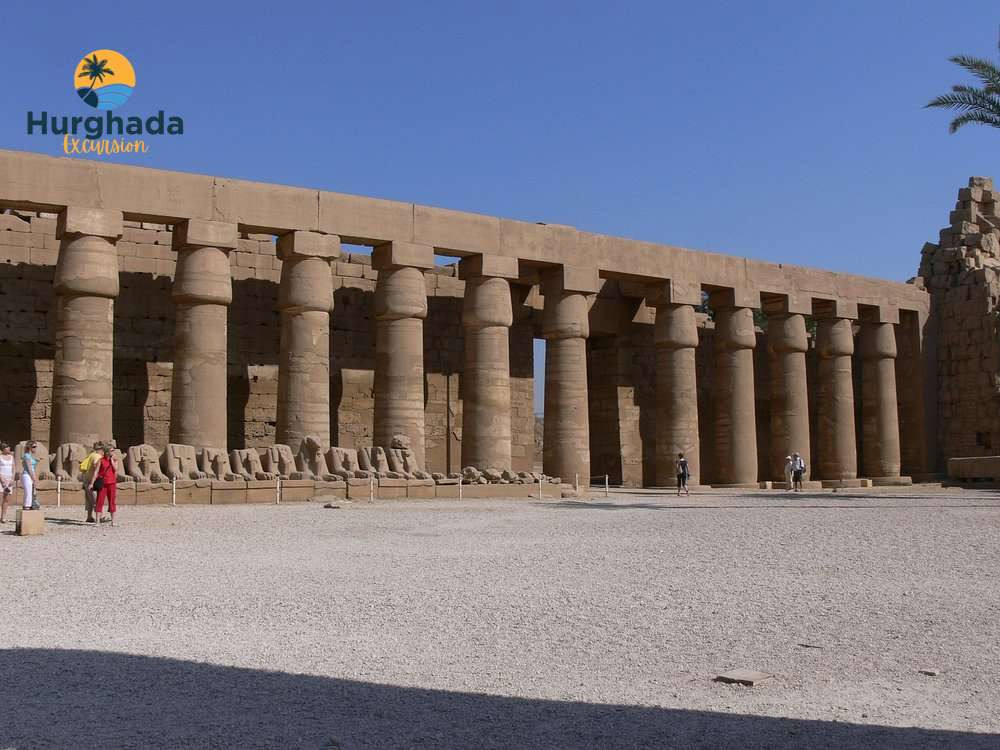
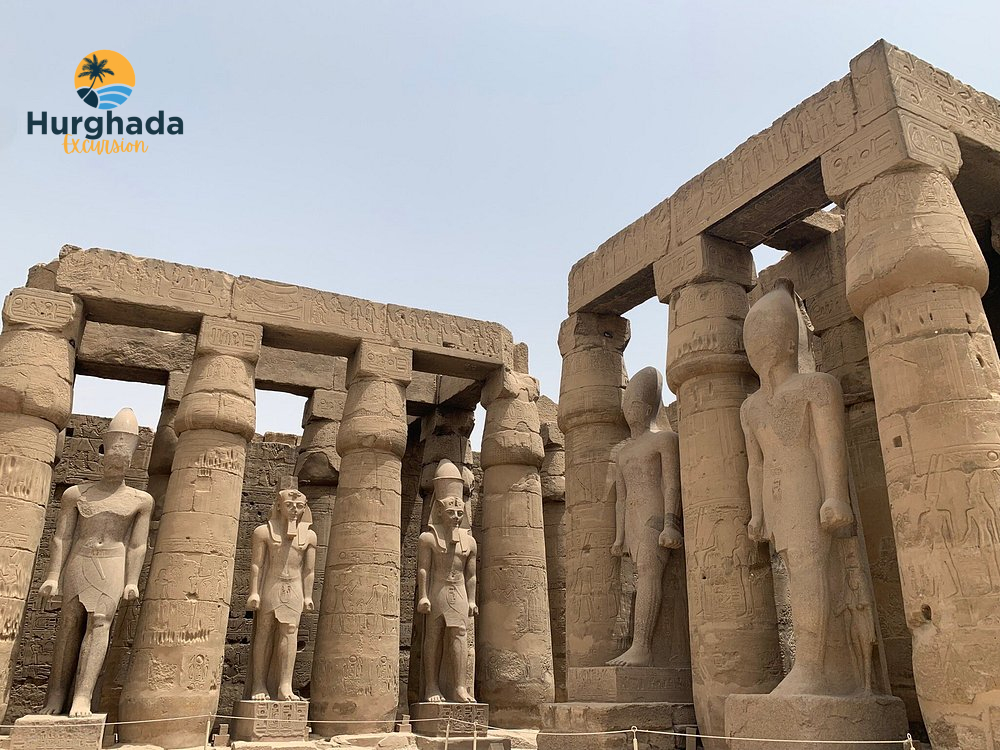
The Colossi at golden hour, the Noble tomb paintings in the diffuse underground light, the hillside panorama, the agricultural walking route, the faces of the local villagers — the photography on this tour is consistently described as the most varied and most authentic of any Luxor excursion.
Full Day Program — Hour by Hour from Hurghada
The Colossi of Memnon and Valley of Nobles historical walking tour is typically combined with other West Bank sites for a complete Luxor day from Hurghada. Here is the recommended full-day program:
04:00 – 07:30 · Departure & Road Transfer
🚐 Private Vehicle from Hurghada to Luxor West Bank
Pickup at 04:00 AM. The 3-hour road journey delivers the guide’s introduction to Amenhotep III, the history of the Colossi, and the social history of the Theban Nobles whose tombs you will visit. Arrival at the Luxor West Bank at approximately 07:30 AM — perfect for the early morning Colossi light.
07:30 – 08:15 · Colossi of Memnon
🗿 Colossi of Memnon — Morning Light, Full Historical Briefing
Arrival at the Colossi in the early morning light — the most photographically optimal time of the day. The guide delivers the complete story of Amenhotep III, the purpose of the statues, the lost mortuary temple they guarded, the Greek identification as Memnon, the singing phenomenon, and the Roman pilgrimage tradition. Approximately 45 minutes at the statues — with time for photographs from every angle before other tour groups arrive after 09:00 AM.
Photography tip: Stand with the statues behind you and the Nile and Luxor Temple (east) in the background for the classic West Bank portrait. Stand facing the statues with the Al-Qurn mountain above the Valley of the Kings behind them (northwest) for the most dramatic composition. Arrive before 08:30 AM to photograph without other tour groups in frame.
08:15 – 09:00 · Walking Route
🚶 Walking Through the West Bank Plain — 45-Minute Route
From the Colossi, the walking tour moves north across the agricultural plain toward the Sheikh Abd al-Qurna hillside where the Noble tombs are located — approximately 1 km on a well-maintained path through the fields. The guide provides running commentary on both the landscape (explaining how the Nile flood cycle made this plain the most productive agricultural land in the ancient world) and the history (explaining who the Nobles were and why they chose this hillside for their tombs).
09:00 – 11:00 · THE NOBLE TOMBS
🎨 Valley of the Nobles — 4–6 Selected Tombs with Full Explanation
The core of the walking tour — 2 hours visiting 4–6 of the finest Noble tombs on the Sheikh Abd al-Qurna hillside. The guide selects the best available combination based on current access and your group’s interests. Each tomb visit includes 15–20 minutes of guide commentary explaining who the official was, what role they played at court, what specific scenes in their tomb depict, and what those scenes tell us about everyday New Kingdom Egyptian life.
The key Noble tomb groups accessible from this hillside include: Tombs of the Viziers and Senior Officials (TT52 Nakht, TT55 Ramose, TT100 Rekhmire); Tombs of the Royal Tutors (TT96 Sennefer); and Tombs of the Temple Officials (TT69 Menna). The guide selects the open tombs with the finest painting condition and the most historically engaging content for each visit day.
11:00 – 14:00 · Optional West Bank Continuation
🏺 Valley of the Kings · Hatshepsut Temple · Medinet Habu
For the combined West Bank full-day package, the morning walking tour (Colossi + Noble Tombs) transitions to the principal West Bank monuments: Valley of the Kings (3 tombs, standard entry), Hatshepsut Temple, or Medinet Habu — depending on which combination your guide recommends based on time and energy. Lunch at a West Bank or city restaurant at approximately 13:00.
14:30 – 17:30 · Return to Hurghada
🛣️ Return Drive — Arrive Hurghada ~17:30 PM
The return journey departs Luxor in the early-to-mid afternoon — arriving in Hurghada at approximately 17:30 PM with a full evening ahead.
The Story of the Colossi — Amenhotep III & the Singing Statues
What is the story of the Colossi of Memnon? The complete story involves three distinct chapters — the Egyptian creation, the Roman legend, and the modern archaeology:
Chapter 1 — The Egyptian Creation
Amenhotep III’s Grand Vision (c. 1350 BCE)
Amenhotep III — one of the wealthiest and most artistically accomplished pharaohs in Egyptian history — built his mortuary temple on the West Bank as the largest and most magnificent religious complex in Egypt. The Colossi were positioned at its entrance pylon, visible across the agricultural plain and across the Nile itself. At 18 metres, they were the largest statues in the world when built. The temple behind them — of which virtually nothing now survives — was even more extraordinary.
Chapter 2 — The Roman Legend
Memnon’s Song (27 BCE – 199 CE)
In 27 BCE, a devastating earthquake split the northern colossus from the waist upward. The damaged statue began to emit a musical sound at sunrise — described by ancient visitors as a singing, wailing, or musical note. The Greeks identified the statues as depicting Memnon — the Ethiopian hero of the Trojan War — and interpreted the song as Memnon greeting his mother Eos (the Dawn). Emperors, generals, poets, and tourists travelled from across the Roman Empire to witness it.
Chapter 3 — Modern Archaeology
The Lost Temple & Ongoing Excavation
Since 1998, the Colossi of Memnon and Amenhotep III Temple Project (directed by Dr. Hourig Sourouzian) has been excavating the site of the lost mortuary temple — recovering thousands of high-quality statues, architectural fragments, and relief blocks from beneath the agricultural plain. The excavations have revealed that the temple was not merely large but one of the most lavishly decorated buildings in Egyptian history. Ongoing work continues annually.
Do the Colossi of Memnon Still Sing? The Legend Explained
What is the legend behind Memnon’s statue sound? And do the Colossi of Memnon still sing? The complete scientific and mythological explanation:
🎵 The Science Behind the Singing: The “song” of the northern Colossus was almost certainly caused by a physical phenomenon: the 27 BCE earthquake fractured the upper body of the statue, creating internal cracks and cavities. When the cold night air retained within the sandstone (which was used to repair the broken upper section) expanded rapidly in the warmth of the sunrise, the gas movement through the cracks produced audible vibrations — a whistling, musical sound. This phenomenon is well-documented in other cracked stone structures.
Do the Colossi of Memnon still sing? No — when the Roman Emperor Septimius Severus visited in 199 CE and had the statue repaired (refilled with sandstone blocks to restore its original shape), the sound disappeared permanently. The repair that preserved the statue also silenced its song — one of history’s most poignant ironies.
🏛️
Ancient Visitor Graffiti
Over 100 ancient Greek and Latin inscriptions survive on the statue bases, left by visitors who heard the sound — including inscriptions from the Roman Empress Sabina (wife of Hadrian) who visited twice trying to hear the song, and the poet Julia Balbilla who commemorated the experience in verse. These graffiti are the world’s oldest tourist reviews — legible on the statue bases today.
🌟
Memnon the Hero
The Greek identification of the statues as Memnon was entirely erroneous — the statues depict Amenhotep III, not Memnon. But the legend it generated was so powerful that it turned the Colossi into one of the ancient world’s most famous tourist attractions. Memnon in Greek mythology was an Ethiopian king and warrior who fought at Troy, killed by Achilles, whose immortality was granted by Zeus. His mother Eos (Dawn) was said to weep for him every morning — explained as the sunrise dew on the statues.
Colossi of Memnon Reconstruction — What Remains & What Was Lost
What does the Colossi of Memnon represent — and what does the current state of the statues reveal about what was lost? The guide explains both at the site:
🗿
The Main Seated Figures
The primary figures — Amenhotep III seated, hands on knees, wearing the nemes headdress and double crown — are the original quartzite blocks, though significantly weathered. The northern statue is composed partly of the original quartzite and partly of the sandstone repair blocks added by Septimius Severus in 199 CE.
👸
The Side Figures — Wife & Mother
Carved at each throne: the standing figures of Amenhotep III’s mother Mutemwia (left leg side) and his wife Queen Tiye (right leg side). Significantly weathered but still legible. The guide identifies each figure and explains their role and significance in Amenhotep III’s court.
🌊
The Hapy Reliefs
The most legible carved elements on the current statues — the Hapy figure on the throne bases, showing the god of the Nile flood binding together the heraldic plants of Upper Egypt (lotus) and Lower Egypt (papyrus) around a sema (lungs and trachea) symbol representing unification. This symbolism appears throughout pharaonic royal iconography.
🏚️
The Lost Temple
The vast mortuary temple that the Colossi guarded no longer exists above ground — destroyed by successive Nile floods, earthquake damage, and systematic stone-robbing by later pharaohs. The ongoing Dr. Sourouzian excavation has recovered thousands of objects from beneath the flooded plain, including a 13-metre alabaster statue of Amenhotep III — the largest intact statue of any pharaoh ever discovered.
The Valley of the Nobles — Who Were They and What Do Their Tombs Show?
The Valley of the Nobles (also called the Tombs of the Nobles or the Theban Tombs) is the collective name for the 400+ private tombs of Luxor’s high officials, priests, military commanders, royal tutors, and administrators — scattered across multiple hillside clusters on the West Bank. Here is the essential guide:
🎨 Why the Noble Tombs Are Special
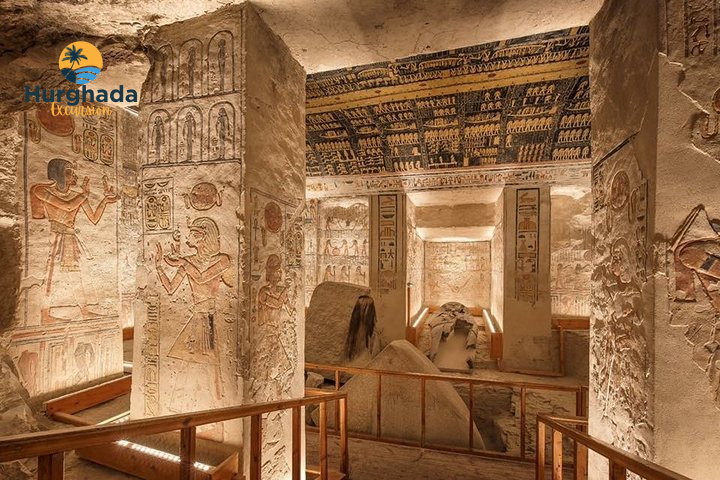
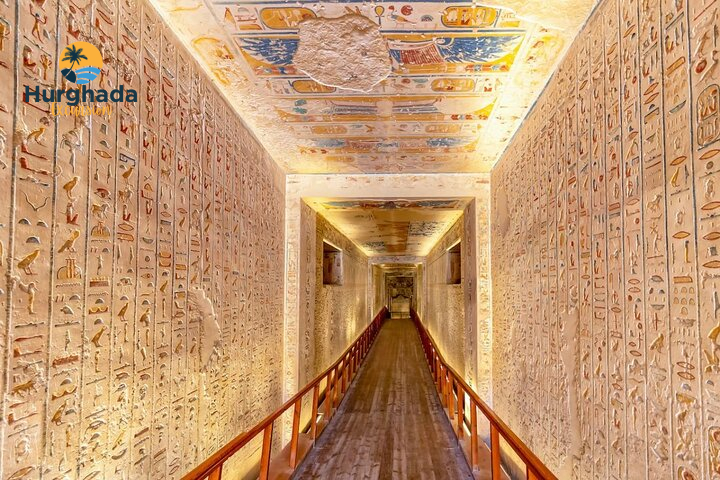
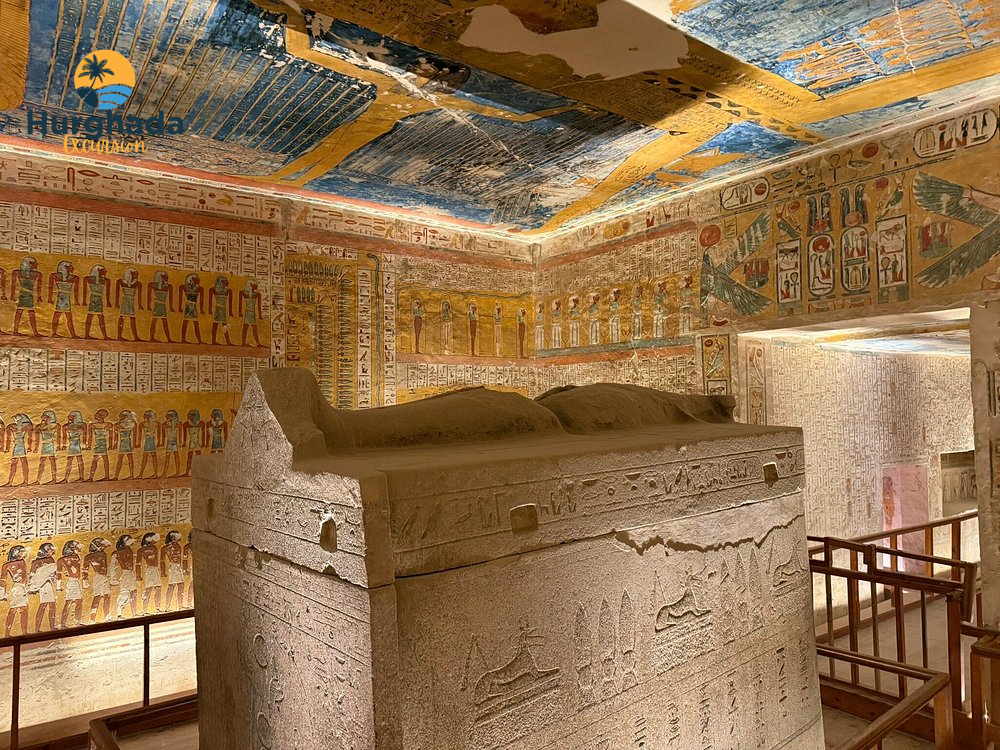
The royal tombs of the Valley of the Kings are decorated primarily with religious texts — the Books of the Dead, Amduat, and Book of Gates — designed to guide the pharaoh through the underworld. The Noble tombs are decorated with something entirely different: scenes from real life.
Hunting in the papyrus marshes. Grape harvests and wine production. Banquets with musicians playing harps and lutes. Craftsmen at work — carpenters, jewellers, potters, weavers. Scribes counting cattle. Agricultural scenes showing every stage of the farming cycle. Fishing. Dancing girls. Funeral processions. Family meals. These are the most vivid, colourful, and humanly accessible paintings in all of ancient Egypt — and they are displayed in tombs that receive only 5% of the visitors who walk past them every day on the way to the Valley of the Kings.
📝
Who Were the Nobles?
The Theban Nobles were the top tier of the Egyptian administrative, religious, and military hierarchy — viziers (prime ministers), high priests, royal architects, chief stewards, generals, treasury officials, and royal tutors. Many had direct daily access to the pharaoh. Their tombs were carved by the same artists who worked on the royal tombs — the quality of painting is often comparable.
🌿
Everyday Life Scenes
The daily life scenes in the Noble tombs are so detailed that Egyptologists use them as primary historical sources for understanding how ordinary (and privileged) ancient Egyptians lived — what they ate, how they dressed, what music they played, how they farmed, fished, and celebrated. No other source provides this level of visual documentation.
🎵
Music & Banquet Scenes
The banquet scenes in the Noble tombs are among the finest paintings in Egypt — elegant guests seated in fine linen, female musicians playing harps, lutes, and double flutes, dancers performing, servants offering food and wine. The quality of the figures, the expressiveness of the faces, and the vibrancy of the colours 3,300 years after painting make these scenes endlessly fascinating.
🍇
Agricultural Scenes
Scenes of grape harvesting, treading, and wine-making appear in multiple Noble tombs — showing the complete process from the vineyard to the storage jar. These paintings are the most detailed surviving visual record of wine production in the ancient world, and make the tombs of particular interest to anyone interested in the history of food and drink.
Best Noble Tombs to Visit — Selected Guide
The guide selects the best available tombs based on current access and your group’s interests. These are the most frequently visited and most highly regarded:
⭐⭐ Most Beautiful
TT96 — Sennefer (Mayor of Thebes)
Known as the “Tomb of the Vines” — the ceiling of the antechamber is painted with a grape vine growing across it, clusters of grapes hanging above the viewer’s head, painted in vivid purple and green on a dark background. Sennefer was Mayor of Thebes under Amenhotep II. The quality and condition of the painting here is extraordinary. One of the most immediately striking tombs in all of Luxor.
⭐ Most Artistically Accomplished
TT55 — Ramose (Vizier under Amenhotep III & Akhenaten)
One of the largest and most artistically accomplished Noble tombs — Ramose was vizier during the transition from Amenhotep III to Akhenaten. His tomb shows both traditional New Kingdom style (some of the finest sunk relief carving outside Seti I’s tomb) and the revolutionary Amarna style introduced by Akhenaten — making it the only tomb in Luxor where both artistic traditions appear side by side.
⭐ Best Daily Life Scenes
TT52 — Nakht (Astronomer & Royal Scribe)
A small tomb but containing some of the finest painted daily life scenes in Egypt — a banquet scene with musicians and dancers of extraordinary delicacy, a hunting scene in the papyrus marshes, and agricultural scenes of grape harvesting and threshing. The colours are exceptionally vivid and the individual figures full of personality. A consistently popular choice for the walking tour.
⭐ Most Comprehensive
TT100 — Rekhmire (Vizier under Thutmose III)
One of the largest Noble tombs and arguably the most historically comprehensive — its walls show tribute processions from foreign lands (Punt, Crete, Syria, Nubia), craftsmen at work in every trade, and administrative scenes of tax collection, legal judgement, and market activity. The guide can spend an entire hour in Rekhmire’s tomb alone and never repeat an explanation.
⭐ Best Agricultural Scenes
TT69 — Menna (Chief of Fields)
Menna was responsible for overseeing agricultural estates for the pharaoh — and his tomb paintings reflect his professional life in extraordinary detail: land surveying, grain measurement, cattle counting, grain transport, and all stages of the agricultural cycle shown with vivid colour and narrative complexity. The fishing and fowling scenes are among the finest of this type in any Egyptian tomb.
Colossi of Memnon Entrance Fee & Valley of Nobles Tickets 2026
| Site |
Ticket (EGP) |
Approx. EUR |
Notes |
| Colossi of Memnon |
FREE |
Free |
No ticket required · viewable from roadside at any time |
| Valley of the Nobles (per group) |
~200–300 EGP |
~€4–6 |
Ticket covers access to a set of tombs in one group |
| Sheikh Abd al-Qurna Group |
~200 EGP |
~€4 |
Includes Nakht (TT52), Menna (TT69), and others |
| Khokha Group (Ramose, Userhat, Khaemhat) |
~200 EGP |
~€4 |
Includes Ramose (TT55) and related tombs |
| Sennefer Tomb (TT96) — separate |
~100–150 EGP |
~€2–3 |
Separate ticket · the Tomb of the Vines · most recommended |
Tour Price from Hurghada 2026 — What’s Included
Colossi of Memnon & Valley of Nobles Historical Walking Tour — From
€75
per adult · Full day · Private Egyptologist guide · Colossi + Noble Tombs + Optional West Bank sites
✓ Private Vehicle · ✓ Egyptologist Guide · ✓ All Entry Fees · ✓ Lunch · ✓ Walking Tour Equipment
Children 4–11: 50% discount · Combined with Valley of the Kings: from €85
✅ Included
✓ Private air-conditioned vehicle: Hurghada – Luxor – Hurghada
✓ Licensed Egyptologist guide for the full day walking tour
✓ Valley of Nobles tomb entry tickets (Sheikh Abd al-Qurna and Khokha groups)
✓ Sennefer Tomb (TT96 — Tomb of the Vines) entry
✓ Nile crossing (motorboat) East Bank ↔ West Bank
✓ Full lunch at a Luxor restaurant · Bottled water · Free cancellation 48 hours before
Best Time to Visit the Colossi & Valley of Nobles
| Season |
Morning Temp |
Colossi Light |
Walking Comfort |
Verdict |
| Oct – Nov |
18–24°C |
Golden, warm |
Excellent |
Ideal |
| Dec – Feb |
10–18°C |
Crisp, brilliant |
Excellent |
Best overall · bring warm layer for dawn |
| Mar – May |
20–30°C |
Good |
Good — start before 09:00 |
Very Good |
| Jun – Sep |
32–40°C |
Intense |
Challenging — very early essential |
Possible before 09:00 AM only |
10 Expert Tips for Your Historical Walking Tour
Tip 1 — Arrive at the Colossi before 08:30 AM for the best light and the fewest other tourists. The Colossi face east — designed to catch the rising sun. Before 08:30 AM, the morning sun illuminates their faces in warm golden light from directly behind the photographer. After 09:30 AM, the sun rises higher and the light becomes harsh. Most tour groups arrive after 09:00 AM — arriving before 08:30 AM with your private guide means the statues to yourself in optimal light.
Tip 2 — Approach the Colossi on foot from 100 metres away — don’t drive straight to them. Arriving by vehicle and stopping at the roadside barrier gives you the conventional tourist photograph. Walking toward the statues from 100 metres away — watching them grow progressively larger as you approach — gives you the spatial experience that communicates their actual scale. The guide times this approach deliberately.
Tip 3 — Ask the guide to read the ancient graffiti on the statue bases. The ancient Greek and Latin inscriptions left by Roman tourists who heard the singing are still partially legible on the lower courses of the northern statue. The guide reads selected inscriptions aloud in translation — including the verse by Julia Balbilla describing Empress Sabina’s visit in 130 CE. Hearing a Roman tourist’s description of visiting these statues 1,900 years ago is a genuinely extraordinary moment of temporal vertigo.
Tip 4 — In the Noble tombs, look at the details rather than the overall scene. The tendency in the Noble tombs is to stand back and appreciate the overall painted compositions. But the finest details — the individual faces of the musicians in Nakht’s banquet, the facial expressions of the grape-treaders in Menna’s wine-making scene, the fish being speared in the marsh hunting scene — are visible only up close. Bring the guide in close to each wall and look at the micro-details.
Tip 5 — Sennefer’s Tomb (TT96) is the single most unmissable Noble tomb — always include it. The vine ceiling of Sennefer’s antechamber — clusters of purple grapes painted across the entire ceiling as if you are standing beneath a real grape arbour — is one of the most immediately beautiful and accessible ancient Egyptian paintings anywhere. It requires no historical knowledge to appreciate; it is simply magnificent. Always include it regardless of time constraints.
Tip 6 — The walking route is the tour’s secret highlight. The 1 km walk between the Colossi and the Noble tombs passes through the working agricultural plain of the Luxor West Bank — the same landscape that has been farmed continuously since the New Kingdom. The guide explains the agriculture, points out the farming techniques, and identifies the ancient monuments visible in every direction. Many guests describe this walk as the most genuinely “in Egypt” they felt during their entire holiday.
Tip 7 — Wear proper walking shoes — not flip-flops or open sandals. The walking route crosses agricultural paths with uneven surfaces, small irrigation channels, and the hillside approaches to the Noble tombs. Comfortable closed shoes with good grip are essential. The tomb interiors involve steps and slight slopes. Flip-flops or sandals are unsuitable and unsafe.
Tip 8 — Combine with the Valley of the Kings in the same morning for maximum West Bank coverage. The Colossi of Memnon and Noble Tombs walking tour occupies approximately 3–4 hours. The Valley of the Kings is 15 minutes further west on the same road. Combining both in a single morning — Colossi at 07:30, Noble Tombs 08:30–10:30, Valley of the Kings 10:30–12:30, lunch at 13:00 — is achievable with early arrival and delivers the most comprehensive West Bank morning available in Luxor.
Tip 9 — The Noble tombs are cool inside — welcome in summer. While the walking route between sites is exposed to full sun (particularly challenging June–September), the Noble tombs themselves are carved into the hillside rock and maintain a natural temperature of approximately 20–22°C regardless of external heat. In summer, the tombs provide genuine relief from the heat — and the walk is best scheduled before 08:30 AM to avoid the worst of the morning temperature rise.
Tip 10 — This tour provides the most human encounter with ancient Egypt available in Luxor. The Valley of the Kings shows you how the pharaohs prepared for eternity. The Noble Tombs show you how educated Egyptians actually lived — what they ate, who they loved, what music they danced to, what made them happy. These are not religious texts. They are the most vivid visual diary of a vanished culture that survives anywhere in the world. Do not miss them.
Real Reviews from Travellers
★★★★★
“The Noble Tombs were the surprise of our entire Luxor trip. We almost didn’t include them — the guide insisted and I’m so glad he did. Sennefer’s vine ceiling is one of the most beautiful things I have ever stood under. The banquet scenes in Nakht’s tomb are extraordinary — the faces of the musicians are full of personality and joy. These should be on every Luxor itinerary.”
Caroline W. — London · March 2026
★★★★★
“Standing before the Colossi of Memnon at 07:45 in the morning light — just our group and the guide, no other tourists — was one of the most powerful moments of our Egypt trip. The guide read from the ancient Roman graffiti on the base and explained the singing legend in complete detail. Then we walked through the fields to the Noble Tombs. Perfect morning.”
David & Helen K. — Edinburgh · February 2026
★★★★★
“The walking through the agricultural fields between the Colossi and the tombs was unexpectedly wonderful — children going to school, farmers on donkeys, ancient irrigation channels still in use. Our guide explained the Nile flood cycle and the agricultural calendar while we walked. It felt like the most genuine moment of the entire holiday. The Noble Tombs were then extraordinary. Highly recommended.”
Sarah & James T. — Bristol · January 2026
Frequently Asked Questions
Where are the Colossi of Memnon and how old are they?
Where are the Colossi of Memnon and how old are they? The Colossi of Memnon are located on the West Bank of the Nile at Luxor, Egypt — approximately 1 km west of the Nile embankment, on the main road toward Hatshepsut Temple and the Valley of the Kings. They were built by the pharaoh Amenhotep III around 1350 BCE — making them approximately 3,370 years old. Entry is free and they are visible from the roadside at any time.
What is the purpose of the Colossi of Memnon?
What is the purpose of the Colossi of Memnon? The Colossi were built to flank the entrance pylon of Amenhotep III’s mortuary temple — the largest temple complex in Egypt at the time of its construction. Their purpose was to proclaim the power and divine status of the pharaoh to all who crossed the Nile, to protect the temple entrance, and to embody the king’s eternal presence at the gateway between the world of the living and the world of the dead. What does the Colossi of Memnon represent? They represent Amenhotep III in his divine form — seated eternally, gazing east toward the rising sun (Amun-Ra), united with the gods after death.
What is the legend behind the Memnon statues’ sound?
What is the legend behind Memnon’s statue sound? After an earthquake in 27 BCE cracked the northern colossus, it began emitting a musical sound at sunrise. The Greeks identified the statues as depicting Memnon — the Ethiopian hero of the Trojan War — and interpreted the sound as Memnon greeting his mother Eos (Dawn). The scientific explanation: rapid warming of the damaged stone at sunrise caused air to expand through internal cracks, producing an audible vibration. Do the Colossi of Memnon still sing? No — when Emperor Septimius Severus repaired the damaged statue in 199 CE (filling the cracks with sandstone blocks), the sound disappeared permanently.
What is the Colossi of Memnon entrance fee?
Colossi of Memnon entrance fee: There is no entrance fee to view the Colossi of Memnon. They stand in an open area visible from the roadside and the designated viewpoint at any time of day, completely free of charge. The Valley of the Nobles tombs require separate tickets (approximately 200–300 EGP per group for each tomb cluster). Our tour includes all Noble Tomb entry tickets in the all-inclusive price.
What time does the Colossi of Memnon open?
What time does the Colossi of Memnon open? The statues are visible from the roadside at any time — sunrise to sunset and beyond. There is no formal “opening time” for the viewpoint area. The best time to visit is 07:00–08:30 AM for optimal morning light (the statues face east and catch the sunrise) and to avoid the tour group crowds that arrive after 09:00 AM. Our historical walking tour departs Hurghada at 04:00 AM and arrives at the Colossi at approximately 07:30 AM.
Book Your Colossi of Memnon & Valley of Nobles Walking Tour Today
From €75 per person · Private vehicle from Hurghada · Egyptologist guide · Colossi + 4–6 Noble Tombs · Agricultural plain walk · Lunch · Free cancellation 48 hours before.
🗿 Book Now — From €75
The Colossi of Memnon and Valley of Nobles Luxor historical walking tour delivers two of the most extraordinary encounters available on the Luxor West Bank — one with the largest and oldest free-standing sculptures in the ancient world, and one with the most vivid and humanly accessible paintings in all of ancient Egypt. The Colossi remind you of what human ambition could achieve 3,370 years ago. The Noble Tombs remind you that the people who lived in the shadows of those ambitions — the musicians, the farmers, the officials, the grape-treaders — were as fully human and as fully alive as anyone who walks past their tombs today. Both encounters are essential. Neither is possible without a guide who understands both.
Book your historical walking tour today with Hurghada Excursion — early departure, private vehicle, licensed Egyptologist, and the most complete West Bank walking experience available from the Red Sea coast.