🏛️ World-Class Museum · Royal Mummies · Egyptologist Guide · From Hurghada · Daily
Luxor Museum – Ancient Artifacts & Royal Mummy Exhibition Tour
📅 Updated: May 2026 | ⏱️ 1.5–2 Hours in Museum · Full Day from Hurghada | 💶 From €75 / person | ⭐ 4.8/5 Rated | 🏛️ Daily Departures
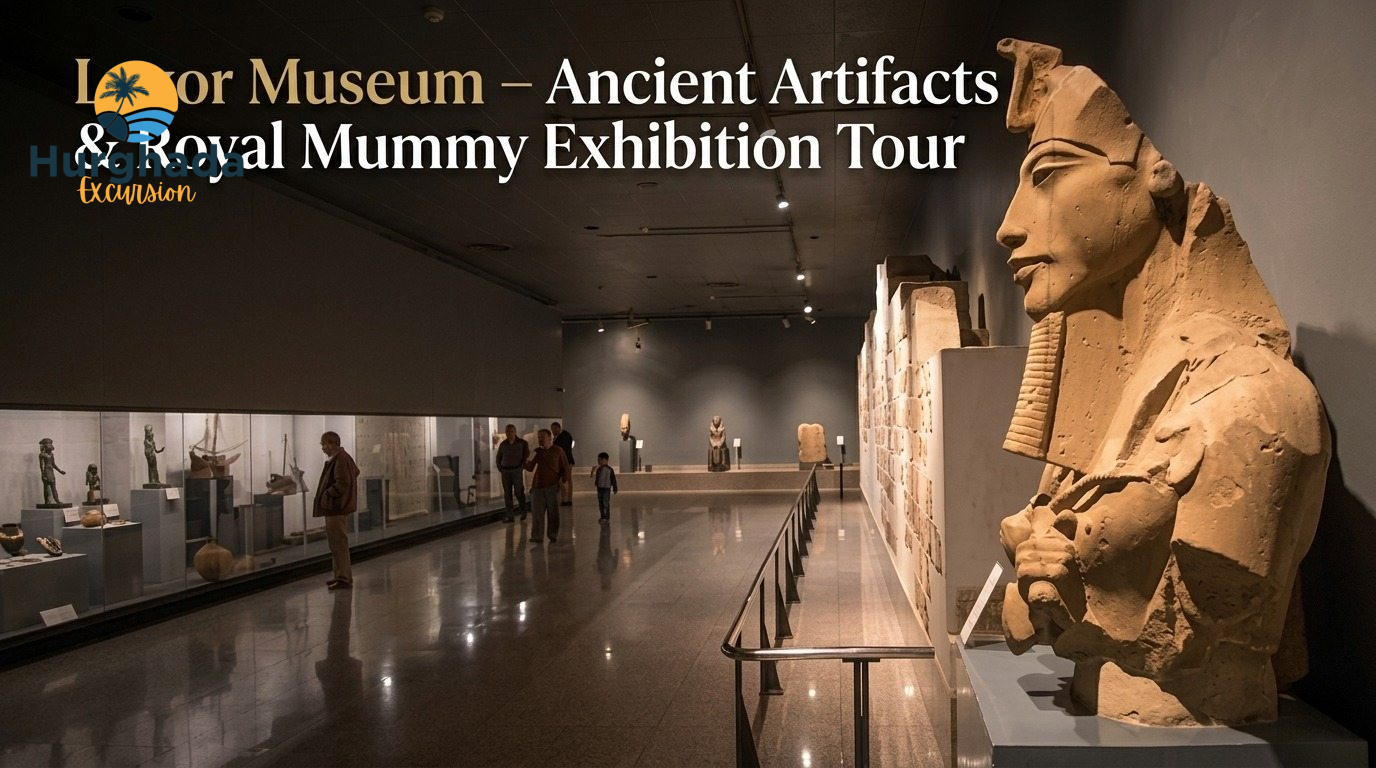
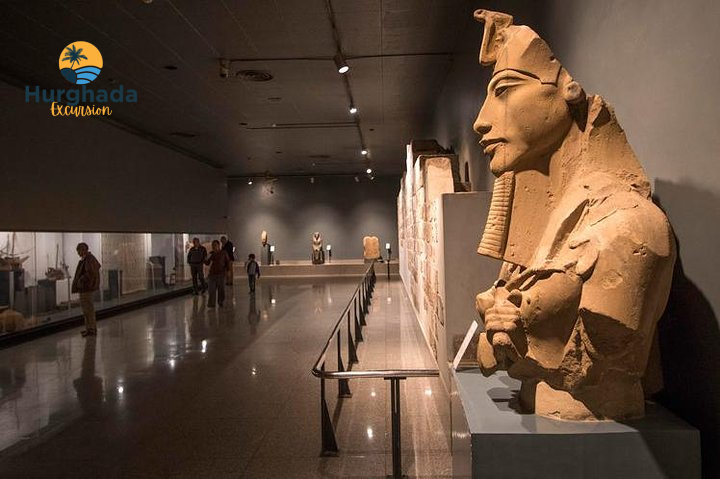
The Luxor Museum is arguably the finest museum in Egypt for the quality, display, and context of its collection — and one of the most underrated cultural experiences available from Hurghada. While the Grand Egyptian Museum in Cairo houses the largest collection of Egyptian antiquities in the world, it is the Luxor Museum that presents them most beautifully — a carefully curated selection of objects from the Theban region, displayed in a modern, spacious, climate-controlled building on the Nile Corniche, with state-of-the-art lighting, bilingual Arabic-English labels, and an exhibition philosophy that prioritises quality over quantity. Every object in the Luxor Museum is extraordinary. Not one is superfluous.
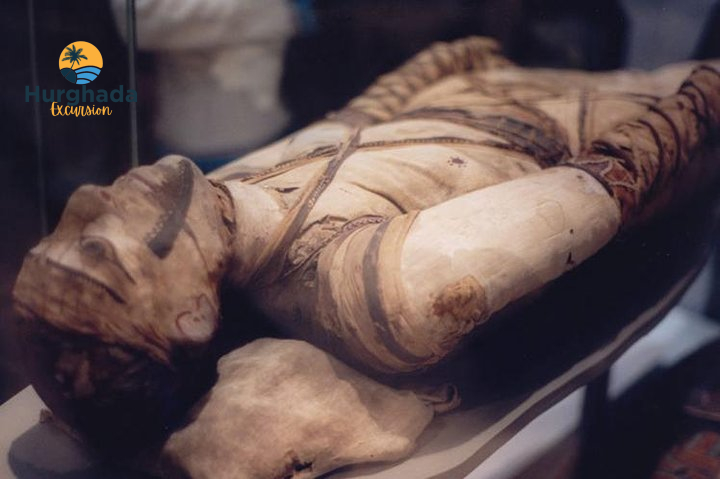
Is Luxor Museum worth visiting? Without question — and not only for history enthusiasts. The Luxor Museum contains two of the most extraordinary objects in Egypt: the reconstructed Talatat Wall — a 17-metre section of the Akhenaten temple at Karnak, reconstructed from 283 individual blocks — and two royal mummies of the greatest warrior pharaohs in history: Ahmose I (founder of the New Kingdom) and Ramesses I (founder of the Nineteenth Dynasty). Lying in climate-controlled cases, these mummies are among the most profoundly moving objects that any traveller can stand before — the physical remains of men who shaped the course of human civilisation, preserved for 3,300 years and displayed with the dignity and scholarly context they deserve.
🏛️ Is Tutankhamun in Luxor? Tutankhamun’s mummy remains in his original tomb (KV62) in the Valley of the Kings — where it has been since Howard Carter’s discovery in 1922. Tutankhamun is not in the Luxor Museum, and his famous gold death mask and the 5,000+ treasures from his tomb are in the Grand Egyptian Museum in Cairo (opened 2023). However, the Luxor Museum contains objects from Tutankhamun’s era, including artifacts from the Amarna period and items relating to the restoration of traditional religion after his predecessor Akhenaten’s monotheistic revolution — providing the essential historical context for understanding why Tutankhamun matters. The two royal mummies in the Luxor Museum — Ahmose I and Ramesses I — are both older and arguably more historically significant than Tutankhamun in terms of their impact on Egyptian history.
What Is Luxor Museum? History, Size & Significance
The Luxor Museum opened in 1975 and underwent a major expansion in 2004 that nearly doubled its floor space and added the New Kingdom Military Gallery and the Royal Mummy Room. Located on the East Bank Nile Corniche between Luxor Temple and Karnak Temple — within walking distance of both — it houses approximately 700 selected objects from the Theban region, spanning the Middle Kingdom (c. 2055 BCE) through the New Kingdom (1550–1070 BCE) to the Late Period and Greco-Roman era.
The museum’s philosophy distinguishes it from virtually every other Egyptian museum: rather than displaying as many objects as possible, it displays only the finest — selected for artistic quality, historical significance, and the story they tell — and presents each one with the space, lighting, and contextual information it deserves. The result is a museum where every object is a masterpiece and no visitor ever feels overwhelmed by quantity. Does Luxor have real Egyptian artifacts? The Luxor Museum is literally built on top of them — the entire Luxor East Bank is an archaeological site, and many of the museum’s objects were found within metres of the building itself.
| Detail |
Information |
| Location |
East Bank Nile Corniche, Luxor city — between Luxor Temple and Karnak Temple |
| Opened |
1975 · expanded and renovated 2004 |
| Collection size |
~700 selected objects — quality over quantity |
| Period covered |
Middle Kingdom through Greco-Roman era (~2055 BCE – 400 CE) |
| Royal mummies |
Ahmose I (founder of New Kingdom) and Ramesses I (founder of 19th Dynasty) |
| Opening hours (2026) |
09:00 AM – 05:00 PM daily (closed during Muslim holy days) |
| Recommended visit time |
1.5–2 hours with an Egyptologist guide · 1 hour without |
| Air conditioning |
Yes — fully air-conditioned throughout · ideal afternoon visit in summer |
Top 10 Highlights — The Must-See Objects in Luxor Museum
💀
1. Royal Mummies — Ahmose I & Ramesses I
The most powerful objects in the museum — two royal mummies displayed in climate-controlled cases in their own dedicated gallery. Ahmose I (c. 1550 BCE) founded the New Kingdom and expelled the Hyksos invaders from Egypt. Ramesses I (c. 1295 BCE) founded the Nineteenth Dynasty. Standing before these men who shaped history is genuinely moving.
🧱
2. The Akhenaten Talatat Wall
A 17-metre section of Akhenaten’s Karnak temple, reconstructed from 283 individual talatat blocks — each block a separately carved scene from the revolutionary pharaoh’s Aten temple. The reconstruction took decades of computer-aided puzzle-solving and represents one of the greatest achievements of modern Egyptology. Visually overwhelming.
👑
3. Head of Amenhotep III — The Finest Portrait
A colossal painted quartzite head of Amenhotep III — arguably the finest surviving royal portrait from the New Kingdom. The face is serene, idealised, and yet deeply individual, with traces of the original paint still visible on the skin. The museum’s single most reproduced and most admired object.
🐊
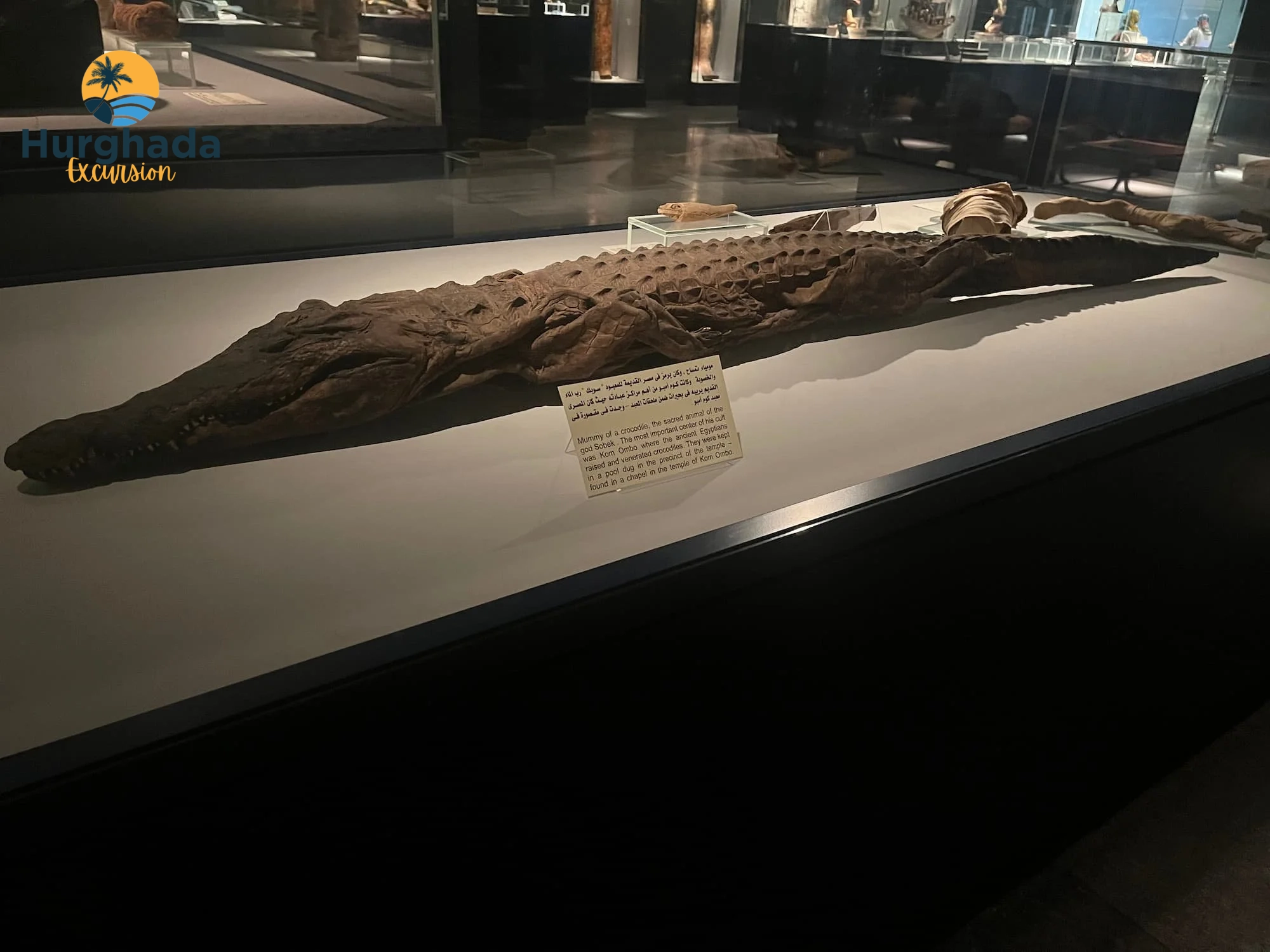
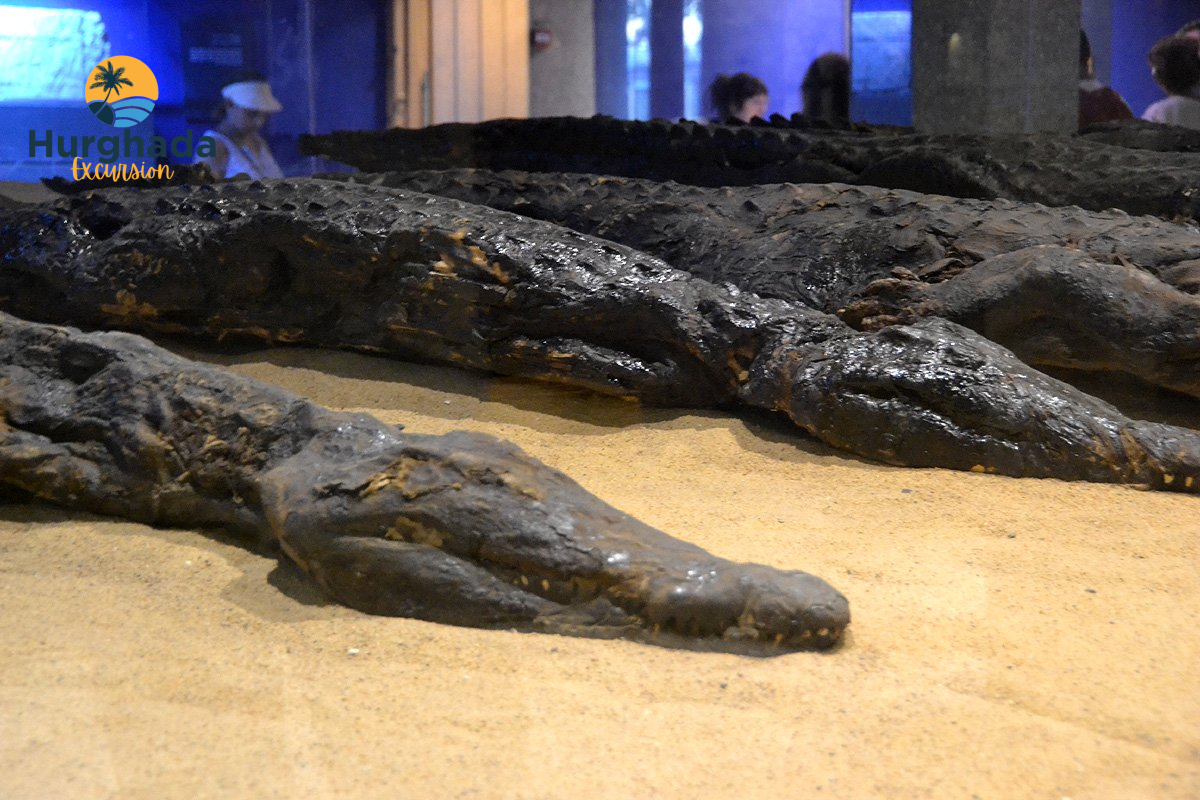
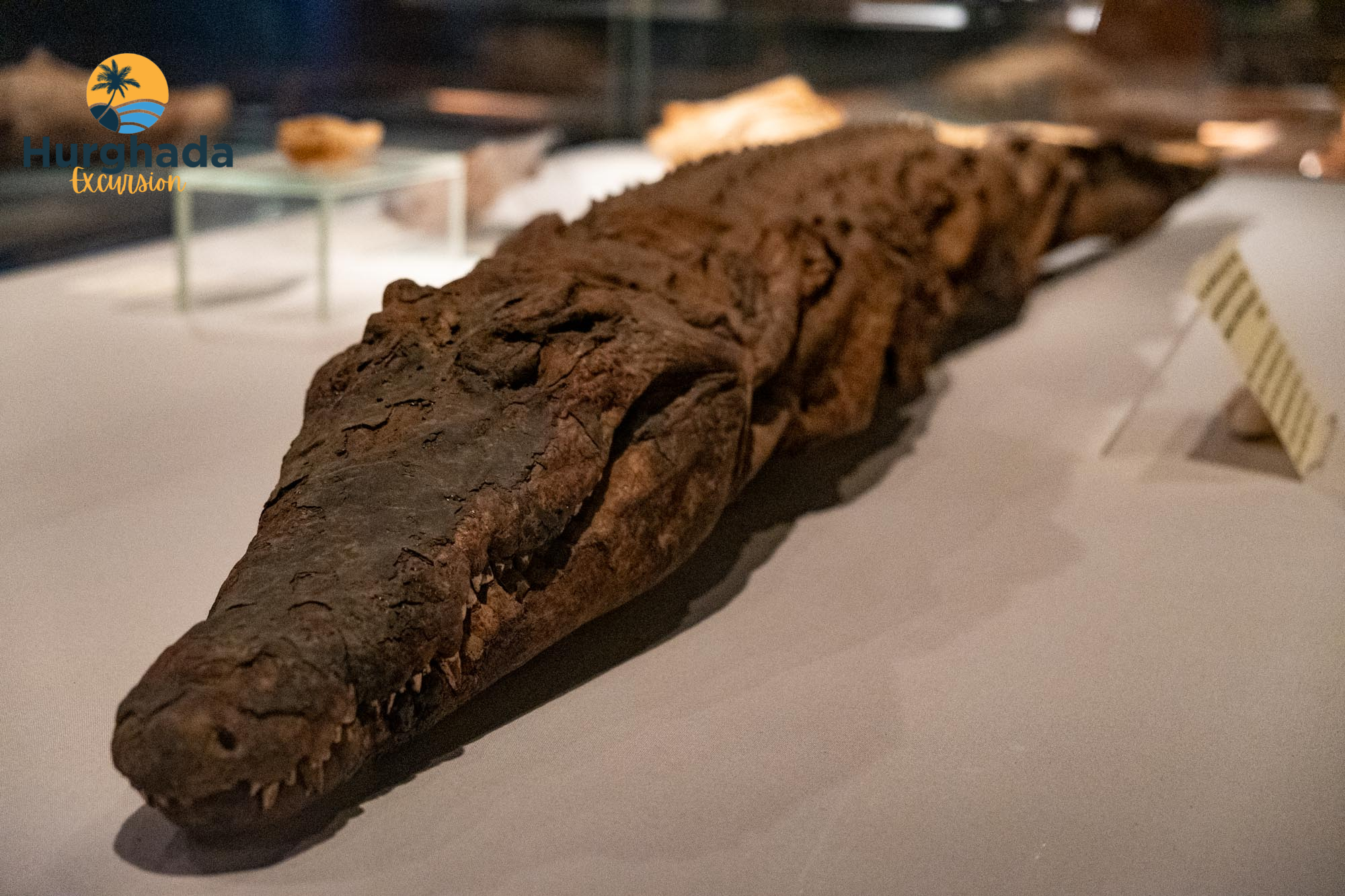
4. Crocodile Mummy (Sobek)
A mummified crocodile from the Nile — sacred to the god Sobek, Lord of the Waters, offered to the temple at Karnak as a religious votive. The mummification of animals — cats, dogs, ibises, crocodiles, bulls — was one of the most widespread practices of ancient Egyptian religion, and this specimen is among the finest preserved examples anywhere.
🪆
5. Statue of Thutmose III — The Warrior King
A beautifully carved grey schist statue of Thutmose III — Egypt’s greatest military commander — from his temple at Karnak. The quality of the carving, the precision of the hieroglyphic cartouches, and the serene power of the king’s face make this one of the finest pharaonic statues outside Cairo.
🌟
6. Cache of Karnak Statuary
In 1989, a cache of 16 extraordinary New Kingdom statues was discovered beneath the floor of Karnak Temple’s court — buried by the ancient priests themselves as a form of reverential storage for ritual objects that could no longer be used. These statues, displayed in the museum’s ground floor, are among the finest surviving examples of New Kingdom royal and divine sculpture.
🦅
7. New Kingdom Military Gallery
The 2004 expansion’s major addition — a gallery dedicated to the military history of the New Kingdom, containing weapons, chariot equipment, and military objects from the reigns of Egypt’s warrior pharaohs. The Hyksos composite bow, the khepesh (curved sword), and the royal chariot components are displayed with exceptional scholarly context.
🖼️
8. Painted Limestone Reliefs from Karnak
Individual painted limestone relief blocks from Karnak Temple, displayed in isolation and lit to reveal the extraordinary quality of New Kingdom relief carving. Colours still vivid after 3,300 years — the blue of lapis lazuli, the red of ochre, the gold of electrum decoration all preserved under the limestone surface. Outstanding examples of ancient Egyptian art.
📜
9. Papyrus Collection
A selection of ancient papyrus documents — hieratic and hieroglyphic scripts recording funerary texts, administrative records, and personal letters. The guide reads aloud from selected papyri, translating the 3,000-year-old text into English for the group. One of the most immediately affecting encounters with ancient literacy available anywhere.
💡
10. The Museum Design Itself
Unlike the often-crowded, dimly lit Egyptian Museum in Cairo, the Luxor Museum is a masterpiece of museum design — wide galleries, individual lighting on each object, spacious cases with comprehensive labels, and a layout that tells the story of Egyptian history chronologically and thematically. The building itself is climate-controlled, air-conditioned, and genuinely pleasant to spend time in.
Full Day Program — Hour by Hour from Hurghada
The Luxor Museum is typically combined with other Luxor sites for a complete full-day tour from Hurghada. Here is the most recommended full-day itinerary:
04:00 – 07:00 · Departure
🚐 Private Vehicle from Hurghada to Luxor
Pickup at approximately 04:00 AM. The 3-hour road journey gives the guide time to deliver a comprehensive introduction to Luxor, the museum’s collection, and the pharaonic context for the objects you will encounter. Arrival in Luxor at approximately 07:00 AM.
07:30 – 10:00 · Morning
🏺 Karnak Temple or Valley of the Kings — Morning Activity
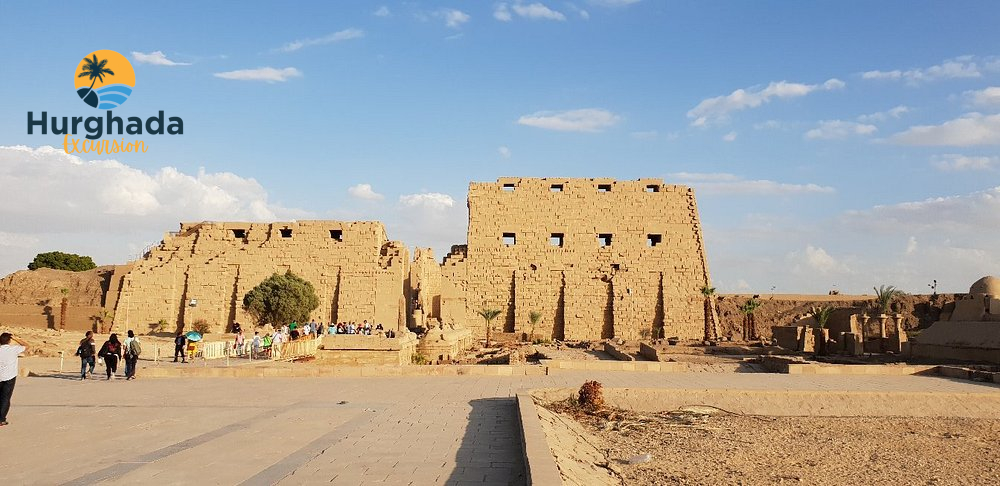
The museum opens at 09:00 AM — so the early morning is best used for Karnak Temple (arrives before the main crowds) or the Valley of the Kings (arrives before peak heat). Visiting the temples and tombs in the morning, then the museum in the cooler afternoon, is the optimal sequence.
10:30 – 12:00 · Museum Visit
🏛️ Luxor Museum — 1.5 Hours with Egyptologist Guide
Entry tickets purchased at the museum entrance (~300 EGP/~€6 per adult — included in tour price). The guide leads the group through the museum’s chronological galleries, spending approximately 10–15 minutes at each major object: the colossal head of Amenhotep III, the Talatat Wall, the 1989 Karnak Cache statuary, the military gallery, the papyrus collection, and the Royal Mummy Room.
Luxor museum how much time: With an Egyptologist guide delivering comprehensive explanations of the key objects, allow 1.5–2 hours. Without a guide, 1 hour is sufficient to see the main galleries. The museum is never as crowded as Karnak or the Valley of the Kings — even in peak season, it is a calm, unhurried experience.
12:00 – 13:00 · Lunch
🍽️ Lunch at a Luxor Restaurant
Full Egyptian lunch in a well-regarded Luxor restaurant — grilled chicken, kofta, rice, salads, hummus, and fruit. Soft drinks and water included. Air-conditioned comfort between the morning temple visit and the afternoon programme.
13:00 – 15:00 · Afternoon
🏛️ Optional: Luxor Temple · Mummification Museum · Corniche Walk
The afternoon is flexible — options include Luxor Temple (open until 19:00 PM), the Mummification Museum (30 minutes, on the Corniche just north of Luxor Temple), an optional Nile felucca sail (see our Felucca & Banana Island article), or a Corniche café before the return journey.
15:30 – 18:30 · Return
🛣️ Return Drive to Hurghada — Arrive ~18:30 PM
Departure from Luxor in the mid-afternoon, arriving back in Hurghada at approximately 18:30 PM with a full evening ahead.
The Royal Mummies — Ahmose I & Ramesses I
The Royal Mummy Room of the Luxor Museum contains two of the most historically significant and visually extraordinary objects in Egypt. Here is the complete guide to who these men were and why seeing them in person is genuinely moving:
⭐ The Liberator of Egypt
Ahmose I (r. c. 1550–1525 BCE)
Ahmose I was the founder of the New Kingdom — the most powerful and culturally richest period of ancient Egyptian history. He expelled the Hyksos, a foreign dynasty that had occupied northern Egypt for over 100 years, reunified the country, and established the imperial Egypt that would produce Hatshepsut, Thutmose III, Ramesses II, and Tutankhamun. Without Ahmose I, there would be no Valley of the Kings. His mummy — lying preserved in its case after 3,550 years — is one of the most extraordinary objects in Luxor.
⭐ The Dynasty Founder
Ramesses I (r. c. 1295–1294 BCE)
Ramesses I was the founder of the Nineteenth Dynasty — the dynasty that produced Seti I and Ramesses II (the Great), Egypt’s most prolific builder. He ruled for only approximately 16 months before his death, but his choice to appoint Seti I as his successor established one of the most remarkable family dynasties in Egyptian history. His mummy was famously in Canada for decades (in the Niagara Falls Museum) before being positively identified and repatriated to Egypt in 2003. It now rests in the Luxor Museum.
💀 The Royal Mummy Experience
Standing before the mummies of Ahmose I and Ramesses I is not a casual museum moment. These are the physical remains of men who shaped history — men who lived, fought, loved, built, and died over 3,300 years ago — whose decisions still echo in the culture of Egypt today. The mummies are displayed with dignity and scholarly respect: in climate-controlled cases, with comprehensive labels, under carefully considered lighting that reveals the preserved facial features with extraordinary clarity. The guide stands beside the cases and delivers the complete story of each pharaoh’s life, achievements, and historical significance. Most guests stand in silence for several minutes before saying anything at all.
The Akhenaten Talatat Wall — The Most Extraordinary Reconstruction
The Talatat Wall is a 17-metre section of the temple that the heretic pharaoh Akhenaten built at Karnak — reconstructed from 283 individual carved blocks that were found scattered inside the cores of later pylons, where Horemheb had used them as rubble fill after Akhenaten’s death. Here is the extraordinary story:
⚡ Akhenaten — Egypt’s Most Controversial Pharaoh: Akhenaten (r. c. 1353–1336 BCE) was the husband of the legendary Nefertiti and the father (probably) of Tutankhamun. He attempted the most radical religious revolution in Egyptian history — abandoning all existing gods in favour of a single solar deity, the Aten (the solar disc), and establishing a new capital city, Akhetaten (modern Amarna), in the desert. After his death, his successor pharaohs systematically dismantled his temples, buried his blocks within their own buildings, and attempted to erase him from history. It took modern Egyptologists with computer databases nearly 30 years to virtually reconstruct the scenes from the 283 scattered blocks — producing the Talatat Wall reconstruction now displayed in the Luxor Museum. Standing before it and understanding its history is one of the most intellectually extraordinary moments available in any Egyptian museum.
The Full Collection — Gallery by Gallery Guide
🗿
Ground Floor — Monumental Statuary
The entry ground floor is dominated by monumental sculpture — the colossal head of Amenhotep III, large-scale statues of New Kingdom pharaohs and deities, the 1989 Karnak Cache statuary, and architectural elements from the major Theban temples. Each object is individually lit against a dark background — dramatically beautiful.
⚔️
New Kingdom Military Gallery
The 2004 expansion addition — weapons, chariot equipment, military objects, and display panels explaining the military campaigns of the New Kingdom pharaohs. The Hyksos composite bow (the weapon that transformed Egyptian warfare), khepesh swords, and bronze arrowheads are all displayed with exceptional scholarly context.
🧱
The Talatat Wall Gallery
The museum’s most dramatic space — the full-height, 17-metre reconstructed section of Akhenaten’s Karnak temple. The guide explains the Akhenaten revolution, the discovery and computer reconstruction of the blocks, and how this wall fits into the narrative of the most extraordinary religious experiment in ancient history.
📦
Upper Floor — Small Objects & Luxury Arts
The upper galleries display the finest small objects in the collection — faience amulets, gold jewellery, decorated cosmetic containers, perfume vessels, painted ushabti figurines, papyrus documents, and the extraordinary painted and gilded wooden objects from New Kingdom tombs. The most intimate and detailed section of the museum.
💀
Royal Mummy Room
A separate dedicated gallery at the museum’s rear — climate-controlled, dimly lit, and deeply respectful in atmosphere. Two climate-controlled cases containing the mummies of Ahmose I and Ramesses I. The guide stands at each case and delivers the complete biographical and historical context for each pharaoh. One of the most moving museum rooms in Egypt.
🌿
Museum Garden & External Sculptures
The museum’s riverside garden contains large-scale architectural elements that cannot be housed inside — granite gateway blocks, limestone column sections, and fragments of pharaonic sculpture displayed in the open air with the Nile as backdrop. A pleasant conclusion to the museum visit, particularly in the cooler late afternoon.
The Mummification Museum — A Separate Luxor Experience
Approximately 500 metres north of Luxor Temple on the Corniche is the Mummification Museum — a small but extraordinary specialist museum dedicated entirely to the ancient Egyptian practice of mummification. Often combined with the Luxor Museum visit as a 30-minute addition:
🫀
What Is the Mummification Museum?
A small specialist museum displaying mummified humans, animals, and the tools and materials used in the mummification process — canopic jars, natron salts, linen bandages, amulets, and the wooden and bronze implements used by the embalmer priests. The most focused and educational presentation of mummification available anywhere in Egypt.
🐈
Animal Mummies
The museum’s most distinctive objects — mummified cats, fish, ibises, a ram, a crocodile, and other animals sacred to different Egyptian deities. The guide explains the theology behind animal mummification: why cats were sacred to Bastet, why ibises were sacred to Thoth, and why offering a mummified animal to a temple was the most common form of ancient Egyptian religious devotion.
⚗️
The Process Explained
The museum explains the 70-day mummification process in precise detail — the removal of organs (each placed in a separate canopic jar), the application of natron for desiccation, the wrapping in linen bandages with protective amulets placed at specific body points, and the ritual recitation of the Opening of the Mouth ceremony. The guide contextualises each step within Egyptian theology.
🎫
Ticket & Duration
Approximately 200 EGP (~€4) per adult. Visit duration: 30–40 minutes with a guide. Open approximately 09:00 AM – 05:00 PM daily. An excellent addition to the Luxor Museum visit for guests with an interest in Egyptian funerary practices — and particularly engaging for children who invariably find the animal mummies fascinating.
Luxor Museum vs Cairo Museum — Which Egyptian Museum Is the Best?
Which Egyptian museum is the best? The answer depends on what you want from a museum visit:
| Feature |
Luxor Museum |
Grand Egyptian Museum (Cairo) |
| Collection size |
~700 objects (selected masterpieces) |
100,000+ objects (world’s largest) |
| Tutankhamun treasures |
Not here · treasures in Cairo |
Full Tutankhamun collection + gold mask |
| Museum design quality |
Outstanding — spacious, modern, perfectly lit |
New building (2023) — impressive but vast |
| Crowds |
Low to moderate — never overwhelming |
High — particularly at Tutankhamun rooms |
| Royal mummies |
2 (Ahmose I, Ramesses I) — intimate setting |
22 royal mummies in dedicated gallery |
| Context for Theban sites |
Perfect — objects from the sites you visit |
Less contextual — broader national collection |
| Best for |
Quality experience · guided visits · Theban context |
Tutankhamun · Largest collection · Full Egypt history |
🏛️ Our Verdict
The Luxor Museum is the best museum in Egypt for a guided visit — its focused, curated collection, state-of-the-art display, and proximity to the sites where its objects were found make it the most contextually rich museum experience in the country. The Grand Egyptian Museum in Cairo is essential for Tutankhamun and the breadth of the national collection. If you only visit one — visit Luxor Museum. If you visit both — visit Luxor Museum first to understand the context, then Cairo Museum for the scale.
Luxor Museum Ticket Price 2026 & Opening Hours
| Ticket / Site |
Price (EGP) |
Approx. EUR |
Notes |
| Luxor Museum (Adult) |
~300 EGP |
~€6 |
Included in tour price · Open 09:00–17:00 |
| Luxor Museum (Student) |
~150 EGP |
~€3 |
Valid student ID required |
| Mummification Museum (Adult) |
~200 EGP |
~€4 |
Optional add-on · 30 min visit · on Corniche |
| Photography fee (if charged) |
~100 EGP |
~€2 |
Charged at some galleries — guide advises on the day |
Tour Price from Hurghada 2026 — What’s Included
Luxor Museum + Full Luxor Day Tour from Hurghada — From
€75
per adult · Luxor Museum + Karnak or Valley of the Kings + Lunch
✓ Private Vehicle · ✓ Egyptologist Guide · ✓ Museum Entry · ✓ Temple Entry · ✓ Lunch · ✓ Water
Children 4–11: 50% discount · Children under 4: Free · Museum only (no Hurghada transfer): ~€6 entry
✅ Included
✓ Private air-conditioned vehicle: Hurghada – Luxor – Hurghada
✓ Licensed Egyptologist guide for the full day
✓ Luxor Museum entry ticket (~300 EGP per adult)
✓ Karnak Temple OR Valley of the Kings entry (morning activity)
✓ Full lunch at a Luxor restaurant (soft drinks and water included)
✓ Free cancellation 48 hours before · Bottled water throughout
Can I Do Luxor in 1 Day? — Perfect Itineraries
Can I do Luxor in 1 day? Yes — with smart planning, one day from Hurghada can cover the essential Luxor experiences. Here are three proven 1-day itineraries depending on your priorities:
⭐ Most Popular
Classic Full Luxor Day
04:00 AM: Depart Hurghada · 07:30: Karnak Temple (2.5h) · 10:30: Luxor Museum (1.5h) · 12:30: Lunch · 14:00: Valley of the Kings (2.5h) · 16:30: Drive back · 19:30: Arrive Hurghada. Covers Karnak, Luxor Museum, and Valley of the Kings in one day.
🏛️ Museum Focus
Museums & Temples Day
04:00: Depart Hurghada · 07:30: Karnak Temple (2h) · 10:00: Luxor Museum (2h) · 12:00: Mummification Museum (30m) · 12:30: Lunch · 14:00: Luxor Temple (1.5h) · 16:00: Corniche walk + café · 17:30: Drive back.
🌅 Evening Experience
Museum + Sunset Evening
10:00: Depart Hurghada (later start) · 13:00: Lunch on arrival · 14:00: Luxor Museum (2h) · 16:30: Felucca & Banana Island (sunset) · 19:00: Karnak Sound & Light Show · 21:00: Drive back · 00:00: Arrive Hurghada.
🏛️ Is Luxor Close to the Pyramids?
Is Luxor close to the pyramids? No — Luxor (ancient Thebes) and the Giza Pyramids are approximately 700 km apart by road. The pyramids are near Cairo in the north; Luxor is in Upper (southern) Egypt. They cannot be combined in a single day trip from Hurghada. For the Giza Pyramids from Hurghada, see our separate Cairo & Pyramids Day Trip article. The New Kingdom pharaohs buried in Luxor’s Valley of the Kings deliberately abandoned pyramid construction — so Luxor has no pyramids (except the natural pyramid of Al-Qurn above the Valley of the Kings).
10 Expert Tips for Your Luxor Museum Visit
Tip 1 — Visit in the late morning or afternoon, after the temple visits. The museum opens at 09:00 AM — but the best temples (Karnak, Valley of the Kings) benefit most from early morning arrival before crowds. A 10:30 AM or 11:00 AM museum arrival means you have the key temples behind you and the museum ahead — with air-conditioned comfort during the warming midday hours. The museum is never crowded enough to warrant an early arrival.
Tip 2 — Ask the guide to explain Akhenaten and the Talatat Wall before entering the gallery. The Talatat Wall’s power depends entirely on understanding who Akhenaten was, what he tried to do, and how completely his successors tried to erase him. A 5-minute briefing from the guide — delivered in the museum lobby before entering the Talatat gallery — transforms the experience from “interesting large wall” to “one of the most extraordinary reconstructions in archaeological history.”
Tip 3 — Spend at least 10 minutes with each royal mummy. Most museum visitors glance at the mummies and move on within 2–3 minutes. The guide who accompanies you will spend 8–10 minutes at each case, delivering the complete biographical story of Ahmose I and Ramesses I and their historical significance. This extended engagement transforms the mummy from an exhibit into a person — and the experience from a museum visit into something genuinely moving.
Tip 4 — Look closely at the paint traces on the statues. Many of the museum’s statues retain traces of the original paint applied by their ancient craftsmen — the red ochre skin tone of Thutmose III, the black kohl around the eyes of a sphinx, the gold leaf traces on the base of a ceremonial statuette. The museum’s excellent lighting makes these traces visible in a way that field visits to the temples rarely achieve. The guide will point out the specific paint-surviving objects.
Tip 5 — Add the Mummification Museum — 30 extra minutes, well worth it. The Mummification Museum on the Corniche (5 minutes’ walk from Luxor Museum) provides the essential contextual complement to the Luxor Museum’s royal mummies — it explains precisely how those mummies were made, what tools and materials were used, and what the ancient Egyptians believed would happen to the body after death. Together, the two museums provide the complete picture of ancient Egyptian attitudes toward death and preservation.
Tip 6 — The museum garden is worth 15 minutes after the interior visit. The riverside garden behind the museum contains large-scale architectural objects that cannot be housed inside — often overlooked by visitors who exit through the main entrance without going round the back. The garden’s Nile views and the sculptures displayed under natural light provide a completely different perspective from the interior galleries.
Tip 7 — The Luxor Museum is the ideal introduction to a first Egypt visit. Guests who visit the Luxor Museum before the temples and tombs invariably describe the subsequent site visits as more meaningful. The museum provides the faces, the objects, and the context that make the inscriptions and reliefs at Karnak and the Valley of the Kings readable rather than merely decorative. If your Luxor schedule allows it, visit the museum first.
Tip 8 — Photography is generally permitted — but confirm with the guide on the day. Photography policies at Egyptian museums change periodically. As of 2026, photography for personal use is generally permitted in most Luxor Museum galleries without a separate fee — but specific rooms (particularly the Royal Mummy Room) may have restrictions. The guide will confirm current policy on the day and advise which objects and galleries are freely photographable.
Tip 9 — The museum is ideal in summer — use it strategically. The Luxor Museum’s full air-conditioning makes it a particularly valuable afternoon activity in summer (June–September), when exterior sites become dangerously hot after 10:00 AM. Plan: Valley of the Kings or Karnak at 07:00–09:30 AM before the heat intensifies, then the air-conditioned Luxor Museum from 10:00–12:00 PM, then lunch, then return.
Tip 10 — The museum shop sells some of Egypt’s finest reproductions. The Luxor Museum shop stocks high-quality reproduction artifacts — plaster casts from original moulds, bronze figurines, papyrus art, and scholarly books on Theban archaeology and Egyptian art history. The reproduction quality is significantly higher than most souvenir markets. Scholars and serious collectors consistently rate the Luxor Museum shop as one of the best places in Egypt to purchase a genuinely meaningful memento.
Real Reviews from Travellers
★★★★★
“Probably the best museum I have ever visited — and I have visited a lot of museums. Small enough to be manageable, large enough to be extraordinary. The mummies of Ahmose I and Ramesses I are the most powerful objects in any museum I have entered. Our guide read from a 3,000-year-old papyrus in the collection while we stood in front of it. Genuinely unmissable.”
Professor James W. — Edinburgh · March 2026
★★★★★
“I was surprised by how much I loved this museum — I expected to prefer the temples. The Talatat Wall reconstruction is extraordinary once you understand what it is and how it got there. The guide’s explanation of Akhenaten’s revolution transformed the entire thing. And the royal mummies — I stood in front of Ahmose I for a long time. He founded the New Kingdom. He was real.”
Sarah K. — London · February 2026
★★★★★
“The best-presented collection of Egyptian artifacts I have encountered — and I include the British Museum in that comparison. The lighting, the space around each object, the quality of the English labels, and the complete absence of overcrowding make this a joy. The head of Amenhotep III alone is worth the trip. Don’t skip this for another temple visit.”
Caroline R. — Bristol · January 2026
Frequently Asked Questions
Is Tutankhamun in Luxor Museum?
Is Tutankhamun in Luxor? Tutankhamun’s mummy remains in its original tomb (KV62) in the Valley of the Kings — where it has been since Howard Carter’s 1922 discovery. Tutankhamun is not in the Luxor Museum. His famous gold death mask and the 5,000+ treasures from his tomb are in the Grand Egyptian Museum in Cairo. However, the Valley of the Kings (included in our Luxor tour) is accessible from Hurghada as a day trip, and you can visit Tutankhamun’s tomb there for an extra ticket of ~700 EGP.
Is Luxor Museum worth visiting?
Is Luxor Museum worth visiting? Absolutely — it is one of the finest museums in Egypt and arguably the best-designed. Its curated collection of ~700 masterpieces, state-of-the-art display, two royal mummies (Ahmose I and Ramesses I), the reconstructed Akhenaten Talatat Wall, and the extraordinary 1989 Karnak Cache statuary make it essential for any serious Luxor visitor. Unlike the crowded temples, it is a calm, unhurried experience that rewards time and attention.
How much to get into Luxor Museum?
How much to get into Luxor Museum? The Luxor Museum ticket price in 2026 is approximately 300 EGP (~€6) per adult. Student tickets are approximately 150 EGP. The Mummification Museum (a separate, smaller specialist museum nearby) costs approximately 200 EGP. Both tickets are card-only — no cash accepted. Our tour package includes both entry tickets in the all-inclusive price from Hurghada.
Does Luxor have real Egyptian artifacts?
Does Luxor have real Egyptian artifacts? Yes — the Luxor Museum contains entirely authentic ancient Egyptian objects, not reproductions. Every object in the museum was excavated from the Theban region and has been scientifically documented and attributed. The royal mummies are the original physical remains of the pharaohs. The Talatat Wall blocks are the original carved stones from Akhenaten’s Karnak temple. Nothing in the Luxor Museum is a copy.
Can I do Luxor in 1 day from Hurghada?
Can I do Luxor in 1 day? Yes — with an early 04:00 AM departure from Hurghada, the following can be covered in one day: Karnak Temple (2.5 hours) + Luxor Museum (1.5 hours) + lunch + Valley of the Kings or West Bank sites (2.5 hours) + return drive. Or: Luxor Museum + Mummification Museum + Luxor Temple sunset + Karnak Sound and Light Show (later departure, midnight return). Our guides plan the optimal sequence based on your specific interests.
Is Luxor close to the pyramids?
Is Luxor close to the pyramids? No — Luxor and the Giza Pyramids are approximately 700 km apart. Luxor is in Upper (southern) Egypt; the pyramids are near Cairo in northern Egypt. They cannot be combined in a single day trip from Hurghada. For the Giza Pyramids, see our separate Cairo and Pyramids Day Trip from Hurghada article. There are no built pyramids in Luxor — the New Kingdom pharaohs deliberately chose secret rock-cut tombs in the Valley of the Kings instead.
Book Your Luxor Museum & Ancient Artifacts Tour Today
From €75 per person · Private vehicle from Hurghada · Egyptologist guide · Luxor Museum + Karnak or Valley of the Kings · Lunch included · Free cancellation 48 hours before.
🏛️ Book Now — From €75
The Luxor Museum is the quiet masterpiece of the Luxor experience — the place where the objects from the temples and tombs are displayed with the care, light, space, and context they deserve. In 1.5 hours with a licensed Egyptologist, you will stand before the face of Amenhotep III preserved in quartzite, read from a 3,000-year-old papyrus, understand why Akhenaten’s revolution matters through 283 reconstructed blocks, and look into the faces of Ahmose I and Ramesses I — the men who built the New Kingdom that produced everything else you see in Luxor. This is not a supplementary activity. It is essential.
Book your Luxor Museum guided tour today with Hurghada Excursion — private vehicle, Egyptologist guide, all entry tickets, and the most complete ancient Egypt museum experience available from the Red Sea coast.