Valley of the Kings Luxor Tour – Ancient Tombs & Pharaonic History
🏺 Full-Day Tour · Luxor West Bank · Egyptologist Guide · From Hurghada · Daily
Valley of the Kings Luxor Tour – Ancient Tombs & Pharaonic History
📅 Updated: May 2026 | ⏱️ Full Day · 14–16 Hours from Hurghada | 💶 From €75 / person | ⭐ 4.9/5 Rated | 🏺 Daily Departures
The Valley of the Kings Luxor tour is the single most extraordinary cultural day trip available from Hurghada — and one of the most extraordinary cultural experiences available anywhere on earth. Hidden within a narrow limestone gorge on the West Bank of the Nile at Luxor, 63 royal tombs of the most powerful pharaohs who ever lived were cut deep into the rock of the Theban mountains over nearly 500 years of ancient Egyptian history. The Valley of the Kings was the sacred burial ground of the New Kingdom pharaohs — from Thutmose I (c. 1504 BCE) to Ramesses XI (c. 1070 BCE) — and the elaborate painted chambers carved into those mountains contain the most complete and visually astonishing record of ancient Egyptian beliefs, cosmology, and royal ideology that survives anywhere in the world.
The Valley of the Kings tour from Hurghada is a full-day private excursion — departing from your hotel at approximately 04:00–05:00 AM, making the 260 km road journey to Luxor across the Eastern Desert, and spending the morning and afternoon with a licensed Egyptologist guide at the Valley of the Kings and the other magnificent West Bank monuments: the mortuary temple of Queen Hatshepsut, the Colossi of Memnon, and Karnak Temple on the East Bank. This is not a simple museum visit — it is an encounter with 3,500 years of human history at a scale and intensity that permanently changes how you understand the ancient world.
🏺 How many tombs are in the Valley of the Kings? There are 63 known tombs in the Valley of the Kings (and likely more still undiscovered beneath the valley floor). Of these, approximately 10–11 are open to the public at any given time, with 3 included in the standard entry ticket. The most famous tombs — Tutankhamun (KV62), Seti I (KV17), and Ramesses V & VI (KV9) — require separate premium tickets. The best Valley of the Kings Luxor tour from Hurghada includes an Egyptologist guide who selects the most historically significant and visually spectacular tombs open on your visit day.
What Is the Valley of the Kings? History & Significance
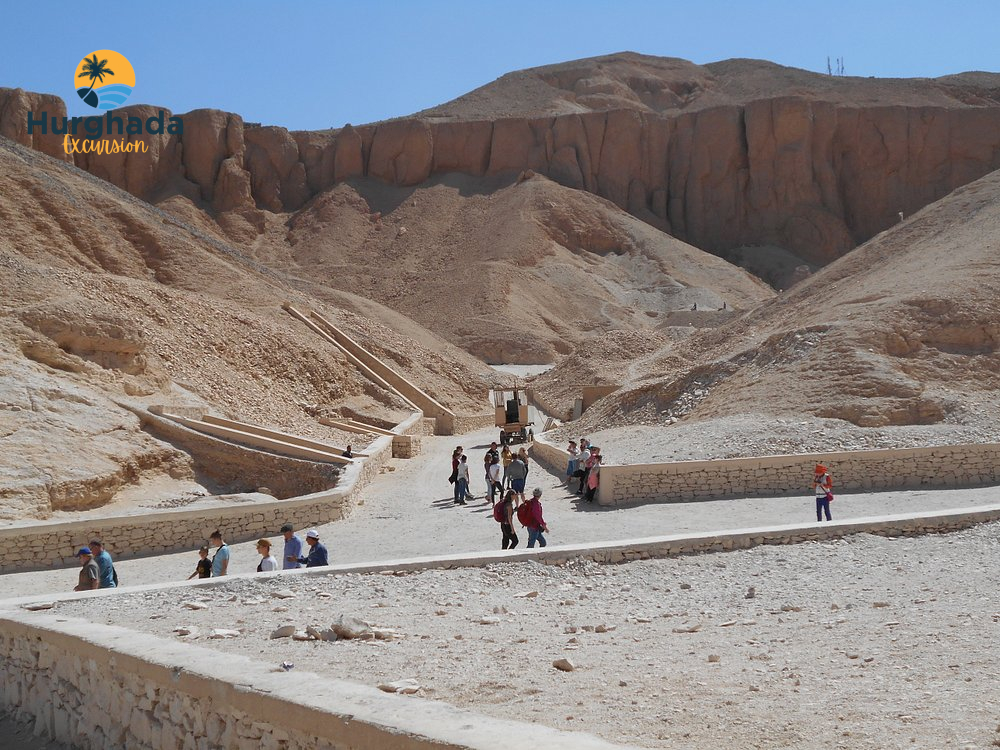
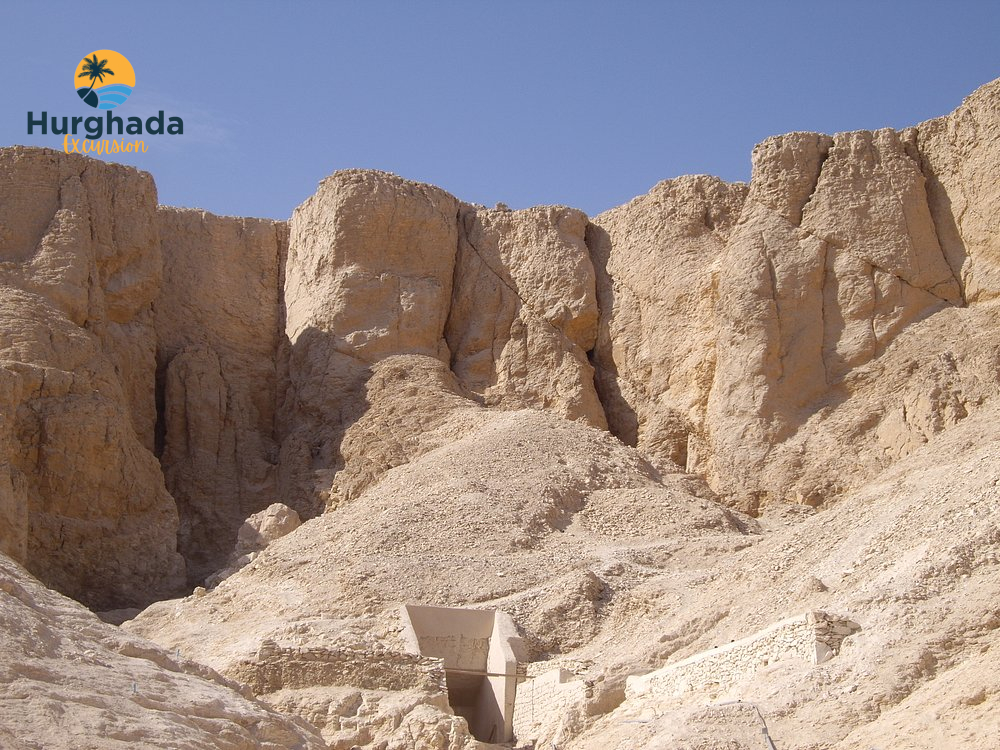
The Valley of the Kings — known in ancient Egyptian as Ta-sekhet-ma’at (The Great Field) — is a valley on the West Bank of the Nile at Luxor (ancient Thebes) in Upper Egypt. For nearly 500 years, from approximately 1504 BCE to 1070 BCE, the valley served as the royal burial ground of Egypt’s New Kingdom pharaohs — the most powerful and culturally sophisticated rulers in all of ancient Egyptian history. The site contains 63 known rock-cut tombs, ranging from simple pits to elaborate multi-chambered complexes extending over 200 metres into the living rock of the limestone cliffs.
Can you tour the Valley of the Kings in Egypt? Yes — the site is open to the public daily from 06:00 AM to 18:00 PM (last entry at 17:00 PM), with approximately 10–11 tombs accessible to visitors at any given time. The standard entry ticket permits access to 3 tombs of your choice from the open list. Premium tombs — including Tutankhamun (KV62), Seti I (KV17), and Ramesses V & VI (KV9) — require separate supplementary tickets purchased at the site entrance. Our Valley of the Kings Luxor tour includes an Egyptologist guide who manages all ticketing and selects the best tombs open on your visit day.
Detail
Information
Location
West Bank of the Nile, Luxor (ancient Thebes), Upper Egypt
Period of use
New Kingdom, c. 1504–1070 BCE (approximately 500 years)
Total tombs discovered
63 known tombs (additional tombs likely still undiscovered)
Tombs open to public (2026)
~10–11 tombs (3 included in standard entry ticket)
Distance from Hurghada
~260 km · approximately 3 hours by road each way
UNESCO status
UNESCO World Heritage Site (part of Ancient Thebes)
Opening hours
06:00 AM – 18:00 PM daily (last entry 17:00 PM)
Best time to arrive
07:00 – 08:00 AM — before tour groups arrive and before peak heat
🌍 UNESCO World Heritage Site
The Valley of the Kings is part of the UNESCO World Heritage Site of Ancient Thebes with its Necropolis — inscribed in 1979. This designation recognises the valley as one of the most significant and irreplaceable cultural heritage sites in the world: a complex of royal and private tombs, temples, and mortuary monuments that constitutes the most complete surviving record of New Kingdom Egyptian civilisation. The painted walls of the royal tombs represent the most vivid and detailed visual art that has survived from the ancient world.
Top 10 Highlights of the Valley of the Kings Luxor Tour
👑
1. Tutankhamun’s Tomb (KV62)
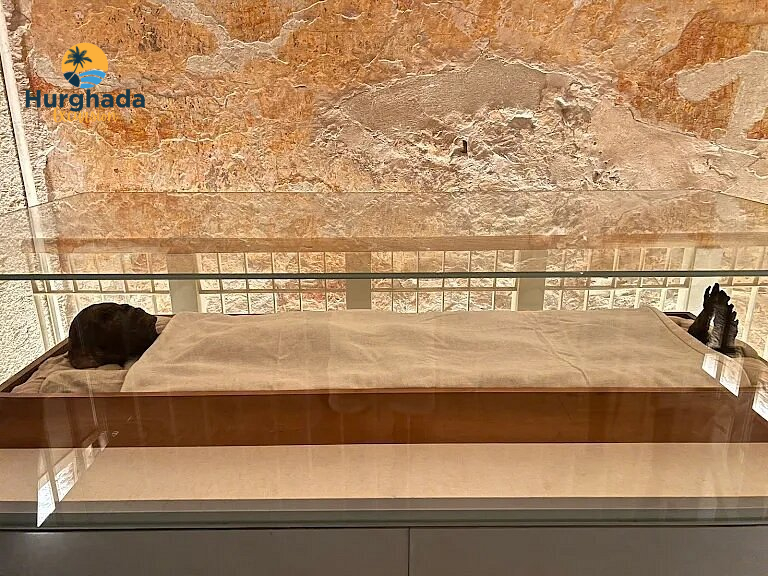
The world’s most famous tomb — discovered by Howard Carter in 1922 with its treasure intact after 3,000 years. Tutankhamun’s mummy lies in situ in his sarcophagus — one of the most profound encounters with ancient Egyptian royalty available anywhere. Separate premium ticket required.
🎨
2. Seti I Tomb (KV17) — Most Beautiful
The longest and most elaborately decorated tomb in the Valley — 137 metres of painted corridors and chambers featuring the finest surviving examples of ancient Egyptian relief carving and painting. A separate premium ticket is required, but universally described as worth every Egyptian pound.
🏛️
3. Ramesses V & VI (KV9) — Best Decoration
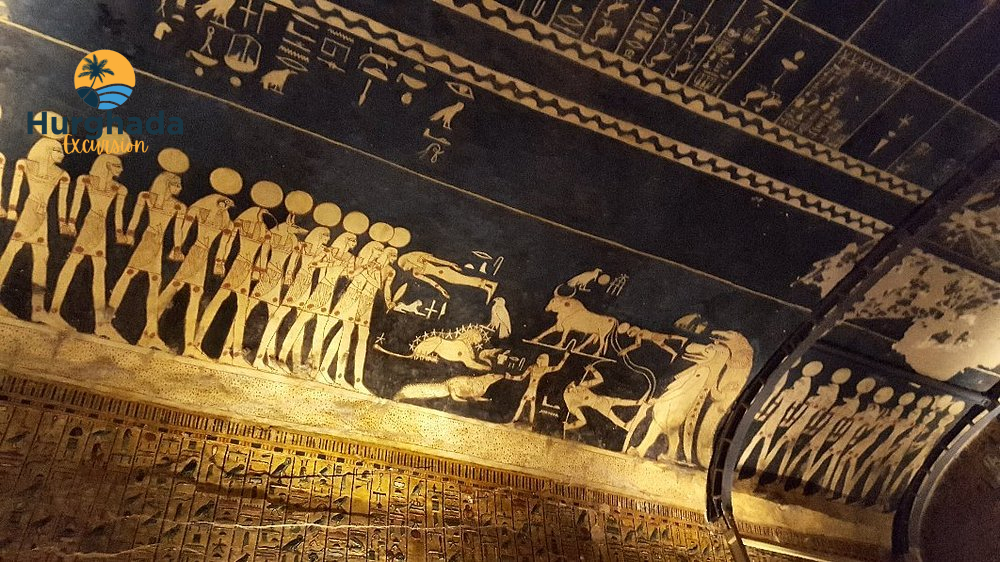
One of the largest and most completely decorated tombs in the valley — extraordinary astronomical ceiling paintings showing the complete Book of the Earth and Book of Caverns. The decoration covers every surface floor-to-ceiling. One of the best-value premium add-ons.
🌅
4. Temple of Hatshepsut — Deir el-Bahari
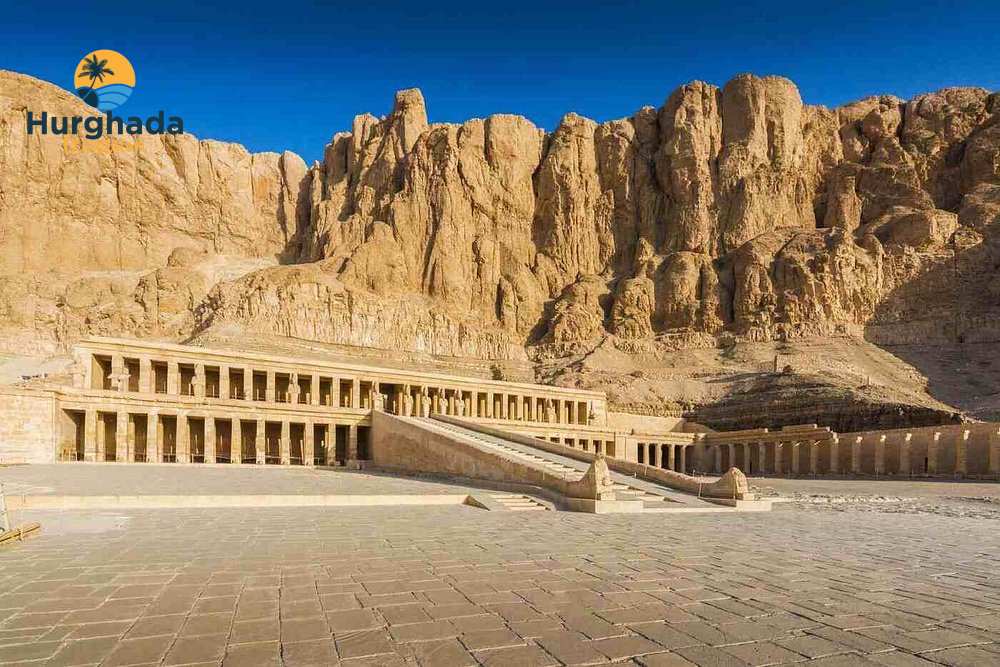
The mortuary temple of Egypt’s most powerful female pharaoh — a three-tiered colonnaded structure built into the limestone cliffs above the West Bank. One of the most architecturally dramatic buildings in Egypt. Included in the standard Luxor West Bank tour itinerary.
🗿
5. Colossi of Memnon
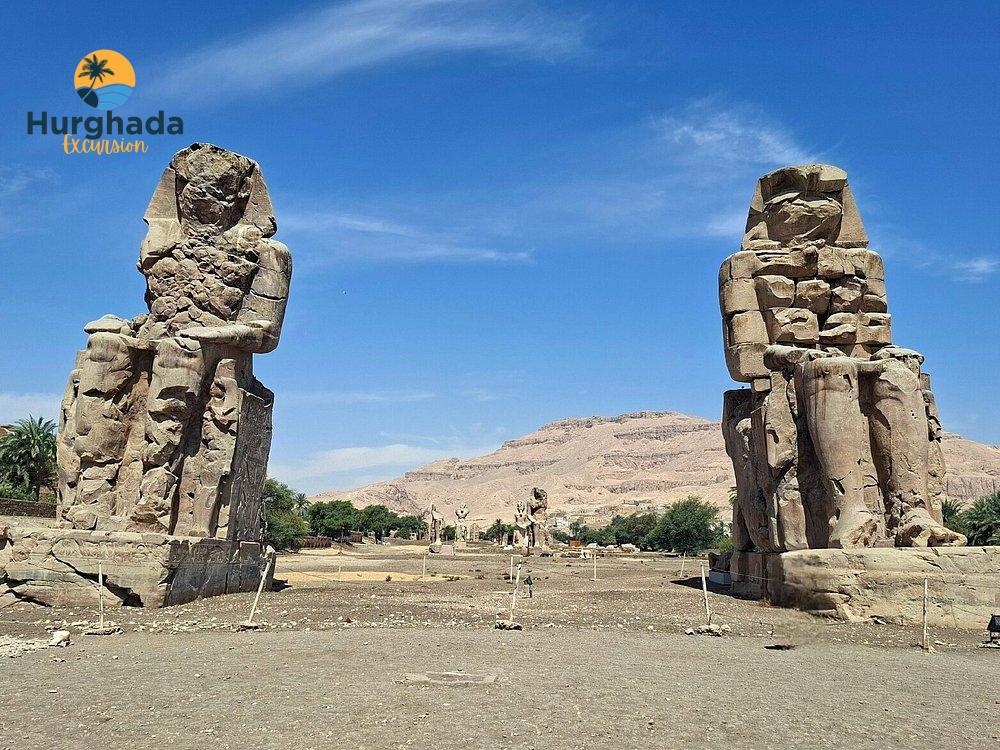
Two colossal seated statues of Amenhotep III — each 18 metres high — standing alone on the West Bank plain. They have guarded the entrance to the West Bank necropolis for 3,400 years. The most immediately impressive free-standing monuments on the Luxor West Bank.
🏺
6. Karnak Temple — East Bank
The largest religious complex ever built in human history — covering 100 hectares and incorporating constructions by 30 different pharaohs over 2,000 years. The Great Hypostyle Hall alone — 134 enormous papyrus-form columns — is one of the most visually overwhelming architectural spaces on earth.
🎓
7. Licensed Egyptologist Guide
A government-licensed Egyptologist — trained at an Egyptian university in archaeology, Egyptology, and art history — accompanies you throughout the entire day. Inside each tomb, they decode the hieroglyphics, explain the religious texts, identify the pharaoh’s story, and bring the painted walls to life in ways no guidebook can replicate.
🚗
8. Private Air-Conditioned Vehicle
The 260 km journey from Hurghada to Luxor is made in a comfortable, air-conditioned private vehicle — not a cramped minibus. The road crosses the Eastern Desert and offers extraordinary views of the landscape between the Red Sea and the Nile Valley.
🍽️
9. Lunch at a Luxor Restaurant
A full lunch at a Luxor restaurant between the morning and afternoon site visits — Egyptian cuisine in the city where the pharaohs lived. The guide recommends and accompanies you to the best local option. Lunch is included in the all-inclusive tour package.
🌄
10. The Nile at Luxor — Timeless View
The crossing of the Nile between the East and West Banks of Luxor by felucca or motorboat is one of the most evocative travel moments in Egypt — the river that gave birth to one of the world’s greatest civilisations, still flowing as it has for millennia, with the temples and tombs visible on both banks.
Valley of the Kings
Full Day Program — Hour by Hour from Hurghada Pickup to Return
Here is the complete, step-by-step program for the Valley of the Kings tour from Hurghada — every phase detailed from hotel pickup to final return. The full round trip is approximately 14–16 hours.
04:00 – 05:00 · Hotel Pickup
🚐 Very Early Departure — Private Air-Conditioned Vehicle
The Luxor private tour from Hurghada departs very early — your driver collects you at approximately 04:00–05:00 AM from your hotel lobby. This early departure is essential: the 260 km road journey takes approximately 3 hours, and arriving at the Valley of the Kings before the main tour groups (which typically arrive between 09:00–10:00 AM) makes an enormous difference to the quality of the experience. Early mornings in the tombs — with fewer visitors, cooler temperatures, and the extraordinary light of a Luxor morning — are consistently described as the most memorable moments of the entire tour.
Prepare the night before: Set your alarm 30 minutes before pickup. Light breakfast before departure (banana, yoghurt, bread) — nothing heavy at 04:00 AM. Bring: hat, sunscreen SPF 50, comfortable closed shoes (the valley floor is uneven and sandy), camera, EGP or credit card for optional extra tomb tickets, water bottle (refillable at the site). Wear light, loose, modest clothing — shorts are fine but long trousers are more comfortable in the tombs (cool and dusty).
05:00 – 08:00 · Road Journey
🛣️ 3-Hour Drive Across the Eastern Desert to Luxor
The road from Hurghada to Luxor crosses the Eastern Desert — the limestone plateau between the Red Sea coast and the Nile Valley. As the sun rises across the desert landscape, the colours of the terrain shift from grey to gold to deep amber. The guide uses this journey time to deliver a comprehensive historical introduction to Luxor, the New Kingdom pharaohs, the history of tomb construction in the Valley of the Kings, and what you will see at each site. Most guests arrive in Luxor better prepared and more excited than they expected from listening to the guide during the drive.
Refreshment stop approximately halfway — 10–15 minutes at a roadside facility. The road is well-maintained, the journey smooth, and the vehicle comfortable. Sleep if you need to — the guide will wake you as you approach Luxor.
08:00 – 08:20 · West Bank Arrival
⛵ Crossing the Nile to the West Bank
Arrival in Luxor. The vehicle drives to the Nile embankment and the group crosses to the West Bank by motorboat — a 5–10 minute crossing on the same river that the ancient Egyptians considered the boundary between the land of the living (East Bank) and the land of the dead (West Bank). The early morning light on the Nile and the limestone cliffs of the West Bank visible ahead is one of the most atmospheric moments of the entire journey. A vehicle waits on the West Bank to continue the tour.
08:20 – 08:30 · Colossi of Memnon
🗿 Colossi of Memnon — 18-Metre Pharaoh Statues
A brief stop at the Colossi of Memnon on the road to the Valley — two seated quartzite statues of Amenhotep III, each 18 metres high and weighing 720 tonnes, carved from a single block of stone and transported from quarries over 600 km away. They have stood here for 3,400 years. In the morning light, with the valley cliffs behind them, they are breathtaking. The guide explains who Amenhotep III was, why these statues were built, and why the Greeks named them after Memnon — a hero of the Trojan War. Photography stop: 10 minutes.
08:30 – 11:30 · THE MAIN EVENT
🏺 Valley of the Kings — 3 Hours in the Royal Necropolis
The centrepiece of the entire Valley of the Kings Luxor tour. Arrival at the valley before the main tourist crowds — typically 08:30–09:00 AM — gives your group the best possible access to the tombs with minimal queuing. The guide purchases tickets at the entrance (credit card only — no cash accepted at the site as of 2026) and selects the best combination of tombs open on your visit day.
The standard entry ticket permits 3 tomb visits from the included list. The guide recommends which 3 to select based on the day’s conditions and suggests which premium add-on tombs (Tutankhamun, Seti I, Ramesses V & VI) represent the best value for your specific interests. An electric tram (included in the tram fee of approximately 10 EGP) transports visitors from the entrance to the tomb zone.
Inside each tomb, the guide delivers a complete explanation of: who the pharaoh was and their place in history, what the specific religious texts on the walls mean (Books of the Dead, Amduat, Book of Gates), which gods are depicted and why, how the tomb was constructed and by whom, what was found in it and where those objects are now, and the story of each tomb’s rediscovery in modern times.
Photography in the tombs: Photography inside the tombs is currently reported to be permitted for personal use (no separate photography pass required as of 2026 — confirm with the guide on the day as rules change). No flash photography is permitted. Tripods are not allowed. The guide will advise on which sections of each tomb offer the best photographic conditions.
11:30 – 12:30 · Temple of Hatshepsut
🏛️ Deir el-Bahari — Temple of the Female Pharaoh
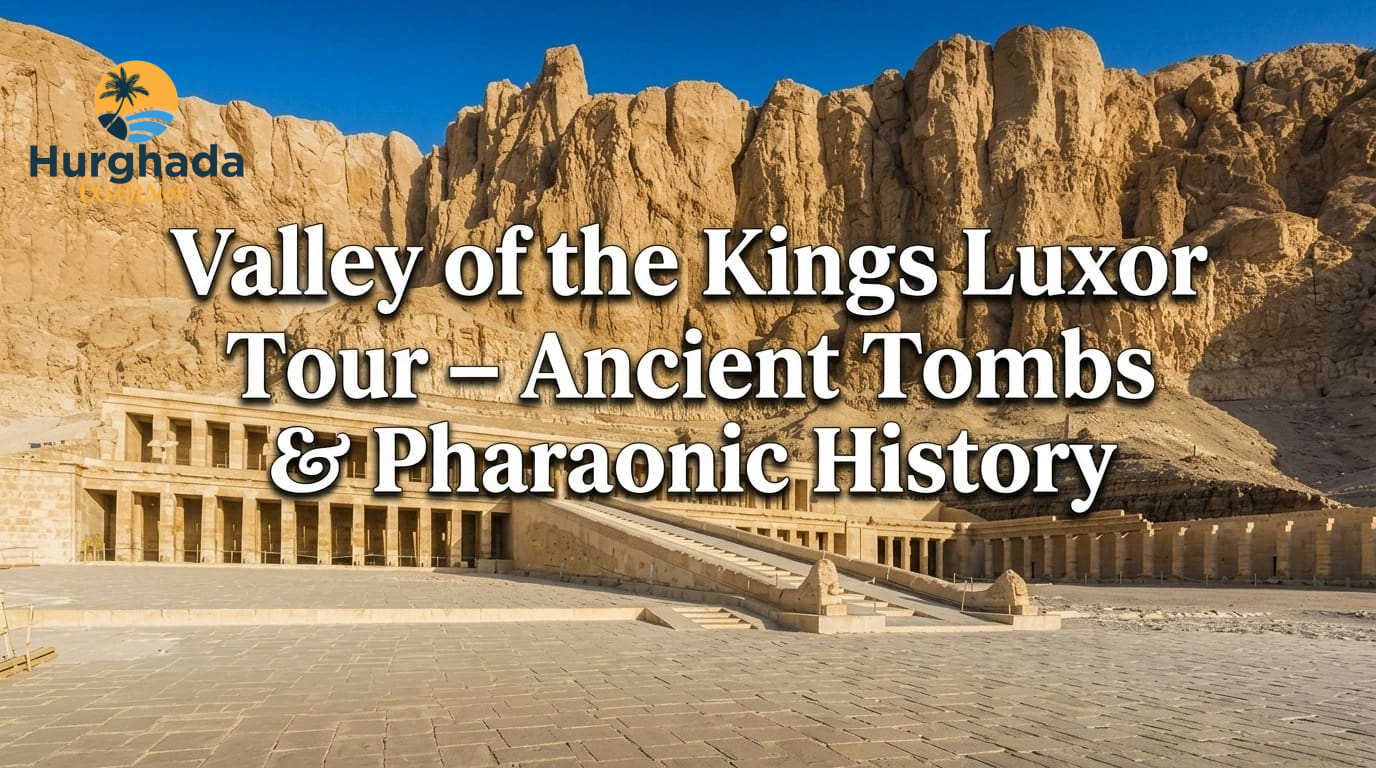
The mortuary temple of Hatshepsut — built c. 1479–1458 BCE and considered the finest architectural achievement of ancient Egypt. Carved into the limestone cliffs above the West Bank, the temple rises in three colonnaded terraces connected by sloping ramps, creating a visual drama that genuinely rivals anything in ancient Greek or Roman architecture. In the morning light, with the cliff face rising directly behind it, the temple is one of the most photographed ancient buildings in the world — and one of the most underrated.
The guide explains the extraordinary story of Hatshepsut: how she ruled Egypt as pharaoh for over 20 years disguised in royal male regalia, how she sent a legendary expedition to the land of Punt (modern Somalia/Ethiopia), and how her successor Thutmose III systematically attempted to erase her name from every monument after her death. The fact that we know her story at all is one of the most remarkable acts of archaeological detective work in history.
12:30 – 13:30 · Lunch
🍽️ Lunch at a Luxor Restaurant
A full lunch at a well-regarded Luxor restaurant — Egyptian cuisine in the city that the pharaohs built. The guide accompanies the group and helps with ordering. Typical menu: grilled chicken or kofta, Egyptian rice, molokhia, mixed salad, hummus, fresh bread, and seasonal fruit. Soft drinks included. The restaurant is air-conditioned — a welcome break during the hottest part of the Luxor day.
13:30 – 15:30 · Karnak Temple
⛪ Karnak Temple Complex — The Largest Temple in the World
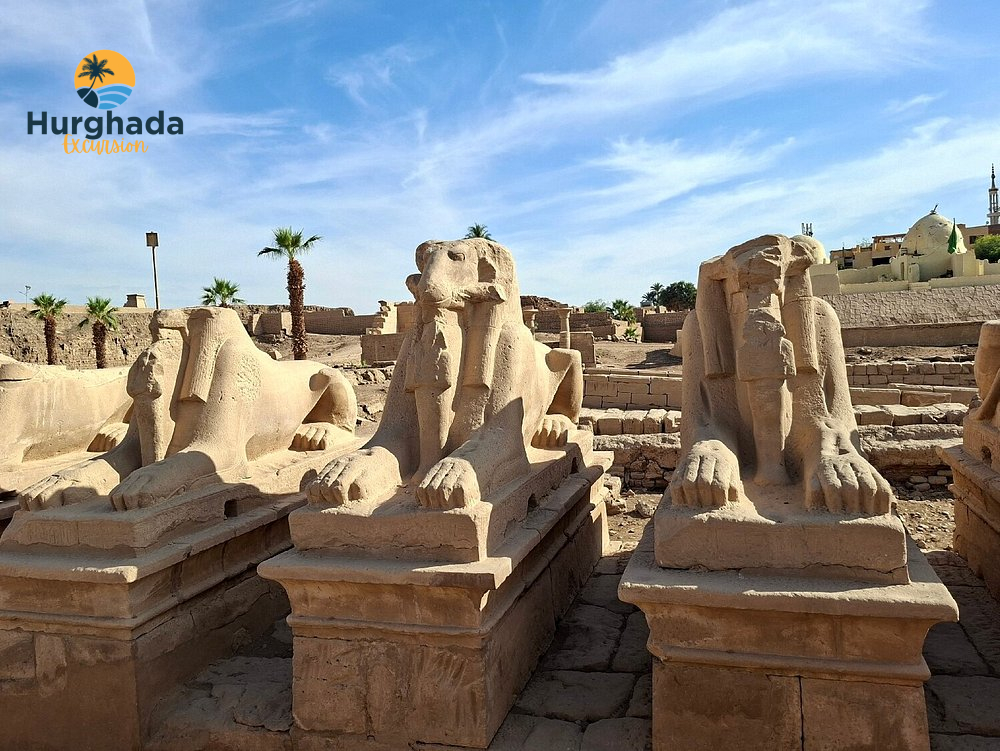
The afternoon is dedicated to Karnak Temple on the East Bank — the largest religious complex ever built by human hands. Covering over 100 hectares (approximately the size of a small city), Karnak was constructed and expanded by 30 different pharaohs over 2,000 years (from c. 2055 BCE to 100 BCE). The guide leads the group through the principal structures: the Avenue of Ram-Headed Sphinxes, the Great Hypostyle Hall (134 columns up to 21 metres high), the obelisks of Hatshepsut, the sacred lake, and the inner sanctuaries dedicated to the Theban triad of Amun, Mut, and Khonsu.
The Great Hypostyle Hall at Karnak is consistently described by first-time visitors as the single most overwhelming architectural experience of their lives. Walking through 134 columns — each inscribed with hieroglyphic texts from floor to capital — in a space that feels simultaneously intimate and infinite is one of the defining moments of any Egypt visit.
15:30 – 18:30 · Return Journey
🛣️ Return Drive to Hurghada — Arrive Hotel ~18:30–19:00
The return journey departs Luxor in the late afternoon — arriving back in Hurghada at approximately 18:30–19:00 PM. The guide is available throughout the return journey for questions and conversation. Most guests spend the return journey in animated discussion about what they saw, what moved them most, and which pharaoh’s story they want to know more about. A full evening in Hurghada remains ahead.
The Best Tombs to Visit — Tutankhamun, Seti I & Ramesses
The most important decision on any Valley of the Kings tour is which tombs to visit. Here is the complete guide to the best available in 2026:
⭐ Premium Add-On · Separate Ticket
KV62 — Tutankhamun
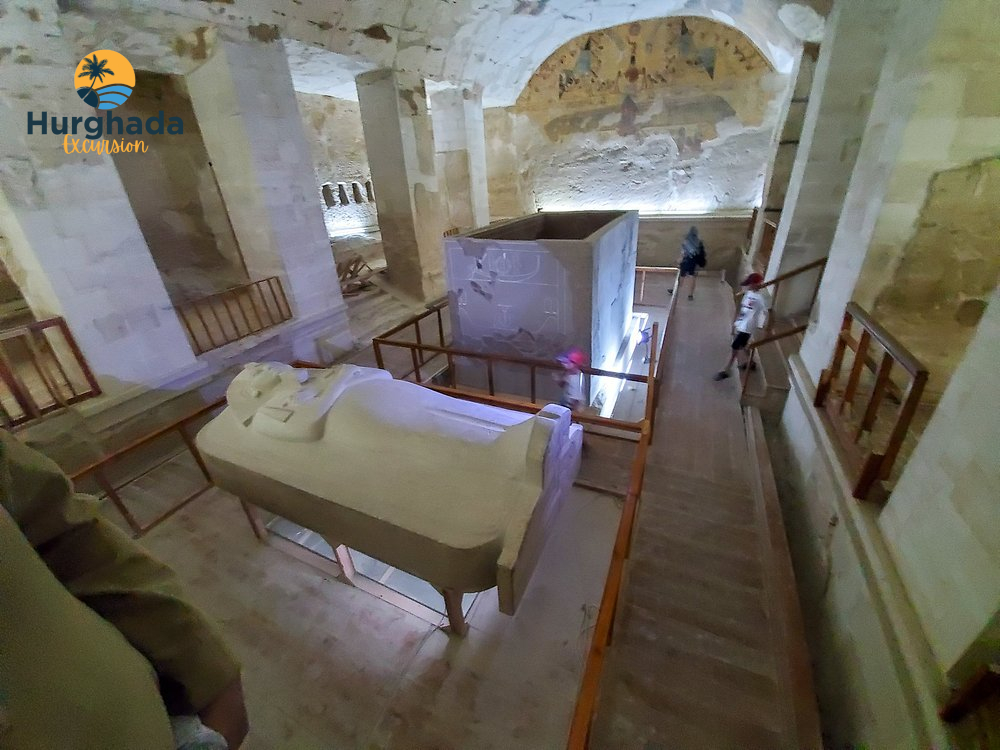
The world’s most famous tomb. Discovered by Howard Carter in 1922 with its entire treasure intact — over 5,000 objects — after 3,000 years. The burial chamber still contains Tutankhamun’s outer sarcophagus and his mummy. The painted walls show vivid scenes of the Pharaoh’s journey to the afterlife. Small but historically overwhelming.
Extra ticket: ~700 EGP (~€13) per person · Highly recommended
⭐⭐ Best of the Valley · Separate Ticket
KV17 — Seti I (Seti the First Tomb)
The longest (137m), deepest, and most elaborately decorated tomb in the Valley. Seti I was the father of Ramesses II and one of the finest artists’ patrons in Egyptian history — his tomb walls contain the most accomplished painting and sunk-relief carving anywhere in Egypt. The astronomical ceiling of the burial chamber is breath-taking. The most expensive extra ticket but universally considered worth it.
Extra ticket: ~2,000 EGP (~€38) per person · Most extraordinary
⭐ Premium Add-On · Separate Ticket
KV9 — Ramesses V & VI
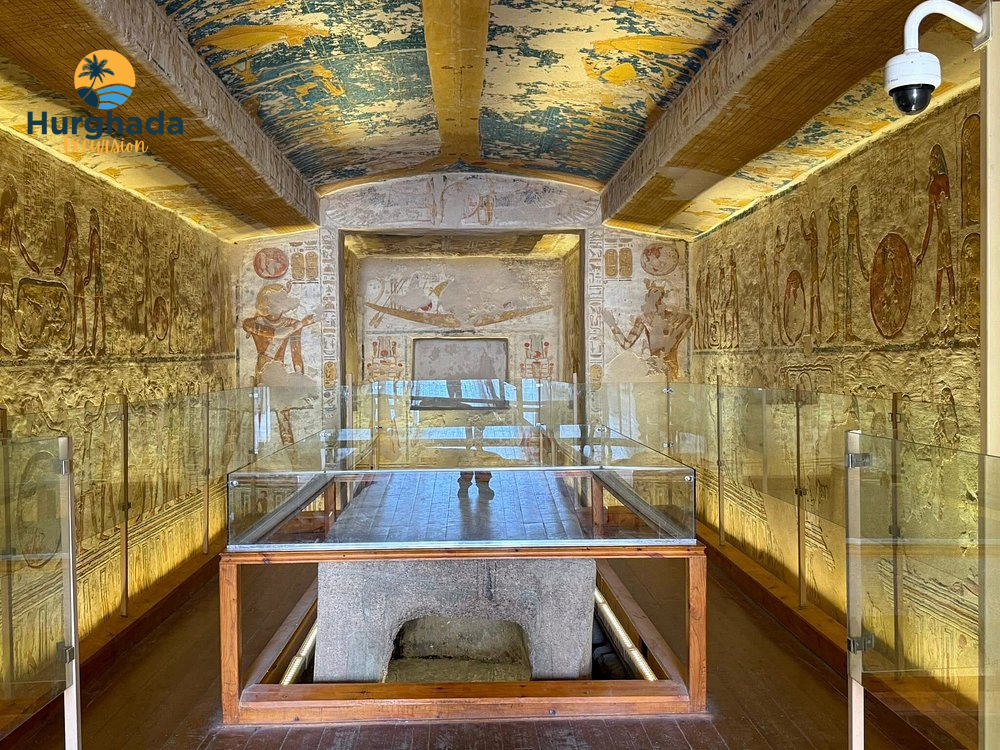
One of the largest and most completely decorated tombs in the valley — the Book of the Earth ceiling paintings are among the most spectacular astronomical art in ancient Egypt. The tomb extends 132 metres into the cliffside with multiple decorated corridors and chambers. Excellent value among the premium tombs.
Extra ticket: ~220 EGP (~€4) per person · Best value premium tomb
✓ Included in Standard Entry
KV2 — Ramesses IV
One of the most accessible and well-decorated of the included tombs — wide corridors, excellent ceiling paintings, and the huge pink granite sarcophagus still in the burial chamber. A good choice as one of the standard three tombs for visitors not purchasing premium tickets.
Included in standard entry · Best of the included tombs
✓ Included in Standard Entry
KV11 — Ramesses III
The longest of the included tombs — 188 metres from entrance to burial chamber, with extraordinary side chambers containing painted scenes of daily New Kingdom life. The quality of decoration here rivals many premium tombs. A consistently recommended choice for one of the standard three tomb visits.
Included in standard entry · Longest included tomb
✓ Included in Standard Entry
KV8 — Merenptah
Merenptah was the son of Ramesses II and the pharaoh associated with the Exodus in some historical interpretations. His tomb contains remarkable astronomical ceiling art and one of the oldest known pieces of historical text mentioning Israel. Fascinating historical content for the third standard tomb visit.
Included in standard entry · Most historically significant
Other West Bank Sites — Hatshepsut, Colossi & Karnak Temple
🏛️
Temple of Hatshepsut (Deir el-Bahari)
Built by Queen Hatshepsut (r. 1479–1458 BCE) — Egypt’s most powerful female pharaoh — her mortuary temple at Deir el-Bahari is a three-tiered colonnaded masterpiece cut into the limestone cliffs above the West Bank. The colonnade walls contain painted reliefs showing the legendary Punt expedition. Entrance fee ~200 EGP (~€4).
🗿
Colossi of Memnon
Two 18-metre quartzite statues of Amenhotep III standing alone on the West Bank plain — the only surviving element of his vast mortuary temple. They have stood here for 3,400 years. Free entry. The morning photography light on these statues is extraordinary. Best stop of the day for many guests who are not archaeology specialists.
🏺
Karnak Temple Complex
The world’s largest religious complex — 100 hectares, 2,000 years of construction, 30 pharaohs. The Great Hypostyle Hall (134 columns to 21m high) is the most overwhelming interior architectural space in ancient Egypt. The Sacred Lake, the obelisks of Hatshepsut, and the innermost sanctuaries are equally compelling. Entrance ~300 EGP (~€6).
🛶
The Nile Crossing
Crossing the Nile between East and West Banks by motorboat is not just a logistical detail — it is a genuinely atmospheric experience. The ancient Egyptians believed the East Bank (sunrise) represented life and the West Bank (sunset) represented death. Crossing the river in the morning light, with the valley cliffs ahead, is one of the most evocative moments of the entire tour.
Pharaonic History — The New Kingdom & the Royal Necropolis
Understanding the historical context of the Valley of the Kings transforms the visual experience of visiting it. Here is the essential history:
⚰️
Why a Valley?
Before the New Kingdom, Egyptian pharaohs were buried in pyramids — enormous public monuments that attracted exactly the tomb robbers they were designed to prevent. Thutmose I chose the hidden valley of the Theban hills for a secret burial: cut deep into the rock, disguised from above, accessible only by a narrow ravine. It was meant to be hidden forever.
🔮
What the Tomb Paintings Mean
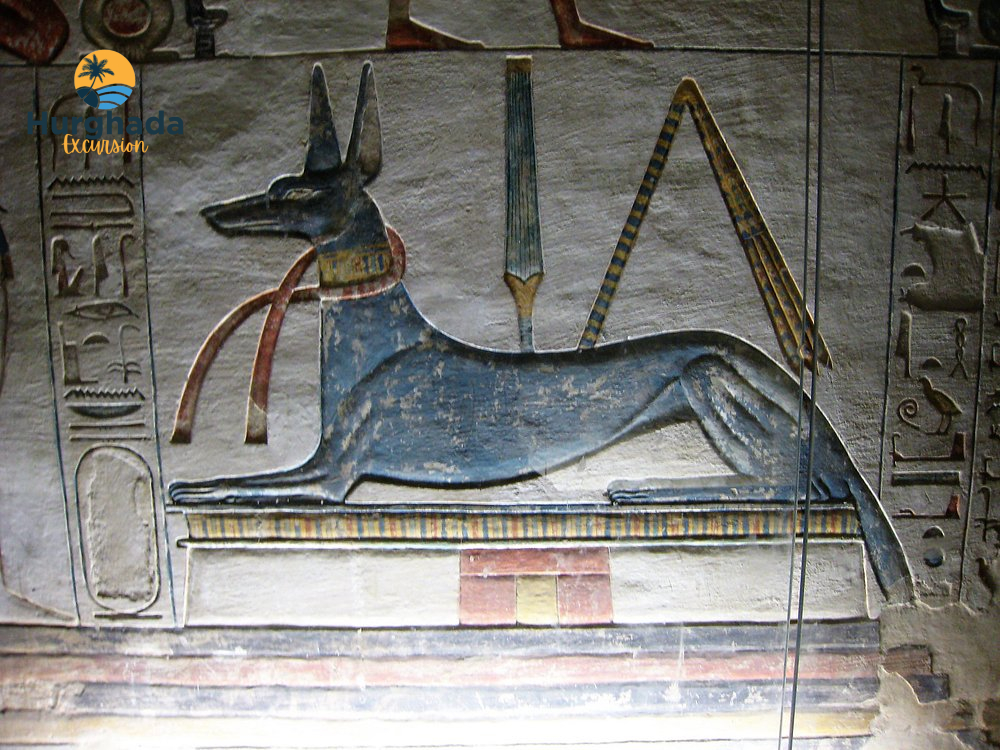
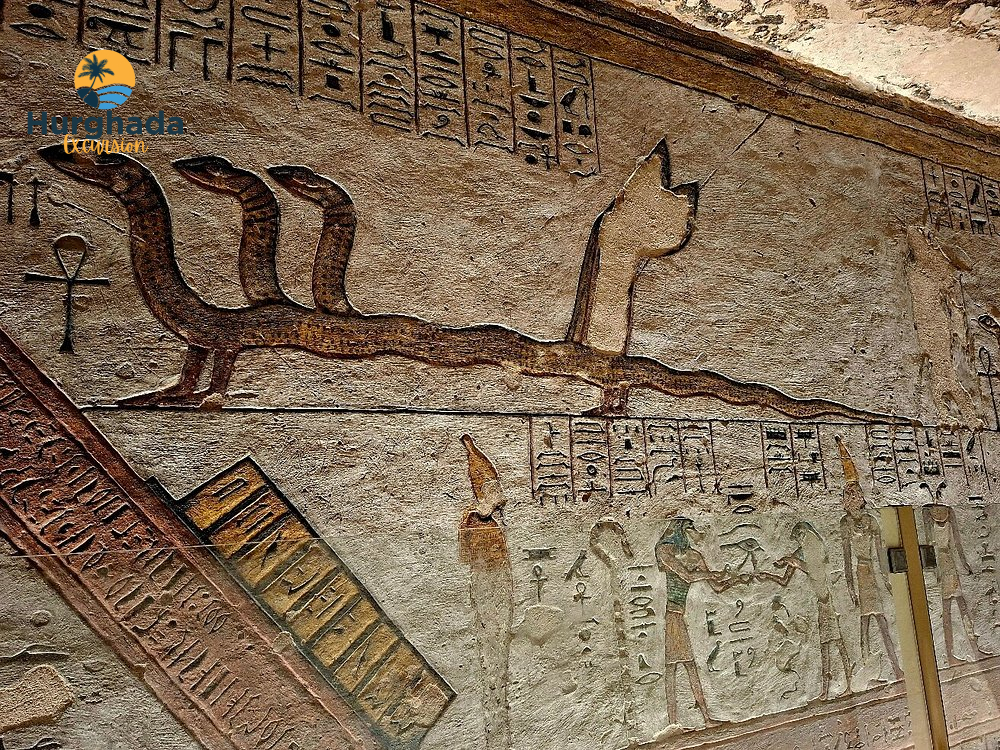
The painted walls are not decoration — they are functional. The texts (Book of the Dead, Amduat, Book of Gates) are spells, maps, and instructions for the pharaoh’s journey through the Duat (underworld) to resurrection. Every image has a purpose: the gods depicted are the pharaoh’s allies on the journey; the serpents are the dangers to overcome; the sunrise scenes at the end of each corridor represent successful resurrection.
🏺
Who Built the Tombs?
The royal tombs were built by a dedicated community of artisan workers who lived in the village of Deir el-Medina on the West Bank — the best-documented workers’ community from the ancient world. We know their names, their wages, their complaints (the world’s oldest recorded strike occurred here), their family relationships, and their personal love poems and humour from surviving papyri and ostraca.
🔍
Howard Carter & Tutankhamun
On 4 November 1922, British archaeologist Howard Carter discovered the only royal tomb in the Valley of the Kings found intact in modern times — KV62, the tomb of Tutankhamun. Carter’s famous words on first looking inside: “Wonderful things.” Over 5,000 objects were removed over the next decade. Most are now in the Grand Egyptian Museum in Cairo — including the iconic gold death mask.
Valley of the Kings Official Ticket Prices 2026
How much does it cost to enter the Valley of the Kings? Here are the official 2026 entrance fees. All prices are in Egyptian Pounds (EGP) — payable by credit card only (cash is no longer accepted at the site as of 2026):
Ticket
Price (EGP)
Approx. EUR
Includes
Standard Entry (Adult)
660 EGP
~€12
Access to 3 tombs from standard list
Electric Tram
10 EGP
~€0.20
Shuttle from entrance to tomb zone
Tutankhamun (KV62)
700 EGP
~€13
Premium add-on · world’s most famous tomb · mummy in situ
Premium add-on · best astronomical ceiling · largest included tomb
Tomb of Ay
200 EGP
~€4
Premium add-on · West Valley · Amarna period art
💳 Important: Cash No Longer Accepted
As of 2026, the Valley of the Kings ticket office no longer accepts cash — all ticket purchases must be made by credit or debit card. Our Valley of the Kings Luxor tour from Hurghada guide manages all ticketing and the standard entry tickets are included in the tour price. Premium tomb tickets (Tutankhamun, Seti I, etc.) are purchased separately on-site by card — bring your bank card and confirm your premium tomb preferences with the guide before arrival at the valley.
Valley of the Kings Luxor Tour Price from Hurghada 2026
Valley of the Kings Luxor Tour from Hurghada — From
€75
per adult · Private full-day tour with Egyptologist guide
✓ Hotel Transfer · ✓ Egyptologist Guide · ✓ Standard Entry Tickets · ✓ Lunch · ✓ Water
Children 4–11: 50% discount · Children under 4: Free · Premium tomb tickets extra (purchased on-site by card)
✅ Included in the Valley of the Kings Tour Price
✓ Private air-conditioned vehicle transfer: Hurghada – Luxor – Hurghada (260 km each way)
✓ Licensed Egyptologist guide for the full day
✓ Standard Valley of the Kings entry ticket (3 tombs) + electric tram
✓ Temple of Hatshepsut entrance fee
✓ Karnak Temple entrance fee
✓ Nile crossing (West Bank motorboat)
✓ Full lunch at a Luxor restaurant (Egyptian menu, soft drinks included)
✓ Bottled water throughout · Free cancellation 48 hours before
❌ Not Included (Payable on Site)
✕ Premium tomb tickets: Tutankhamun (~€13), Seti I (~€38), Ramesses V & VI (~€4), Tomb of Ay (~€4)
✕ Tips for guide and driver (optional but appreciated — €10–€15 per person for a full-day tour)
✕ Personal shopping at the Luxor souks or market area
Valley of the Kings Luxor Tour Packages — Private vs Group
Feature
Private Tour
Small Group Tour
Group size
Your group only (2–10)
8–16 people
Flexibility
Fully flexible — your pace
Fixed schedule
Guide attention
Exclusive to your group
Shared with 15+ guests
Departure time
Confirmed to suit your hotel location
Fixed group departure
Tutankhamun tomb included
Optional (extra card payment on site)
Depends on package — some include it
Price per person
From €75
From €55–€65
💡 Our Recommendation
For families, couples, and groups of 4 or more, the private Luxor tour from Hurghada is strongly recommended — the price difference per person is modest and the experience difference is enormous. With a private guide, you can spend 30 minutes in one tomb while the group tour moves on, ask questions freely, adjust the pace to your children’s energy levels, and make on-the-day decisions about which premium tombs to add. The Valley of the Kings rewards time — and private tours give you the time to use it well.
Best Time to Visit the Valley of the Kings from Hurghada
Season
Luxor Temp
Tomb Conditions
Crowds
Verdict
Oct – Nov
28–36°C
Warm but manageable
Moderate
Excellent
Dec – Feb
15–25°C
Cool, comfortable
High (peak season)
Best weather · early start essential
Mar – May
25–38°C
Warming — morning essential
Moderate–low
Very Good
Jun – Sep
40–48°C
Intense heat outside · cool in tombs
Very low
Possible but demanding — very early start required
10 Expert Tips for Your Valley of the Kings Luxor Tour
Tip 1 — Arrive at the Valley of the Kings before 09:00 AM. This is the single most impactful decision you can make. Before 09:00 AM, the valley is quiet — you can stand alone in a royal tomb that has existed for 3,000 years and hear the silence. After 10:00 AM, the same tomb is crowded with 40 people, the air is thick, and the guide has to shout over the noise of other groups. Our Valley of the Kings tour from Hurghada departs at 04:00 AM specifically to achieve this early arrival.
Tip 2 — Add the Tutankhamun and Ramesses V & VI tombs at minimum. The standard three included tombs are excellent — but Tutankhamun (KV62) for historical significance and Ramesses V & VI (KV9) for visual splendour represent the best value additions at ~€13 and ~€4 respectively. If budget allows, Seti I (KV17) at ~€38 is the finest tomb in the valley — the quality of its painting is in a different league from everything else. The guide will discuss your preferences on the drive from Hurghada.
Tip 3 — Bring a credit or debit card — cash is not accepted at the site. As of 2026, the Valley of the Kings ticket office accepts only card payments. The standard entry tickets for your group are included in the tour price (paid by Hurghada Excursion). Premium tomb tickets (Tutankhamun, Seti I, etc.) must be purchased separately by your card on-site. Notify your bank before travel if you plan to use a card in Egypt.
Tip 4 — Wear a hat and bring your own water bottle. The Valley of the Kings between the tombs is completely exposed — no shade, limestone reflecting the sun from every surface, and temperatures that reach 45°C+ in summer. A wide-brimmed hat and 2+ litres of water are not optional. The tombs themselves are cool (around 20–22°C inside) — so the temperature contrast is extreme and the body needs hydration to manage it.
Tip 5 — Ask the guide to explain the Books of the Dead and Amduat. Most visitors look at the painted walls of the royal tombs and see extraordinary art — but the guide can decode every image as a functional religious text. The Amduat (What Is in the Underworld) is a 3,500-year-old map of the pharaoh’s journey through the 12 hours of the night to resurrection at dawn. When you understand what you are looking at, every image becomes twice as extraordinary.
Tip 6 — Can you visit the Valley of the Kings without a tour? Technically yes — but practically no. Independent visitors can purchase their own entry tickets on-site and use the electric tram. But without an Egyptologist guide, the tombs are visually extraordinary but historically opaque — you see art you cannot decode. The guide transforms 3 hours in the valley from a visual experience to an intellectual and emotional encounter with 3,500 years of human history. It is the single best investment you can make in your Egypt visit.
Tip 7 — Do not miss Karnak Temple’s Great Hypostyle Hall. Many guests who are not particularly interested in ancient temples change their minds completely when they enter the Great Hypostyle Hall at Karnak — 134 papyrus-form columns up to 21 metres high, every surface covered in hieroglyphic relief carvings, the sheer scale defying comprehension. The Hall was roofed in antiquity — standing inside it in the dark, the ancient Egyptians would have experienced one of the most powerful architectural spaces ever created.
Tip 8 — Set expectations with children before visiting the tombs. The tombs are remarkable for children but require specific preparation: they are underground (some are claustrophobic), they are dark, the floors are uneven, and children need to move quietly and respectfully. Children aged 8+ who have been briefed on what they are about to see are invariably captivated. The story of Tutankhamun — his treasure, his mummy, Howard Carter’s discovery — is one of the most compelling archaeological stories imaginable for young people.
Tip 9 — Accept the early departure gratefully. The 04:00 AM pickup time is genuinely difficult. But every guest who does the Valley of the Kings tour from Hurghada and arrives before 09:00 AM describes the early start as “completely worth it.” Guests who do the later departure (arriving at 10:00+ AM) consistently report the same site as “too crowded to fully appreciate.” The difference between 07:30 AM and 10:30 AM in the valley is the difference between a transformative experience and a crowded one.
Tip 10 — Give the guide 48 hours notice of your premium tomb preferences. If you know before the tour that you want Seti I, tell us when you book. The guide can factor this into the day’s timing — Seti I requires an extended visit (it is 137 metres long and requires over an hour to appreciate fully) and timing within the valley’s flow is important for maximising the overall experience.
Suitable for Families & All Ages?
Yes — the Valley of the Kings Luxor tour from Hurghada is suitable for families with children, subject to the specific age and physical considerations below:
✓ Children aged 8+ are typically well-suited to the tour — the story of Tutankhamun and the discovery of his tomb is one of the most compelling stories available to young people anywhere in the world.
✓ Children 4–11 receive a 50% discount. Children under 4 travel free.
✓ The private vehicle accommodates car seats on request — mention this at booking.
✕ Not recommended for young children under 4 who cannot manage the early departure or the heat between tomb visits.
✕ Not suitable for guests with limited mobility — the tombs involve steps, slopes, and uneven surfaces. The West Bank terrain is also uneven. Wheelchairs cannot access most tomb interiors.
Real Reviews from Travellers
★★★★★
“Truly the trip of a lifetime. Our guide was exceptional — an Egyptologist with a genuine passion for his subject. Standing inside Seti I’s tomb at 08:30 in the morning with almost no other visitors, looking at 3,500-year-old paintings that look like they were finished last week, was one of the most profound moments of my life. The early start from Hurghada is worth every second of lost sleep.”
James & Sarah T. — London · March 2026
★★★★★
“A Grand Tour of historical Luxor — a full day out to explore and indulge yourself in the history of Luxor. The guide was very knowledgeable. Our tour included Valley of the Kings, Hatshepsut Temple, Colossi of Memnon, and Karnak. Every single site exceeded expectations. Cannot recommend this enough to anyone visiting Hurghada.”
Robert K. — Edinburgh · March 2026
★★★★★
“We did the private tour with our two children (11 and 14). The guide explained everything at exactly the right level for both ages — Tutankhamun’s story had both kids completely captivated. The early start was tough but arriving before the crowds was worth it. Best day of our Hurghada holiday by a significant margin.”
Caroline M. — Bristol · January 2026
Frequently Asked Questions
How many tombs are in the Valley of the Kings?
There are 63 known tombs in the Valley of the Kings — designated KV1 through KV63 (KV = King’s Valley). Of these, approximately 10–11 are currently open to the public. The standard entry ticket permits visits to 3 tombs from the open list. Four additional tombs (Tutankhamun, Seti I, Ramesses V & VI, and the Tomb of Ay) require separate premium tickets purchased at the site. Archaeologists believe additional undiscovered tombs remain beneath the valley floor.
How much does it cost to enter the Valley of the Kings in 2026?
How much does it cost to enter the Valley of the Kings? The standard adult entry ticket costs approximately 660 EGP (~€12) including 3 tomb visits and the electric tram. Premium tomb add-ons: Tutankhamun (KV62) ~700 EGP (~€13), Ramesses V & VI (KV9) ~220 EGP (~€4), Seti I (KV17) ~2,000 EGP (~€38), Tomb of Ay ~200 EGP (~€4). All payments are card only — cash is no longer accepted at the site. Our tour price includes the standard entry ticket — premium tombs are paid separately on-site.
What is the Valley of the Kings Luxor tour price from Hurghada?
The Valley of the Kings Luxor tour cost from Hurghada starts from €75 per adult for the private full-day tour. This includes private air-conditioned vehicle transfer (260 km each way), licensed Egyptologist guide for the full day, standard Valley of the Kings entry ticket (3 tombs), Temple of Hatshepsut and Karnak entrance fees, Nile crossing, lunch, and bottled water. Children 4–11: 50% discount. Premium tomb tickets (Tutankhamun, Seti I, etc.) are purchased separately on-site by card.
Can you visit the Valley of the Kings without a tour?
Can you visit the Valley of the Kings without a tour? Yes — independent entry is possible. The site is open daily 06:00 AM–18:00 PM and tickets can be purchased at the entrance by card. However, the tombs contain no English signage inside — the hieroglyphic texts and painted scenes are unexplained without a guide. An Egyptologist guide transforms the visual experience into a genuinely educational and emotionally meaningful encounter with 3,500 years of history. From Hurghada, independent travel (bus, taxi, etc.) is logistically complex and significantly more time-consuming than a private tour. The private Luxor tour from Hurghada is consistently considered the most practical and most rewarding option.
How long is the Valley of the Kings tour from Hurghada?
The full Valley of the Kings tour from Hurghada is approximately 14–16 hours door to door — departing at 04:00–05:00 AM and returning at approximately 18:30–19:00 PM. The 260 km road journey takes 3 hours each way. Time at the sites: 3 hours at the Valley of the Kings, 1 hour at Hatshepsut Temple, 1.5–2 hours at Karnak Temple, with lunch between the West and East Bank visits.
What is the Seti I (Seti the First) tomb?
Seti the First tomb (KV17) is the longest (137 metres), deepest, and most elaborately decorated tomb in the Valley of the Kings. Built for Seti I — father of Ramesses the Great — it was discovered by Giovanni Belzoni in 1817. The quality of the sunk-relief carving and painting inside surpasses every other tomb in the valley — the colours remain vivid, the figures are exquisitely rendered, and the astronomical ceiling of the burial chamber is one of the finest examples of New Kingdom art anywhere in Egypt. A separate premium ticket of approximately 2,000 EGP (~€38) is required. Universally considered worth the cost by everyone who visits it.
Book Your Valley of the Kings Luxor Tour Today
From €75 per person · Private vehicle from Hurghada · Egyptologist guide · All entrance fees · Lunch · Tutankhamun’s tomb optional · Free cancellation 48 hours before.
The Valley of the Kings Luxor tour is the single most extraordinary day available from Hurghada — and, for many guests who make the journey, the most extraordinary day of their lives. Standing inside a tomb that was sealed for 3,000 years, looking at paintings of a world that ended before Rome was founded, in a valley that has been sacred ground since the most powerful civilisation in ancient history chose it as the resting place of its gods-on-earth — this is an experience that no amount of reading or television can prepare you for. It must be lived.
Book your Valley of the Kings Luxor tour today with Hurghada Excursion — early departure, private vehicle, licensed Egyptologist, and the most complete pharaonic history experience available from the Red Sea coast.