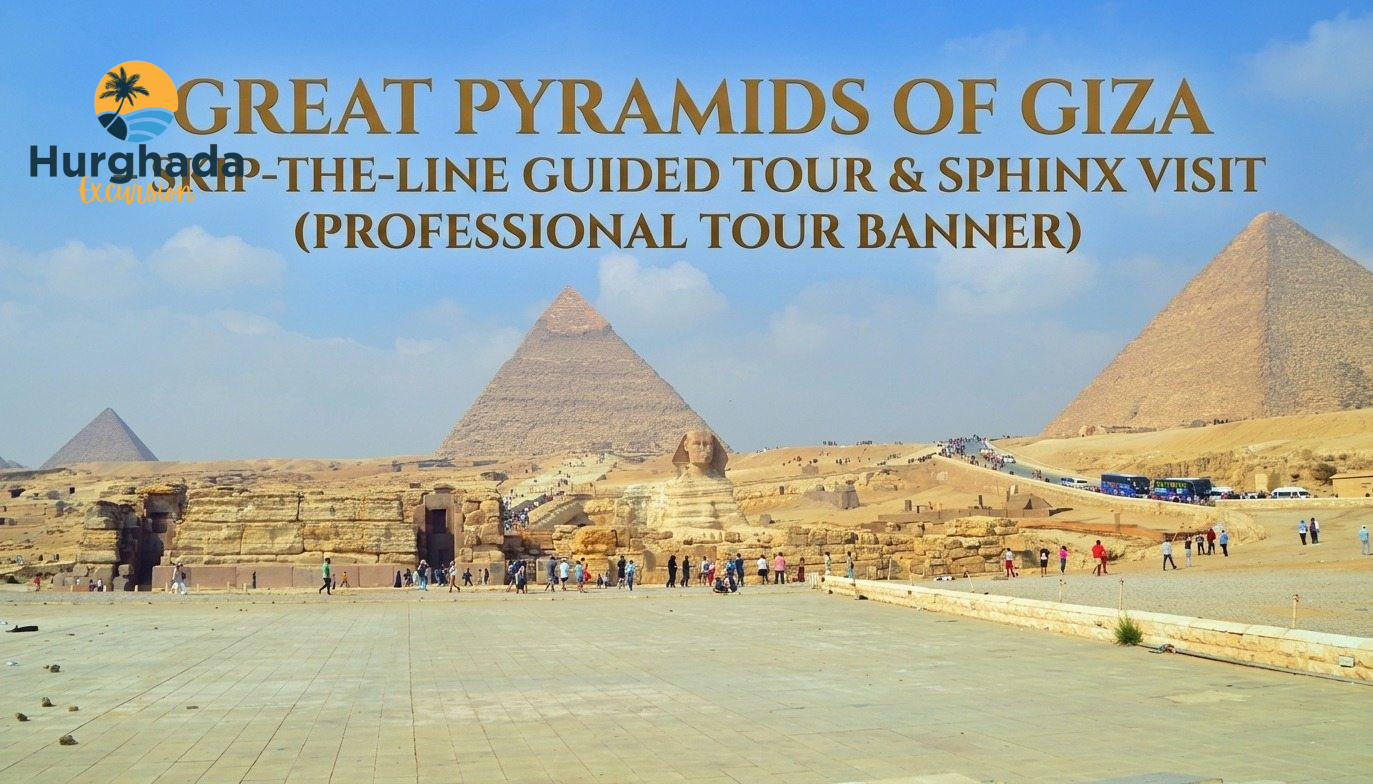
🏺 Skip-the-Line · Great Pyramid · Sphinx · Grand Egyptian Museum · From Hurghada · Daily
Great Pyramids of Giza – Skip-the-Line Guided Tour & Sphinx Visit
📅 Updated: May 2026 | ⏱️ Full Day · From Hurghada (Flight or Road) | 💶 From €100 / person | ⭐ 4.9/5 Rated | 🏺 Daily Departures
They are the last surviving wonder of the ancient world. They were the tallest structures on earth for 3,800 years. They were built 4,500 years ago by a civilisation that had not yet invented the wheel — or at least had not yet applied it to construction — using organisational and engineering skills that continue to astonish modern researchers. The Great Pyramids of Giza are not merely ancient monuments: they are the most enduring physical demonstration in human history that extraordinary things are possible, that ambition can be made permanent, and that human ingenuity can outlast every civilisation, language, and religion that has existed since they were built. Standing before them for the first time is one of the most powerful experiences available to any traveller anywhere on earth.
The Great Pyramids of Giza skip-the-line guided tour and Sphinx visit from Hurghada provides the complete, expertly managed experience of the Giza plateau — the three Great Pyramids, the Great Sphinx, the Valley Temple of Khafre, and the Grand Egyptian Museum (home of Tutankhamun’s gold death mask) — with a licensed Egyptologist guide who brings the complete 4,500-year-old story of these extraordinary monuments to life. Skip-the-line entry, private transport, and a guide whose full attention is on your group ensures that this extraordinary site delivers everything it promises — without the queues, the confusion, or the vendors that can make independent visits unnecessarily stressful.
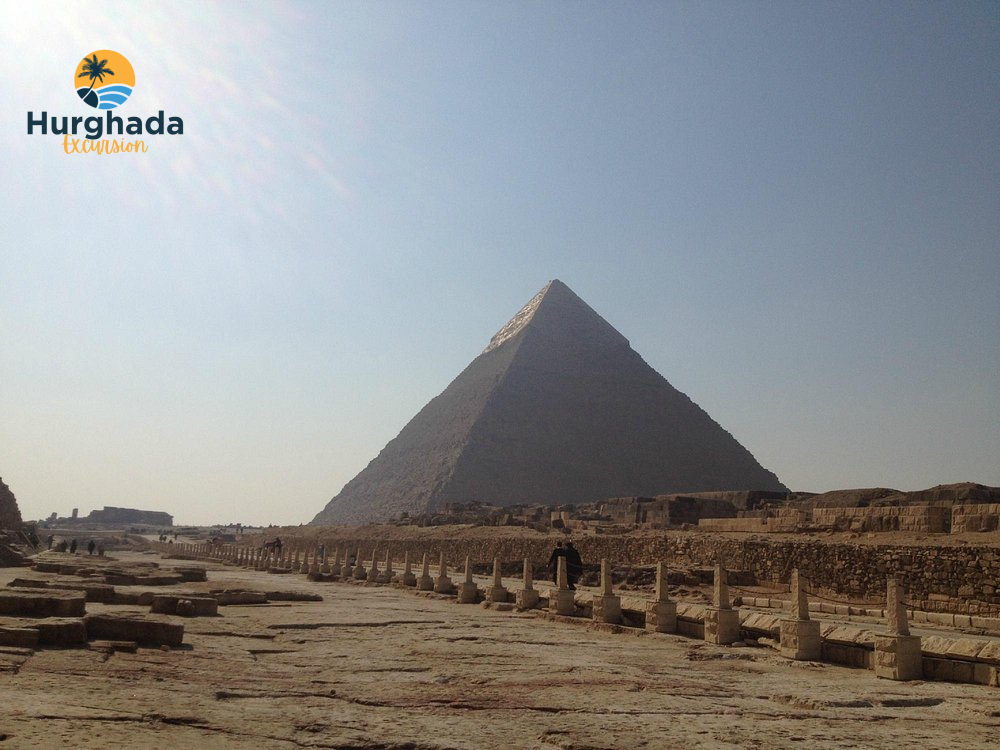
🏺 What are the three big pyramids of Giza? The three Great Pyramids of Giza are: (1) The Great Pyramid of Khufu (Cheops) — the largest, built c. 2560 BCE, original height 146.6 metres, still 138.8 metres, the oldest and only surviving Seven Wonders of the Ancient World; (2) The Pyramid of Khafre (Chephren) — the second largest, appears taller due to its elevated position, still retains limestone casing at the apex; (3) The Pyramid of Menkaure (Mycerinus) — the smallest of the three, surrounded by three subsidiary pyramids for the king’s queens. Together they form the most recognised and most visited ancient monument complex on earth — and the only group of monuments anywhere that lives up to, and exceeds, its photographs.
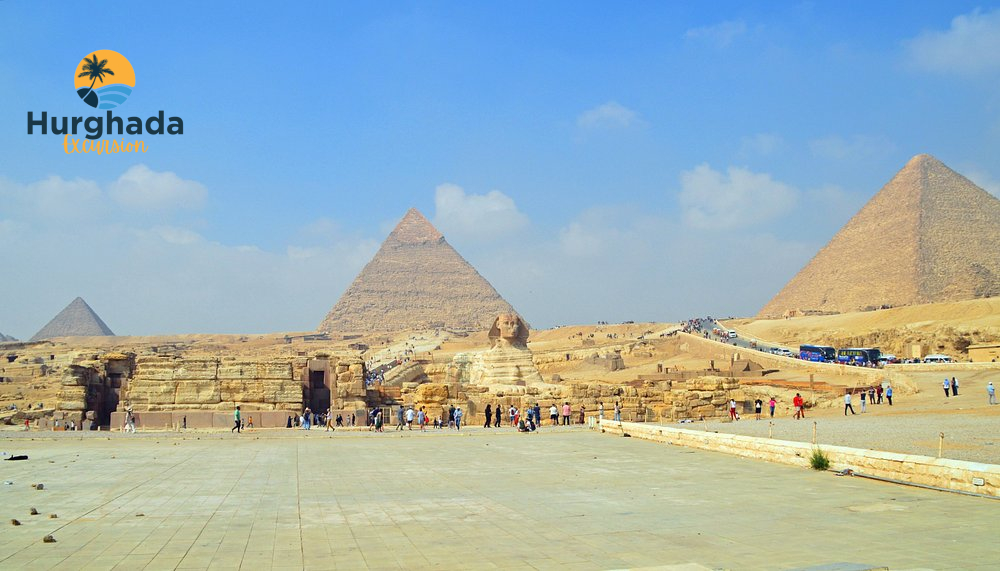
The Great Pyramids of Giza — History, Facts & Significance
The Great Pyramids of Giza stand on the Giza plateau on the west bank of the Nile, approximately 13 km southwest of central Cairo. They are the royal tombs of three successive Fourth Dynasty pharaohs — Khufu (Greek: Cheops), his son Khafre (Chephren), and his grandson Menkaure (Mycerinus) — built between approximately 2589 BCE and 2503 BCE during the Old Kingdom period of ancient Egyptian history.
| Pyramid |
Pharaoh |
Built |
Original Height |
Current Height |
| Great Pyramid |
Khufu (Cheops) |
c. 2589–2566 BCE |
146.6 m |
138.8 m |
| Pyramid of Khafre |
Khafre (Chephren) |
c. 2558–2532 BCE |
143.5 m |
136.4 m |
| Pyramid of Menkaure |
Menkaure (Mycerinus) |
c. 2532–2503 BCE |
65 m |
61 m |
🏆 Three Great Facts About the Great Pyramid
1. The Great Pyramid of Khufu contains approximately 2.3 million stone blocks, each weighing 2–80 tonnes, and covers a base area of 53,000 m² (a city block in either direction). 2. It remained the tallest man-made structure in the world for 3,800 years — until the Lincoln Cathedral spire was completed in 1311 CE. 3. When was the Great Pyramid of Giza built? Construction began around 2589 BCE and was completed around 2566 BCE — approximately 4,590 years ago.
👷 Who Built the Pyramids of Giza?
Who built the pyramid of Giza? The Great Pyramid was built by approximately 20,000–30,000 skilled workers employed by the state — not slaves, as is popularly assumed. Archaeological evidence from the workers’ village at Giza (discovered in 1990) shows they were fed, housed, and given medical care. Graffiti from inside the pyramid includes workers’ team names written in red paint — evidence of a professional, organised workforce.
Top 10 Highlights of the Skip-the-Line Guided Tour
🏺
1. First View of the Great Pyramid
The moment of first seeing the Great Pyramid of Khufu in person — as the vehicle crests the Giza plateau and the pyramid fills the windscreen from top to bottom — is consistently described by every visitor as genuinely overwhelming. Photographs do not capture the scale. The pyramid is 138.8 metres tall and over 230 metres along each base edge. Nothing you have seen before prepares you for the reality of it.
🦁
2. The Great Sphinx — Face to Face
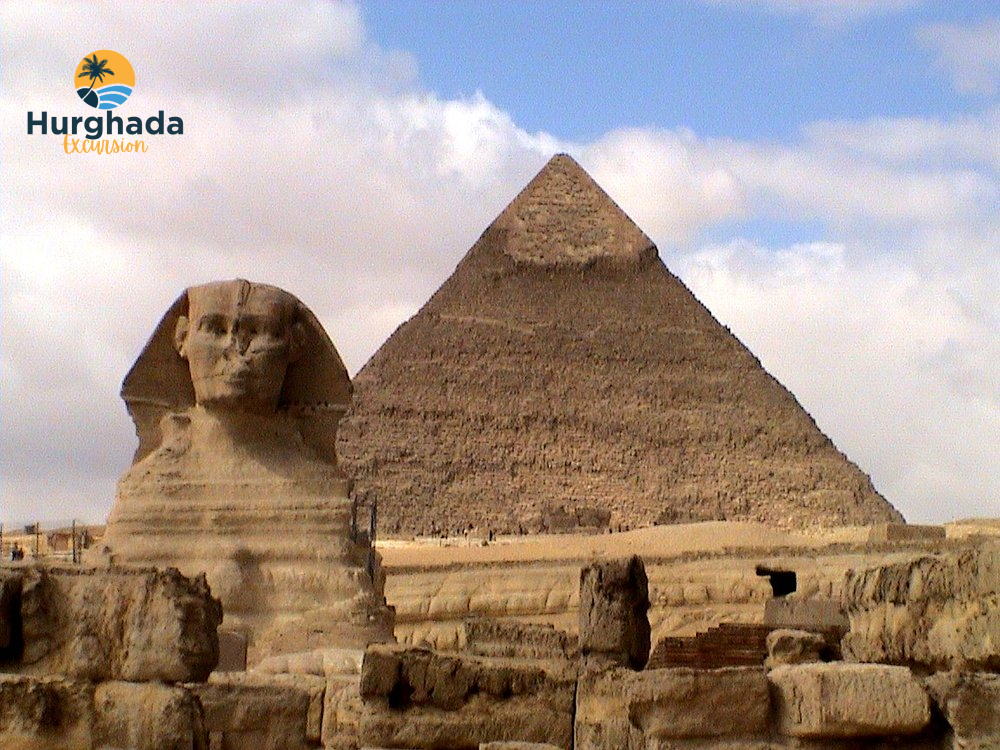
Standing at the viewing platform before the Great Sphinx — 73 metres long, 20 metres high, carved from a single outcrop of natural limestone, the largest monolithic sculpture in the world — is as immediate and as powerful as the first view of the pyramids. How close is the Sphinx to the pyramids? The Sphinx lies approximately 350 metres east of the Great Pyramid, directly in front of the Pyramid of Khafre.
📜
3. Entering the Great Pyramid (Optional)
An optional premium experience — climbing inside the Great Pyramid of Khufu through the ascending corridor to the King’s Chamber. A profound encounter with one of the most extraordinary spaces in the ancient world — the granite burial chamber where the pharaoh’s body was placed 4,500 years ago. Hot, narrow, and atmospheric. Claustrophobics should consider alternatives. Premium ticket required.
🏛️
4. Grand Egyptian Museum — Tutankhamun
Adjacent to the Giza plateau, the Grand Egyptian Museum (GEM) — the world’s largest archaeological museum, opened 2023 — houses the complete Tutankhamun collection including the iconic gold death mask. This is one of the most significant museum openings in decades. Our tour includes the GEM visit in combination with the Giza plateau.
🎓
5. Licensed Egyptologist Guide
A licensed Egyptologist whose expertise transforms the Giza experience — explaining who Khufu was, how the pyramids were built, what the theories are about the construction methods, why the builders chose this specific location, what the astronomical alignments mean, and what was found (and what was not found) inside the pyramids when they were entered in medieval and modern times.
📸
6. The Classic Panoramic View
The guide takes the group to the panoramic viewpoint at the southern edge of the Giza plateau — the single viewpoint from which all three pyramids are visible simultaneously in perfect alignment. This is the most photographed view in Egypt and the one that appears in virtually every documentary about the pyramids. The guide times the visit for the best light conditions.
🏯
7. Valley Temple of Khafre
The best-preserved mortuary temple in Egypt — the Valley Temple of Khafre stands beside the Sphinx and retains its original polished Aswan granite casing. The guide explains how the mortuary temple connected to the pyramid via a covered causeway and how the cult of the dead pharaoh was maintained for decades after burial. One of the most complete Old Kingdom architectural spaces surviving.
🐫
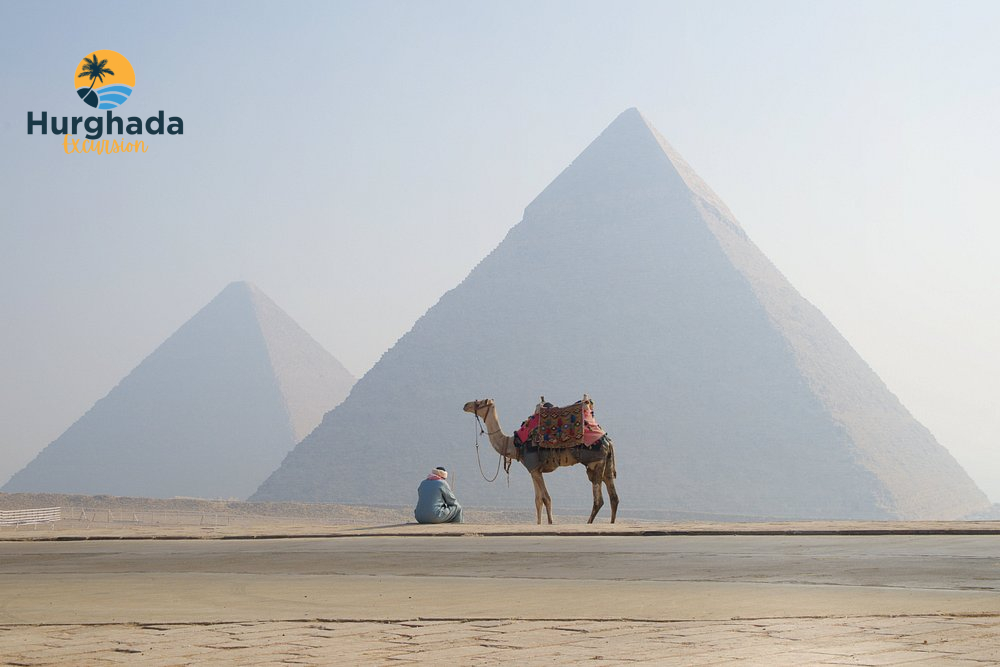
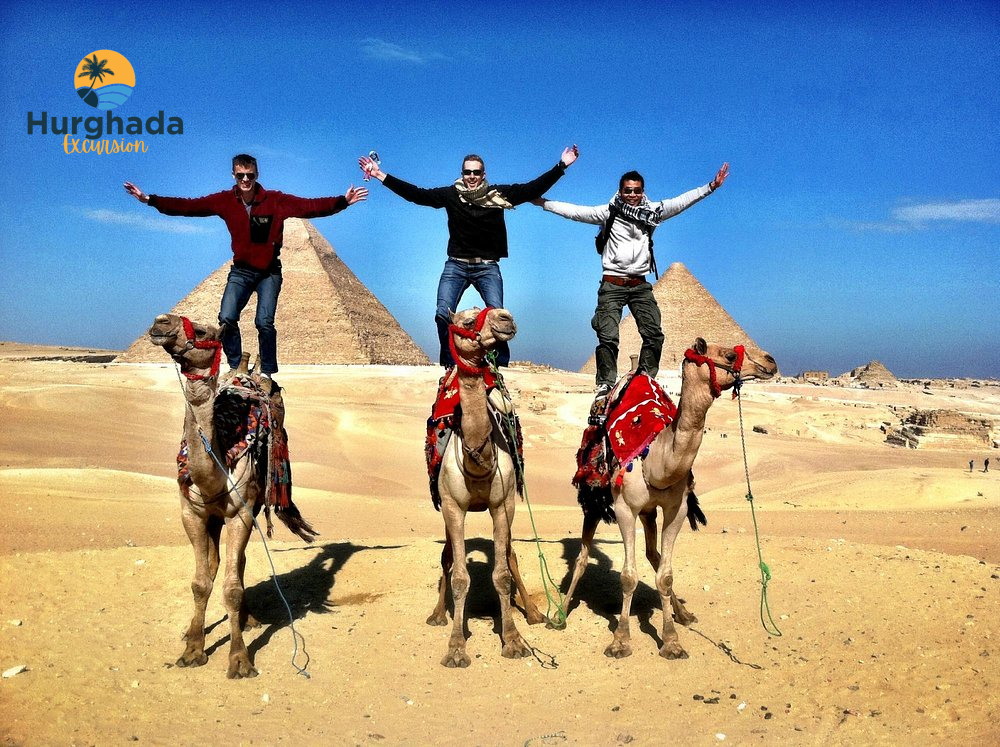
8. Camel Ride (Optional)
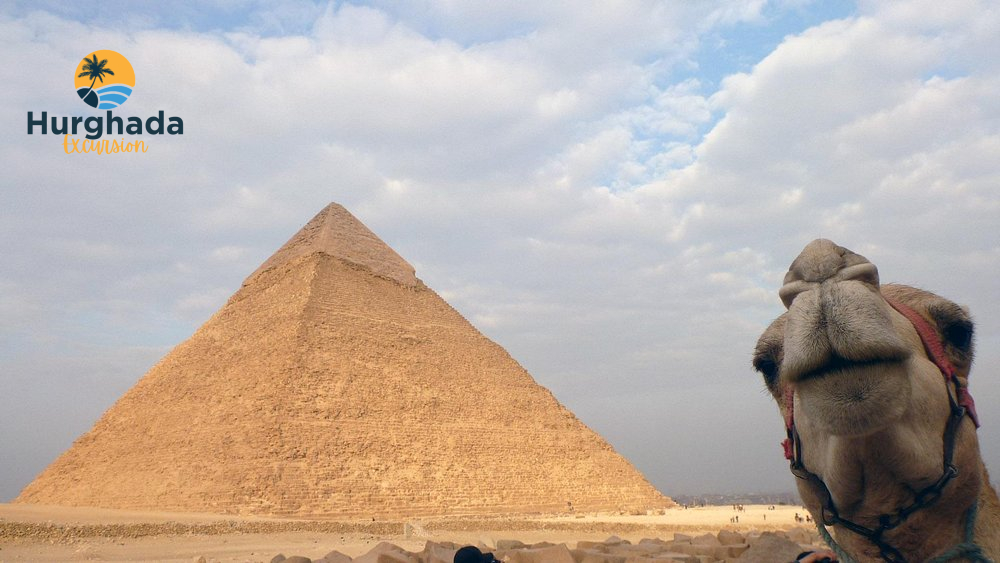
An optional camel ride at the plateau — approximately 15–30 minutes on a camel through the desert terrain between the pyramids, with unobstructed views of all three. The guide assists with reputable camel operators. Not mandatory but provides one of the most distinctive photographic perspectives of the Giza plateau available to tourists.
🌅
9. Solar Boat Museum
Adjacent to the Great Pyramid, the Solar Boat Museum houses one of the most extraordinary objects in Egypt — a 43-metre cedar wood funerary boat, buried in a sealed pit beside the Great Pyramid in 2560 BCE and discovered intact in 1954. Reconstructed and displayed in its own climate-controlled museum, it is one of the finest surviving examples of ancient Egyptian craftsmanship.
🚫
10. Skip-the-Line — Maximum Time at the Pyramids
Pre-purchased skip-the-line tickets mean no queuing at the entrance gates — your guide has the tickets ready and the group walks directly into the Giza plateau without joining the general admission queue. In peak season (October–March), this can save 30–60 minutes at the main gate alone. More time at the monuments, less time in queues.
Complete Day Program — From Hurghada to the Pyramids & Back
The Great Pyramids of Giza day trip from Hurghada is available by both flight and road. Here is the complete program for both options:
✈️ OPTION A — BY FLIGHT (Recommended · 12–13 Hours Total)
Depart Hurghada Airport ~06:00 AM · 45-minute flight to Cairo International Airport · Transfer to Giza: 30–45 min · Arrive Giza plateau 08:30 AM · Full day programme (08:30–15:00) · Return transfer to Cairo Airport · Flight back to Hurghada ~18:00–19:00 PM · Arrive Hurghada ~19:00–20:00 PM
🚐 OPTION B — BY ROAD (Budget Option · 18–20 Hours Total)
Depart Hurghada ~23:00 PM (night before) · Road to Cairo: 4–5 hours (460 km) · Arrive Cairo 04:00–05:00 AM · Rest until 08:00 AM · Full day Giza + GEM programme · Depart Cairo ~16:00 PM · Return road to Hurghada · Arrive ~21:00–22:00 PM. The road option is significantly more economical but considerably more demanding — recommended only for guests in good health who are comfortable with long driving days.
08:30 – 09:00 · Giza Plateau Arrival
🏺 First Sight — Skip-the-Line Entry to the Giza Plateau
Arrival at the new entrance to the Giza Pyramids (the visitor management system introduced in recent years includes a new organised entry point). Skip-the-line tickets pre-purchased and ready — the group enters the plateau without joining the general admission queue. The guide delivers the orientation briefing: the layout of the three pyramids, the Sphinx, the causeway, and the planned programme for the morning.
How long does it take to visit the pyramids and Sphinx? A comprehensive guided visit to the Giza plateau — covering all three pyramids (exterior), the Sphinx, the Valley Temple, the panoramic viewpoint, and the Solar Boat Museum — takes approximately 4–5 hours. Adding the Grand Egyptian Museum requires an additional 1.5–2 hours. Our full-day programme allocates approximately 6–7 hours for the complete Giza experience.
09:00 – 10:30 · Great Pyramid Complex
🏺 The Great Pyramid of Khufu — Standing at the World’s Greatest Wonder
The first major stop — standing at the base of the Great Pyramid of Khufu. The guide delivers the complete story: who Khufu was, when and how the pyramid was built, the theories of construction, the internal chambers discovered by Arab explorers in 820 CE and by modern researchers, and the extraordinary mathematical and astronomical precision of the structure. Guests circle the base (a 1 km walk), approach the original entrance on the north face, and photograph the pyramid from close range and from the nearby causeway.
For guests who have purchased the optional interior ticket: the guide accompanies the group through the ascending corridor (approximately 40 metres of a 26-degree incline, crouched, followed by the grand gallery at full height) to the King’s Chamber. Duration: 20–30 minutes inside.
10:30 – 11:00 · Khafre & Menkaure Pyramids
🏺 Pyramid of Khafre & Pyramid of Menkaure — The Complete Trio
The vehicle drives to the Khafre pyramid (second largest, with intact limestone casing at the apex) and the Menkaure pyramid (smallest of the three, with the three subsidiary queens’ pyramids). The guide explains the architectural differences between the three pyramids and what they reveal about the evolution of pyramid design during the Fourth Dynasty.
11:00 – 11:30 · Panoramic Viewpoint
📸 The Three Pyramids Panoramic View — The Iconic Photograph
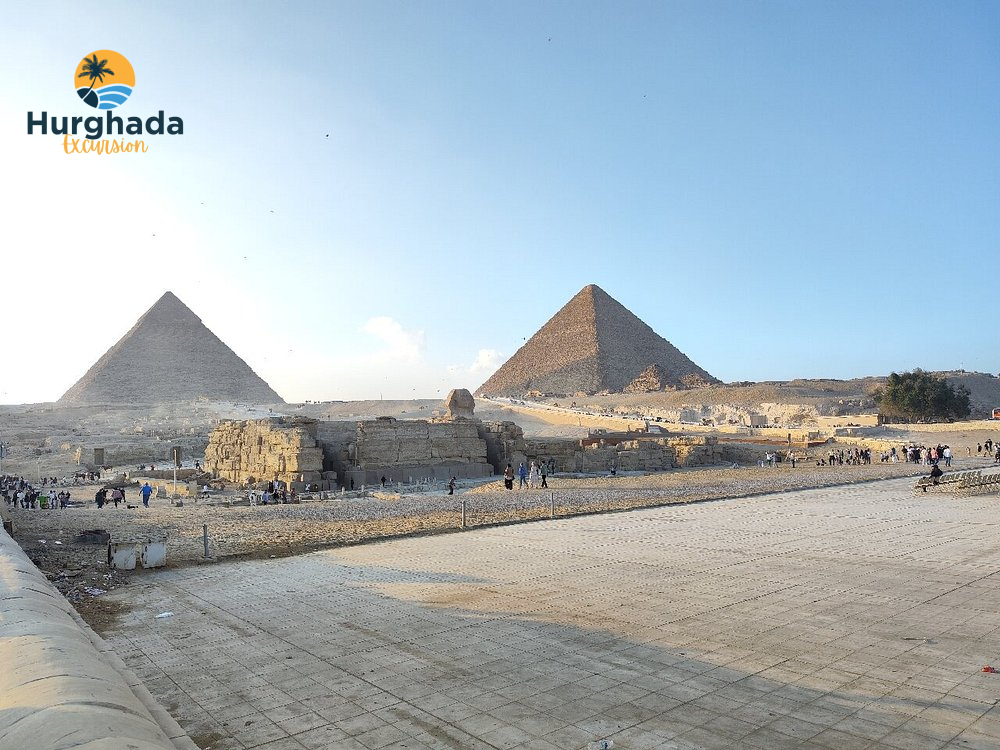
The guide takes the group to the southern panoramic viewpoint — the only location from which all three pyramids are simultaneously visible in perfect alignment. This is the defining photograph of any Egypt visit. The guide positions the group for the best light conditions and assists with photography. Optional camel rides are available here for an additional charge.
11:30 – 12:30 · Sphinx & Valley Temple
🦁 The Great Sphinx & Valley Temple of Khafre
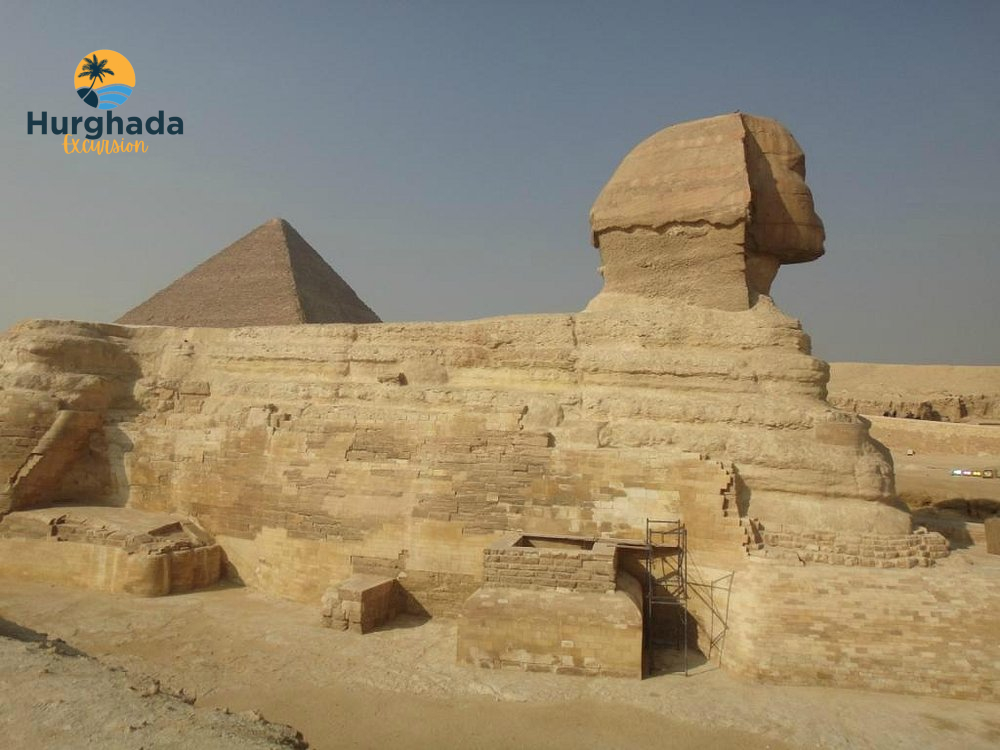
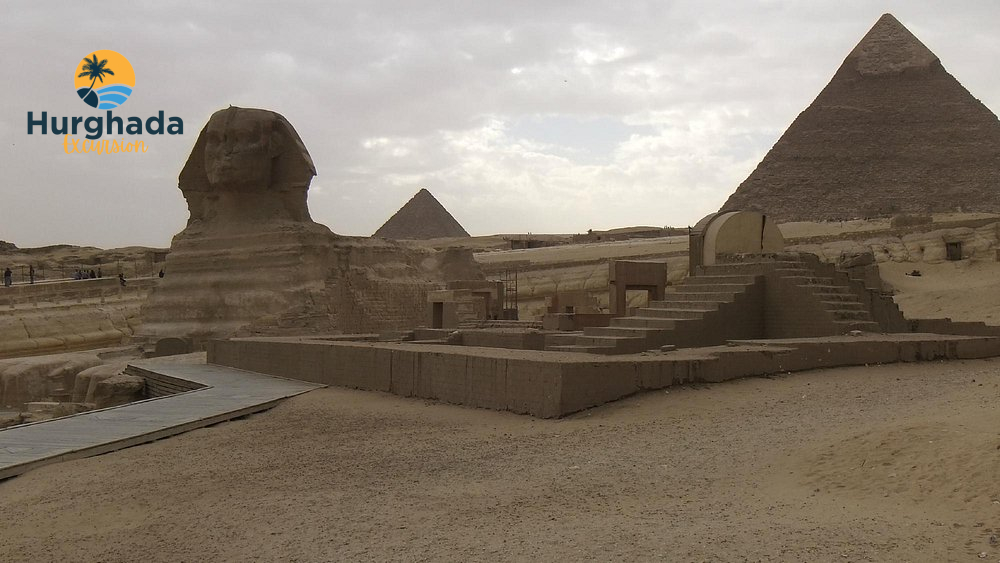
The vehicle descends to the Sphinx enclosure — the guide delivers the complete story of the Great Sphinx: who it depicts (almost certainly Khafre), when it was built (c. 2530 BCE), what its original function was, the history of its progressive burial in desert sand and repeated excavations, the famous missing nose (lost to erosion or deliberate damage centuries before Napoleon’s artillery, despite popular legend), and the current state of ongoing conservation.
The Valley Temple of Khafre (beside the Sphinx) — still retaining its original Aswan granite casing stones and alabaster floor — provides the guide’s explanation of how the pyramid cult was maintained after the pharaoh’s death, including the regular ritual offerings, the priests’ roles, and the economic infrastructure of a pyramid complex.
12:30 – 13:30 · Lunch
🍽️ Lunch at a Cairo Restaurant — Egyptian Cuisine in the Shadow of the Pyramids
A full lunch at a well-regarded Cairo restaurant — Egyptian cuisine with soft drinks included. Some restaurants near the Giza plateau offer pyramid views from the terrace. The guide accompanies the group and handles the ordering.
13:30 – 15:30 · Grand Egyptian Museum
🏛️ Grand Egyptian Museum — Tutankhamun’s Gold Death Mask
The afternoon is devoted to the Grand Egyptian Museum (GEM) — the world’s largest archaeological museum, located adjacent to the Giza plateau, opened 2023. The guide leads the group through the highlights: the complete Tutankhamun collection (over 5,000 objects, including the famous gold death mask), the royal mummies gallery, the monumental atrium with the 11-metre statue of Ramesses II, and the selected highlights of the broader collection.
The Three Great Pyramids — Khufu, Khafre & Menkaure
⭐ The World’s Greatest
Great Pyramid of Khufu
Height: 138.8m (original 146.6m) · Base: 230m each side · Volume: 2.6 million m³ · Blocks: ~2.3 million (2–80 tonnes each) · Built c. 2589–2566 BCE · The only surviving Seven Wonder of the Ancient World · Contains three main chambers (King’s Chamber, Queen’s Chamber, Subterranean Chamber) connected by internal passages. The King’s Chamber contains the empty red granite sarcophagus of Khufu — the mummy was never found.
With Surviving Casing Stones
Pyramid of Khafre
Height: 136.4m (original 143.5m) · The second pyramid appears taller than Khufu’s because it sits on higher ground. Uniquely retains its original polished Tura limestone casing at the apex — showing what all three pyramids looked like when completed. Contains two internal chambers and is the only pyramid with a still-surviving causeway connecting it to its valley temple beside the Sphinx. Also contains the granite sarcophagus of Khafre — mummy not found.
With Three Queens’ Pyramids
Pyramid of Menkaure
Height: 61m (original 65m) · The smallest of the three — approximately one quarter of Khufu’s volume — but surrounded by three subsidiary pyramids for the pharaoh’s queens. Its lower sections retain some of the original Aswan granite casing (pink granite rather than the white limestone of the other two). The guide explains why Menkaure’s pyramid is smaller despite the later construction date — a function of changing religious priorities rather than reduced resources.
The Great Sphinx — Guardian of the Giza Plateau
The Great Sphinx of Giza is the largest monolithic sculpture in the world — carved from a single outcrop of natural limestone on the Giza plateau. Here is the complete guide:
📏
Dimensions & Age
Length: 73 metres · Height: 20 metres · Width: 19 metres · Weight: ~200 tonnes · Built c. 2530 BCE by Khafre (the face bears his royal nemes headdress and features consistent with his portrait statues). The body of a lion — representing royal power and solar symbolism — with the head of a man — representing intelligence and divine kingship.
👃
The Missing Nose
The popular legend that Napoleon’s artillery destroyed the nose is false — historical drawings from before Napoleon’s 1798 expedition already show the nose missing. The most likely explanation: deliberate defacement by a Sufi Muslim named Muhammad Sa’im al-Dahr in 1378 CE, who was reportedly hanged for vandalism. Evidence: chisel marks consistent with deliberate removal rather than weathering.
💤
The Dream Stele & Thutmose IV
Between the Sphinx’s forepaws, a granite stele records how the pharaoh Thutmose IV (c. 1401 BCE) — as a young prince — fell asleep in the shade of the partially buried Sphinx and dreamed that the Sphinx-god Horemakhet promised him the kingship of Egypt in exchange for clearing the sand. Thutmose IV did become pharaoh and did excavate the Sphinx — confirming the stele’s story.
💰
How Much to Go Inside the Sphinx?
How much does it cost to go inside the Sphinx? It is not possible for tourists to enter the Sphinx itself — there is no accessible interior chamber currently open to the public. The Sphinx can be viewed from the designated viewing platform at close range (included in the standard Giza plateau entry ticket). The Valley Temple beside the Sphinx is accessible with a separate ticket.
What Is Inside the Great Pyramid of Giza?
What is inside the Great Pyramid of Giza? The interior of the Great Pyramid of Khufu contains a network of passages and three main chambers, accessible via a premium entry ticket. Here is the complete guide:
🏺 Inside the Great Pyramid — The Complete Route
The Descending Passage: The original entrance on the north face leads down a 26-degree descending corridor to the Subterranean Chamber — unfinished and largely empty. This was the original planned burial chamber, abandoned in favour of the higher design.
The Ascending Passage: From the junction inside the entrance, an ascending corridor (1.05 metres high, requiring crouching) leads upward at 26 degrees for approximately 40 metres — passing the sealed portcullis blocks that were lowered after the burial to block access.
The Grand Gallery: The ascending passage opens into the Grand Gallery — a corbelled hall 8.6 metres high and 46 metres long, one of the most impressive architectural spaces in ancient Egypt. The steep ramp rises at 26 degrees toward the King’s Chamber above.
The King’s Chamber: At the top of the Grand Gallery, the King’s Chamber is a rectangular room of red Aswan granite — 10.5 metres long, 5.2 metres wide, 5.8 metres high. The granite sarcophagus of Khufu stands in the western end — larger than the access passage, proving it was placed inside before the chamber was sealed. The sarcophagus is empty. The mummy of Khufu has never been found. The chamber is hot (~26°C), claustrophobic, and one of the most extraordinary spaces in the ancient world.
🌡️
Conditions Inside
Hot (~26°C regardless of outside temperature), humid from visitor breath, low-oxygen in peak periods, dimly lit with electric lighting. The ascending passage requires crouching for approximately 40 metres. The Grand Gallery has handrails. Not suitable for guests with severe claustrophobia, heart conditions, or mobility limitations.
🔍
Recent Discoveries — ScanPyramids
In 2017, the ScanPyramids project using cosmic ray muon imaging discovered a large previously unknown void above the Grand Gallery — approximately 30 metres long and potentially a further undiscovered chamber. In 2023, a 9-metre hidden corridor was confirmed near the north entrance. The pyramid may still hold undiscovered secrets.
The Grand Egyptian Museum — Tutankhamun’s Gold Death Mask
The Grand Egyptian Museum (GEM) — opened 2023, located 2 km from the Giza plateau — is the world’s largest archaeological museum and an essential addition to any Great Pyramids of Giza guided tour. Here is the complete guide:
👑
The Complete Tutankhamun Collection
The GEM is the first museum ever to display the complete Tutankhamun collection together — over 5,000 objects from his tomb (KV62) including the iconic gold death mask, the golden throne, the golden shrine, the four alabaster canopic jars, the golden anthropoid coffins, and thousands of smaller objects. Previously split between the old Egyptian Museum and storage, the complete collection is now visible in one place for the first time since its discovery in 1922.
🏛️
The Building Itself
The GEM building is a feat of architecture in its own right — 480,000 m² of floor space, designed by Heneghan Peng Architects, with the main atrium housing the 11-metre red granite statue of Ramesses II as its centrepiece. The Grand Staircase contains artifacts displayed at each level, creating a journey through Egyptian history from the Old Kingdom to the Greco-Roman period.
📅
GEM Ticket Price & Hours
Grand Egyptian Museum entry: approximately 1,000 EGP (~€18) per adult (standard entry). Premium Tutankhamun gallery: approximately 1,500 EGP (~€27) per adult. Open daily 09:00 AM – 05:00 PM. Visit duration: 1.5–2 hours for a guided highlights tour. Our tour includes standard GEM entry in the package price — premium Tutankhamun gallery is an optional add-on.
Skip-the-Line — Why It Matters & How It Works
Can you visit the pyramids without a tour guide? Yes — but should you? Here is the complete comparison between independent visits and our skip-the-line guided tour:
| Feature |
Skip-the-Line Guided Tour |
Independent Visit |
| Entry queue |
No queue — pre-purchased tickets |
Up to 60 min in peak season |
| Vendor harassment |
Guide manages all vendor interactions |
Persistent at Giza — challenging for solo tourists |
| Historical context |
Complete Egyptologist explanation |
Self-guided — limited without a guide |
| Best photography spots |
Guide knows every optimal position |
Often discovered too late |
| Best for |
All visitors — especially first-timers |
Experienced Egypt travellers who know the site |
⚠️ About Vendors at the Giza Plateau
The Giza plateau is one of the most visited tourist sites on earth — and independent visitors, particularly those without a licensed guide, are frequently approached by unlicensed vendors offering camel rides, photo opportunities, “free” gifts that come with payment expectations, and unsolicited “guide” services. These interactions can be stressful, particularly for first-time visitors. Our guide manages all of these encounters on behalf of the group — firmly and respectfully declining unsolicited approaches while facilitating genuine paid services (camel rides, etc.) with reputable operators when requested.
Pyramids of Giza Ticket Price 2026 — Complete Fee Guide
How much to enter the pyramids? Here is the complete 2026 pricing for the entire Giza plateau — all fees in Egyptian Pounds (EGP), card payment only at most sites:
| Ticket |
Price (EGP) |
Approx. EUR |
Notes |
| Giza Plateau Entry (Adult) |
~540 EGP |
~€10 |
Included · All 3 pyramids exterior + Sphinx area · Open 08:00–17:00 |
| Interior — Great Pyramid of Khufu |
~1,000 EGP |
~€18 |
Optional premium · King’s Chamber access · Limited daily tickets |
| Interior — Pyramid of Khafre |
~500 EGP |
~€9 |
Optional premium · Burial chamber access |
| Valley Temple of Khafre |
~300 EGP |
~€6 |
Included in tour · beside the Sphinx |
| Solar Boat Museum |
~150 EGP |
~€3 |
Optional · 43-metre ancient cedar boat |
| Grand Egyptian Museum (Standard) |
~1,000 EGP |
~€18 |
Included in tour price · Open 09:00–17:00 |
| GEM — Premium Tutankhamun Gallery |
~1,500 EGP |
~€27 |
Optional premium add-on · Gold death mask · Full collection |
Tour Price from Hurghada 2026 — What’s Included
Great Pyramids of Giza Skip-the-Line Tour from Hurghada — From
€100
per adult · By flight · Three Pyramids + Sphinx + Grand Egyptian Museum
✓ Flights · ✓ Transfers · ✓ Skip-the-Line Entry · ✓ Egyptologist Guide · ✓ GEM Entry · ✓ Lunch
By road (budget): from €80 per adult · Children 4–11: 50% discount · Premium pyramid interior: ~€18 extra
✅ Included (Flight Package)
✓ Return flights Hurghada – Cairo – Hurghada (45 min each way)
✓ Airport-to-Giza transfers (Cairo) in private air-conditioned vehicle
✓ Skip-the-line Giza plateau entry ticket (~540 EGP) · Valley Temple ticket
✓ Grand Egyptian Museum standard entry (~1,000 EGP)
✓ Licensed Egyptologist guide for the full day
✓ Full lunch at a Cairo restaurant · Bottled water · Free cancellation 48 hours before
By Flight or By Road — How to Get to Giza from Hurghada
| Option |
Journey Time |
Distance |
Verdict |
| Flight (Recommended) |
45 minutes each way |
~460 km as the crow flies |
Best — more time at the pyramids |
| Road (Budget) |
4–5 hours each way (overnight) |
~460 km by road |
Economical but demanding |
10 Expert Tips for the Perfect Great Pyramids Experience
Tip 1 — Book by flight from Hurghada, not by road. The 45-minute flight from Hurghada Airport to Cairo International Airport is one of the most efficient travel investments in Egyptian tourism. It adds approximately €30–€40 to the tour cost and saves 8–10 hours of driving — leaving maximum time at the Giza plateau and the Grand Egyptian Museum. The road option is possible but results in an exhausting day with less time at the monuments. For first-time visitors with limited Egypt days, the flight is not optional — it is essential.
Tip 2 — Book the interior of the Great Pyramid if you have no claustrophobia. The Great Pyramid interior experience is genuinely extraordinary — the King’s Chamber in red Aswan granite, the empty sarcophagus, the Grand Gallery, the ascending passage — and it is available to relatively few visitors (daily capacity is limited). If you are comfortable in enclosed spaces and can manage a steep 40-metre crawl, the interior visit is one of the most memorable experiences available at Giza. Book the interior ticket in advance — daily numbers are limited.
Tip 3 — Visit the Grand Egyptian Museum in the afternoon, not the morning. The GEM is better experienced after the outdoor Giza plateau experience — the objects inside have more context and more emotional power when you have already stood before the pyramids they came from. The Tutankhamun collection in particular is more moving after seeing the Valley of the Kings context (if applicable) or after hearing the guide explain Tutankhamun’s story at the Giza plateau.
Tip 4 — The panoramic viewpoint requires a vehicle — don’t walk there from the entrance. The southern panoramic viewpoint (the only spot where all three pyramids are simultaneously visible in alignment) is approximately 1.5 km from the main entrance and on elevated terrain. The guide’s vehicle drives there directly. Walking in the Giza plateau heat without shade is inadvisable. Always defer to the guide’s vehicle route.
Tip 5 — The best photograph of the Sphinx is from the western viewing platform, not the front. The standard tourist photograph of the Sphinx is taken from the eastern viewing platform (the front). The western platform (accessible with the guide) provides a full profile view of the Sphinx with Khafre’s Pyramid directly behind — a more architecturally complete and more dramatically composed photograph. Ask the guide to include this viewpoint specifically.
Tip 6 — Bring EGP cash for optional tips, camel rides, and small purchases. The Giza plateau has several optional paid experiences — camel rides, horse rides, photo opportunities with costumed attendants — that are paid in cash. Tips for the guide and driver are customary (€10–€15 per person for the full day is appropriate and appreciated). ATMs are available near the plateau entrance but can be busy.
Tip 7 — The camel ride at the panoramic viewpoint is worth it for the photographs. An optional camel ride at the southern panoramic viewpoint (approximately 15–30 minutes, approximately 200–300 EGP) provides a perspective on the Giza plateau from a traditional Egyptian vantage point and produces genuinely unique photographs. The guide assists with negotiating a fair price with reputable operators and ensures the experience is enjoyable rather than stressful.
Tip 8 — For the GEM Tutankhamun collection — upgrade to the premium gallery. The standard GEM entry provides access to the broader collection but not to the innermost Tutankhamun gallery containing the gold death mask and the most precious objects. The premium upgrade (~€27 extra per person) is the most important single upgrade available in this tour — seeing the actual gold death mask of Tutankhamun is one of the most quietly powerful museum moments in the world.
Tip 9 — Wear closed shoes and light long trousers. The Giza plateau involves approximately 3–4 km of walking on uneven limestone terrain, desert sand, and paved paths. Sandals or flip-flops are uncomfortable and potentially hazardous. The sun at Giza reflects intensely off the limestone surfaces — a wide-brimmed hat and SPF 50+ sunscreen are essential. Light long trousers are more comfortable in the desert wind than shorts.
Tip 10 — This is the experience that every traveller who postpones it regrets. The Great Pyramids of Giza are frequently described by first-time visitors as “the one thing in my life that completely exceeded my expectations.” The photographs are familiar. The facts are known. But the physical reality — standing at the base of 138 metres of ancient limestone, looking upward at the sky above the apex, knowing this structure was completed 4,500 years ago and has stood here ever since — is completely beyond what any preparation provides. Do not leave Egypt without going.
Real Reviews from Travellers
★★★★★
“I have visited monuments around the world. Nothing — nothing — prepared me for the reality of the Great Pyramid. The scale is simply not communicable in photographs. Our guide was exceptional — his explanation of the construction theories and the King’s Chamber was delivered with genuine passion. The Grand Egyptian Museum with Tutankhamun’s gold death mask was equally extraordinary. One of the finest days of my life.”
Professor David W. — Oxford · March 2026
★★★★★
“The skip-the-line made a real difference — we walked past the queue (30+ minutes long) directly into the plateau. Our guide was brilliant at managing the vendor approaches — we never felt harassed. Going inside the Great Pyramid was extraordinary — narrow, steep, atmospheric — the King’s Chamber is genuinely one of the most powerful spaces I have entered anywhere. Book the interior. It is worth every penny.”
Sarah & James K. — Edinburgh · February 2026
★★★★★
“We flew from Hurghada — the 45-minute flight was the best decision we made on the entire holiday. We arrived at the pyramids at 08:30 and had 6 full hours. The guide knew exactly where to go and when. The panoramic view of all three pyramids together — I have that photograph framed on my wall. The GEM Tutankhamun gold mask is breathtaking in person. Completely unmissable.”
Caroline R. — London · January 2026
Frequently Asked Questions
How much does it cost to go inside the Sphinx?
How much does it cost to go inside the Sphinx? It is not currently possible for tourists to enter the Great Sphinx — there is no accessible interior space open to the public. The Sphinx can be viewed at close range from the designated viewing platforms (included in the standard Giza plateau entry ticket of ~540 EGP/~€10). The Valley Temple of Khafre beside the Sphinx requires a separate ticket (~300 EGP/~€6) and is accessible with a guide.
How long does it take to visit the pyramids and Sphinx?
How long does it take to visit the pyramids and Sphinx? A comprehensive guided visit covering all three pyramids (exterior), the Great Sphinx, the Valley Temple, and the panoramic viewpoint takes approximately 4–5 hours. Adding the pyramid interior visit (Great Pyramid of Khufu) adds 30–45 minutes. Adding the Grand Egyptian Museum adds 1.5–2 hours. Our full-day programme allocates 6–7 hours for the complete experience.
Can you visit the pyramids without a tour guide?
Can you visit the pyramids without a tour guide? Yes — the Giza plateau is open to independent visitors with a standard entry ticket. However, independent visitors miss the historical and archaeological context (the Great Pyramid has no internal signage), frequently face persistent vendor approaches without a guide to manage them, may spend time in the entry queue that skip-the-line tickets eliminate, and often miss the optimal photography locations and the less obvious highlights (Valley Temple, Solar Boat Museum, best interior timing). For first-time visitors, a guided visit is strongly recommended.
How much to enter the pyramids in 2026?
How much to enter the pyramids? The standard Giza plateau entry ticket is approximately 540 EGP (~€10) per adult. This covers all three pyramid exteriors, the Sphinx viewing platform, and general plateau access. Interior visits cost extra: Great Pyramid of Khufu ~1,000 EGP (~€18), Pyramid of Khafre ~500 EGP (~€9). Valley Temple ~300 EGP (~€6). Grand Egyptian Museum ~1,000 EGP (~€18) standard, ~1,500 EGP (~€27) for premium Tutankhamun gallery. All included or stated in our tour package.
What is inside the Great Pyramid of Giza?
What is inside the Great Pyramid of Giza? The accessible interior includes: the Descending Passage (leading to the abandoned Subterranean Chamber); the Ascending Passage (26-degree incline for ~40m, requires crouching); the Grand Gallery (8.6m high, 46m long corbelled hall at full standing height); and the King’s Chamber (red Aswan granite, 10.5m × 5.2m × 5.8m, containing the empty granite sarcophagus of Khufu — the mummy was never found). A 2017 cosmic ray scan discovered an additional large void (~30m) above the Grand Gallery, and a 2023 excavation confirmed a 9-metre hidden corridor near the north entrance.
Book Your Great Pyramids of Giza Skip-the-Line Tour Today
From €100 per person by flight · Three Great Pyramids · Sphinx · Grand Egyptian Museum · Skip-the-Line Entry · Egyptologist Guide · Lunch · Free Cancellation 48 Hours Before.
🏺 Book Now — From €100
The Great Pyramids of Giza skip-the-line guided tour and Sphinx visit delivers the most anticipated cultural experience in the history of global tourism — and the one that most consistently exceeds every expectation its visitors bring to it. The pyramids have been one of humanity’s most powerful symbols for 4,500 years because they deserve to be. They are genuinely, physically, overwhelming. The Sphinx beside them is genuinely, personally, moving. The Grand Egyptian Museum’s gold death mask of Tutankhamun is genuinely, quietly, one of the most beautiful objects any human hand has ever made. None of these experiences can be approximated by a photograph, a documentary, or a description. They must be lived.
Book your Great Pyramids of Giza tour today with Hurghada Excursion — skip-the-line entry, private transfers, licensed Egyptologist, and the most professionally managed day at the world’s greatest ancient monument available from the Red Sea coast.