🏰 Saladin Citadel · Muhammad Ali Mosque · Panoramic Cairo · Historic Tour · From Hurghada
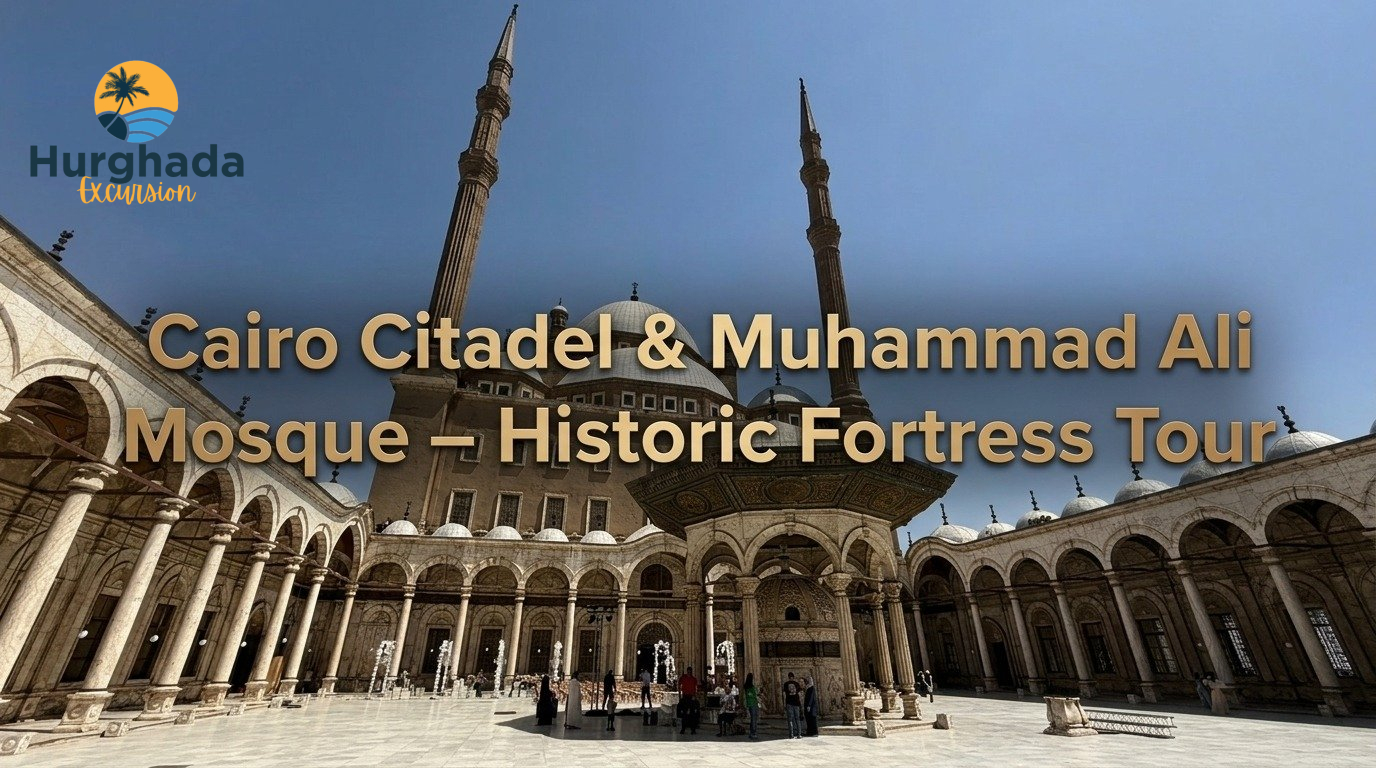
Cairo Citadel & Muhammad Ali Mosque – Historic Fortress Tour
📅 Updated: May 2026 | ⏱️ 2–3 Hours at Citadel · Full Day from Hurghada | 💶 From €100 / person | ⭐ 4.8/5 Rated | 🏰 Daily Departures
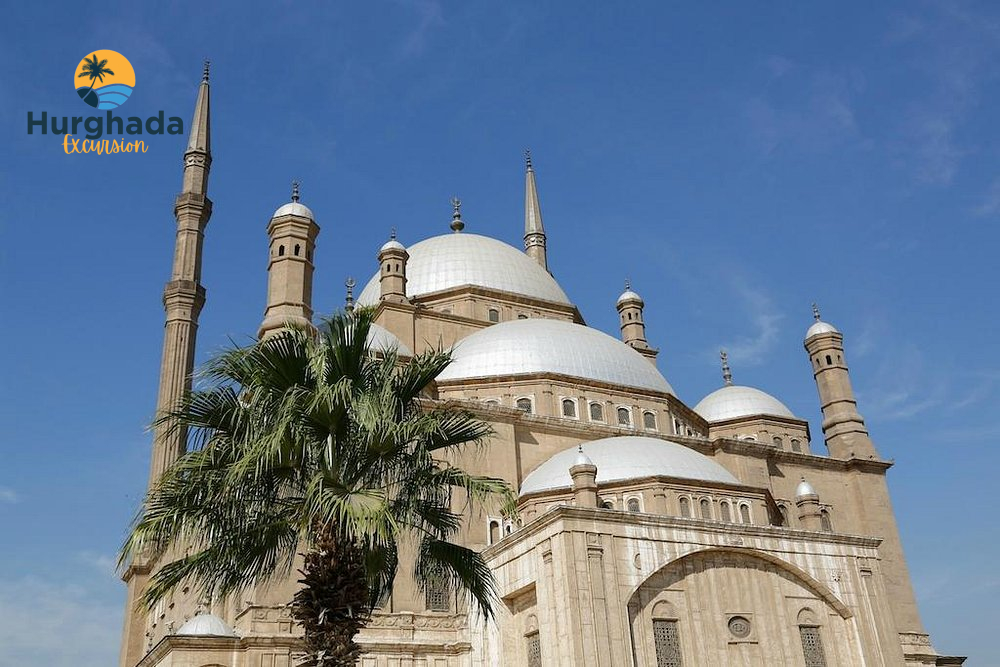
From the moment you see it rising above the Cairo skyline — the twin pencil minarets of the Muhammad Ali Mosque catching the Egyptian sun at the summit of the Saladin Citadel — you understand why this hilltop fortress was the seat of Egyptian power for 700 years. Built by one of history’s most celebrated military commanders, expanded by the greatest pharaohs of the medieval era, and crowned by the most visually dominant building in modern Cairo, the Cairo Citadel is simultaneously a medieval fortress, an Ottoman-inspired mosque, a royal palace complex, three museums, and the finest panoramic viewpoint over the medieval city below. It is visible from the Giza pyramids 13 km away. The Nile glitters to the west. The minarets of 600 years of Islamic architecture spread north below the ramparts. Nothing in Cairo offers this view — and nothing else in Cairo tells so complete a story of 850 years of unbroken Egyptian history.
The Cairo Citadel and Muhammad Ali Mosque historic fortress tour from Hurghada combines a full guided visit to the Citadel complex — the Mosque of Muhammad Ali (the Alabaster Mosque), the Mosque of Al-Nasir Muhammad, the National Military Museum, the Police Museum, and the extraordinary panoramic terraces — with the adjacent Mosque-Madrasa of Sultan Hassan (Cairo’s greatest medieval building) and the Al-Rifa’i Mosque (the modern royal mosque). Together, these monuments span eight centuries of Islamic history in a single compact district, guided by a specialist who brings every era to life with the authority and enthusiasm that only genuine expertise provides.
🏰 Is the Citadel in Cairo worth it? The Cairo Citadel (also called the Saladin Citadel or Qal’at al-Jabal — Fortress of the Mountain) is absolutely worth visiting — and consistently underestimated by tourists who have come primarily for the Giza pyramids. What to see at Cairo Citadel? The Alabaster Mosque of Muhammad Ali (the most dramatically decorated religious interior in Cairo, with its Ottoman domes, alabaster panels, and gilded ceilings), the Mosque of Al-Nasir Muhammad (the finest surviving Mamluk mosque interior in the Citadel), the panoramic terraces with views of the entire city from the pyramids to the medieval minarets, and three museums on site. How long to spend at Cairo Citadel? Allow 2–3 hours for a comprehensive guided visit; 1.5 hours minimum to cover the Muhammad Ali Mosque, the panoramic terrace, and the Al-Nasir Mosque.
What Is the Cairo Citadel? History & Strategic Significance
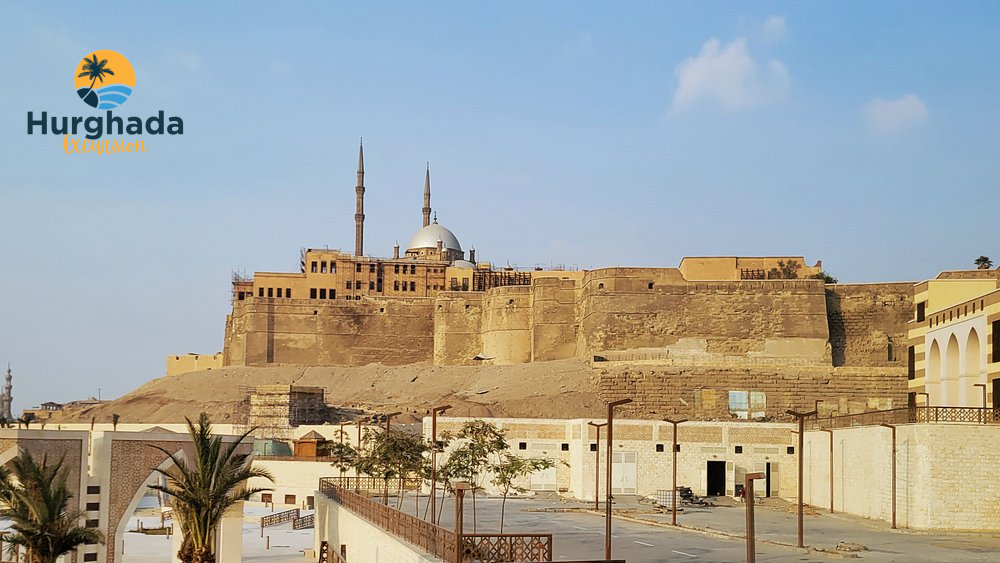
The Cairo Citadel (Arabic: Qal’at Salah al-Din or Qal’at al-Jabal — Fortress of the Mountain) is a medieval Islamic fortification built on a natural limestone spur of the Muqattam Hills, approximately 70 metres above the city of Cairo. Construction was begun by Saladin (Salah al-Din al-Ayyubi) in 1176 CE and continued under his Ayyubid successors. The Citadel served as the seat of Egyptian government — the residence of Egypt’s rulers and the centre of military, judicial, and administrative power — for 700 years, from Saladin’s Ayyubid sultanate through the Mamluk and Ottoman periods to the reign of Muhammad Ali Pasha in the 19th century.
| Detail |
Information |
| Founded |
1176 CE by Saladin (Salah al-Din al-Ayyubi) |
| Altitude |
70 metres above Cairo — on the Muqattam limestone spur |
| Period of rule |
700 years — Ayyubid (1176), Mamluk (1250–1517), Ottoman (1517–1805), Muhammad Ali dynasty (1805–1952) |
| Key building inside |
Mosque of Muhammad Ali (Alabaster Mosque) — commissioned 1830, completed 1857 |
| Location |
Al-Qala’a district, Cairo — 5 km east of Khan el-Khalili · 15 km from Giza plateau |
| Cairo Citadel entrance fee (2026) |
~450 EGP (~€8) per adult — includes Muhammad Ali Mosque and all Citadel areas |
| Opening hours |
08:00 AM – 05:00 PM daily |
🏰 The Citadel in Cairo’s History
The Citadel history tracks the complete arc of Egyptian political power: Saladin chose this hilltop in 1176 to dominate both the city of Cairo (to the north and west) and the older settlement of Fustat (to the south), creating an unassailable command position over the entire region. His Ayyubid successors expanded the walls. The Mamluks — who ruled Egypt for 267 years — built the most elaborate palace and mosque complexes inside the Citadel’s walls (most now demolished). The Ottomans used it as their administrative centre for three centuries. Muhammad Ali (r. 1805–1848) completed its current appearance by building the Alabaster Mosque, the palace complex, and the formal gardens that visitors see today.
Top 10 Highlights of the Cairo Citadel Historic Fortress Tour
🕌
1. Muhammad Ali Mosque — The Alabaster Interior
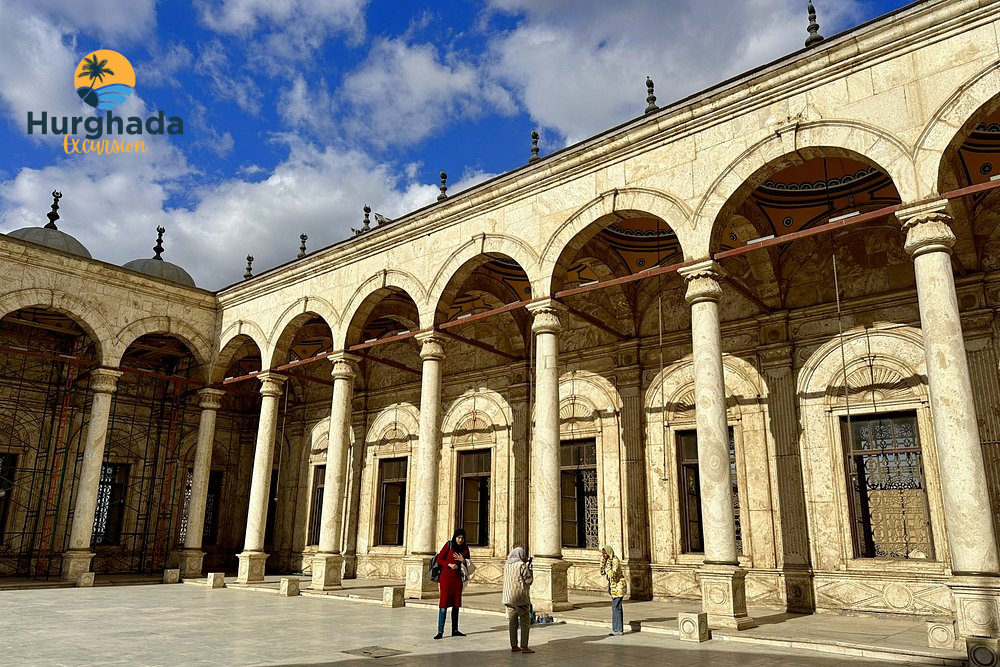
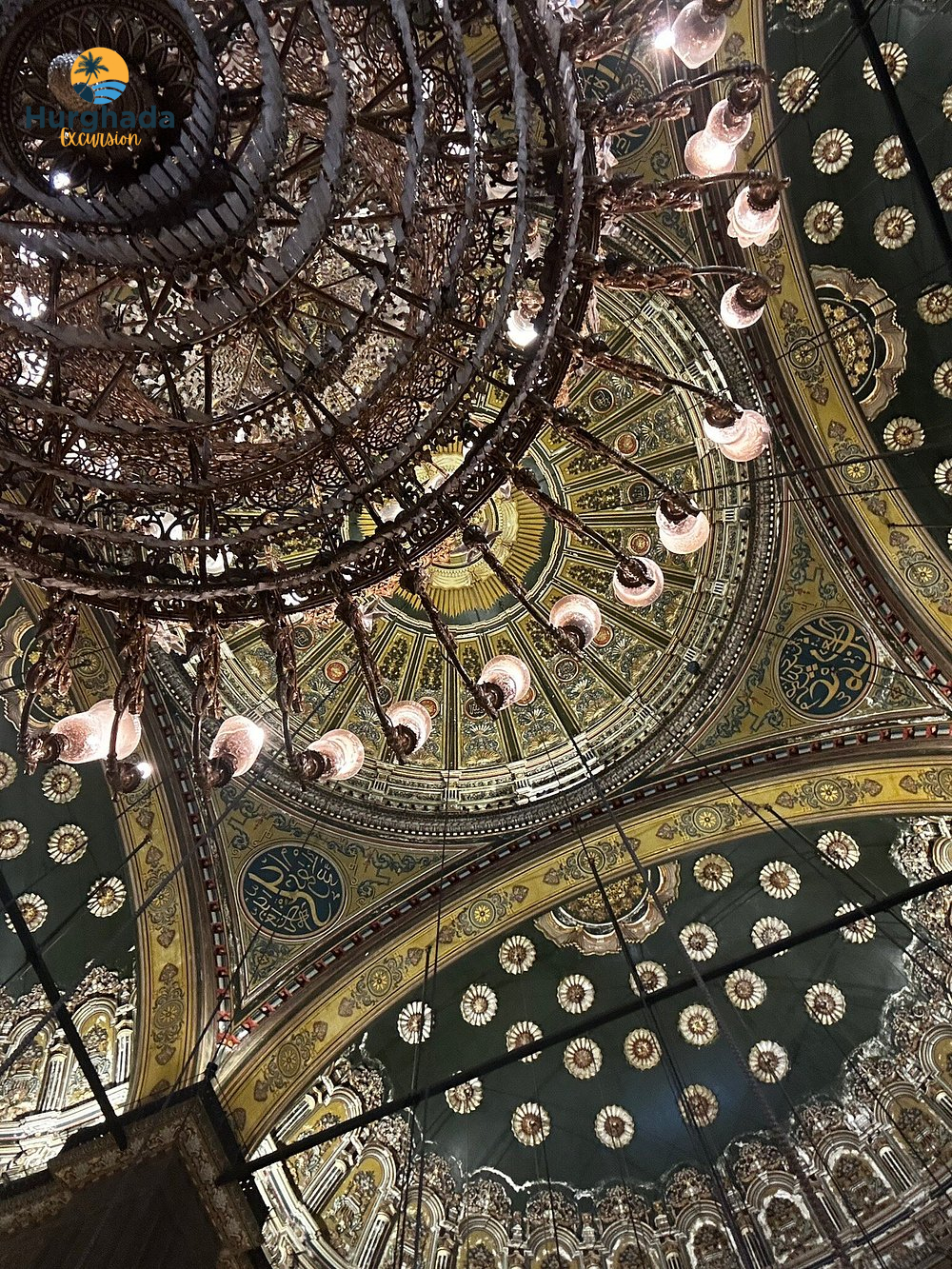
The Mosque of Muhammad Ali (also called the Alabaster Mosque) is the most immediately dramatic religious interior in Cairo — its central dome soaring 52 metres above the floor, the walls lined from floor to ceiling with alabaster panels, the vast complex of Ottoman-style domed ceilings painted in deep red, gold, and green, and enormous French crystal chandeliers hanging at every level. The guide delivers a complete architectural analysis of the Ottoman-Baroque synthesis that produced this extraordinary building.
🌅
2. The Panoramic Terrace — Cairo at Your Feet
The panoramic viewpoint terrace on the Citadel’s western rampart provides the finest elevated view of Cairo available from any accessible location — the forest of minarets of Islamic Cairo below, the Nile to the west, the Giza pyramids visible on the southwestern horizon, the Muqattam Hills above, and on a clear day, the entire 5,000-year cityscape of one of the world’s great capitals spread before you.
🏯
3. Saladin’s Original Walls & Towers
The original Ayyubid fortification walls of Saladin — built of Tura limestone quarried from the same source as the Giza pyramid casing stones — are still largely intact on the northern and eastern sides of the Citadel. The guide explains how Saladin’s military engineers designed the overlapping towers and the Crusader-resistant wall thickness that made this fortress effectively impregnable for 400 years.
🕌
4. Mosque of Al-Nasir Muhammad — Mamluk Interior
The oldest surviving mosque inside the Citadel — built by the Mamluk Sultan al-Nasir Muhammad ibn Qalawun between 1318 and 1335 CE, using ancient marble columns taken from pharaonic and Greco-Roman sites across Egypt. The guide identifies the specific ancient sources of the columns: Aswan pink granite from Pharaonic temples, Ptolemaic marble from Alexandria, Roman porphyry from the Eastern Desert quarries.
🏛️
5. Sultan Hassan Mosque — Cairo’s Finest Medieval Building
Below the Citadel, directly facing its western gate, the Mosque-Madrasa of Sultan Hassan (1356–1363 CE) is the most architecturally impressive medieval mosque in Egypt — its 37-metre entrance portal (the tallest in Islamic architecture), its soaring cruciform interior, and its extraordinary stone carving making it the undisputed masterpiece of Mamluk religious architecture. Included in the combined tour.
👑
6. Al-Rifa’i Mosque — The Royal Burial Mosque
Adjacent to Sultan Hassan, the Al-Rifa’i Mosque (begun 1869, completed 1912) is the burial place of Egypt’s modern royal dynasty — including King Farouk (the last king of Egypt, deposed 1952), and the Shah of Iran Mohammad Reza Pahlavi (who died in exile in Cairo in 1980). The guide delivers the story of Egypt’s 20th-century political history beside the royal tombs.
⚔️
7. National Military Museum
The former palace of Muhammad Ali’s son Ibrahim Pasha — converted into the National Military Museum, housing one of the finest collections of Islamic and Ottoman weaponry in Egypt. The guide selects the most historically significant pieces: Mamluk cavalry armour, Ottoman cannon, Napoleonic-era military equipment, and personal weapons of the Khedival period. One of the best-curated museums in the Citadel complex.
⏰
8. The Clock Tower & French Clock of Muhammad Ali
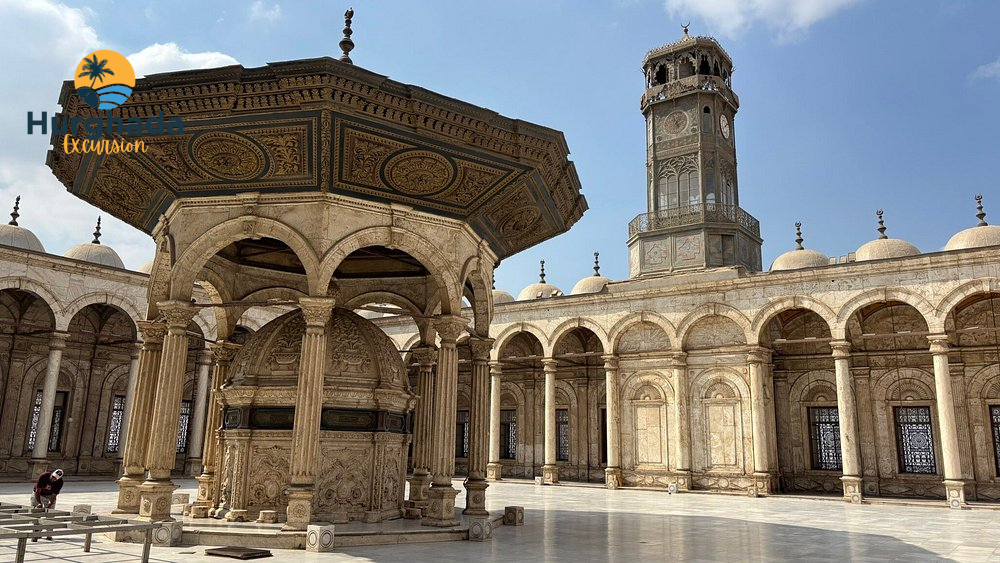
In the Muhammad Ali Mosque courtyard, an ornate French clock tower stands — given to Muhammad Ali by King Louis-Philippe of France in 1845 in exchange for the obelisk now standing in Paris’s Place de la Concorde. The guide tells the full story of this exchange: Muhammad Ali sent an 3,200-year-old obelisk to Paris; in return he received this French clock, which has never worked. The Egyptian judgement of this trade has been consistent.
🚰
9. The Well of the Citadel — Joseph’s Well
The extraordinary 87-metre deep well inside the Citadel walls — known as “Joseph’s Well” (Bi’r Yusuf), attributed by medieval tradition to Saladin but possibly predating his construction. Cut through solid limestone by hand, with a helical ramp allowing donkeys to descend to the water level, the well was the Citadel’s primary water supply and represents one of the most impressive engineering achievements of the medieval Islamic world.
🎓
10. Expert Guide — 850 Years of Citadel History
The Citadel tells the story of Egypt from Saladin’s Crusade-era fortress to Muhammad Ali’s modernising Ottoman dynasty — eight and a half centuries of architecture, politics, military strategy, and royal ceremony in a single hillside complex. A specialist guide who connects every building to its historical moment makes the Citadel the most historically coherent site in Cairo.
Complete Day Program — Hour by Hour from Hurghada
The Cairo Citadel tour from Hurghada is best done by flight and combined with Islamic Cairo (Khan el-Khalili, Al-Azhar) or the Giza Pyramids for a complete Cairo day. Here is the Citadel-focused programme:
✈️ FROM HURGHADA BY FLIGHT (Recommended · Full Day)
Depart Hurghada ~06:00 AM · 45-min flight · Cairo Airport transfer 30 min · Khan el-Khalili & Al-Azhar (09:00–12:00) · Lunch (12:00–13:00) · Cairo Citadel (13:00–16:00) · Sultan Hassan & Al-Rifa’i (16:00–17:00) · Return flight ~19:00 PM · Arrive Hurghada ~20:00 PM
13:00 – 13:30 · Citadel Arrival
🏰 Cairo Citadel — Approach, Context & Ticket Entry
Arrival at the main gate of the Citadel (Bab al-Azab or the main tourist entrance depending on current access) — tickets purchased at the entrance (~450 EGP per adult, included in tour price, card payment only). The guide delivers the orientation: the Citadel’s layout (northern enclosure with Muhammad Ali Mosque; southern enclosure with Al-Nasir Mosque and museums), the history of Saladin’s construction, and the programme for the visit.
Citadel map and layout: The Citadel comprises two main enclosures. The Northern (Upper) Enclosure contains the Muhammad Ali Mosque, the Al-Nasir Muhammad Mosque, and the National Military Museum. The Southern (Lower) Enclosure contains the Police Museum and additional areas. The panoramic viewpoint terrace is accessible from the Northern Enclosure near the Muhammad Ali Mosque courtyard.
13:30 – 15:00 · The Mosque of Muhammad Ali
🕌 The Alabaster Mosque — Cairo’s Most Dramatic Interior
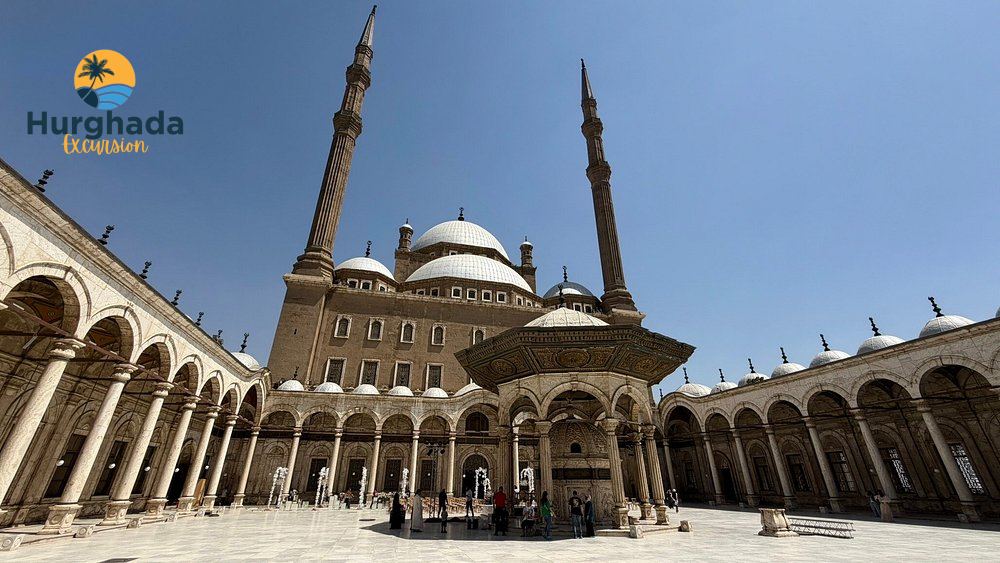
The centrepiece of the Citadel visit — entering the courtyard of the Muhammad Ali Mosque with its central ablution fountain and the famous French clock tower. The guide delivers the story of Muhammad Ali — the Albanian-born Ottoman commander who became Egypt’s de facto ruler, modernised the country, massacred the Mamluks in 1811, and built this mosque as his architectural declaration of a new Egypt. Removing shoes at the entrance and stepping into the mosque interior.
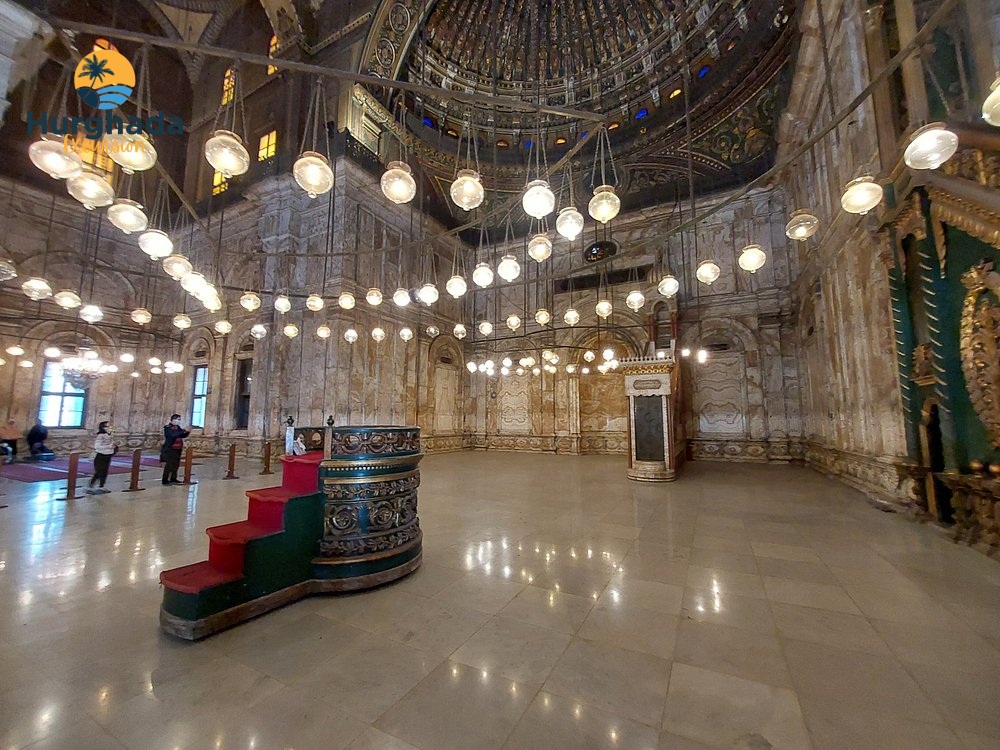
Inside the mosque: the guide walks the group through the complete interior — pointing out the Ottoman-inspired cascade of domes (the architectural model was the Ottoman mosques of Istanbul), the alabaster wall panels that give the mosque its popular name, the extraordinary scale of the central chandelier (one of the largest in any mosque in Egypt), the painted ceiling decorations in Baroque-Ottoman fusion style, and the marble minbar (pulpit) and mihrab (prayer niche). The tombs of Muhammad Ali and some family members are at the rear of the mosque. The guide delivers Muhammad Ali’s complete biography beside his tomb.
15:00 – 15:30 · Panoramic Terrace & Joseph’s Well
🌅 The Panoramic View & Bi’r Yusuf — Joseph’s Well
The western panoramic terrace — the finest elevated viewpoint in Cairo. The guide identifies the key landmarks visible from the terrace: the minarets of the Sultan Hassan Mosque directly below, Al-Azhar’s five minarets to the northwest, the Khan el-Khalili bazaar roofscape, the Nile glittering 8 km to the west, and on a clear afternoon, the silhouettes of the Giza pyramids on the southwestern horizon. The guide explains how Saladin chose this specific hilltop by standing here and mapping the city’s vulnerable approaches.
Joseph’s Well (Bi’r Yusuf): the 87-metre deep well cut through solid limestone inside the Citadel walls. The guide explains its engineering: a helical ramp inside the outer shaft allowed donkeys to descend carrying empty water skins and ascend with filled ones — the Citadel’s self-sufficient water supply in siege conditions. The attribution to “Joseph” (the Biblical patriarch, also known as Yusef in Islamic tradition) is medieval legend; the well dates from Saladin’s construction.
15:30 – 16:00 · Al-Nasir Muhammad Mosque & Military Museum
🕌 Mamluk Mosque · National Military Museum
The Mosque of Al-Nasir Muhammad — the oldest surviving mosque inside the Citadel (1318–1335 CE), with its forest of ancient columns from pharaonic and Roman-period sites. The guide identifies the column types by their material (pink Aswan granite, white Tura limestone, grey porphyry) and traces each type to its ancient quarry source. Then a 20-minute selected highlights tour of the National Military Museum — the finest pieces of Islamic cavalry armour and Mamluk weaponry, with the guide’s military history narrative.
16:00 – 17:00 · Sultan Hassan & Al-Rifa’i Mosques
🏯 Sultan Hassan Mosque & Al-Rifa’i Royal Mosque
Descending from the Citadel gate to the two great mosques facing its western wall. Sultan Hassan (1356–1363 CE) — 1 hour, the guide delivers the complete architectural analysis: the 37-metre entrance portal, the four madrasas for the four schools of Sunni law, the soaring iwan heights, the marble mosaic mihrab, the mausoleum. Adjacent Al-Rifa’i (begun 1869) — 20 minutes, the guide delivers the story of Egypt’s last royal dynasty and the unexpected royal tomb of the Shah of Iran. Then departure for the return to Cairo Airport.
Saladin & the Citadel — The Story of Egypt’s Greatest Defender
Saladin (Salah al-Din al-Ayyubi, 1137–1193 CE) is the most celebrated military commander in Islamic history and one of the most admired figures in the medieval world — admired even by his Christian Crusader opponents for his chivalry, his honour, and his military genius. Here is his complete story as delivered at the Citadel:
The Man
Who Was Saladin?
Saladin was born in Tikrit (modern Iraq) in 1137 CE to a Kurdish family in the service of the Zengid rulers of Syria. He rose to power as the vizier of Fatimid Egypt in 1169, converted the country from Shia to Sunni Islam in 1171, founded the Ayyubid dynasty, reunited Egypt and Syria, and became the most powerful ruler in the Islamic world. He is most famous for his 1187 victory at the Battle of Hattin and his subsequent re-capture of Jerusalem from the Crusaders — after 88 years of Christian occupation.
The Builder
Why Saladin Built the Citadel
Saladin chose the Muqattam spur in 1176 for strategic reasons: it commanded views of all approaches to Cairo from every direction, it was on the highest ground adjacent to the city, and it connected both the old capital of Fustat (south) and the Fatimid city of Cairo (north). His military engineers designed the walls with Crusader-style towers — evidence that Saladin’s engineers had studied and incorporated the best military architecture of their enemies.
The Legacy
How Saladin Is Remembered
Saladin died in Damascus in 1193 — two years after the Third Crusade ended with neither side achieving its objectives. His treasury was found to contain only one gold coin and 47 silver coins — he had given everything away. Richard I of England (the Lionheart) — his principal opponent — wept at the news of his death. The 1963 Ridley Scott film Kingdom of Heaven and the Arab world’s collective memory still revere him as the model of the ideal Muslim ruler.
Muhammad Ali Mosque — The Alabaster Interior
The Mosque of Muhammad Ali — also called the Alabaster Mosque of Cairo or the Cairo Citadel Mosque of Muhammad Ali — is the most visually dominant building in the Cairo skyline and the most dramatically decorated religious interior in Egypt. Here is the complete architectural guide:
🏗️
Construction History
Commissioned by Muhammad Ali Pasha in 1830, designed by Turkish architect Yusuf Boshnak, and completed in 1857 — nine years after Muhammad Ali’s death. Built over the site of demolished Mamluk palaces inside the Citadel’s northern enclosure. The exterior and the twin minarets (84 metres high) are clearly visible from the Giza plateau 15 km away.
🪨
The Alabaster Panels
The mosque’s popular name comes from the alabaster (banded calcite) panels covering the lower walls both inside and outside the building — carved from Egyptian alabaster from the Beni Suef quarries south of Cairo. The veined, translucent quality of the alabaster panels catches the light from the courtyard and the interior chandeliers and creates the warm glow that photographers prize at any time of day.
🕌
The Ottoman Dome System
The mosque is modelled on the Ottoman imperial mosques of Istanbul — particularly the Blue Mosque (Sultan Ahmed Mosque, 1616). The central dome (52 metres) is surrounded by a cascade of four semi-domes at the cardinal points, four quarter-domes at the diagonals, and smaller domes at the corners — the Ottoman solution to covering a large square plan with a circular dome, creating the seamlessly flowing internal ceiling that distinguishes Ottoman from earlier Islamic architecture.
💡
The Chandeliers & Lighting
The Muhammad Ali Mosque’s interior is lit by an extraordinary array of chandeliers — the central chandelier alone carries hundreds of lamps, creating a warm light that plays across the alabaster and the painted dome surfaces. The chandeliers are among the most photographed interior elements of any mosque in Egypt and produce the most distinctive and most recognisable interior photographs of the Cairo Citadel.
The Panoramic Terraces — Cairo at Your Feet
The Cairo Citadel panoramic view from the western terrace is one of the most extraordinary urban vistas in the world. Here is a guide to what you see from 70 metres above Cairo:
🕌
Islamic Cairo — The Forest of Minarets
Directly below and to the northwest: the medieval Islamic city — 600+ mosques and madrasas, their minarets rising at every angle from the dense urban fabric. The Sultan Hassan Mosque minarets directly below, the Al-Azhar minarets to the northwest, the Ibn Tulun mosque minaret to the west. The guide identifies each major minaret from the terrace.
🌊
The Nile — 8 km West
The Nile is visible as a silver ribbon 8 km to the west — the Corniche hotels and bridges of central Cairo identifiable. On a clear day, the boats on the Nile are visible from the terrace. The agricultural green of the Nile Valley contrasting with the desert colour of the city is clearly legible from this height.
🏺
Giza Pyramids — 15 km Southwest
On a clear afternoon, the Great Pyramid of Khufu and the two adjacent pyramids are visible on the southwestern horizon — their familiar triangular profiles rising above the city’s low-rise suburban sprawl. The guide contextualises: from this terrace, Saladin’s generals in 1176 CE would have seen the same pyramids rising from the same desert, already 3,700 years old. The view connects Egypt’s ancient and medieval histories in a single glance.
🏔️
The Muqattam Hills — Behind the Citadel
The limestone escarpment rising directly behind the Citadel to the east — the same Tura limestone quarried for both the Giza pyramid casings and the Citadel walls. The guide explains the geological relationship between the pyramids’ casing stones and the Citadel walls: they came from the same limestone formation, 4,500 years apart.
Mosque of Al-Nasir Muhammad — The Mamluk Interior
The Mosque of Al-Nasir Muhammad ibn Qalawun (built 1318–1335 CE) is the oldest surviving mosque inside the Citadel complex and the finest example of Mamluk religious architecture within the fortress. Here is the complete guide:
🏺
A Column from Every Empire
The mosque’s hypostyle prayer hall is supported by a forest of ancient columns — taken from pharaonic temples, Ptolemaic and Roman structures, Byzantine churches, and Crusader buildings across Egypt and the Levant. The Mamluk practice of reusing ancient columns in new mosques was both practical and symbolic: incorporating the power of older civilisations into the new Islamic order. The guide identifies each column type and its probable source.
🌟
The Gothic Portal
The mosque’s entrance portal is decorated with a distinctly Gothic pointed arch and tracery — believed to have been taken from a Crusader church (possibly from Acre or Jaffa) after Mamluk victories against the Crusaders. The presence of Gothic architectural elements inside a medieval Islamic mosque is one of the most striking examples of the cultural exchange — and cultural appropriation — of the medieval Mediterranean world.
👑
Sultan Al-Nasir’s Reign
Al-Nasir Muhammad ibn Qalawun ruled Egypt three times (1293–1294, 1299–1309, 1310–1341 CE) — the third and longest reign lasting 31 years and representing the cultural and artistic peak of the Mamluk sultanate. His reign produced some of the finest mosque architecture, manuscript illumination, and metalwork in Islamic history. He was buried in his father’s mausoleum at the Qalawun Complex in Khan el-Khalili, not in the Citadel.
The Citadel Museums — Military History & Royal Collections
Best Museum in the Citadel
National Military Museum
Housed in the former palace of Ibrahim Pasha (son of Muhammad Ali), the National Military Museum covers 1,400 years of Egyptian military history — from the early Islamic conquests through the Mamluk cavalry era, the Ottoman period, and the modern Egyptian military. The finest pieces are the Mamluk cavalry armour, the engraved Ottoman cannon, and the personal military equipments of Muhammad Ali and his successors. The guide selects a 20-minute highlights tour.
Specialist Interest
Police Museum
The Police Museum on the Citadel’s upper terrace traces the history of Egyptian law enforcement from the pharaonic period to the present — with exhibits on famous crimes and criminals, the history of the Egyptian prison system, and artefacts from the Khedival-era police force. Smaller and more specialised than the Military Museum but worth a 20-minute visit for its collection of early 20th-century criminal case materials and its extraordinary collection of historic firearms.
Historical Exhibit
Carriage Museum
A small museum in the former royal stables housing the ceremonial carriages used by Egypt’s 19th and early 20th-century rulers — the gilded state coach of Muhammad Ali, the carriages of Khedive Ismail (the ruler who built modern Cairo and opened the Suez Canal in 1869), and the carriage used for royal weddings and formal state occasions. A fascinating window into the court life of Egypt’s last royal dynasty.
Sultan Hassan & Al-Rifa’i Mosques — Below the Citadel
The two mosques at the base of the Citadel’s western wall complete the tour — providing the finest examples of medieval Mamluk and modern royal Egyptian mosque architecture:
🏛️
Sultan Hassan Mosque-Madrasa (1356–1363 CE)
Built by the Mamluk Sultan Hassan ibn Muhammad during the peak of Mamluk power and confidence — the most ambitious single building project in Mamluk Egypt. At 150 metres long and 68 metres wide, it is the largest mosque in Cairo by volume. The 37-metre entrance portal is the tallest in Islamic architecture. Inside: a cruciform plan of four iwans (vaulted halls) facing a central courtyard, each iwan serving as a madrasa for one of the four schools of Sunni jurisprudence. The mausoleum behind the qibla iwan contains the tomb of Sultan Hassan himself.
👑
Al-Rifa’i Mosque (begun 1869, completed 1912)
Built by Khushyar Hanim (mother of Khedive Ismail) as a royal mausoleum for the modern Egyptian dynasty. The burials inside include: King Farouk I (last king of Egypt, deposed 1952, died in exile in Rome 1965), Sultan Hussein Kamel, Shah Mohammad Reza Pahlavi of Iran (died in Cairo in exile 1980), and multiple members of the Khedival family. The guide tells each person’s story beside their tomb — particularly King Farouk, whose extraordinary life ended with death in a Rome restaurant at age 45.
Cairo Citadel Entrance Fee 2026 & Opening Hours
Cairo Citadel tickets: Here is the complete 2026 pricing for the Citadel complex and adjacent mosques. Note: Cairo Citadel tickets online are not yet universally available — purchase is currently at the on-site ticket office (card payment only):
| Site / Ticket |
Price (EGP) |
Approx. EUR |
Notes |
| Cairo Citadel Entry (Adult) |
~450 EGP |
~€8 |
Included in tour · includes Muhammad Ali Mosque · open 08:00–17:00 |
| Muhammad Ali Mosque (separate) |
Included in Citadel ticket |
No separate fee |
Mosque of Muhammad Ali tickets — no extra charge |
| National Military Museum |
Included in Citadel ticket |
No separate fee |
All Citadel museums included |
| Sultan Hassan Mosque |
~120 EGP |
~€2 |
Included in tour · separate ticket from Citadel |
| Al-Rifa’i Mosque |
~80 EGP |
~€1.50 |
Included in tour · separate ticket · royal tombs access |
Tour Price from Hurghada 2026 — What’s Included
Cairo Citadel & Muhammad Ali Mosque Historic Tour — From
€100
per adult · By flight · Citadel + Muhammad Ali Mosque + Sultan Hassan + Al-Rifa’i
✓ Flights · ✓ Transfers · ✓ Expert Guide · ✓ All Entry Tickets · ✓ Lunch
Children 4–11: 50% discount · Combined with Islamic Cairo walking tour: from €110 · Combined with Giza: from €120
✅ Included
✓ Return flights Hurghada – Cairo – Hurghada (45 min each way)
✓ Cairo Airport–Citadel private transfers
✓ Cairo Citadel entry (~450 EGP, includes Muhammad Ali Mosque)
✓ Sultan Hassan Mosque entry (~120 EGP) · Al-Rifa’i Mosque entry (~80 EGP)
✓ Expert Islamic history guide for the full day
✓ Full lunch · Bottled water · Headscarf for women (provided) · Free cancellation 48 hours before
Combining with Islamic Cairo & Other Cairo Sites
The Cairo Citadel is perfectly positioned to combine with the Islamic Cairo walking tour (Khan el-Khalili, Al-Azhar) or the Giza Pyramids in a single day from Hurghada:
🕌+🏰
Best Combination: Islamic Cairo + Citadel
Morning: Khan el-Khalili + Al-Azhar Mosque + Al-Muizz Street (09:00–12:00) → Lunch → Afternoon: Citadel + Muhammad Ali + Sultan Hassan (13:00–17:00). The Islamic city on foot in the morning, the fortress commanding it in the afternoon. The most complete Islamic Cairo experience in a single day.
🏺+🏰
Giza Pyramids + Citadel
Morning: Giza Pyramids + Sphinx (08:30–12:30) → Lunch → Afternoon: Citadel + Muhammad Ali + Sultan Hassan (13:30–17:00). Pharaonic Egypt in the morning, medieval Islamic Egypt in the afternoon — 4,500 years of Egyptian power in one day.
🏰
Citadel Only — Deep Visit
For guests who want the most complete Citadel experience — a dedicated 3-hour visit covering the Muhammad Ali Mosque in depth, the panoramic terraces, the Al-Nasir Mosque, the Military Museum, Joseph’s Well, the Citadel walls, and the Sultan Hassan and Al-Rifa’i mosques below. The most recommended for guests with a specific interest in Islamic military and architectural history.
10 Expert Tips for Your Cairo Citadel Tour
Tip 1 — Visit the panoramic terrace at the start of the Citadel visit, not the end. The panoramic view of Cairo from the Citadel’s western terrace is best in the early afternoon when the light is good and before haze builds in the late afternoon. Starting the Citadel visit with the terrace orientation — having the guide identify every major monument visible from the ramparts — provides the geographic and historical context that makes every subsequent stop within the Citadel more comprehensible.
Tip 2 — Spend at least 30 minutes inside the Muhammad Ali Mosque — look at the ceiling. Most visitors spend 10–15 minutes in the Muhammad Ali Mosque and miss its finest quality: the painted ceiling of the Ottoman cascade of domes — the deep red, gold, and green painted geometric patterns covering every surface between the alabaster walls and the apex of the central dome. The guide points out the specific sections; stand directly beneath the central chandelier and look straight up for the finest photograph.
Tip 3 — Visit Sultan Hassan Mosque immediately after leaving the Citadel — not before. The Sultan Hassan Mosque directly below the Citadel’s western gate is best visited after the Citadel — so that the guide can connect the 1356 CE mosque (which would have been seen from Saladin’s walls even before Muhammad Ali’s mosque existed) to the broader history of the Mamluk period that the Citadel represents. The architectural contrast between Mamluk Sultan Hassan and Ottoman Muhammad Ali is one of the tour’s defining moments.
Tip 4 — Ask the guide to tell the story of the Mamluk massacre of 1811. One of the most dramatic events in Citadel history took place in 1811, when Muhammad Ali invited 470 Mamluk leaders to a ceremony at the Citadel and had them ambushed in the narrow passage below the Bab al-Azab gate — killing almost all of them and ending the Mamluk power that had dominated Egypt for centuries. Standing in the entrance passage where this event occurred, the guide delivers the complete account. One of the most powerful historical stories at any site in Cairo.
Tip 5 — Descend to Joseph’s Well with the guide if it’s accessible. The 87-metre well cut through solid limestone inside the Citadel walls is one of the most impressive engineering achievements of medieval Cairo — and one of the most overlooked by visitors. If accessible (access varies by maintenance schedule), the guide descends the helical ramp with the group to show the engineering principle. Bring a torch. The experience of being inside a 850-year-old hand-cut stone shaft is genuinely extraordinary.
Tip 6 — The National Military Museum is the best museum on the Citadel — spend 20 minutes there. The Ibrahim Pasha Palace housing the National Military Museum is itself a beautiful 19th-century structure — the finest surviving example of Khedival palace architecture in the Citadel. The Mamluk cavalry armour inside is among the finest Islamic metalwork in Egypt. The guide selects the 8–10 most historically significant pieces for a focused visit.
Tip 7 — Visit Al-Rifa’i Mosque specifically to see the tomb of the Shah of Iran. The Shah of Iran Mohammad Reza Pahlavi died in Cairo in July 1980, having been refused permanent asylum by virtually every country in the world after the Islamic Revolution. Egypt’s President Sadat gave him refuge and a royal burial in the Al-Rifa’i Mosque — the most overtly political act of any burial in modern Cairo. The guide tells the complete story of the Shah’s final months. The tomb is plainly marked and accessible within the mosque.
Tip 8 — Dress modestly from the start — the Citadel mosques have the same etiquette as all Cairo mosques. The Muhammad Ali Mosque, the Al-Nasir Mosque, and the Sultan Hassan and Al-Rifa’i mosques below all require shoes to be removed and women to cover their hair. The guide provides headscarves for women who need them. Dressing modestly from Hurghada (light long trousers, covered shoulders) eliminates any inconvenience at each mosque entrance.
Tip 9 — Look for the Giza pyramids from the panoramic terrace — they are visible on a clear day. From the Citadel’s western terrace, the Giza pyramids are visible 15 km to the southwest — their profiles rising above the low-rise suburban sprawl of western Cairo. The guide specifically points them out and delivers the statement of historical perspective: from this spot, Saladin’s generals in 1176 CE would have seen these same pyramids, already 3,700 years old. The view connects Egypt’s ancient and medieval histories in a single sight-line.
Tip 10 — The Citadel is more than just the Muhammad Ali Mosque — allow 2.5 hours minimum. Most visitors to the Cairo Citadel spend 45–60 minutes, see only the Muhammad Ali Mosque, photograph the panoramic view, and leave — missing the Al-Nasir Muhammad Mosque with its ancient columns, the Military Museum, Joseph’s Well, the Citadel walls, and the Sultan Hassan and Al-Rifa’i mosques below. A guided visit that includes all of these requires a minimum of 2.5–3 hours. Our tour allocates the full time — ensuring a complete rather than superficial experience.
Real Reviews from Travellers
★★★★★
“The Citadel was the highlight of our Cairo day. The panoramic view of the city from the terraces is extraordinary — the guide identified every minaret and every mosque below, then took us to the Muhammad Ali Mosque, which is one of the most beautiful interiors I have seen anywhere in the Islamic world. The guide’s story of the 1811 Mamluk massacre in the entrance passage was one of the most dramatic historical stories of our entire Egypt trip.”
James T. — Edinburgh · March 2026
★★★★★
“We combined the Islamic Cairo walking tour in the morning with the Citadel in the afternoon — the most complete single-day experience of medieval Cairo possible. Sultan Hassan Mosque below the Citadel was an architectural revelation. The Al-Rifa’i Mosque with the Shah of Iran’s tomb — the guide’s story of the Shah’s final months in Cairo was extraordinary. A perfect day.”
Caroline K. — London · February 2026
★★★★★
“I am an architect and the Muhammad Ali Mosque is one of the most technically impressive mosque interiors I have studied anywhere — the Ottoman dome cascade, the alabaster panels, the scale of the chandeliers. Our guide understood the architecture deeply and explained the Ottoman-Baroque synthesis with real expertise. Then Sultan Hassan below — the finest Mamluk building in Egypt. This combination of sites is unmissable.”
Dr. Michael W. (Architect) — Manchester · January 2026
Frequently Asked Questions
Is the Citadel in Cairo worth it?
Is the Citadel in Cairo worth it? Absolutely yes. The Cairo Citadel offers four distinct experiences in a single site: the dramatically decorated Muhammad Ali Mosque interior (alabaster panels, Ottoman domes, enormous chandeliers); the finest panoramic view of Cairo from its western terraces (Islamic Cairo minarets, Nile, and Giza pyramids on the horizon); the oldest surviving Mamluk mosque in Cairo (Al-Nasir Muhammad, 1318–1335 CE); and three museums including the National Military Museum with its Mamluk cavalry armour. Combined with Sultan Hassan Mosque below, it is one of the finest half-day cultural experiences in Cairo.
How long to spend at Cairo Citadel?
How long to spend at Cairo Citadel? Allow 2–3 hours for a comprehensive guided visit covering the Muhammad Ali Mosque, the panoramic terrace, the Al-Nasir Muhammad Mosque, and the National Military Museum. Adding Sultan Hassan and Al-Rifa’i Mosques below the Citadel adds another 1–1.5 hours. Minimum recommended time for a worthwhile visit (Muhammad Ali Mosque + terrace only): 1.5 hours.
What is the Cairo Citadel entrance fee?
Cairo Citadel entrance fee in 2026: approximately 450 EGP (~€8) per adult. This includes the Muhammad Ali Mosque, the Al-Nasir Muhammad Mosque, the National Military Museum, the Police Museum, the Carriage Museum, and access to the panoramic terraces. Mosque of Muhammad Ali tickets: no separate ticket — included in the Citadel entry. Sultan Hassan Mosque requires a separate ticket (~120 EGP). Al-Rifa’i Mosque separate ticket (~80 EGP). Card payment only at most Citadel ticket windows. Opening hours: 08:00 AM – 05:00 PM daily.
What to see at Cairo Citadel?
What to see at Cairo Citadel? The essential stops in priority order: (1) Muhammad Ali Mosque — the Alabaster Mosque with its Ottoman cascade of domes and alabaster-lined walls; (2) Panoramic terrace — the finest elevated view of Cairo; (3) Mosque of Al-Nasir Muhammad — the finest Mamluk mosque interior on the Citadel; (4) National Military Museum — the Mamluk cavalry armour collection; (5) Joseph’s Well — the 87-metre hand-cut water shaft; (6) Saladin’s original fortification walls. Below the Citadel: Sultan Hassan Mosque (Cairo’s finest medieval building) and Al-Rifa’i Mosque (royal tombs).
What is the price of the Cairo Citadel tour from Hurghada?
The Cairo Citadel and Muhammad Ali Mosque historic fortress tour from Hurghada starts from €100 per adult by flight. This includes return flights (45 min each way), private transfers, specialist guide, all entry tickets (Citadel, Sultan Hassan, Al-Rifa’i), lunch, headscarf for women, and bottled water. Combined with Islamic Cairo walking tour (Khan el-Khalili, Al-Azhar): from €110 per adult. Combined with Giza Pyramids: from €120 per adult. Children 4–11 receive a 50% discount.
Book Your Cairo Citadel & Muhammad Ali Mosque Tour Today
From €100 per person by flight · Saladin Citadel · Alabaster Mosque · Panoramic View · Sultan Hassan Mosque · Al-Rifa’i Royal Mosque · Expert Guide · All Entry Tickets · Lunch · Free Cancellation.
🏰 Book Now — From €100
The Cairo Citadel and Muhammad Ali Mosque historic fortress tour is Cairo’s finest elevated history — the hilltop where Saladin built his fortress to defend a city he had just conquered, where the Mamluks built their most ambitious religious architecture, where the Ottomans ruled Egypt for 300 years, and where Muhammad Ali built the most visually dominant building in the modern Cairo skyline as his architectural declaration of a new Egypt. Standing in the Muhammad Ali Mosque with its cascading Ottoman domes and its alabaster walls, then stepping out onto the panoramic terrace where 850 years of Islamic Cairo spread below you with the Giza pyramids on the horizon — this is the moment when Cairo makes complete sense as a city of extraordinary depth, extraordinary duration, and extraordinary resilience.
Book your Cairo Citadel tour today with Hurghada Excursion — private flights, specialist guide, all entry tickets, and the most complete historic fortress experience available from the Red Sea coast.