🐢 Swim with Turtles · Abu Dabbab Bay · Dugong · Snorkeling · Marsa Alam · From Hurghada · Daily
Abu Dabbab Tour from Hurghada Swim with Turtles Guide
📅 Updated: May 2026 | ⏱️ Full Day · Hurghada to Abu Dabbab (~3h road) | 💶 From €35 / person | ⭐ 4.9/5 Rated | 🐢 Daily Departures
There is a moment — and anyone who has experienced it will confirm that it changes everything that comes after — when you enter the water at Abu Dabbab Bay and a green sea turtle, unhurried and completely unbothered by your presence, glides past you at arm’s reach. Not in an aquarium. Not behind glass. In the open ocean of the Red Sea, in water so clear you can count the tiles of the turtle’s shell from five metres away, above a meadow of seagrass so green and so alive that it looks like an underwater field on a summer morning. This is the Abu Dabbab experience — and it is available from Hurghada on a full day tour that combines one of the most consistently reliable sea turtle encounters on earth with the outstanding snorkelling conditions of Marsa Alam’s pristine reef systems.
The Abu Dabbab tour from Hurghada is one of the most popular excursions in the Hurghada area — consistently rated as the finest snorkelling day trip available on the Egyptian Red Sea coast, combining the seagrass meadow of Abu Dabbab Bay (Egypt’s most reliable location for wild green sea turtle and dugong encounters) with the coral gardens of Marsa Shagra and the extraordinary marine biodiversity of the southern Red Sea coast. This complete guide covers everything: the turtle species, the bay’s ecology, the full day programme, the snorkelling technique, the best viewing positions, and exactly what to expect from one of the most extraordinary wildlife encounters available anywhere in Egypt.
🐢 What Is Abu Dabbab Bay? Abu Dabbab Bay is a protected coastal bay approximately 25 km north of Marsa Alam (and approximately 180 km south of Hurghada) in the southern Egyptian Red Sea coast. It is internationally recognised as one of the finest sites in the world for wild green sea turtle (Chelonia mydas) observation — because the bay’s extensive seagrass meadows provide exactly the feeding habitat that green turtles prefer, making turtle encounters virtually guaranteed at any time of year. Abu Dabbab is also one of only a handful of sites in the Egyptian Red Sea where the endangered dugong (Dugong dugon) — also called the sea cow — is regularly sighted. The bay is protected under Egyptian environmental law; no touching, chasing, or feeding of the turtles is permitted, and the snorkelling experience is managed to minimise disturbance to the animals.
Abu Dabbab Bay — Location, Ecology & Wildlife
Abu Dabbab Bay is located on the Egyptian Red Sea coast, approximately 25 km north of Marsa Alam town and 180 km south of Hurghada. The bay is a shallow, sheltered inlet approximately 2 km wide and 800 metres deep, bordered by coral reefs on the northern and southern headlands and floored with the most extensive seagrass meadow (Halodule uninervis and Cymodocea rotundata) on the Egyptian Red Sea coast.
| Detail |
Information |
| Location |
25 km north of Marsa Alam · 180 km south of Hurghada · Red Sea Governorate, Egypt |
| Distance from Hurghada |
Approximately 180 km by road · approximately 2.5–3 hours driving |
| Key wildlife |
Green sea turtles (virtually guaranteed) · Dugong (frequently sighted) · hawksbill turtles · reef fish |
| Water depth (snorkelling zone) |
1–5 metres in the seagrass zone · 5–15 metres at the reef edge |
| Water visibility |
15–30 metres year-round — among the best in the Red Sea |
| Water temperature |
22–29°C year-round · warmest Jun–Oct |
| Protection status |
Protected bay · part of Marsa Alam National Park · no touching, chasing, or feeding marine life |
🌿 Why Do Turtles Gather at Abu Dabbab?
The green sea turtle’s primary diet is seagrass — and Abu Dabbab Bay has the largest and most productive seagrass meadow on the Egyptian Red Sea coast. The seagrass grows in the bay’s shallow, well-lit, sheltered waters at a depth of 1–5 metres — exactly the right depth for turtles to graze while remaining accessible for breathing. The bay’s sheltered nature (protected from the prevailing northerly winds) keeps the water calm and the seagrass undisturbed. The combination of food, shelter, and calm water makes Abu Dabbab one of the most consistently turtle-populated bays in the entire Red Sea — turtles can be seen feeding in the bay at virtually any time of day throughout the year.
Top 10 Highlights of the Abu Dabbab Turtle Tour
🐢
1. Swimming Alongside Wild Green Sea Turtles
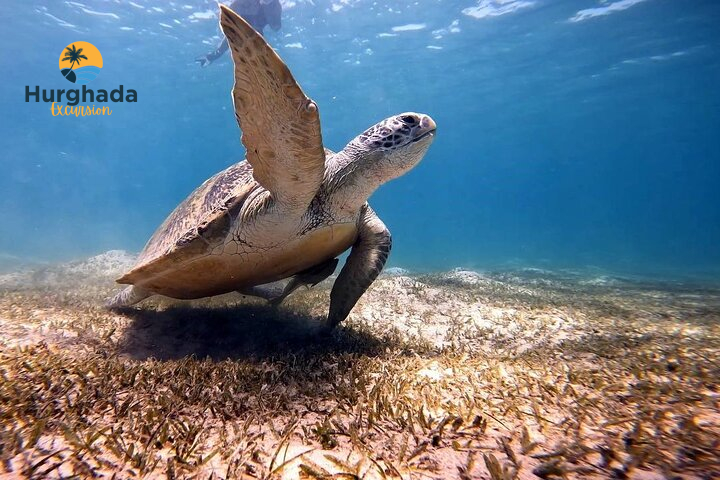
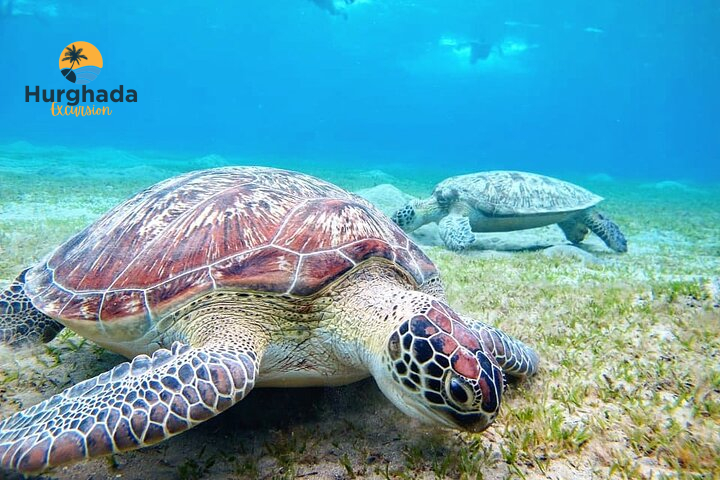
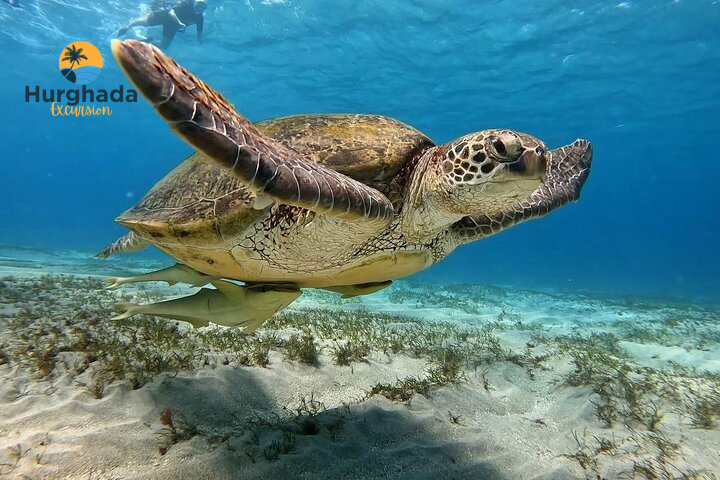
The defining experience of the Abu Dabbab tour — entering the water and finding green sea turtles grazing in the seagrass meadow, completely unperturbed by human presence. Unlike many “turtle experiences” that require searching, Abu Dabbab turtles are typically visible within minutes of entering the water — often in groups of 2–5 animals, grazing slowly through the meadow at depths of 1–4 metres. At this depth you can observe them from the surface without diving.
🌊
2. Crystal Clear Southern Red Sea Water
The southern Red Sea around Marsa Alam has some of the best water clarity in the world — visibility of 20–30 metres is standard. The contrast between the turquoise surface, the green seagrass meadow below, and the electric blue of the reef edge creates one of the most visually spectacular snorkelling environments on earth. Photography in these conditions — with a basic waterproof camera or GoPro — produces extraordinary results.
🐘
3. Possible Dugong Sighting
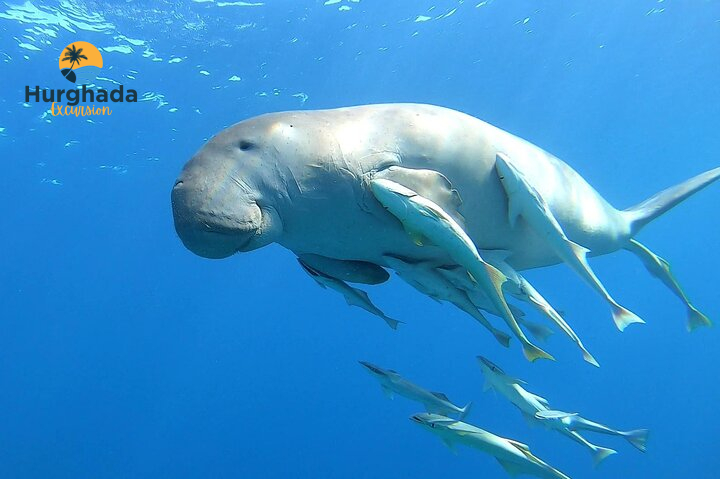
Abu Dabbab is one of only a handful of places in the Egyptian Red Sea where the dugong — the large, shy, endangered marine mammal that inspired the mermaid legend — is regularly seen. Dugong sightings are not guaranteed (the animals are shy and unpredictable) but occur several times per week in season. A dugong sighting at Abu Dabbab is one of the rarest and most memorable wildlife encounters available on any Red Sea tour.
🪸
4. The Abu Dabbab Reef Edge
Beyond the seagrass meadow, the reef edge drops away in a wall of hard and soft corals — fire corals, table corals, brain corals, and fan corals — populated by lionfish, moray eels, blue-spotted rays, parrotfish, and Napoleon wrasse. The reef edge snorkelling at Abu Dabbab is equivalent in quality to Giftun Island but with far fewer other visitors — another reason the southern Red Sea consistently outperforms the Hurghada area for marine biodiversity.
🏖️
5. The Abu Dabbab Beach
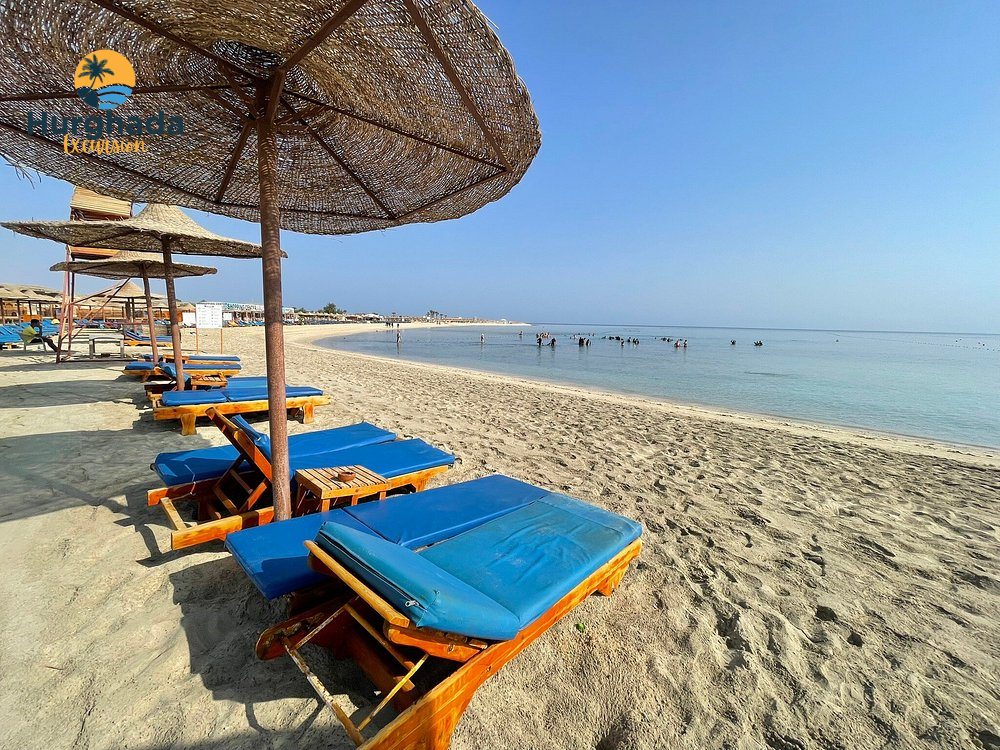
The beach at Abu Dabbab Bay is a crescent of white-gold coral sand framed by sandstone cliffs — one of the most beautiful natural beaches on the Egyptian Red Sea coast. The beach is relatively undeveloped and uncrowded. Between snorkelling sessions, the beach provides a genuinely beautiful setting for relaxation, sunbathing, and photography, with a small beach café for refreshments.
🐟
6. Extraordinary Fish Diversity
The Abu Dabbab marine environment supports extraordinary fish diversity — the seagrass meadow alone hosts garden eels, flounder, pipefish, and the remarkable seahorse (occasionally found in the seagrass), while the reef edge provides the complete Red Sea reef fish spectrum. The guide identifies each species encountered during the snorkelling session, providing a running commentary through the guide’s signals and post-session briefing.
🏕️
7. Second Snorkelling Stop — Marsa Shagra
The Abu Dabbab day tour typically includes a second snorkelling stop at Marsa Shagra — a legendary dive and snorkel site approximately 10 km south of Marsa Alam, with a pristine fringing reef, excellent coral cover, and the possibility of encountering sharks (whitetip reef sharks), turtles, and large schools of pelagic fish at the outer reef edge. The Marsa Shagra snorkelling is significantly more dramatic than the Abu Dabbab seagrass experience — complementary rather than competitive.
📸
8. Underwater Photography Paradise
Abu Dabbab provides the finest underwater photography conditions available on any Red Sea day tour — the exceptional visibility, the shallow turtle depth (1–4 metres — perfect for natural light photography without flash), and the turtles’ unhurried behaviour allow for extraordinary images with even a basic waterproof camera. The guide advises on optimal positioning for turtle photography without disturbing the animals.
🌍
9. Conservation & Environmental Education
The Abu Dabbab tour guide delivers a complete environmental briefing — the green turtle’s life cycle, conservation status, threats (plastic pollution, boat strikes, egg poaching), Egyptian marine park protection, and the rules for responsible snorkelling around turtles. The tour operates under strict environmental guidelines and contributes to the protection of the turtles through registered tour operator fees to the Marsa Alam National Park.
🚌
10. The Southern Red Sea Road — Untouched Egypt
The 180 km drive south from Hurghada to Abu Dabbab along the Red Sea coastal highway is itself a remarkable experience — passing through the Eastern Desert landscape of sand-coloured mountains dropping to the turquoise sea, with the untouched coastline of the southern Red Sea visible from the road. The guide provides commentary on the geology, wildlife, and history of the coastal region during the driving segments.
Complete Day Program — Full Tour Itinerary from Hurghada
Here is the complete Abu Dabbab tour from Hurghada itinerary — a professionally managed full-day programme with every stop, timing, and activity detail:
🚌 ABU DABBAB DAY TOUR FROM HURGHADA — FULL PROGRAMME
Pickup 05:30–06:00 AM · Drive south (~3h, 180 km) · Abu Dabbab Bay (09:00–12:30) · Lunch at Marsa Alam (12:30–13:30) · Marsa Shagra snorkelling (13:30–15:30) · Drive north (~3h) · Return to Hurghada 18:00–18:30
05:30 – 06:00 · Pickup from Hurghada Hotels
🚌 Hotel Pickup & Departure for the Southern Red Sea
Early morning pickup from your Hurghada hotel — the guide collects all guests in a comfortable air-conditioned minibus or coach. The early departure is essential: the 180 km drive to Abu Dabbab takes approximately 2.5–3 hours, and arriving at the bay by 09:00 AM is important for the best turtle activity (turtles are most active in the morning hours when water temperature is rising).
What to bring on the Abu Dabbab tour: Swimsuit (already wearing under clothes) · Towel · Sunscreen (reef-safe — no chemical sunscreen in the marine park; mineral sunscreen only) · Waterproof camera or GoPro · Water bottle (1.5L minimum) · Light snacks for the drive · Rashguard or wetsuit top (recommended for sun protection in the water) · Cash EGP for optional purchases at the beach · Light cover-up for the road sections.
06:00 – 09:00 · Drive South (3 Hours)
🏜️ The Red Sea Coastal Highway — Eastern Desert to Marsa Alam
The drive south along the Red Sea coastal highway is part of the experience — the Eastern Desert landscape of sand-red mountains and the turquoise sea visible to the east creates one of the most dramatic coastal drives in Egypt. The guide delivers the environmental briefing during the drive: the green sea turtle’s biology, feeding behaviour, conservation status (globally vulnerable, Egyptian Red Sea population recovering), the dugong’s biology and rarity, and the rules for responsible wildlife snorkelling at Abu Dabbab.
Rest stop: A brief comfort stop approximately halfway (at the Safaga or El Quseir area) with the option to purchase additional snacks and water before the final approach to Abu Dabbab.
09:00 – 09:30 · Abu Dabbab Arrival & Briefing
🐢 Abu Dabbab Bay — Arrival, Equipment & Conservation Briefing
Arrival at Abu Dabbab Bay — snorkelling equipment distributed (mask, fins, snorkel — included in tour price, all quality-checked before distribution). The guide delivers the mandatory conservation briefing at the beach: the rules for turtle interaction (maintain a 1-metre minimum distance, no touching, no chasing, no blocking the turtle’s path to the surface, no flash photography), the identification of the seagrass zone, and the signals used to communicate underwater (turtle sighted, follow me, surface now).
Entry point instruction: the guide identifies the three entry points to the seagrass meadow — the northern entry (best for turtle concentration), the central entry (good for beginners, shallower), and the reef edge entry (for experienced snorkellers who want the coral section). The guide leads each group to the appropriate entry point for their experience level.
09:30 – 11:30 · First Snorkelling Session — Seagrass Meadow & Turtle Zone
🌿 The Seagrass Meadow — Swimming with Wild Sea Turtles
The main event — two hours in the Abu Dabbab seagrass meadow with the guide leading the group to the turtle concentrations. The guide monitors the turtles’ behaviour throughout, ensuring the group maintains the correct observational distance and positioning (never above a turtle that needs to surface, never between a turtle and the open water). Turtles at Abu Dabbab are accustomed to careful snorkellers and typically allow approach to within 1–2 metres before moving away.
What to observe during the turtle session: The grazing behaviour (turtles bite and tear the seagrass with their hooked beak, leaving characteristic circular feeding scars in the meadow), the breathing pattern (every 4–7 minutes the turtle rises to the surface for a breath — the most dramatic moment to be alongside them), the cleaning behaviour (turtles sometimes visit specific “cleaning stations” on the reef where fish remove parasites), and the social behaviour (multiple turtles in the same meadow section, occasionally resting on the seagrass bed).
Dugong watch: The guide maintains a lookout for dugong sightings throughout the session — signalling immediately if a dugong is spotted. Dugongs typically appear from the deeper water toward the seagrass edge in the morning hours. If sighted, the guide leads a cautious approach: dugongs are significantly shyer than turtles and require a larger observational distance (minimum 3 metres).
11:30 – 12:00 · Beach Break & Second Snorkel (Optional)
🏖️ Abu Dabbab Beach — Rest, Photography & Optional Reef Edge Snorkel
Beach break — 30 minutes on the Abu Dabbab white sand beach for rest, refreshments, and photography. The beach café offers cold drinks, fresh coconut, and light snacks (EGP cash). Guests who want to continue snorkelling can take the optional reef edge session — moving from the seagrass meadow to the outer reef drop-off, where the coral diversity and fish life intensify significantly. The reef edge section is appropriate for confident swimmers only; the guide accompanies this group.
12:00 – 13:30 · Drive to Marsa Alam · Lunch
🍽️ Lunch at Marsa Alam — Egyptian and International Cuisine
Drive 25 km south to Marsa Alam town for lunch at a local restaurant — fresh grilled fish, mezze, rice dishes, and soft drinks. The guide handles all ordering. Lunch provides the essential rest period between the morning seagrass session and the afternoon Marsa Shagra reef snorkelling. Duration: approximately 1 hour.
13:30 – 15:30 · Marsa Shagra — Reef Snorkelling
🪸 Marsa Shagra — One of Egypt’s Finest Reef Snorkel Sites
The afternoon stop at Marsa Shagra — a legendary Red Sea dive and snorkel site where a pristine fringing reef begins just 10 metres from the beach, with exceptional coral cover and extraordinary fish diversity. The guide leads two groups: experienced snorkellers to the outer reef drop-off (depth 5–15 metres, with excellent visibility of the complete reef ecosystem) and beginners to the shallow reef flat (depth 1–4 metres, equally rich in coral and fish but more comfortable for less confident swimmers).
What to look for at Marsa Shagra: Whitetip reef sharks (frequently spotted resting under coral heads at the deeper sections), large Napoleon wrasse (the giant, blue-lipped fish that approaches curiously), the multicoloured parrotfish schools, the moray eel kingdom at the reef base, the blue-spotted ribbontail ray on the sandy patches, the spectacular fire coral walls, and the occasional hawksbill turtle on the outer reef (different turtle species from Abu Dabbab’s green turtles).
15:30 – 18:30 · Return Drive to Hurghada
🌅 Sunset Drive North — Return to Hurghada
The 180 km return drive north to Hurghada — arriving at hotels approximately 18:00–18:30 PM. The guide conducts the post-tour briefing during the drive: species identification recap for any fish or marine life seen, the conservation message about the Abu Dabbab turtles, and recommendations for further marine conservation engagement. The return drive catches the afternoon light on the Eastern Desert mountains — one of the most beautiful landscapes in Egypt in the golden hour.
Green Sea Turtles at Abu Dabbab — The Complete Guide
Species Profile
Green Sea Turtle (Chelonia mydas)
Length: 80–150 cm · Weight: 70–190 kg · Lifespan: 80–100 years · Shell colour: olive brown (not green — the green colour is from the fat layer beneath the skin, visible in the water as a greenish hue) · IUCN Status: Endangered globally, Vulnerable in the Red Sea · Diet: exclusively seagrass and algae (adults) · Breeding: females return to their hatching beach every 2–5 years to nest.
At Abu Dabbab
Why Turtles Choose Abu Dabbab
The Abu Dabbab turtle population consists primarily of adult and sub-adult green turtles using the bay as a feeding ground — not a nesting site (the nesting beaches for Red Sea green turtles are primarily on the Saudi Arabian and Yemeni coasts). The same individual turtles return to Abu Dabbab year after year — studies have identified over 30 individual turtles using the bay as a regular feeding station. A few individuals have been named by researchers and local guides.
Encounter Quality
Encounter Probability & Behaviour
Turtle encounter probability at Abu Dabbab is consistently rated at 95–100% — the seagrass meadow is so productive and the turtle population so established that it is extraordinarily rare not to see turtles. The turtles’ habituation to careful snorkellers means they do not flee — they continue feeding at distances of 0.5–1 metre from stationary snorkellers, providing observation opportunities that simply do not exist at most turtle sites worldwide.
The Dugong — Egypt’s Most Elusive Marine Mammal
🐘 The Dugong — The Sea Cow That Inspired the Mermaid
The dugong (Dugong dugon) is a large marine mammal closely related to the elephant — a fully aquatic herbivore that feeds exclusively on seagrass, breathing air through two nostrils at the top of its rounded snout. Adult dugongs reach 2.5–3 metres in length and weigh 250–400 kg. They move slowly and deliberately through the seagrass meadow, creating the characteristic “feeding trails” of bare sand that run through the seagrass in parallel lines.
The dugong’s slow, large-bodied movement through calm water, occasionally surfacing vertically with its rounded head and small flipper-like forelimbs visible — seen from a distance by early mariners — is believed to have inspired the mermaid legend in the Red Sea and Indian Ocean seafaring traditions.
Dugong sighting probability at Abu Dabbab: Approximately 30–40% on any given day — significantly higher than at virtually any other accessible site in the Egyptian Red Sea. Dugongs are significantly shyer than turtles and will typically retreat to deeper water if approached too quickly. The guide monitors the seagrass meadow for dugong feeding trails (characteristic parallel bare sand channels) which indicate recent or current dugong presence.
Snorkelling at Abu Dabbab — Technique & Wildlife Guide
🤿
For Complete Beginners
Abu Dabbab is an ideal first snorkel site — the shallow (1–4 m) seagrass zone, calm protected water, minimal current, and the immediate reward of turtle encounters make the learning curve very gentle. The guide provides a 10-minute surface snorkelling lesson for complete beginners before entering the main turtle zone. A flotation noodle or life vest is available for non-swimmers or nervous beginners.
🎯
The Turtle Approach Technique
The key to maximising turtle encounters: move slowly, never splash the fins (turtles are disturbed by surface splashing more than by underwater noise), stay horizontal and streamlined at the surface, and never position yourself between the turtle and the surface (turtles need to breathe every 4–7 minutes and will panic if their breathing path is blocked). Approach from the side, never from above or head-on. When the turtle surfaces to breathe — the finest observational moment — be still.
📷
Underwater Photography Tips
For the best turtle photographs at Abu Dabbab: use a wide-angle setting (the turtle should fill the frame), position yourself at the same depth as the turtle (on the surface looking down gives the least flattering angles), shoot when the turtle is between you and the sun (back-lit turtle silhouettes can be beautiful but front-lit shots show more detail), and wait for the breathing surface moment — the turtle rising vertically creates the most dramatic image.
⚠️
What NOT to Do
Never touch a turtle — it is illegal in the Marsa Alam National Park and causes measurable stress to the animal. Never chase a swimming turtle — they can easily outswim humans when alarmed and you will exhaust yourself. Never use flash photography on turtles — the flash can temporarily blind them, making navigation difficult. Never stand on the seagrass — it takes years to recover from physical damage. Never use chemical sunscreen in the water — it damages the reef and is specifically prohibited in the national park.
Abu Dabbab Marine Life — Complete Species Guide
| Species |
Zone |
Encounter Probability |
| Green Sea Turtle |
Seagrass meadow |
95–100% — virtually guaranteed |
| Dugong |
Seagrass meadow / reef edge |
30–40% — frequent |
| Hawksbill Turtle |
Reef edge |
20–30% — occasional |
| Blue-spotted Ribbontail Ray |
Sandy patches · seagrass edge |
80% — very common |
| Garden Eels |
Sandy seagrass floor |
90% — very common |
| Moray Eel (Giant) |
Reef base |
60% — common |
| Whitetip Reef Shark |
Reef edge (Marsa Shagra) |
40–50% — Marsa Shagra stop |
| Napoleon Wrasse |
Reef edge |
50% — moderately common |
| Seahorse |
Seagrass meadow |
10% — rare but occasionally seen |
Conservation & Responsible Tourism — The Rules at Abu Dabbab
✅
DO: Responsible Turtle Behaviour
✅ Maintain minimum 1-metre distance from turtles · ✅ Approach slowly from the side · ✅ Stay at the surface (do not dive toward the turtle) · ✅ Wait still for the turtle to come closer · ✅ Never block the turtle’s path to the surface · ✅ Use only reef-safe mineral sunscreen · ✅ Take all rubbish from the beach and water with you
❌
DON’T: What Is Prohibited
❌ Touch or ride turtles (illegal — criminal fine) · ❌ Chase turtles or block their swimming path · ❌ Use flash photography · ❌ Feed turtles or any marine animals · ❌ Remove any shells, coral, or marine organisms · ❌ Stand on or damage seagrass · ❌ Use chemical sunscreen in the national park water · ❌ Bring single-use plastic into the marine park
🛡️
Protection Status
Abu Dabbab Bay is within the Wadi el-Gamal – Hamata National Park, established in 2003 and managed by the Egyptian Environmental Affairs Agency (EEAA). The national park prohibits all extractive activities and protects the dugong and turtle populations. Tour operators must pay a national park entry fee per visitor — included in our tour price. The national park status is the primary reason the Abu Dabbab turtle population has remained stable while other Red Sea turtle sites have declined.
Best Season — When Is the Best Time to Visit Abu Dabbab?
| Season |
Water Temp |
Turtle Activity |
Road Conditions |
Verdict |
| Oct – Nov |
26–28°C |
Excellent |
Perfect |
Ideal — warm water, active turtles |
| Dec – Feb |
22–24°C |
Good |
Good |
Very good — wetsuit recommended (3mm) |
| Mar – May |
24–27°C |
Excellent |
Perfect |
Excellent — peak season |
| Jun – Sep |
28–32°C |
Very good |
Very hot drive |
Good — extra sun protection essential |
Abu Dabbab Tour Price from Hurghada 2026
Abu Dabbab Swim with Turtles Tour from Hurghada — From
€35
per adult · Full day · Abu Dabbab Bay + Marsa Shagra · Transport + Guide + Snorkelling Equipment
✓ Hotel pickup · ✓ AC transport · ✓ Guide · ✓ Snorkel gear · ✓ National Park fees · ✓ Lunch
Children 4–11: 50% discount · All-inclusive package from Hurghada resort: from €45 per adult
✅ Included
✓ Hotel pickup and return from Hurghada area hotels (05:30–06:00 AM)
✓ Air-conditioned transport (180 km each way to Abu Dabbab)
✓ Expert snorkelling guide + marine wildlife briefing
✓ Quality mask, fins, and snorkel · Life vest available on request
✓ National Park entry fees (Wadi el-Gamal – Hamata National Park)
✓ Lunch at Marsa Alam · Bottled water throughout · Free cancellation 48 hours before
Abu Dabbab vs Marsa Alam vs Giftun Island — Comparison
| Feature |
Abu Dabbab |
Marsa Alam General |
Giftun Island (Hurghada) |
| Turtle encounter |
95–100% guaranteed |
50–70% at reef sites |
10–20% occasional |
| Dugong sighting |
30–40% |
5–10% at Marsa Mubarak |
Not present |
| Coral reef quality |
Excellent (reef edge) |
Outstanding |
Good (some bleaching) |
| Crowd level |
Low — managed access |
Low to moderate |
High — day trip boats |
| Distance from Hurghada |
180 km (~3 hours) |
220 km (~3.5 hours) |
15 km (30 min boat) |
| Best for |
Turtle encounters · wildlife · families |
Diving · pristine reefs · biodiversity |
Day at sea · boat trip · snorkelling |
10 Expert Tips for Swimming with Turtles at Abu Dabbab
Tip 1 — Be in the water by 09:00 AM for the best turtle activity and the best light. Green sea turtles are most active in the morning hours when the water is warming — the combination of increased metabolic activity and the angle of morning sunlight (which creates the finest underwater visibility and the most beautiful underwater photography conditions) makes the 09:00–11:00 AM window the single best period for turtle encounters at Abu Dabbab. The tour is designed to reach the bay at exactly this time.
Tip 2 — Use only reef-safe mineral sunscreen — and apply it at least 30 minutes before entering the water. Chemical sunscreens (containing oxybenzone, octinoxate, and related compounds) are banned in the Marsa Alam National Park because they cause coral bleaching and disrupt marine ecosystems. Use mineral sunscreen (zinc oxide or titanium dioxide base) only. Apply it at the hotel, at least 30 minutes before your session, and allow it to fully absorb. Do not reapply immediately before entering the water.
Tip 3 — Bring a rashguard — it provides sun protection without sunscreen and keeps you comfortable for 2+ hours in the water. A rashguard (thin Lycra long-sleeved swim shirt) eliminates the need for any sunscreen on the back and shoulders — the areas most exposed during snorkelling. It also adds warmth during the cooler months (December–February) and reduces jellyfish sting risk. It is the single most practical piece of snorkelling equipment investment for any Red Sea snorkelling day trip.
Tip 4 — Stay still when a turtle is nearby — it will approach you, not the other way around. The commonest beginner mistake at Abu Dabbab is swimming actively toward a turtle — this triggers a slow retreat. The correct technique: when a turtle is spotted within 3–4 metres, stop swimming completely and float still at the surface. Within 30–60 seconds, the turtle — reassured that you are not a threat — will resume its feeding behaviour and often move closer. The finest turtle encounters happen when the snorkeller is completely motionless.
Tip 5 — Watch for turtle breathing moments — they are the most dramatic observational opportunities. Green turtles at Abu Dabbab breathe every 4–7 minutes at the surface. When you see a turtle begin to ascend (it tilts its head upward and begins a slow vertical rise), position yourself slightly to the side and float still. The turtle will surface directly beside you, inhale, and submerge again — a 10–15 second encounter at zero distance that produces the most powerful photographs and the most indelible memories of the day.
Tip 6 — Bring a waterproof camera with a wide-angle setting — not a zoom lens. Underwater photography requires a wide-angle lens because the water between you and the subject reduces contrast and colour at distances greater than 1–2 metres. A wide-angle GoPro (set to the widest field of view) positioned 50 cm from a feeding turtle produces extraordinary images. A smartphone in a waterproof case, held at the widest angle setting, also works very well in Abu Dabbab’s excellent visibility. Avoid zoom — it forces you too far from the subject.
Tip 7 — Look for the dugong feeding trails — they tell you where the dugong has been recently. The dugong creates distinctive feeding trails through the seagrass — parallel channels of bare sand running through the meadow, where the animal has uprooted the seagrass in rows while feeding. Fresh feeding trails (bright white sand, seagrass remnants still floating) indicate the dugong is in the area. The guide monitors these trails as the primary indicator of dugong presence and proximity.
Tip 8 — Don’t forget the Marsa Shagra afternoon stop — it is one of the finest reef snorkel sites in Egypt. Many guests are so overwhelmed by the Abu Dabbab turtle session that they treat the Marsa Shagra afternoon stop as a minor addition. It is not — Marsa Shagra has outstanding coral cover, extraordinary fish diversity, and the regular presence of whitetip reef sharks resting under coral heads that Abu Dabbab’s seagrass zone does not provide. The two stops are genuinely complementary: Abu Dabbab for marine megafauna and Marsa Shagra for reef ecosystem richness.
Tip 9 — Eat a light breakfast before departure — a heavy meal makes snorkelling uncomfortable. The 05:30 AM hotel pickup means breakfast is typically very early or skipped. A light breakfast (fruit, yogurt, bread) is ideal — enough to sustain energy for the 3-hour drive without making snorkelling uncomfortable. The tour includes a hearty lunch at Marsa Alam at midday. Bring additional snacks (nuts, energy bars) for the drive.
Tip 10 — This is the most extraordinary wildlife experience available from Hurghada — do not skip it. The Abu Dabbab tour is consistently rated by guests as the single most memorable day of their Red Sea holiday — above the Giza pyramids, above the Luxor temples, above every other activity in the Hurghada region. The reason is simple: no photograph, no nature documentary, no aquarium, and no previous description prepares you for the reality of floating in the open Red Sea while a 150 kg ancient reptile — a species that has been swimming in this ocean for 100 million years — grazes quietly beneath you, completely unbothered by your presence, going about its ancient life as if you weren’t there. That is what Abu Dabbab delivers.
Real Reviews from Travellers
★★★★★
“I have snorkelled in the Maldives, the Great Barrier Reef, and Thailand. Nothing prepared me for Abu Dabbab. Within three minutes of entering the water, a turtle the size of a coffee table drifted past me at arm’s reach and stopped to breathe on the surface directly beside me. I was completely frozen. It looked at me, breathed, and went back to grazing. I have never experienced anything like it in 20 years of ocean swimming.”
James T. (experienced snorkeller) — Edinburgh · April 2026
★★★★★
“We saw SEVEN turtles in the morning session. Seven. And a dugong — the guide spotted the feeding trails and led us to it. When we saw the shape of that huge animal moving slowly through the seagrass 3 metres below us, my husband and I just looked at each other through our masks. The guide was exceptional — his briefing before the session made us genuinely careful and considerate snorkellers. Book this tour. Just book it.”
Sarah & Michael K. — London · March 2026
★★★★★
“We took our 8-year-old daughter and she was mesmerised. She had never snorkelled before — the guide gave her a 10-minute lesson and she was in the water. When her first turtle appeared beneath her, she surfaced and just said ‘Mum. MUM.’ in a voice I will never forget. The Marsa Shagra afternoon stop was equally beautiful — we saw a shark (whitetip reef shark) resting under a coral head. Best day of our lives.”
Caroline R. (family of 3) — Manchester · February 2026
Frequently Asked Questions
How far is Abu Dabbab from Hurghada?
Abu Dabbab Bay is approximately 180 km south of Hurghada by the Red Sea coastal highway — approximately 2.5–3 hours by road. The tour departs from Hurghada hotels at 05:30–06:00 AM to arrive at the bay by 09:00 AM for the optimal morning turtle activity period.
Are turtles guaranteed at Abu Dabbab?
Yes — turtle encounter probability at Abu Dabbab is 95–100%. The bay’s extensive seagrass meadow attracts a resident population of 30+ green sea turtles that feed in the bay year-round. In over five years of organised snorkelling tours at Abu Dabbab, a session without at least one turtle encounter is virtually unrecorded. On most mornings, 3–7 turtles are visible simultaneously in the seagrass zone.
Can I touch the turtles at Abu Dabbab?
No — touching turtles is strictly prohibited in the Wadi el-Gamal – Hamata National Park and carries criminal penalties under Egyptian law. Beyond the legal prohibition, touching turtles causes measurable stress, disrupts their feeding behaviour, and can transmit bacteria from human hands to the turtle’s shell and skin. The turtles at Abu Dabbab are habituated to careful, non-touching snorkellers — which is precisely why they allow such close observation. Touching them would eliminate the extraordinary behavioural access that respectful visitors currently enjoy.
What is the Abu Dabbab tour price from Hurghada?
The Abu Dabbab tour from Hurghada costs from €35 per adult. This includes hotel pickup and return, air-conditioned transport (180 km each way), expert guide, quality snorkelling equipment (mask, fins, snorkel), national park entry fees, and lunch at Marsa Alam. The all-inclusive package from €45 adds additional refreshments and a second afternoon snorkel stop at Marsa Shagra. Children 4–11 receive a 50% discount. Free cancellation 48 hours before departure.
Is the Abu Dabbab tour suitable for non-swimmers?
Yes — with appropriate equipment. The seagrass zone at Abu Dabbab is 1–4 metres deep, with calm, protected water and minimal current. Life vests and flotation noodles are available on the tour for guests who are not confident swimmers. The guide provides individual assistance for non-swimmers and beginners. Most guests who have never snorkelled before manage the turtle zone session comfortably within 15 minutes of entering the water.
Book Your Abu Dabbab Turtle Tour Today
From €35 per adult · Hotel pickup · 3h to Abu Dabbab · Green Sea Turtles (95–100% guaranteed) · Dugong Watching · Marsa Shagra Reef · Expert Guide · Equipment · Lunch · Free Cancellation.
🐢 Book Now — From €35 per Adult
The Abu Dabbab tour from Hurghada — swim with turtles guide is the most consistently extraordinary wildlife experience available on the Egyptian Red Sea coast. The green sea turtles of Abu Dabbab are not tourist attractions — they are wild animals pursuing their ancient lives in a protected bay, utterly indifferent to the small group of floating humans who have come to watch them feed. That indifference is the greatest gift they give. It means that every encounter is genuine. Every turtle that allows you to float alongside it for five minutes of breathing and grazing is doing so not because it has been trained or habituated or baited — but because it has decided, in its ancient reptilian assessment of the situation, that you pose no threat and can be ignored. That assessment, extended for five minutes while you float beside an animal whose ancestors swam in these waters 100 million years ago, is one of the most humbling and most extraordinary things that the natural world can offer any traveller.
Book your Abu Dabbab turtle tour today with Hurghada Excursion — hotel pickup, expert guide, quality snorkelling equipment, national park fees, lunch, and the most reliable wild turtle encounter available anywhere on the Egyptian Red Sea coast.