🕌 Islamic Cairo · Khan el-Khalili · Al-Azhar Mosque · Walking Tour · From Hurghada · Daily
Cairo Old Town Walking Tour – Islamic Cairo, Khan el-Khalili & Mosques
📅 Updated: May 2026 | ⏱️ Full Day from Hurghada (Flight) | 💶 From €100 / person | ⭐ 4.9/5 Rated | 🕌 Daily Departures
The Great Pyramids are ancient Egypt. But there is another Cairo — a medieval Islamic city of extraordinary density, complexity, and beauty that most tourists who come for the pyramids never see. Islamic Cairo is one of the finest surviving examples of medieval urban architecture in the world — a UNESCO World Heritage district of 600+ monuments packed into 5 square kilometres, where 10th-century mosques stand beside 14th-century madrasas and 19th-century caravanserais, where the air carries the mingled scent of cardamom, cumin, and burning oud, and where the Khan el-Khalili bazaar — established in 1382 and in continuous commercial operation for 644 years — still sells copper, spices, perfume, gold, and antiques in the same warren of alleys where Mamluks and Ottomans traded before them. This is the Cairo that Naguib Mahfouz wrote about, the Cairo that Ibn Battuta visited, the Cairo that the medieval world called Umm al-Dunyā — Mother of the World.
The Cairo Old Town walking tour — Islamic Cairo, Khan el-Khalili and mosques from Hurghada combines the finest monuments, markets, and neighbourhoods of medieval Cairo in a guided walking tour of approximately 3–4 hours — the great mosque of Al-Azhar (the world’s oldest university, founded 970 CE), the Mosque-Madrasa of Sultan Hassan (the most architecturally magnificent mosque in Cairo), the Citadel of Saladin with its Ottoman Alabaster Mosque, the Khan el-Khalili bazaar, the medieval street of Al-Muizz li-Din Allah (one of the finest Islamic streetscapes in the world), and the spice and gold markets that have operated here for seven centuries. This is the tour that makes Cairo comprehensible — and makes it unforgettable.
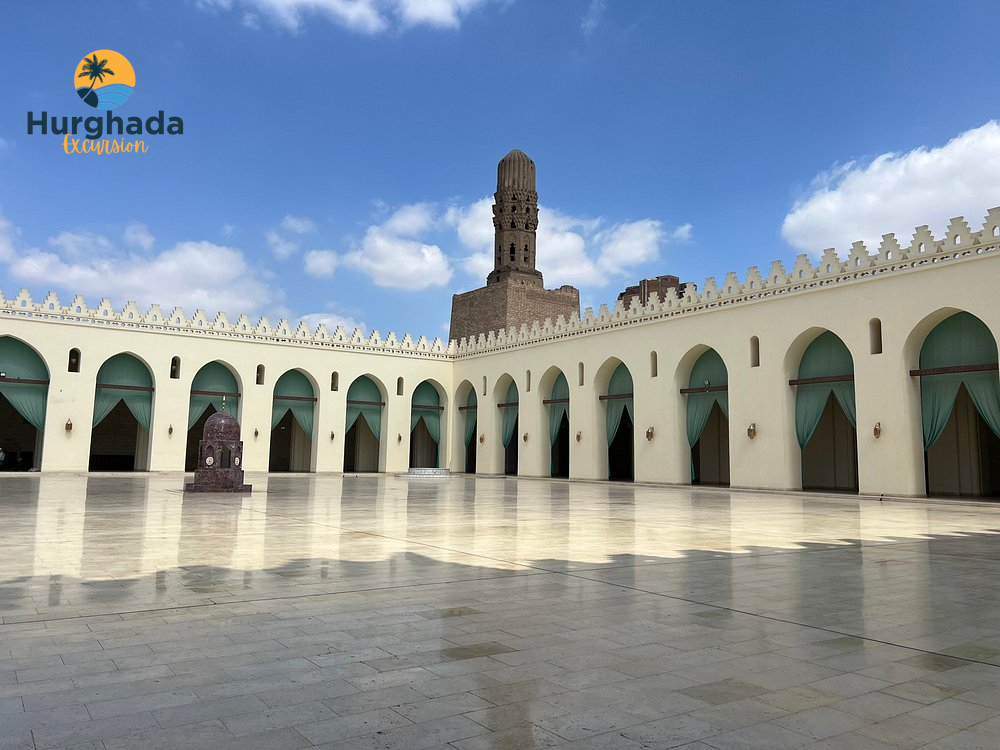
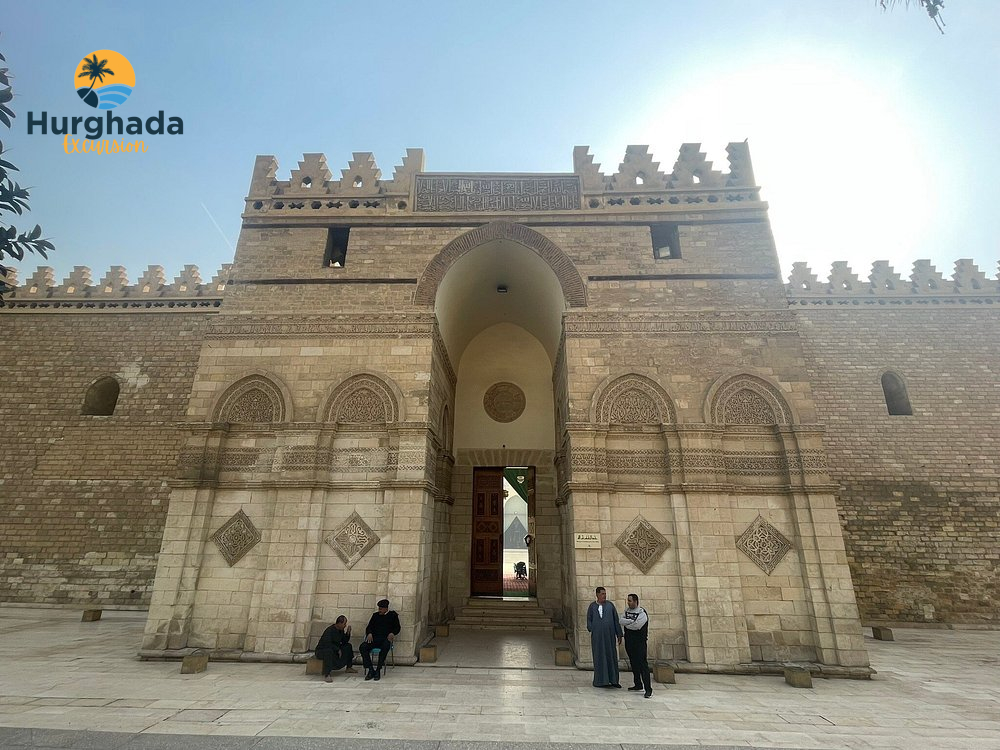
🕌 What to see in Old Cairo — Islamic Cairo: The Islamic Cairo UNESCO World Heritage district contains more listed monuments per square kilometre than any other urban area in the world — over 600 Islamic-era buildings surviving from the 7th to the 19th centuries. The essential sites for a half-day walking tour are: Al-Azhar Mosque & University (founded 970 CE, the world’s oldest continuously operating university); Al-Muizz Street (the finest Islamic architectural street in Egypt); the Khan el-Khalili bazaar (Cairo’s greatest market, founded 1382); the Mosque of Ibn Tulun (Cairo’s oldest mosque, built 879 CE); the Sultan Hassan Mosque (the most architecturally ambitious medieval mosque in Egypt); and the Cairo Citadel with the Muhammad Ali Alabaster Mosque. The Old Cairo walking tour visits the best of these within a manageable half-day programme.
What Is Islamic Cairo? History & UNESCO Significance
Islamic Cairo (Arabic: al-Qahira al-Islamiyya) refers to the historic medieval city that grew up east of the Nile between the 7th and 19th centuries — the successive capitals established by the Arab, Fatimid, Ayyubid, Mamluk, and Ottoman rulers of Egypt. The district is designated by UNESCO as a World Heritage Site under the title “Historic Cairo” (inscribed 1979) and is described as “one of the world’s oldest Islamic cities, with its famous mosques, madrasas, hammams and fountains.” It contains more than 600 officially listed monuments — the highest concentration of listed Islamic-era architecture anywhere in the world.
| Era |
Rulers |
Key Monuments |
| Early Islamic (641–969 CE) |
Arab · Abbasid |
Mosque of Amr ibn al-As (642 CE) · Mosque of Ibn Tulun (879 CE) |
| Fatimid (969–1171 CE) |
Fatimid Caliphate |
Al-Azhar Mosque & University (970 CE) · Al-Hakim Mosque |
| Ayyubid (1171–1250 CE) |
Saladin’s dynasty |
Cairo Citadel (1176 CE) |
| Mamluk (1250–1517 CE) |
Mamluk Sultans |
Khan el-Khalili (1382) · Sultan Hassan Mosque (1356) · Al-Muizz Street |
| Ottoman & Modern (1517–1952) |
Ottoman · Muhammad Ali |
Muhammad Ali Alabaster Mosque (1857) · numerous caravanserais |
Top 10 Highlights of the Old Cairo Walking Tour
🕌
1. Al-Azhar Mosque — World’s Oldest University
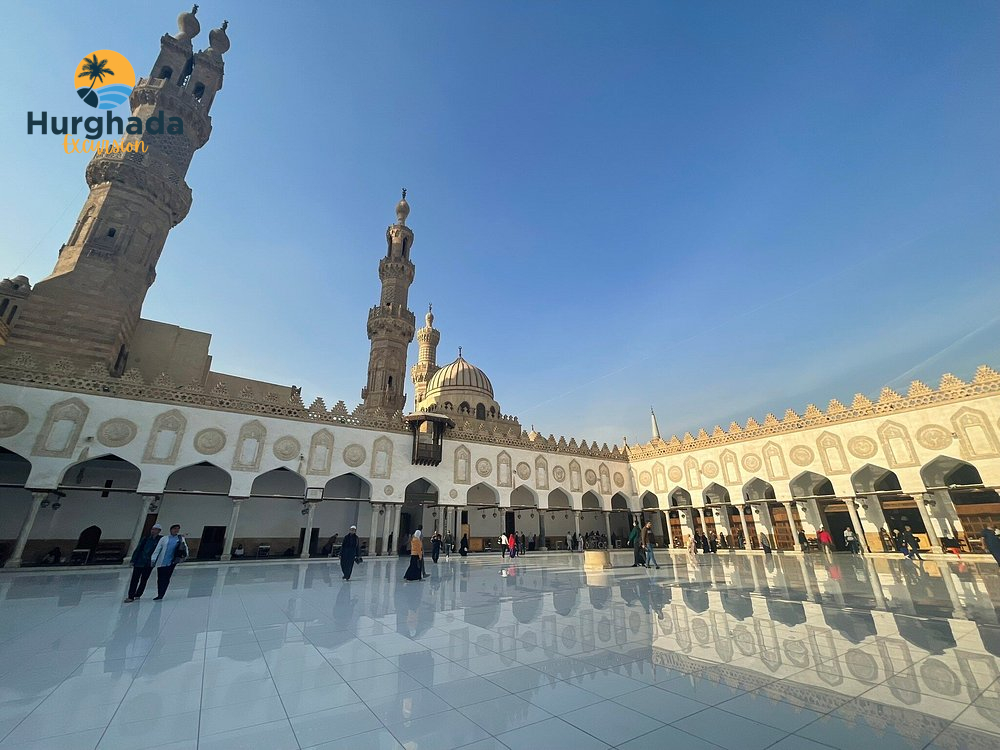
Founded in 970 CE by the Fatimid general Jawhar al-Siqilli — simultaneously a mosque and the first university in the world, 26 years before the University of Bologna. Al-Azhar has been continuously functioning for 1,056 years. The mosque’s layered architectural history — Fatimid, Mamluk, and Ottoman additions visible in a single structure — is one of the finest architectural palimpsests in the Islamic world.
🛍️
2. Khan el-Khalili — Cairo’s Great Bazaar
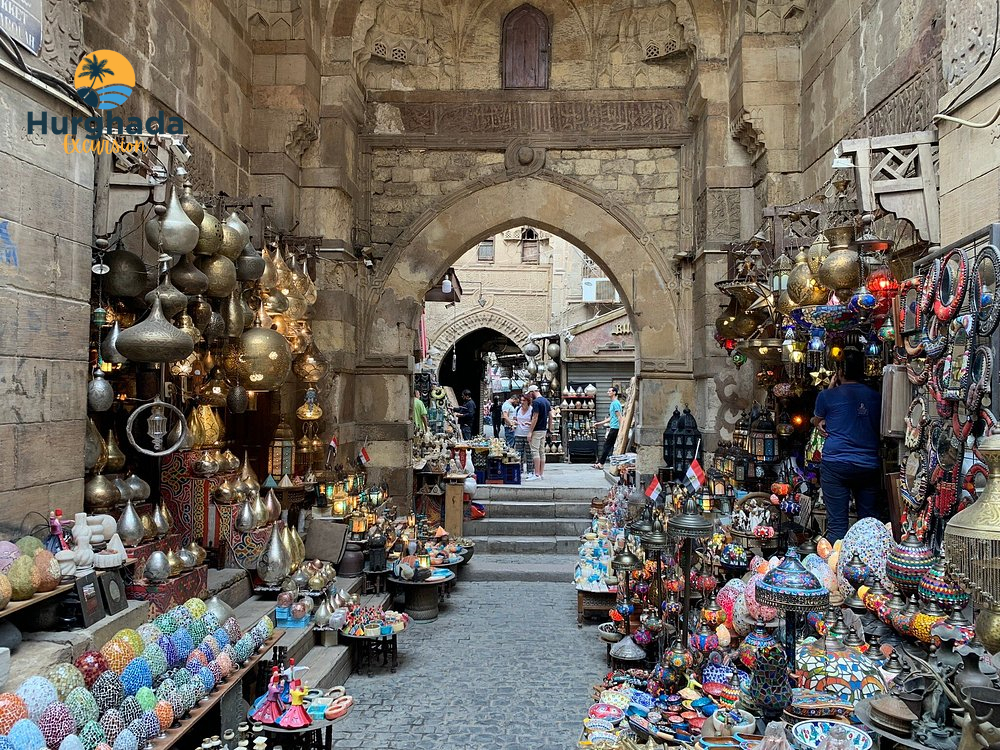
Founded by the Mamluk emir Jarkas el-Khalili in 1382 and in continuous operation for 644 years — Cairo’s greatest market occupies a warren of medieval alleys where copper and brass craftsmen still beat their pots by hand, where gold jewellers work in front-facing workshops, where spice merchants pile pyramids of turmeric, cardamom, and dried hibiscus, and where perfumers fill custom bottles from ancient glass vessels. The most atmospheric market in the Middle East.
🏛️
3. Al-Muizz Street — UNESCO’s Greatest Islamic Streetscape
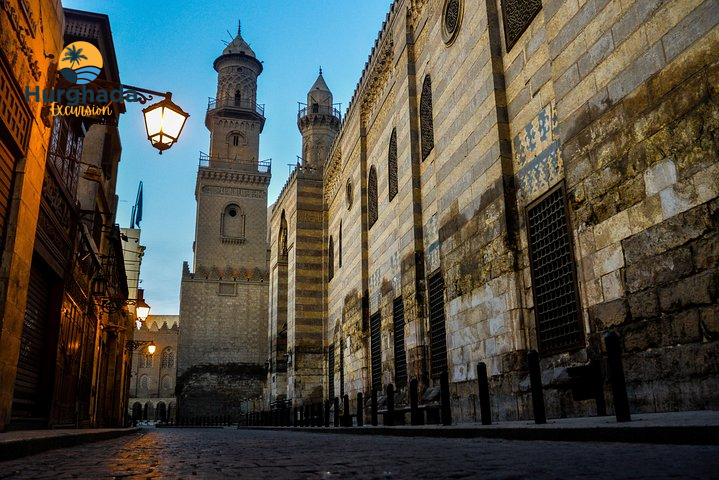
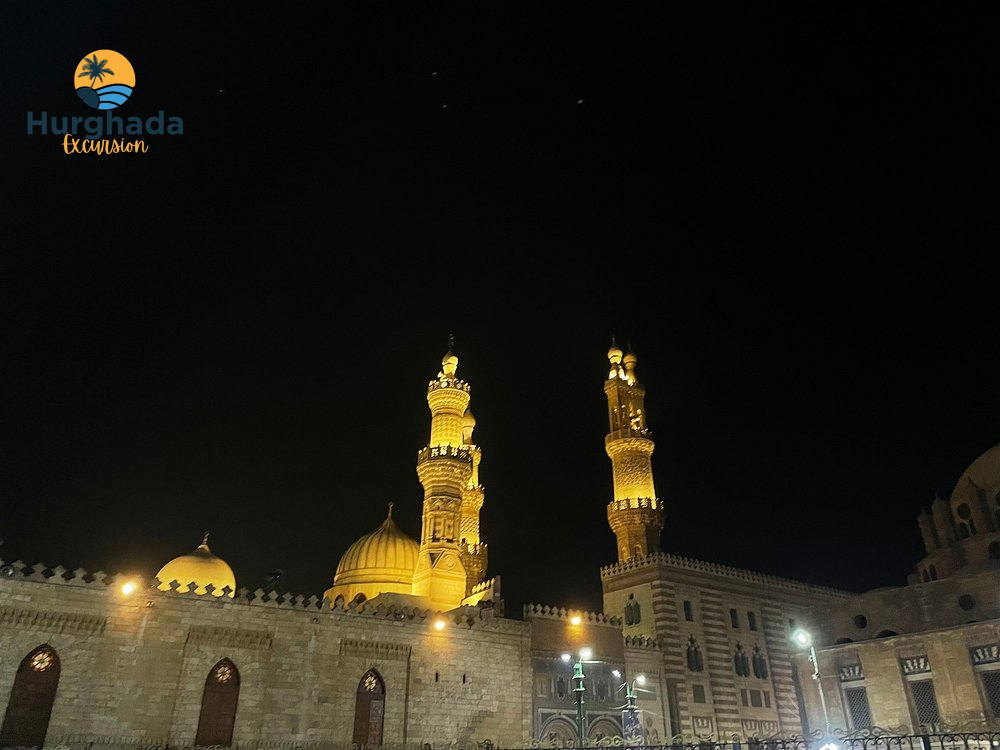
The medieval spine of Fatimid Cairo — a 1.2 km pedestrianised street lined on both sides with a continuous sequence of Fatimid, Ayyubid, and Mamluk monuments: mosques, madrasas, mausolea, sabil-kuttabs (fountain-schools), and caravanserais from the 10th to the 18th centuries. UNESCO has called it “an open-air museum of Islamic architecture.” In the evening, the street is illuminated and the carved stone facades glow with extraordinary beauty.
🏰
4. The Cairo Citadel of Saladin
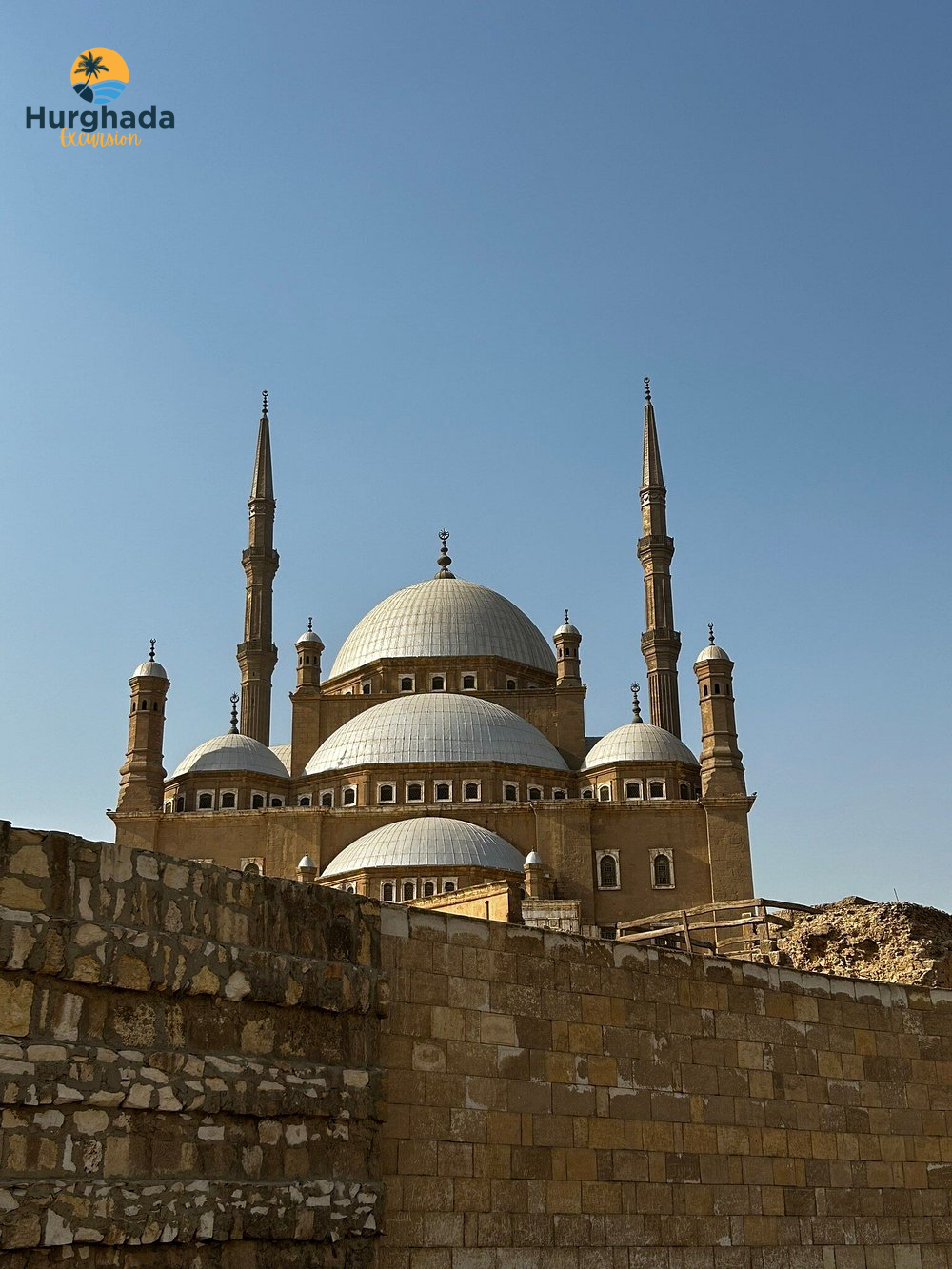
The fortified hilltop complex built by Saladin (Salah al-Din) between 1176 and 1183 CE — for 700 years the seat of Egyptian power. The Citadel is dominated by the Muhammad Ali Alabaster Mosque, a spectacular Ottoman-inspired domed mosque completed in 1857 whose interior of alabaster, gilt, and chandeliers is one of the most dramatic religious interiors in Cairo. The Citadel’s ramparts offer the finest panoramic views of Islamic Cairo.
🏯
5. Sultan Hassan Mosque — Cairo’s Architectural Masterpiece
Built between 1356 and 1363 CE by Sultan Hassan ibn Muhammad, the Mosque-Madrasa of Sultan Hassan is widely considered the most architecturally impressive medieval mosque in Egypt — its entrance portal (the tallest in Islamic architecture at 37 metres), its soaring interior iwans, and its extraordinary proportional control make it one of the finest buildings of any era in Cairo. The guide delivers a complete architectural analysis at the entrance.
🕌
6. Mosque of Ibn Tulun — Cairo’s Oldest
Built between 876 and 879 CE by Ahmad ibn Tulun, governor of Egypt, the Mosque of Ibn Tulun is the oldest intact mosque in Cairo and one of the oldest in the world. Its enormous congregational courtyard (the largest of any mosque in Cairo), its unique pointed-arch arcades, and its distinctive spiral minaret (the only spiral minaret in Egypt, modelled on the Samarra mosques of Iraq) make it one of the most extraordinary buildings in Islamic architecture.
☕
7. El Fishawi Café — Cairo’s Most Famous Coffee House
Hidden in the alleys behind Khan el-Khalili, El Fishawi café has been serving tea and coffee continuously since 1773 — 253 years of uninterrupted operation. Naguib Mahfouz, Egypt’s Nobel laureate, used it as his regular writing café. Brass mirrors, wooden screens, a permanent haze of shisha smoke, and servers who have been bringing tea to the same marble tables for decades. A stop here, with a glass of mint tea, is one of the finest cultural moments in any Cairo day.
🌶️
8. Spice Market & Gold Souk
The dedicated spice market running north from Khan el-Khalili — pyramids of turmeric, cumin, coriander, dried hibiscus (karkade), black seed, and ras el hanout piled in canvas sacks, with vendors calling the prices in a tradition unchanged since the Mamluk period. Adjacent, the gold souk — where 18 and 21-carat gold jewellery is made and sold by weight — is one of the most active gold markets in Africa.
🏛️
9. Beit el-Suhaymi — A Mamluk Merchant’s House
Hidden off Al-Muizz Street, the Beit el-Suhaymi (House of Suhaymi) is the finest surviving example of a traditional Cairene merchant’s house — built in 1648 and expanded in 1796, with its internal courtyard, mashrabiyya (wooden lattice) screens, painted ceilings, and fountain. Standing in the courtyard after the noise of the Khan el-Khalili provides one of the most tranquil and most beautiful moments of the entire walking tour.
📖
10. Naguib Mahfouz Street — Living Literature
The alley behind Al-Azhar bearing the name of Egypt’s Nobel laureate Naguib Mahfouz (1911–2006) — whose Cairo Trilogy novels (Palace Walk, Palace of Desire, Sugar Street) are set precisely in these alleys and these cafés. The guide identifies specific locations mentioned in the novels: the house of al-Sayyid Ahmad Abd al-Jawad, the café where Kamal Abdel Jawad debated philosophy, the street where the three generations of the Abd al-Jawad family lived their extraordinary lives.
Complete Day Program — Hour by Hour from Hurghada
The Cairo Old Town walking tour from Hurghada is best done by flight — the 45-minute flight maximises time in Islamic Cairo. Here is the complete programme:
✈️ FLIGHT PROGRAMME (Recommended · Full Day · ~13 Hours)
Depart Hurghada ~06:00 AM · 45-min flight · Cairo Airport transfer ~45 min · Arrive Islamic Cairo ~08:30 AM · Walking tour (08:30–14:30) · Lunch · Optional Citadel or Giza afternoon · Return flight ~18:00–19:00 PM · Arrive Hurghada ~19:30–20:00 PM
08:30 – 09:00 · Arrival at Islamic Cairo
🕌 First Impressions — Al-Hussein Square
Arrival at Al-Hussein Square — the central gathering point of Islamic Cairo, surrounded by the Mosque of Al-Hussein (housing relics sacred to Shia Islam), the facade of Al-Azhar, and the entrance to Khan el-Khalili. The guide delivers the orientation: the history of Fatimid Cairo, the structure of the day’s walk, the etiquette for mosque visits (remove shoes, women cover hair with provided scarves), and the geography of the Al-Muizz Street axis.
Mosque visit etiquette: All mosques on the tour are open to non-Muslim visitors. Remove shoes at the entrance (a bag is provided). Women cover their hair with a scarf (provided by the guide). Dress modestly — shoulders and knees covered for both men and women. No loud noise or photography during active prayer times. The guide confirms access status for each mosque before entry.
09:00 – 10:00 · Al-Azhar Mosque
🕌 Al-Azhar Mosque & University — 1,056 Years of Continuous Learning
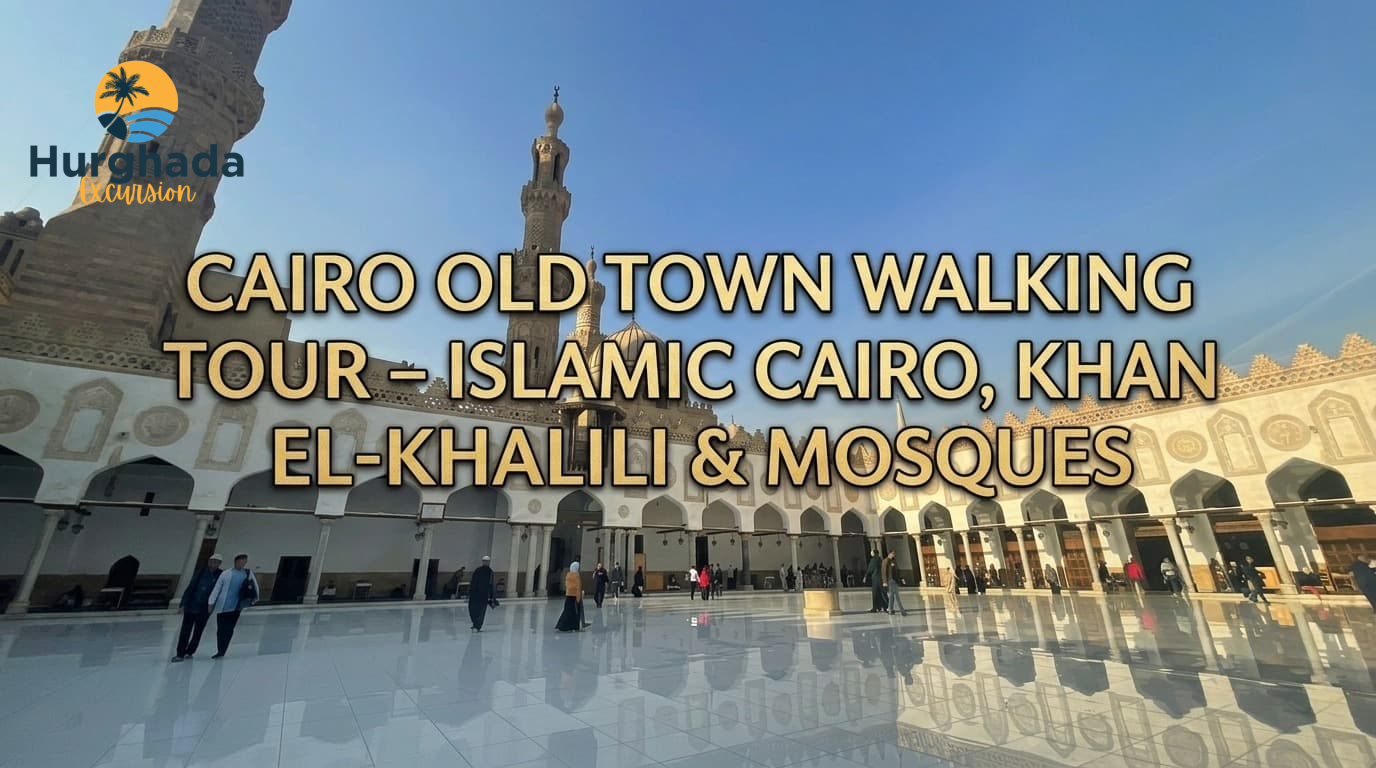
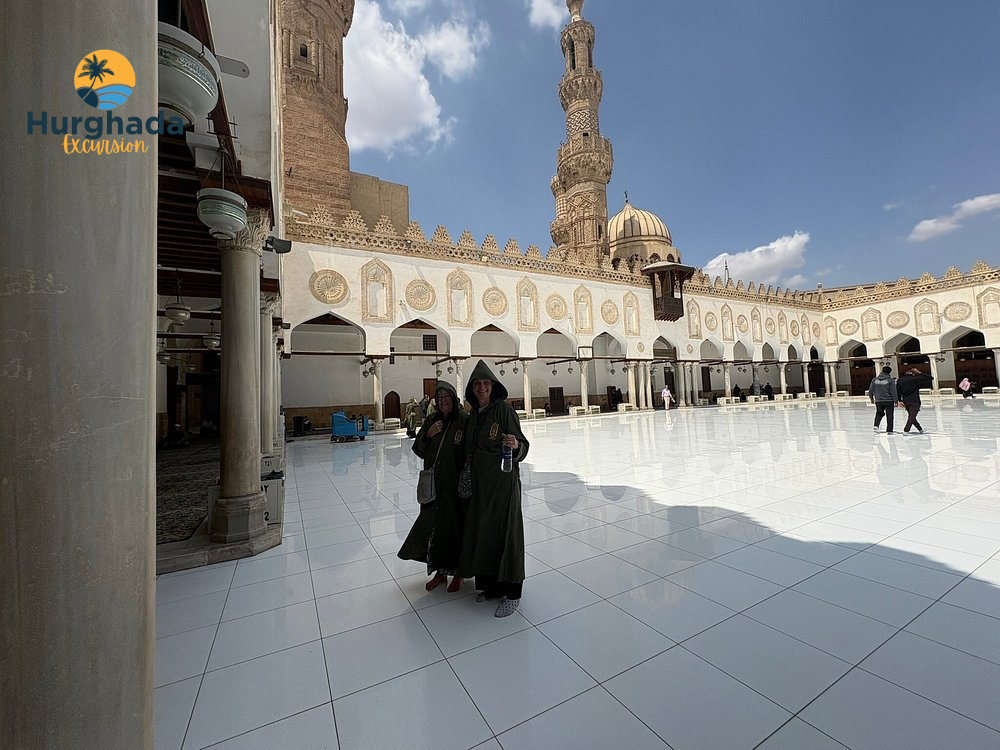
Entry to Al-Azhar Mosque — built in 970 CE, expanded through the Fatimid, Ayyubid, Mamluk, and Ottoman periods — each architectural layer visible simultaneously. The guide walks the group through the main courtyard, the hypostyle prayer hall, and the five minarets of different periods, delivering the complete history of Al-Azhar as both a mosque and the world’s oldest continuously operating university. Students from 90+ countries still come to Al-Azhar to study Islamic sciences — the same institution Saladin’s scholars argued in and Naguib Mahfouz’s characters debated outside.
10:00 – 11:30 · Khan el-Khalili & Al-Muizz Street
🛍️ Khan el-Khalili Bazaar & Al-Muizz li-Din Allah Street
The walking tour moves into the Khan el-Khalili bazaar alleys — the guide identifies the different market sections (copper workers, perfume sellers, gold jewellers, spice merchants, antique dealers), explains the Mamluk market system that created them, and leads the group to El Fishawi café for a 20-minute tea break in the city’s most famous coffee house.
After the Khan, the tour moves north onto Al-Muizz Street — walking the medieval spine of Fatimid Cairo through a 1.2 km sequence of extraordinary monuments. The guide stops at the Mosque of al-Aqmar (1125 CE — the finest Fatimid facade in Cairo), the Qalawun Complex (1285 CE — madrasa, mausoleum, and hospital combined), the Barquq Complex (1386 CE — the first Mamluk Sultan’s tomb), and the Bab al-Futuh and Bab al-Nasr city gates (1087 CE — still standing after 939 years).
11:30 – 12:30 · Mosque of Ibn Tulun & Gayer-Anderson Museum
🕌 Ibn Tulun Mosque — Cairo’s Oldest & Finest Congregational Mosque
A 15-minute drive south to the Mosque of Ibn Tulun — Cairo’s oldest intact mosque (879 CE), the largest in Cairo by floor area, and one of the most architecturally satisfying in the Islamic world. The enormous open courtyard (90 metres square), the pointed arches of the arcades, the unique spiral minaret, and the extraordinary Abbasid-style stucco decoration make this one of the most important buildings in Islamic architectural history.
Adjacent to the mosque, the Gayer-Anderson Museum (optional — 20 minutes) occupies two connected 17th-century Cairene houses collected and furnished by the British officer R.G. Gayer-Anderson — its rooms providing the finest surviving example of traditional Cairene domestic interior design and the setting for a scene in the James Bond film The Spy Who Loved Me (1977).
12:30 – 13:30 · Sultan Hassan & Al-Rifa’i Mosques
🏯 Sultan Hassan Mosque — Cairo’s Greatest Medieval Building
A 10-minute drive to the base of the Citadel — the Mosque-Madrasa of Sultan Hassan (1356–1363 CE) and the adjacent Al-Rifa’i Mosque (begun 1869 — the royal mosque of Egypt’s modern dynasty, burial place of King Farouk and the Shah of Iran Mohammad Reza Pahlavi). The guide delivers the complete architectural story of Sultan Hassan: the 37-metre entrance portal, the cruciform plan of the four madrasas for the four schools of Sunni jurisprudence, and the soaring height of the interior court.
13:30 – 15:00 · Citadel & Lunch
🏰 Cairo Citadel · Muhammad Ali Mosque · Panoramic View · Lunch
Ascent to the Cairo Citadel — the fortified hilltop complex of Saladin (1176 CE), for 700 years the seat of Egyptian government. The Muhammad Ali Alabaster Mosque (completed 1857) — the most prominent building in the Cairo skyline, visible from anywhere in the city — is the centrepiece: its Ottoman-inspired domed interior lined with alabaster panels, the enormous chandeliers, and the extraordinary gilt decorations make it one of the most dramatic religious interiors in Egypt. The Citadel ramparts provide the finest panoramic view of Islamic Cairo — the forest of minarets stretching across the medieval city below. Lunch at a restaurant near the Citadel or in the Khan el-Khalili area.
Al-Azhar Mosque — The World’s Oldest University
The Al-Azhar Mosque (Arabic: الجامع الأزهر — the Most Resplendent Mosque) is simultaneously the holiest mosque in Cairo, the symbolic centre of Sunni Islamic scholarship worldwide, and the world’s oldest continuously operating university. Here is the complete guide:
Founded 970 CE
The World’s First University
Al-Azhar was founded in 970 CE by the Fatimid general Jawhar al-Siqilli on the orders of the caliph al-Muizz li-Din Allah — simultaneously as a mosque and a university for the teaching of Ismaili Shia jurisprudence. When Saladin converted Egypt to Sunni Islam in 1171, Al-Azhar was converted to Sunni scholarship and has been the world’s foremost centre of Sunni Islamic learning ever since. Today it has 90+ affiliated universities worldwide.
Architecture
1,000 Years of Architectural Layers
The current structure is a composite of multiple eras — the original Fatimid hypostyle prayer hall and its columns, Mamluk additions (the madrasa on the south side, several minarets), an Ottoman addition (the Aqbugha madrasa and library), and the main entrance gate (the Barber’s Gate — students who came to Al-Azhar traditionally had their heads shaved here). Five minarets of five different styles rising above a single mosque court.
Practical Information
Visiting Al-Azhar
Free entry for all visitors. Shoes must be removed at the entrance. Women must cover hair (scarves provided by the guide). Dress modestly. Open throughout the day except during the five daily prayers when non-Muslim visitors are respectfully asked to wait outside (approximately 15–20 minutes per prayer time). Photography of the interior is generally permitted.
Khan el-Khalili — Cairo’s Great Bazaar Since 1382
The Khan el-Khalili bazaar is one of the oldest and largest markets in the Arab world — in continuous commercial operation since 1382 and still functioning as an active trading market, not merely a tourist attraction. Here is the complete guide:
⚱️
Copper & Brasswork District
The oldest section of Khan el-Khalili — where copper and brass craftsmen still sit in front of their workshops beating bowls, trays, and lanterns by hand using techniques unchanged for 600 years. The sound of hammers on metal and the smell of metal dust are the defining sensory signature of this part of the bazaar. Finished pieces are displayed on hooks and ledges in a density of gleaming metalwork that photographs brilliantly.
🧪
Perfume Souk
The perfume vendors of Khan el-Khalili sell Egyptian essential oils — jasmine, rose, oud, amber, and musk — from ancient glass vessels in custom blends. The guide explains that Egyptian perfume oils are the direct descendants of the ancient Egyptian perfumery tradition (the Egyptians invented distillation and created many of the aromatic compounds still used in modern French perfumery). Free samples are offered without purchase obligation.
🌶️
Spice Market
The spice section north of the Khan — pyramids of turmeric, cumin, coriander, dried hibiscus (karkade), black seed, saffron, and ras el hanout in canvas sacks. The guide identifies each spice, explains its culinary and medicinal uses in Egyptian tradition, and selects recommended vendors with fair prices and quality product. The best karkade (dried hibiscus for tea) in Cairo is sold here.
☕
El Fishawi Café (1773)
The guide leads the group through a narrow alley behind the Khan to El Fishawi café — operating continuously since 1773, 253 years of unbroken service. Naguib Mahfouz’s regular writing table. Brass mirrors, wooden screens, white marble tables. The guide orders mint tea or karkade for the group. This 20-minute tea break in this specific café is one of the most genuinely Cairo moments of the entire tour.
Al-Muizz Street — The World’s Greatest Islamic Streetscape
Al-Muizz li-Din Allah Street (named for the Fatimid caliph who founded Cairo) is a 1.2 km pedestrianised street that functions as an open-air museum of Islamic architecture — more UNESCO-listed monuments per linear metre than any other street in the world. Here is a walking guide to its key monuments:
🕌
Mosque of al-Aqmar (1125 CE)
The finest surviving Fatimid facade in Cairo — its carved stone front with muqarnas niches, pointed arch portal, and Quranic inscriptions is a masterpiece of 12th-century Islamic architectural decoration. The first mosque in Cairo to be aligned with the street rather than Mecca, creating an angular plan that allows both orientations simultaneously.
🏯
Qalawun Complex (1285 CE)
The madrasa-mausoleum-hospital complex of Sultan Qalawun — one of the most ambitious building programmes in Mamluk history. The mausoleum interior (with its extraordinary stained glass windows — the finest medieval Islamic glass in Egypt) and the entrance portal’s carved stone stalactites (muqarnas) are architectural highlights. The hospital served all citizens of Cairo free of charge for centuries.
🏰
Barquq Complex (1386 CE)
The mosque-madrasa of Sultan Barquq — the first Circassian Mamluk sultan and the first ruler to be buried in his madrasa rather than a separate mausoleum. The twin-minaret facade and the hypostyle prayer hall with its ancient reused granite columns (salvaged from pharaonic temples) are among the finest examples of late Mamluk architectural ambition.
🚪
Bab al-Futuh & Bab al-Nasr (1087 CE)
The twin city gates at the northern end of Al-Muizz Street — built in 1087 CE by the Armenian general Badr al-Jamali and still standing 939 years later. The guide takes the group up onto the city walls between the two towers — providing a unique bird’s-eye view over Islamic Cairo’s roofscape and a vivid sense of the medieval city’s original scale and density.
The Cairo Citadel & Muhammad Ali Mosque
🏰
Saladin’s Citadel (1176 CE)
The fortified hilltop complex built by Saladin between 1176 and 1183 CE — the seat of Egyptian power for 700 years, from the Ayyubid sultans through the Mamluk and Ottoman periods to Muhammad Ali’s 19th-century dynasty. The Citadel’s massive limestone walls, the towers, the underground cisterns, and the views from the ramparts are all part of the guided visit.
🕌
Muhammad Ali Alabaster Mosque (1857)
Commissioned by Muhammad Ali Pasha in 1830 and completed in 1857 — the Ottoman-inspired mosque that dominates the Cairo skyline from every direction. Its interior of alabaster panels, gilt mouldings, enormous chandeliers, and deep-coloured glass windows is one of the most sumptuously decorated religious interiors in Egypt. The twin minarets visible from the Giza plateau 13 km away.
🌅
Panoramic View of Islamic Cairo
The Citadel’s ramparts and the designated viewpoint terraces provide the finest panoramic view of Islamic Cairo — the forest of minarets stretching north across the medieval city, the Al-Azhar minarets directly below, the Khan el-Khalili roofscape, and on a clear day the Giza pyramids visible 13 km to the southwest. The guide identifies the key monuments in the panorama.
The Great Mosques of Islamic Cairo — Complete Guide
| Mosque |
Built |
Significance |
Tour Status |
| Al-Azhar Mosque |
970 CE |
World’s oldest university · Sunni Islam’s foremost institution |
Included — free |
| Mosque of Ibn Tulun |
879 CE |
Cairo’s oldest mosque · unique spiral minaret |
Included · ~80 EGP |
| Sultan Hassan Mosque |
1356–1363 CE |
Cairo’s greatest medieval building · 37m entrance portal |
Included · ~120 EGP |
| Muhammad Ali Mosque |
1830–1857 |
Cairo’s most recognisable skyline feature · alabaster interior |
Included with Citadel ticket |
| Al-Aqmar Mosque |
1125 CE |
Finest Fatimid facade in Cairo |
Included — free exterior · interior if open |
Cairo Street Food & Café Culture
🫓
Ful & Ta’amiya
Cairo’s iconic street breakfast — ful medammes (slow-cooked fava beans with cumin, lemon, and olive oil) served in freshly baked bread from a cart, with ta’amiya (Egyptian falafel, made with fava beans rather than chickpeas, crunchier and more flavourful than its Middle Eastern cousins). The guide stops at a specific cart near Al-Azhar — a vendor whose ful has been made by the same family for three generations.
☕
Egyptian Coffee & Tea Culture
Egyptian coffee (ahwa) is served in small handleless cups — dark, thick, sweet, and occasionally cardamom-scented. The tea (shai) is black and strongly brewed, served with mint or simply sweet. Both are consumed in the countless ahwas (coffee houses) scattered through Khan el-Khalili and Al-Hussein Square. El Fishawi remains the finest and most historically resonant of them.
🍬
Om Ali & Baklava
Om Ali — Egypt’s most beloved dessert, a warm bread pudding made with flaky pastry, milk, cream, and nuts, baked until golden and served directly from the oven — is available at several traditional sweet shops in the Khan el-Khalili area. The guide identifies the best pastry vendors on the tour and stops for a tasting.
🍽️
Lunch Near the Citadel
The tour lunch is at a well-regarded restaurant near the Citadel or Khan el-Khalili — grilled meats (kofta, kababgi), mezze (babaganoush, tahini, hummus), rice dishes, and fresh bread. Egyptian cuisine at its finest, in the context of a medieval city that has been feeding its people for 1,000 years.
🥫
Spices & Dried Herbs
Best buys: dried hibiscus (karkade — makes the most beautiful deep red tea), black seed (nigella), cumin, coriander, ras el hanout, and saffron. The guide identifies which vendors have the freshest and highest quality product. Prices are a fraction of European supermarket equivalents for dramatically superior quality.
🧪
Egyptian Essential Oils
Pure Egyptian essential oils — jasmine absolute, rose otto, oud, amber, lotus, and Egyptian musk — in custom blends. The guide identifies honest vendors who sell genuine essential oils rather than synthetic fragrances. A custom-blended Egyptian perfume oil makes one of the finest and most genuinely Egyptian souvenirs available in Cairo.
⚱️
Handmade Copper & Brass
Genuinely handmade (not imported) copper and brass objects — lanterns, trays, coffee sets, incense burners, and decorative bowls. The guide can take the group to the craftsmen’s quarter where the objects are still made by hand and sold direct from the workshop, eliminating the middleman and guaranteeing the provenance of the object.
📿
Gold & Silver Jewellery
The gold souk adjacent to Khan el-Khalili sells 18 and 21-carat gold jewellery by weight — cartouche pendants, Nefertiti heads, scarab bracelets, and Eye of Horus pendants. The guide explains how to check the hallmark stamp and calculate the spot price per gram, ensuring the group pays a fair price in a transparent transaction.
Tour Price from Hurghada 2026 — What’s Included
Cairo Old Town Walking Tour — Islamic Cairo — From
€100
per adult · By flight · Al-Azhar + Khan el-Khalili + Al-Muizz + Ibn Tulun + Citadel
✓ Flights · ✓ Transfers · ✓ Expert Guide · ✓ All Entry Tickets · ✓ Tea at El Fishawi · ✓ Lunch
Children 4–11: 50% discount · Combined with Giza Pyramids: from €120 · Combined with GEM: from €120
✅ Included
✓ Return flights Hurghada – Cairo – Hurghada (45 min each way)
✓ Cairo Airport–Islamic Cairo private transfers (45 min)
✓ Expert guide (Islamic history specialist) for full day walking tour
✓ All mosque and monument entry tickets · Citadel entry · Sultan Hassan entry
✓ Tea at El Fishawi café (included) · Headscarf for women at mosques (provided)
✓ Full lunch · Bottled water · Free cancellation 48 hours before
Combining with Giza Pyramids & Grand Egyptian Museum
Cairo’s three great experiences — the Great Pyramids of Giza, the Grand Egyptian Museum, and Islamic Cairo — are each best experienced on separate days for maximum depth. However, with a flight from Hurghada, two of the three can be combined in a single ambitious day:
🏺+🕌
Option A: Giza + Islamic Cairo
Morning: Great Pyramids + Sphinx (08:30–12:30) → Lunch → Afternoon: Khan el-Khalili + Al-Azhar + Al-Muizz Street (14:00–17:30) → Return flight. This combination pairs pharaonic Egypt with medieval Islamic Egypt in a single day — the most dramatic historical contrast available in Cairo.
🏛️+🕌
Option B: GEM + Islamic Cairo
Morning: Grand Egyptian Museum full visit (09:00–13:00) → Lunch → Afternoon: Khan el-Khalili + Al-Azhar + Citadel (14:00–17:30) → Return flight. The ancient world in the morning, the medieval world in the afternoon — an extraordinary 5,000-year span in one Cairo day.
🕌
Option C: Islamic Cairo Only (Best Depth)
For the most complete Islamic Cairo experience — a dedicated full day covering Al-Azhar, Khan el-Khalili, Al-Muizz Street, Ibn Tulun Mosque, Sultan Hassan, and the Citadel at a leisurely pace, with time for El Fishawi café, the gold souk, the spice market, and a proper lunch. The most recommended option for guests visiting Cairo for the first time.
10 Expert Tips for Your Islamic Cairo Walking Tour
Tip 1 — Dress modestly from the start — it affects your experience at every mosque. The Islamic Cairo walking tour visits 4–6 mosques. For each one, shoes are removed, women cover their hair (scarves provided), and both genders should have shoulders and knees covered. Dressing modestly from Hurghada (light long trousers, a light long-sleeved shirt) eliminates the need for any adjustment at each mosque and ensures warmer receptions from the local community throughout the day.
Tip 2 — El Fishawi café is not optional — spend 20 minutes there. The 20-minute tea break at El Fishawi — 253 years old, Naguib Mahfouz’s regular table, brass mirrors and marble tops — is one of the genuinely unmissable Cairo moments. The guide orders the tea; the group sits; the café’s extraordinary atmosphere does the rest. It is not a tourist attraction — it is a living part of Cairo that happens to welcome tourists.
Tip 3 — Visit the Citadel last for the best panoramic view. The Citadel’s panoramic view of Islamic Cairo is best in the afternoon, when the minaret shadows lengthen and the light turns golden on the limestone facades. Visiting in sequence — Al-Azhar, Khan el-Khalili, Al-Muizz, Ibn Tulun, Sultan Hassan, Citadel — ends with the finest overview of everything you have just walked through.
Tip 4 — Bring EGP cash for purchases — most Khan el-Khalili vendors are cash only. While major tourist sites accept cards, the Khan el-Khalili vendors are predominantly cash-only businesses. Bring a reasonable amount of EGP for optional purchases (spices, perfume oils, copper work, gold jewellery). The guide can assist with price negotiation and vendor selection to ensure fair prices and quality products.
Tip 5 — Walk up to the city walls at Bab al-Futuh for the rooftop view. At the northern end of Al-Muizz Street, the guide takes the group up the internal staircase inside the city walls between Bab al-Futuh and Bab al-Nasr (the twin 1087 CE gates). From the wall-walk, the view over Islamic Cairo’s roofscape — the density of the medieval city, the minarets rising at every angle, the narrow alleys below — is one of the most evocative available anywhere in the district.
Tip 6 — The best spice buy is dried hibiscus (karkade) — bring plenty home. Egyptian dried hibiscus (karkade) makes a tea of extraordinary colour (deep crimson) and flavour (sharp, floral, refreshing hot or cold). Egyptian karkade is significantly better in quality than anything sold outside Egypt. The guide identifies the vendor with the freshest, most richly coloured karkade. A kilo lasts months and costs approximately 100 EGP (~€2).
Tip 7 — Book the walking tour in combination with the Giza Pyramids for the ultimate contrast. Seeing the pharaonic world in the morning at Giza and the Islamic medieval world in the afternoon at Khan el-Khalili in a single day provides the most dramatic demonstration of Cairo’s extraordinary historical depth — 4,500 years of continuous human civilisation, two completely different cultures, one city. No other city on earth offers this combination in a single day.
Tip 8 — The Ibn Tulun Mosque is often the most powerfully atmospheric of all the mosques. The Ibn Tulun Mosque (879 CE) — Cairo’s oldest intact mosque — receives far fewer visitors than Al-Azhar or the Citadel. On most mornings, the group has the enormous congregational courtyard largely to itself — a vast open space of limestone and pointed arches where the Abbasid architectural tradition of Iraq materialised in Egypt 1,146 years ago. The guide delivers the complete historical analysis in this extraordinary empty space.
Tip 9 — Ask the guide to read from Naguib Mahfouz’s Cairo Trilogy in the alleys behind Al-Azhar. Naguib Mahfouz set his Nobel Prize-winning Cairo Trilogy precisely in the alleys, cafés, and houses behind Al-Azhar and around Khan el-Khalili. Standing in the actual streets described by Egypt’s greatest novelist while the guide reads selected passages transforms the neighbourhood from a tourist district into a living literary landscape. Ask specifically for the opening of Palace Walk.
Tip 10 — This is the Cairo that most tourists miss entirely — don’t be one of them. The majority of tourists who come to Egypt from Hurghada visit the Giza pyramids and the Grand Egyptian Museum and return to Hurghada without ever entering Islamic Cairo. They miss a city that is more continuously inhabited, more architecturally dense, and more humanly alive than almost any medieval city in the world — a place where a 1,056-year-old university still operates, where the same markets have sold spices since the Mamluk period, and where the most famous café in Egypt has served tea for 253 consecutive years. Do not miss this Cairo.
Real Reviews from Travellers
★★★★★
“Islamic Cairo was the most unexpected highlight of our Egypt holiday. We had come for the pyramids — and the pyramids were extraordinary. But the walking tour of Al-Azhar, Khan el-Khalili, Al-Muizz Street, and the Citadel was on a completely different level of beauty and atmosphere. The guide was outstanding — his reading from the Naguib Mahfouz novel in the alleys behind Al-Azhar was genuinely moving.”
Prof. Sarah K. — Oxford · March 2026
★★★★★
“El Fishawi café — 253 years old, Naguib Mahfouz’s regular table — was one of the finest moments of our entire Egypt trip. Our guide ordered mint tea and we sat there in those 18th-century surroundings for 20 minutes while he explained the history of the café and the bazaar. Then the Ibn Tulun Mosque — completely to ourselves, the guide’s voice echoing across the enormous courtyard. Perfect.”
James & Caroline W. — Edinburgh · February 2026
★★★★★
“We combined the Giza pyramids in the morning with the Islamic Cairo walking tour in the afternoon — pharaonic Egypt and medieval Islamic Cairo in the same day. The guide connected the two worlds throughout: ancient Egyptian religious symbolism in the mosque decorations, Mamluk architectural elements derived from pharaonic prototypes. The contrast and the continuity were extraordinary. Best day of the whole holiday.”
Dr. Michael T. — London · January 2026
Frequently Asked Questions
What to see in Old Cairo — Islamic Cairo?
What to see in Old Cairo? The essential sites of the Islamic Cairo walking tour are: Al-Azhar Mosque (970 CE, world’s oldest university); Al-Muizz li-Din Allah Street (1.2 km of medieval Islamic monuments — open-air museum of Islamic architecture); Khan el-Khalili bazaar (founded 1382, still functioning); Mosque of Ibn Tulun (879 CE, Cairo’s oldest); Sultan Hassan Mosque (1356 CE, Cairo’s greatest medieval building); Cairo Citadel (1176 CE) with Muhammad Ali Mosque; and El Fishawi café (1773, Naguib Mahfouz’s regular). Allow a full day for the complete programme.
What is the best Cairo Old Town walking tour itinerary?
Best Cairo Old Town walking tour itinerary: Start at Al-Hussein Square → Al-Azhar Mosque (1 hour) → Khan el-Khalili and El Fishawi café (1 hour) → Al-Muizz Street north (45 min) → Bab al-Futuh city walls (30 min) → Ibn Tulun Mosque (45 min) → Sultan Hassan Mosque (45 min) → Citadel and Muhammad Ali Mosque (1 hour) → Lunch near Citadel. Total: 6–7 hours including travel between sites. Our guided programme covers all of these with transport between the more dispersed sites.
What is Al-Azhar Mosque?
What is Al-Azhar Mosque? Al-Azhar Mosque (Arabic: الجامع الأزهر — the Most Resplendent Mosque) is a mosque and university founded in 970 CE in Cairo, Egypt, by the Fatimid general Jawhar al-Siqilli. It is simultaneously the holiest mosque in Cairo, the foremost institution of Sunni Islamic scholarship in the world, and the world’s oldest continuously operating university — 26 years older than the University of Bologna (founded 996 CE). Today, Al-Azhar University has 90+ affiliated institutions worldwide and students from 90+ countries. Entry is free for all visitors.
Can non-Muslims visit the mosques in Islamic Cairo?
Yes — all the mosques on the Islamic Cairo walking tour (Al-Azhar, Ibn Tulun, Sultan Hassan, Muhammad Ali) are open to non-Muslim visitors throughout the day, except during the five daily prayers when visitors are asked to wait at the entrance for 15–20 minutes. Requirements: remove shoes at the entrance (a bag is provided), women cover their hair with a scarf (provided by the guide), dress modestly (shoulders and knees covered). No charge at Al-Azhar; small entry fees at other mosques (all included in our tour price).
What is the price of the Cairo Old Town Walking Tour from Hurghada?
The Cairo Old Town Walking Tour from Hurghada starts from €100 per adult by flight. This includes return flights (45 min each way), private transfers, specialist guide, all mosque and monument entry tickets, tea at El Fishawi café, headscarf for women at mosques, lunch, and bottled water. Combined with Great Pyramids of Giza: from €120 per adult. Children 4–11 receive a 50% discount. Free cancellation 48 hours before departure.
Book Your Cairo Old Town Walking Tour Today
From €100 per person by flight · Al-Azhar Mosque · Khan el-Khalili · Al-Muizz Street · Ibn Tulun · Sultan Hassan · Cairo Citadel · El Fishawi Café · All Entry Tickets · Lunch · Free Cancellation.
🕌 Book Now — From €100
The Cairo Old Town walking tour — Islamic Cairo, Khan el-Khalili, and mosques reveals the city that Egypt built after the pharaohs: a medieval Islamic capital of extraordinary density, beauty, and cultural sophistication, where a 1,056-year-old university still operates, where a 644-year-old bazaar still trades, where a 253-year-old café still serves tea, and where the Al-Muizz Street monuments stand as unbroken testimony to ten centuries of architectural ambition. Naguib Mahfouz called these alleys home. Ibn Battuta passed through them in 1326. Saladin built his Citadel above them in 1176. The medieval world genuinely called this city the Mother of the World. Walking it with a guide who understands all of this — seeing it, smelling it, drinking tea in it — is an encounter with history that no museum can replicate.
Book your Islamic Cairo walking tour today with Hurghada Excursion — private flights, specialist guide, all entry tickets, and the most complete encounter with medieval Cairo available from the Red Sea coast.