🏯 Medinet Habu · Ramesseum · Mortuary Temples · Egyptologist Guide · From Hurghada
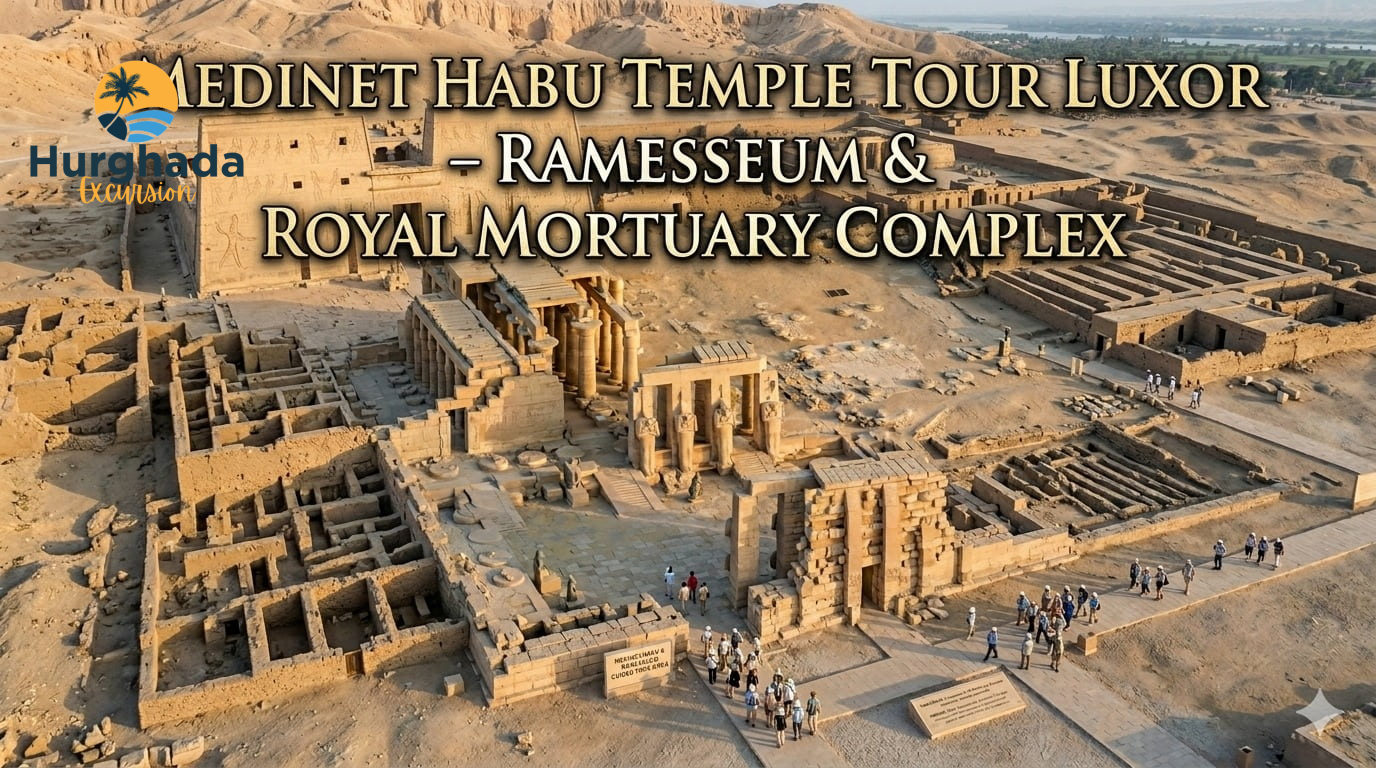
Medinet Habu Temple Tour Luxor – Ramesseum & Royal Mortuary Complex
📅 Updated: May 2026 | ⏱️ Full Day · From Hurghada | 💶 From €75 / person | ⭐ 4.9/5 Rated | 🏯 Daily Departures
While the Valley of the Kings and Karnak Temple draw millions of visitors each year, the Luxor West Bank holds a secret that most tourists drive past every morning on their way to the famous tombs: the Medinet Habu Temple — the best-preserved and most completely decorated mortuary temple in all of ancient Egypt. Built by Ramesses III (r. c. 1186–1155 BCE) and covering over 700 metres in length, Medinet Habu is the most comprehensive surviving record of a New Kingdom pharaoh’s military campaigns, religious festivals, and daily court life — inscribed across walls still standing to their full original height, with painted relief carvings in colours that shame museums twice as famous. Fewer than 5% of Luxor visitors ever enter it. Every single one wishes they had come sooner.
The Medinet Habu temple tour Luxor combines Egypt’s finest preserved mortuary temple with the haunting ruins of the Ramesseum — the mortuary complex of Ramesses II, whose toppled 57-tonne granite colossus inspired Percy Bysshe Shelley’s most celebrated poem, “Ozymandias” — and with the broader context of the royal mortuary complex tradition that defines the Luxor West Bank. Guided by a licensed Egyptologist who decodes the military reliefs, identifies the Sea Peoples battle scenes, and brings the complete story of Ramesses III’s extraordinary reign to life beside the walls he built, this is the most intellectually rewarding half-day available on the West Bank — and the one that most guests describe as the biggest revelation of their entire Egypt visit.
🏯 What makes Medinet Habu different from every other Luxor temple? Three things make the Medinet Habu mortuary temple exceptional: (1) It is the only major Luxor West Bank temple where the outer walls still stand to their full original height — creating an enclosed interior space rather than a roofless ruin; (2) its painted relief carvings are among the most vivid and best-preserved of any New Kingdom temple, with colours still brilliant after 3,100 years; and (3) it records the most extraordinary military history of the New Kingdom — the Battle of the Sea Peoples, a catastrophic invasion attempt against Egypt by a coalition of Mediterranean peoples in 1175 BCE that Ramesses III defeated in both a land and naval engagement, saving Egyptian civilisation. This battle is inscribed in unprecedented visual detail across the exterior walls — the only surviving record of the event.
What Is Medinet Habu? History & Significance
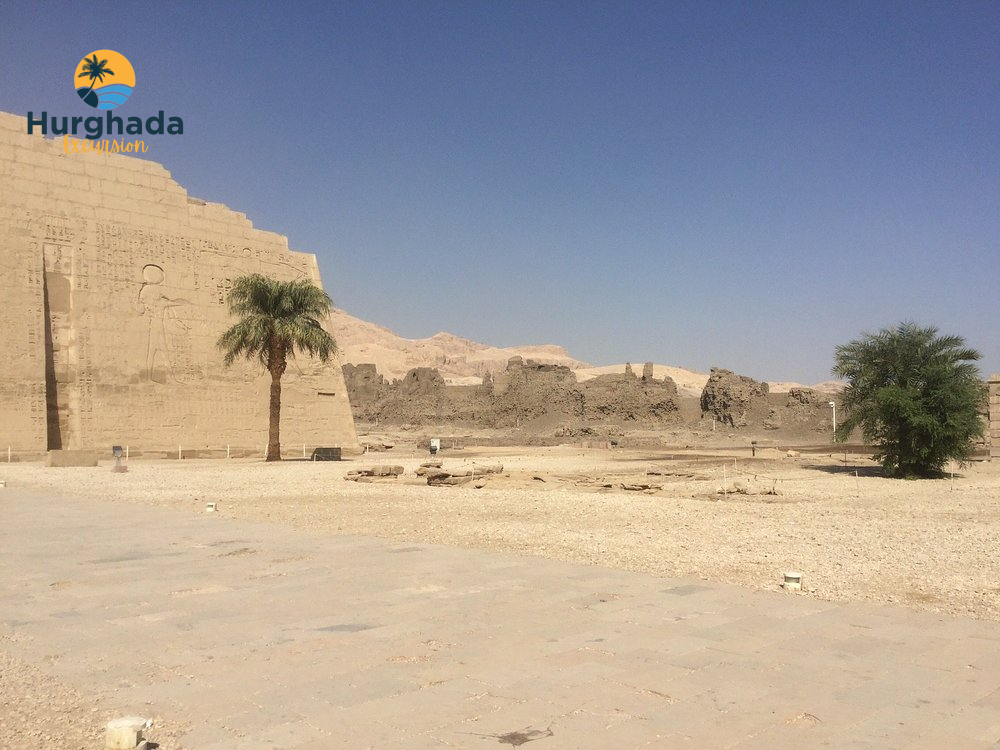
Medinet Habu (ancient Egyptian: Djanet) is the Arabic name for the mortuary temple complex of Ramesses III, located on the southern end of the Luxor West Bank. The site is one of the largest, best-preserved, and most historically significant temple complexes in Egypt — and yet it receives a fraction of the visitors that flock to Karnak and the Valley of the Kings just a few kilometres away. This relative obscurity is one of its greatest advantages: even in peak season, you can stand before walls covered in the finest painted military reliefs in Egypt with almost no other visitors around.
| Detail |
Information |
| Pharaoh |
Ramesses III — Twentieth Dynasty, r. c. 1186–1155 BCE |
| Age |
~3,100 years old |
| Total complex length |
~700 metres (including outer enclosure walls) |
| Preservation |
Best-preserved mortuary temple in Luxor — outer walls still standing to full height |
| Key reliefs |
Battle of the Sea Peoples (land + naval) · Battle of the Libyans · Opet Festival · daily life |
| Location |
Southern Luxor West Bank — 2 km south of the Colossi of Memnon |
| Entry ticket |
~450 EGP (~€8) per adult — included in tour price |
| Opening hours |
06:00 AM – 17:00 PM daily |
Top 10 Highlights of the Medinet Habu Temple Tour
⚔️
1. The Sea Peoples Battle Reliefs
The exterior north wall of the first pylon carries the most dramatic battle scene in ancient Egyptian art — Ramesses III’s defeat of the Sea Peoples in 1175 BCE, depicted in a continuous panorama of land and naval combat. Ships engaged at sea, warriors fighting hand-to-hand, prisoners being counted — all carved in sunk relief with extraordinary energy and detail. The only surviving record of this world-historical event.
🎨
2. The Painted Inner Sanctuary
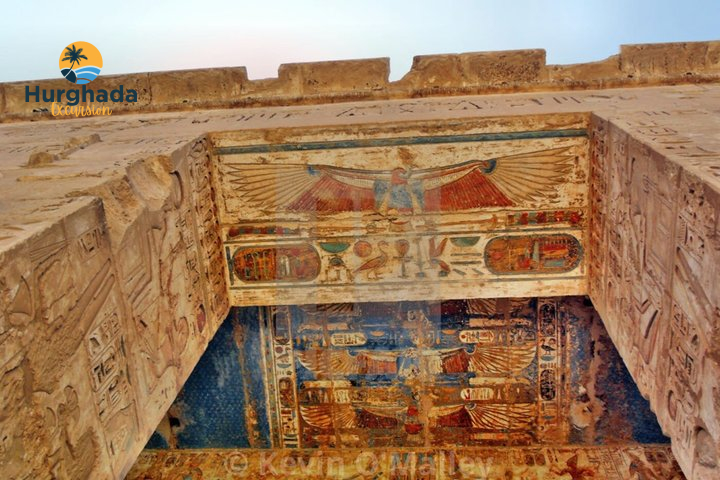
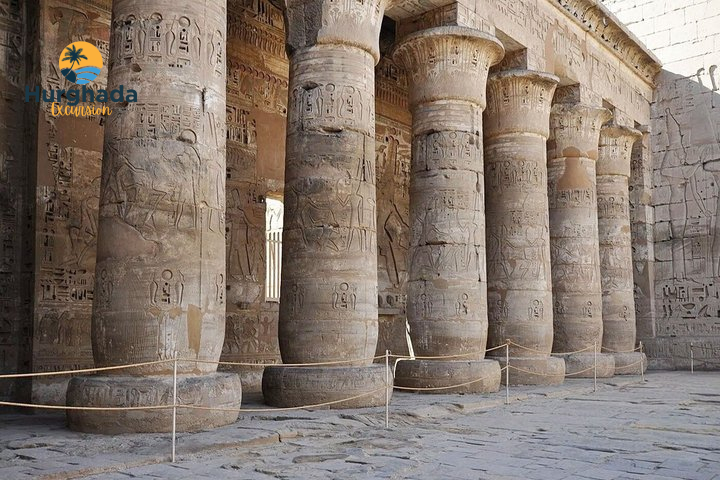
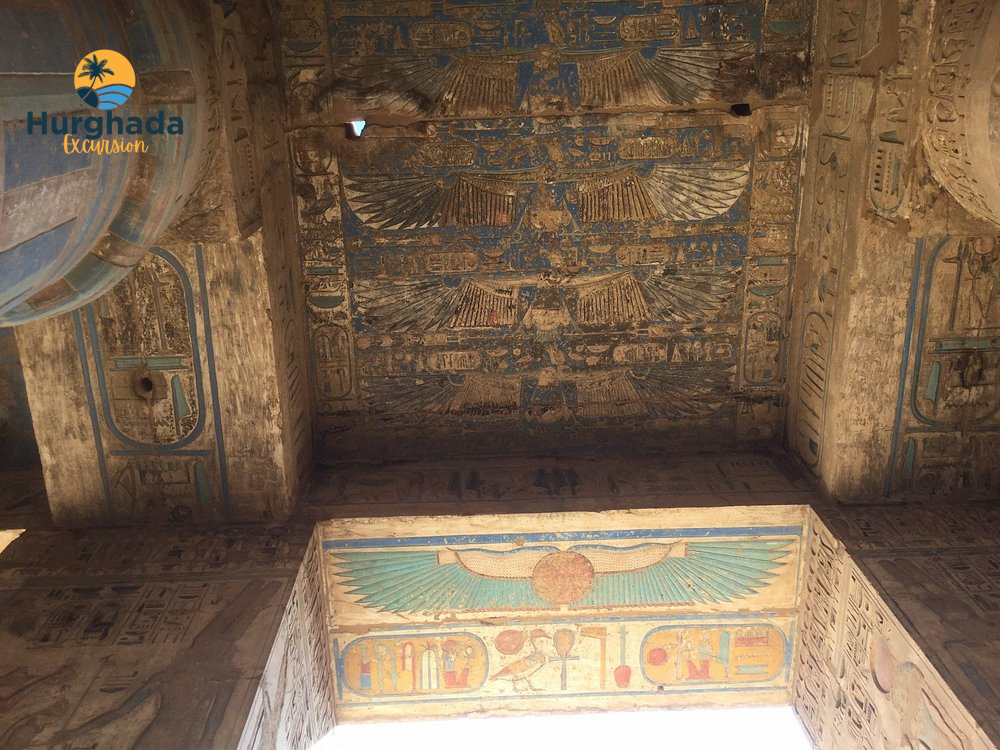
The inner sanctuary and hypostyle hall of Medinet Habu retain the most vivid surviving painted decoration of any New Kingdom mortuary temple. Columns still coloured in original blue, red, yellow, and gold. Ceiling painted deep blue with golden stars. The quality and completeness of the decoration is simply not available at any other comparable Luxor West Bank site.
🏯
3. The Migdol Gateway — Syrian-Style Fortified Entrance
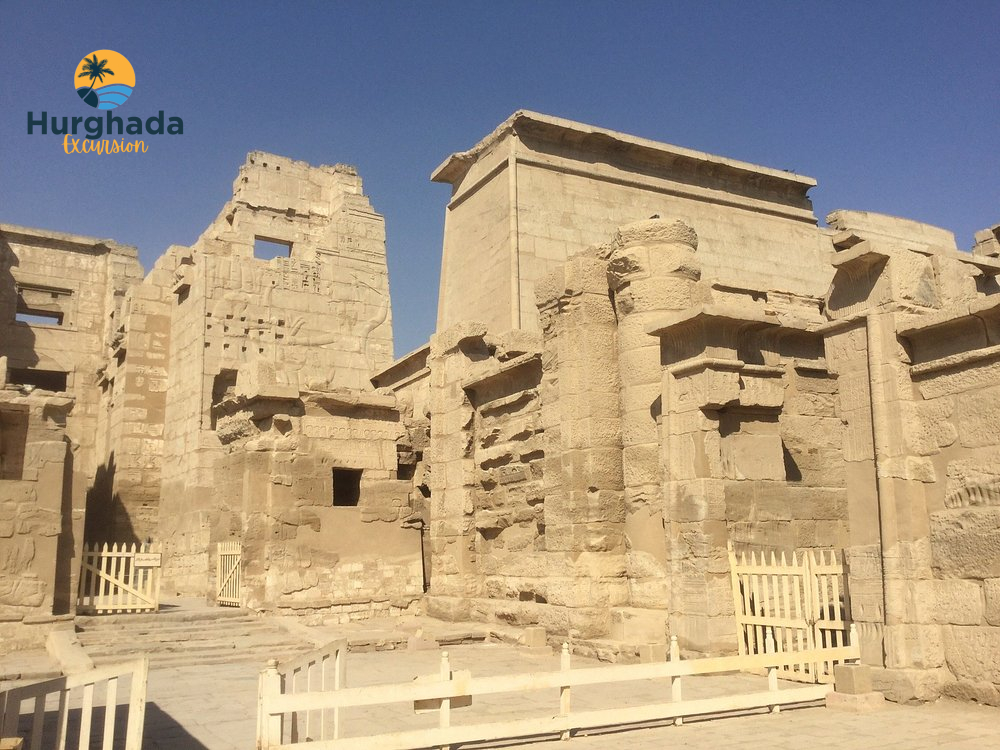
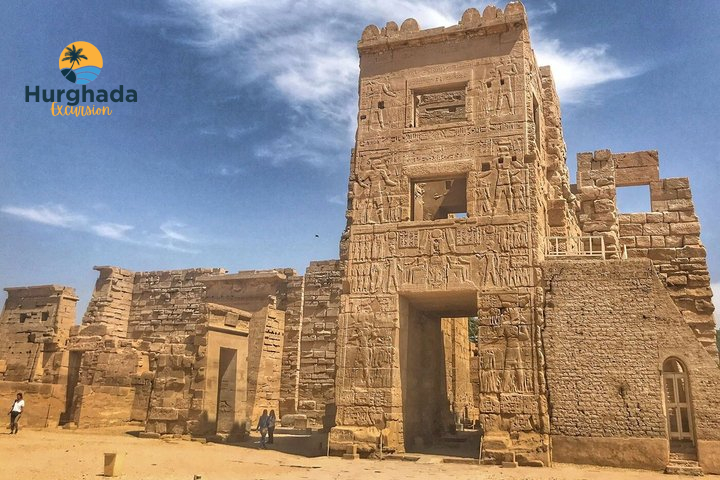
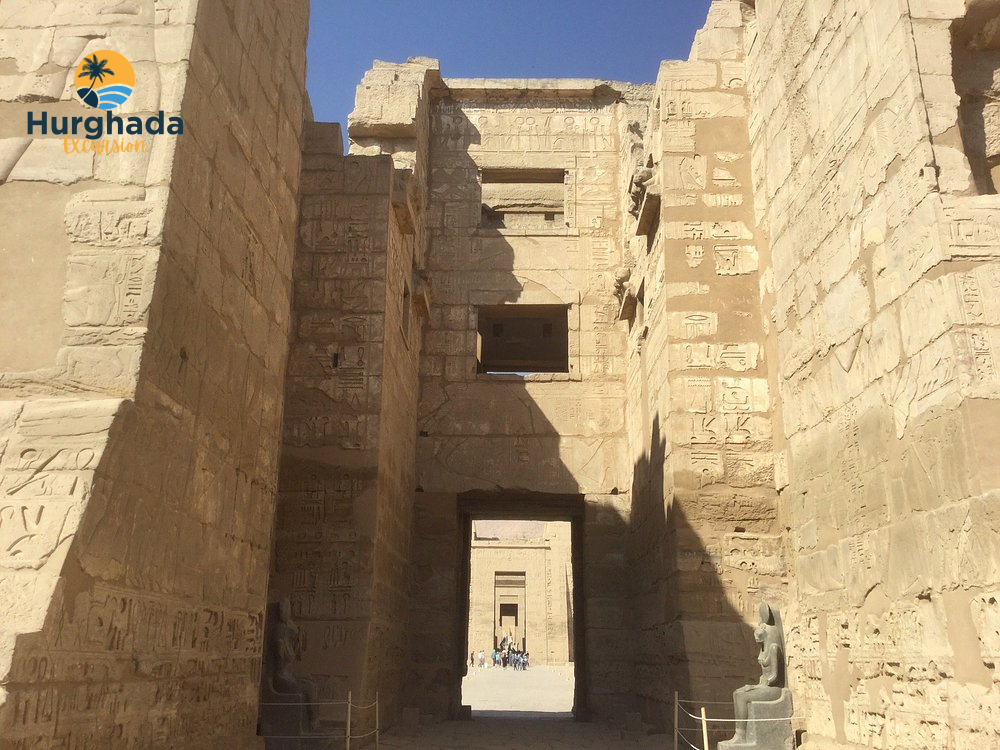
The extraordinary fortified entrance tower (the migdol) at the east entrance of Medinet Habu — modelled on the Syrian military fort design Ramesses III had encountered on campaign. Chambers inside the migdol walls are decorated with intimate paintings of the pharaoh at leisure with foreign women — among the most unusual and charming paintings in any Egyptian temple.
🏛️
4. The Royal Palace Remains
Attached to the south side of the temple, the remains of Ramesses III’s personal palace — the only surviving royal palace attached to any Egyptian mortuary temple. The “Window of Appearance” where the pharaoh showed himself to the people and threw gifts into the crowd is still visible, carved with scenes of the king accepting tribute.
🌿
5. The Small Temple of Amun — 600 BCE Earlier
Inside the Medinet Habu enclosure, a small temple dedicated to Amun predates Ramesses III’s construction by 400 years — built during the Eighteenth Dynasty and used continuously. It is one of the oldest surviving temple structures on the Luxor West Bank, containing paintings from multiple pharaonic periods layered on top of each other.
💔
6. The Ramesseum — Fallen Giant of Ramesses II
A 15-minute walk from Medinet Habu, the mortuary temple of Ramesses II — now partly ruined — contains the most dramatically melancholy object in Luxor: the 57-tonne granite colossus of Ramesses II lying face-up in the dust, exactly where it fell. The inspiration for Shelley’s “Ozymandias.” The guide recites the poem. Most guests find it unexpectedly moving.
🎓
7. Private Egyptologist Guide
A licensed Egyptologist guides your group through every section of Medinet Habu — reading the hieroglyphic battle captions, identifying the Sea Peoples nations depicted, explaining the palace layout and the pharaoh’s daily routine, and connecting Ramesses III’s story to the broader collapse of the Bronze Age that was reshaping the Mediterranean world during his reign. One of the most historically rich guided experiences in Luxor.
🕊️
8. The Coptic Church Inside the Temple
In the early Christian period, a Coptic church was built inside the Medinet Habu first court — its painted plaster decorations still partially visible over the ancient Egyptian reliefs beneath. This extraordinary layering of religious history (pharaonic → Coptic Christian → medieval) within one building is one of the most vivid demonstrations of Luxor’s continuous 4,000-year occupation.
🔇
9. The Quiet — Almost No Other Tourists
Even in peak season (December–February), Medinet Habu is visited by fewer than 5% of Luxor tourists. It is common to have the painted hypostyle hall entirely to yourself. The contrast with the crowded Valley of the Kings and Karnak — visited by hundreds simultaneously — makes Medinet Habu feel like a private discovery even on the busiest Luxor day.
📸
10. Extraordinary Photography — No Crowds
The absence of crowds at Medinet Habu makes it the finest photography site on the Luxor West Bank. The painted columns in the hypostyle hall, the battle relief panoramas on the exterior walls, the soaring pylon towers in the early morning light, and the atmospheric remains of the royal palace all photograph beautifully without strangers in the frame.
Full Day Program — Hour by Hour from Hurghada
The Medinet Habu temple tour Luxor from Hurghada is typically combined with the Ramesseum and other West Bank sites for a comprehensive full day. Here is the complete program:
04:00 – 07:30 · Departure
🚐 Private Vehicle from Hurghada to Luxor West Bank
Pickup at 04:00 AM from your hotel lobby. The 3-hour road journey delivers the guide’s complete introduction to Ramesses III, the Late Bronze Age collapse, the Sea Peoples invasion, and the architectural context of the Medinet Habu mortuary complex. Arrival in Luxor at approximately 07:30 AM.
What to bring: Comfortable closed shoes, hat, sunscreen SPF 50, credit/debit card (most West Bank sites are card-only 2026), camera, water bottle. Medinet Habu’s enclosed courts trap heat — a hand fan is useful in summer. The interior spaces are dim — allow your eyes to adjust before looking at the painted decoration.
07:30 – 08:00 · Colossi of Memnon
🗿 Quick Stop at the Colossi — Morning Photography
A brief orientation stop at the Colossi of Memnon — free entry, perfect morning light — before the main temple visits. The guide uses the Colossi panorama to orient the group to the West Bank geography: pointing out Medinet Habu to the south, Hatshepsut Temple to the north, the Valley of the Kings ridge above, and the Nile to the east. Photography stop: 20 minutes.
08:00 – 10:30 · THE MAIN EVENT
🏯 Medinet Habu Temple — 2.5 Hours with Egyptologist
The centrepiece of the tour. Tickets purchased at the entrance (~450 EGP per adult — included in tour price). The guide leads the group through the complete complex in a carefully planned sequence: Migdol Gateway (exterior) → exterior wall battle reliefs → first pylon → first court with Coptic church remains → hypostyle hall (painted columns) → inner sanctuary → royal palace → treasury and storerooms → second court. Approximately 2.5 hours — with the guide spending 15–20 minutes at each major section.
The guide’s priority stops at Medinet Habu: (1) The exterior north wall Sea Peoples battle scene — the most dramatic military relief in Egypt; (2) The painted hypostyle hall columns — the finest surviving painted decoration on the West Bank; (3) The migdol gateway chambers with their intimate leisure paintings; (4) The royal palace “Window of Appearance” — one of only two surviving examples in Egypt; (5) The ceiling of the innermost sanctuary — deep blue with golden stars, perfectly preserved.
10:30 – 11:30 · The Ramesseum
🏚️ The Ramesseum — Mortuary Temple of Ramesses II
A 15-minute drive north to the Ramesseum — the mortuary complex of Ramesses II, one of the most atmospherically powerful ruins on the West Bank. While less intact than Medinet Habu, the Ramesseum contains the single most dramatically melancholy object in Luxor: the 57-tonne granite torso of Ramesses II lying face-up in the dust, exactly where it fell after the earthquake that toppled it. The guide recites Percy Bysshe Shelley’s “Ozymandias” — written after seeing a drawing of this specific object in 1818.
The surviving sections of the Ramesseum contain fine sunk-relief carvings of the Battle of Kadesh — Ramesses II’s celebrated (and partially fictional) victory against the Hittites — and the surviving columns of the hypostyle hall, still standing at their full height, give a vivid sense of how magnificent the complete temple must have been.
11:30 – 13:00 · Optional Continuation
🏺 Valley of the Kings or Hatshepsut Temple (Optional)
For the combined West Bank full-day package, the morning at Medinet Habu and the Ramesseum transitions to the Valley of the Kings or Hatshepsut Temple — depending on your package and interests. The guide coordinates timing so that the Valley of the Kings is reached before noon for maximum tomb access before the midday crowds.
13:00 – 17:30 · Lunch & Return
🍽️ Lunch → Return Drive → Arrive Hurghada ~17:30
Full lunch at a Luxor restaurant (included). Return drive departing Luxor at approximately 14:00–15:00 PM, arriving in Hurghada at approximately 17:00–18:00 PM.
Complete Guide to Medinet Habu Temple Sections
The Medinet Habu mortuary temple is one of the most architecturally complete ancient Egyptian structures. Here is a section-by-section guide to what you will see:
⭐ Most Unique Structure
The Migdol Gateway
A massive fortified entrance tower modelled on the Syrian fort design Ramesses III encountered on his Asiatic campaigns. The exterior face is decorated with battle reliefs and prisoner scenes. Inside the tower walls, intimate chambers — the royal apartments — are decorated with astonishing paintings of the pharaoh relaxing with female musicians and foreign women, playing senet (an ancient board game), and receiving flowers. The most personal images of any Egyptian pharaoh in any temple.
Most Dramatic Relief
Exterior Battle Reliefs
The exterior north and south walls carry massive battle reliefs recording Ramesses III’s three military campaigns: the Second Libyan War (north wall, Year 11), the Libyan War (south wall, Year 5), and most dramatically, the Battle of the Sea Peoples (north wall, Year 8) — both the land battle and the naval engagement depicted in unprecedented scale and detail.
Best Preserved Colour
Hypostyle Hall & Inner Sanctuary
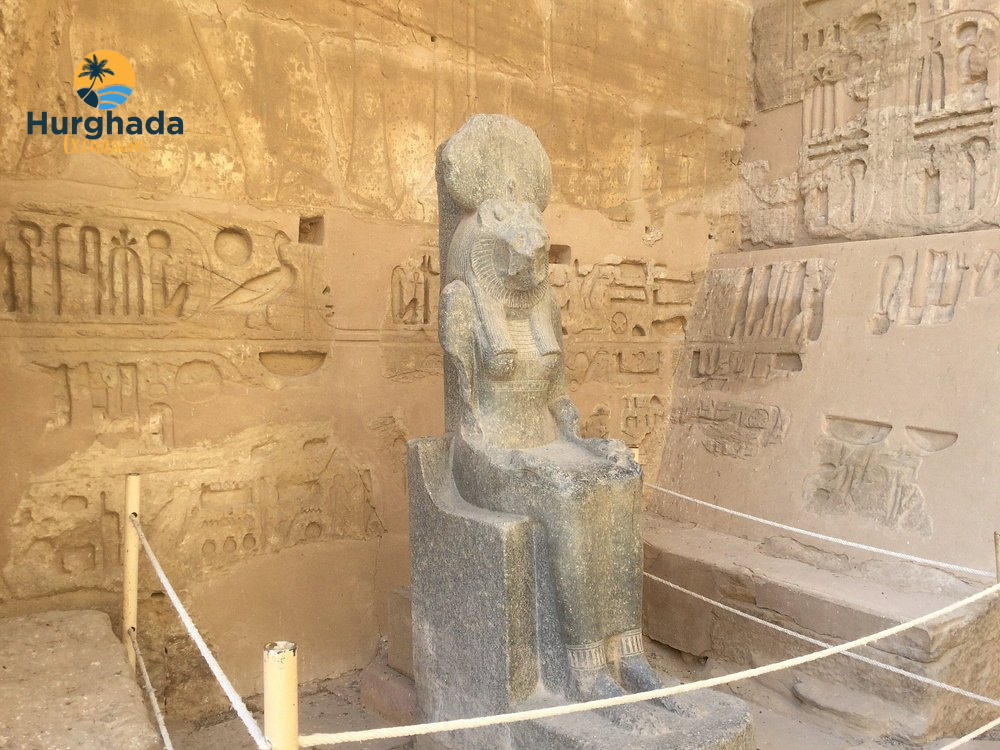
The hypostyle hall columns retain their original painted decoration to a degree matched by no other West Bank mortuary temple — vivid blue, red, gold, and green pigments still clearly visible on papyrus-form column shafts. The ceiling of the innermost sanctuary is painted deep blue with golden stars. The inner chapels dedicated to specific deities contain some of the finest relief painting on the entire West Bank.
Only in Egypt
Royal Palace & Window of Appearance
Attached to the south wall of the temple, Ramesses III’s personal palace is one of only two surviving royal palace structures in all of ancient Egypt (the other is at Tell el-Amarna). The “Window of Appearance” — the ceremonial window through which the pharaoh showed himself to the people and threw gifts — is decorated with carved scenes of the king accepting tribute and is among the most evocative royal domestic spaces in the ancient world.
Historical Layers
Coptic Church Remains & Earlier Temple
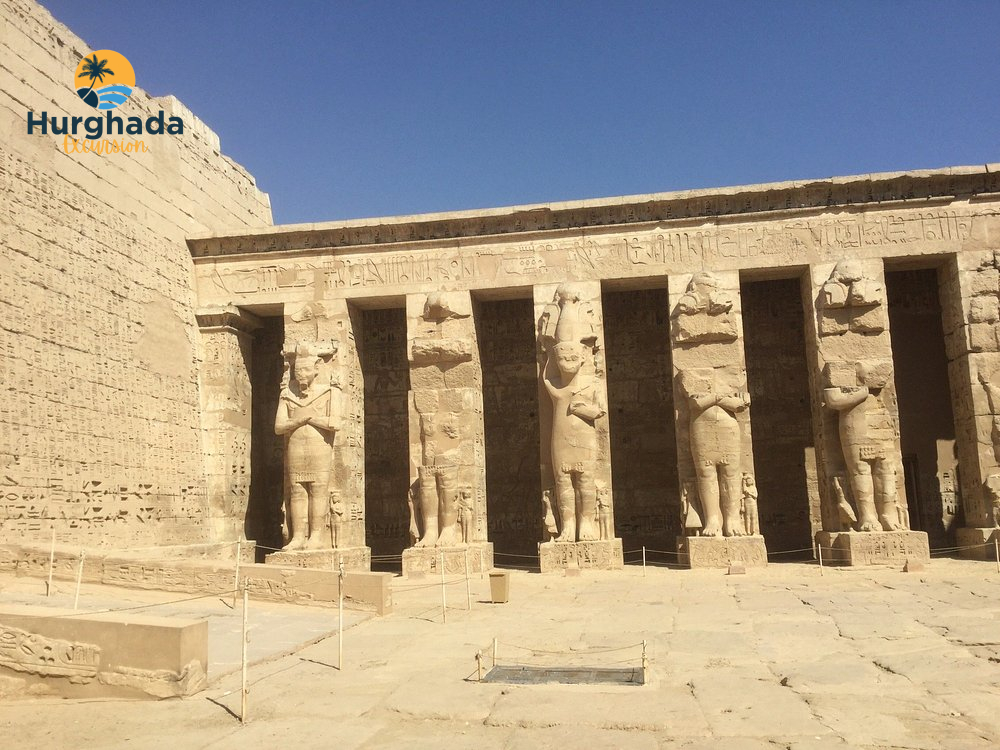
The first court of Medinet Habu contains remains of a Coptic Christian church built into the ancient structure — its painted plaster ceiling sections still visible over the pharaonic reliefs beneath. The Small Temple of Amun inside the enclosure predates Ramesses III by 400 years, with paintings from multiple New Kingdom pharaohs layered on top of each other.
Practical Information
Storerooms & Treasury
The extensive storerooms and treasury building surrounding the temple are decorated with detailed inventories of the temple’s holdings — grain stores, cattle counts, linen stocks, and precious metal records. These provide the most detailed surviving administrative record of how an ancient Egyptian mortuary temple actually functioned as an economic institution.
The Sea Peoples Battle — Egypt’s Most Dramatic Military Record
The most historically significant and visually extraordinary section of the Medinet Habu temple reliefs is the record of the Battle of the Sea Peoples — one of the most dramatic events in ancient history and the only such event recorded in vivid visual detail anywhere in the world:
⚔️ The Bronze Age Collapse & the Sea Peoples (1175 BCE): Around 1200–1150 BCE, the Late Bronze Age world — the interconnected network of civilisations including the Mycenaean Greeks, the Hittites, the Canaanites, and others — collapsed with catastrophic speed. The causes are still debated by historians (climate change, drought, internal rebellion, earthquake, epidemic), but the result was that virtually every major palace civilisation in the eastern Mediterranean was destroyed within a generation. Only Egypt survived — and barely. The Medinet Habu reliefs record Egypt’s side of this story: in the eighth year of Ramesses III’s reign (1175 BCE), a massive coalition of displaced sea-going peoples (the “Sea Peoples” — identified from the reliefs as including the Peleset, Tjeker, Shekelesh, Denyen, and Weshesh) attempted to invade Egypt simultaneously by land and sea. Ramesses III met both attacks and defeated them — recording both victories in the Medinet Habu wall reliefs with unprecedented detail. The Peleset among the Sea Peoples are widely identified as the Philistines of later biblical tradition.
⚓
The Naval Battle
The most extraordinary section of the Sea Peoples relief: a naval battle depicted in remarkable detail — Egyptian ships with oarsmen and archers, Sea Peoples ships with distinctive headgear (the feather crowns visible in the carvings), warriors fighting aboard ships and falling into the water, captured prisoners being held at spear-point. The only naval battle scene from the ancient world depicted in this level of detail.
🏃
The Land Battle
The land battle relief shows the Sea Peoples’ invasion force — including ox-carts carrying women and children (refugees, not soldiers, suggesting the entire peoples were migrating, not merely raiding) — being met by Egyptian chariotry and infantry. The guide identifies the different Sea Peoples nations from their distinctive headgear and armour depicted in the carvings.
📝
The Inscriptions
Accompanying hieroglyphic text provides the historical context — Ramesses III’s victory speech, prisoner counts, descriptions of the enemy nations. The guide reads and translates selected passages, including the famous description of the Sea Peoples: “Their confederation was the Peleset, Tjeker, Shekelesh, Denyen and Weshesh.” The only contemporary written record of the Sea Peoples’ names and identities.
The Ramesseum — Ozymandias & the Fallen Colossus of Ramesses II
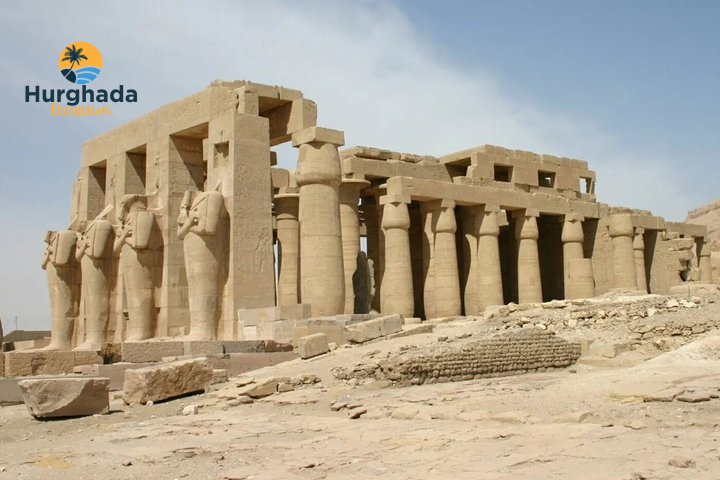
The Ramesseum — the mortuary temple of Ramesses II — stands approximately 1 km north of Medinet Habu and is the second major site on this tour. Where Medinet Habu is preserved and vivid, the Ramesseum is ruined and haunting — and the contrast between the two is one of the most philosophically interesting experiences available on the West Bank:
🗿
The Fallen Colossus
The 57-tonne granite torso of Ramesses II — the largest fragment of what was once a 17-metre seated colossus, the largest statue in Egypt — lying face-up in the Ramesseum first court exactly where it fell after the earthquake that toppled it. The shattered face and head lie nearby. Standing over it, the guide recites Shelley’s “Ozymandias” — written in 1817 after the poet Horace Smith saw a sketch of this specific object. “Look on my works, ye Mighty, and despair!” The poem becomes immediately, viscerally comprehensible.
🏛️
The Surviving Structures
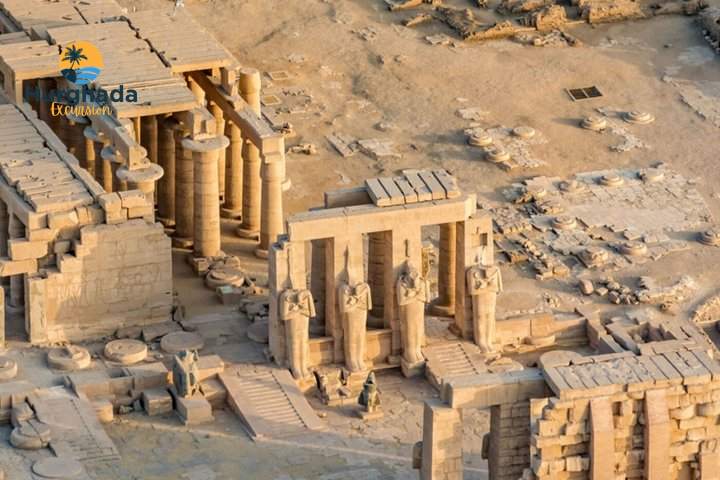
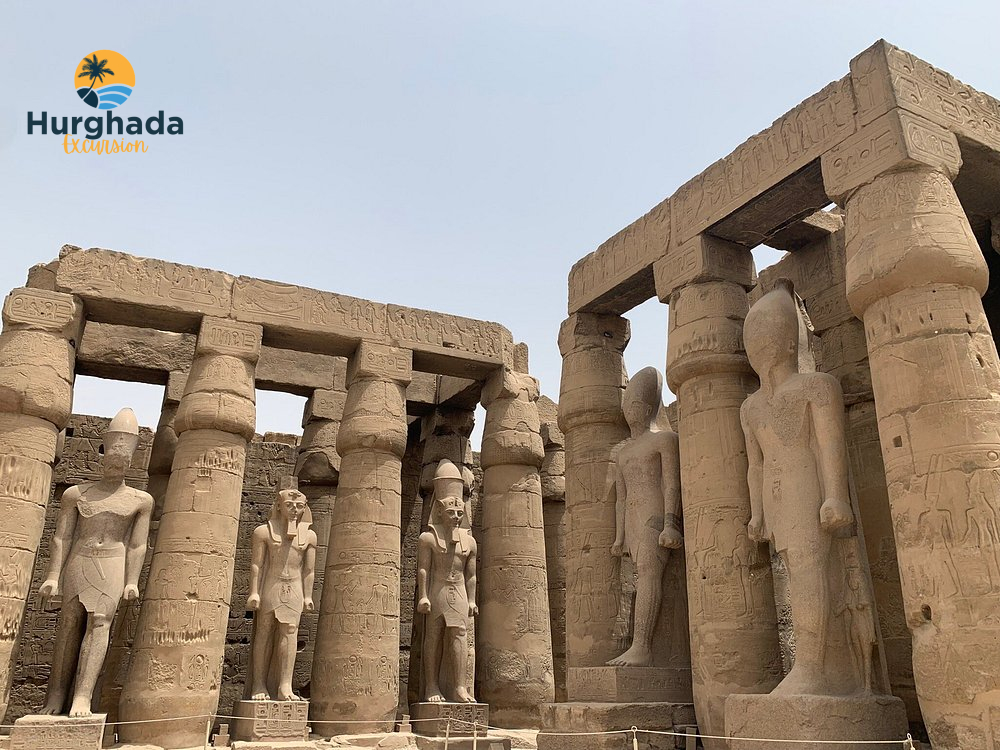
Despite extensive damage, significant sections of the Ramesseum survive: the first hypostyle hall retains standing columns with fine relief decoration; the second hypostyle hall columns still bearing astronomical ceiling paintings (faded but legible); the inner sanctuary walls with Ramesses II making offerings to the gods; and the famous Battle of Kadesh reliefs on the pylon exterior — the same battle recorded at Karnak, Abu Simbel, Abydos, and Luxor Temple.
📚
The Ancient Library
The storerooms of the Ramesseum are believed to have functioned as one of ancient Egypt’s most important libraries — papyrus documents on medicine, magic, and literature were found here by 19th-century excavators. The famous Papyrus of Ani (one of the finest Books of the Dead known) was found at this site. The guide explains the temple’s role as a centre of scribal education and literary production.
🎭
Ozymandias — The Poem
Percy Bysshe Shelley wrote “Ozymandias” in 1817 after seeing a sketch of the fallen colossus. “Ozymandias” is the Greek form of Ramesses II’s throne name “User-maat-ra.” The poem’s meditation on the futility of human power and the permanence of time — inspired by this exact object lying in this exact field — is one of the most celebrated in English literature. The guide reads it aloud at the site. Virtually every guest describes this moment as deeply moving.
Royal Mortuary Temples — The Complete West Bank Complex
The Luxor West Bank contains the remains of at least eight major royal mortuary temple complexes — a row of temples stretching from north to south, each built by a different New Kingdom pharaoh. Here is the complete overview:
| Temple |
Pharaoh |
Condition |
Status |
| Medinet Habu |
Ramesses III |
Best preserved in Egypt |
Included in this tour |
| Ramesseum |
Ramesses II |
Partially ruined — atmospheric |
Included in this tour |
| Deir el-Bahari (Hatshepsut) |
Hatshepsut |
Well preserved — architecturally finest |
Available as add-on |
| Temple of Seti I |
Seti I |
Partly accessible · fine reliefs |
Available as add-on |
| Amenhotep III Temple |
Amenhotep III |
Almost entirely destroyed — Colossi survive |
Colossi visited on this tour |
| Temple of Ramesses IV, Merenptah, others |
Various |
Fragmentary — under excavation |
Research sites only |
Ramesses III — Egypt’s Last Great Warrior Pharaoh
Understanding Ramesses III is the key to understanding Medinet Habu. Here is the complete historical portrait:
⚔️
The Defender of Egypt
Ramesses III ruled for 31 years (c. 1186–1155 BCE) during one of the most turbulent periods in ancient history — the Bronze Age collapse. He fought three major wars (two against Libyan confederacies, one against the Sea Peoples) and defeated all three, preserving Egypt as the last major civilisation standing in the eastern Mediterranean. He was the last pharaoh to exercise strong centralised control over all of Egypt.
🏛️
The Builder King
Despite the military crises, Ramesses III built extensively — most notably the Medinet Habu complex, but also temples at Karnak (a small temple within the Karnak enclosure) and other sites. His building programme was modelled consciously on that of his hero Ramesses II — he even adopted the name “Ramesses” (not his birth name) to associate himself with the great pharaoh of a century earlier.
🗡️
The Harem Conspiracy
Ramesses III’s reign ended in assassination — the “Harem Conspiracy” in which his secondary wife attempted to kill him and place her son on the throne. CT scans of his mummy (Ramesses III’s mummy is in Cairo, not Luxor) have revealed a deep cut to the throat, confirming the assassination. The guide tells this extraordinary story — supported by the surviving papyrus documents of the assassination trial — at the migdol gateway where the pharaoh’s personal apartments were located.
📜
The Turin Strike Papyrus
From Ramesses III’s reign comes one of the most remarkable documents in Egyptian history — the Turin Strike Papyrus, recording the world’s first documented labour strike. The royal tomb workers of Deir el-Medina stopped work because their grain rations had not been delivered. Their complaint — that they were “hungry and thirsty” — is the first written record of workers collectively refusing to work. The guide contextualises this document at the Deir el-Medina site on the combined West Bank tour.
Medinet Habu Ticket Price 2026 & Opening Hours
| Site |
Ticket (EGP) |
Approx. EUR |
Notes |
| Medinet Habu Temple (Adult) |
~450 EGP |
~€8 |
Included in tour · Open 06:00–17:00 daily |
| The Ramesseum (Adult) |
~150 EGP |
~€3 |
Included in tour · card payment only |
| Colossi of Memnon |
FREE |
Free |
No ticket needed · viewable any time |
| Hatshepsut Temple (optional add-on) |
~440 EGP |
~€8 |
Included if combined West Bank package booked |
| Valley of the Kings (optional add-on) |
~750 EGP |
~€14 |
3 tombs included; premium tombs extra |
Tour Price from Hurghada 2026 — What’s Included
Medinet Habu & Ramesseum Tour from Hurghada — From
€75
per adult · Medinet Habu + Ramesseum + Colossi + Egyptologist Guide
✓ Private Vehicle · ✓ Egyptologist Guide · ✓ All Tickets · ✓ Lunch · ✓ Water
Children 4–11: 50% discount · Combined with Valley of the Kings: from €85
✅ Included
✓ Private air-conditioned vehicle: Hurghada – Luxor – Hurghada (260 km each way)
✓ Licensed Egyptologist guide for the full day
✓ Medinet Habu Temple entry (~450 EGP per adult)
✓ The Ramesseum entry (~150 EGP per adult)
✓ Colossi of Memnon photography stop (free)
✓ Full lunch at a Luxor restaurant · Bottled water · Free cancellation 48 hours before
Best Time to Visit Medinet Habu Temple
| Season |
Temp (Morning) |
Relief Colour Visibility |
Crowds |
Verdict |
| Oct – Nov |
20–28°C |
Excellent |
Very low |
Ideal |
| Dec – Feb |
12–22°C |
Best — crisp light |
Low (most visitors go to Valley of Kings) |
Best overall |
| Mar – May |
22–36°C |
Good |
Very low |
Very Good |
| Jun – Sep |
38–48°C |
Good · enclosed courts retain heat |
Almost empty |
Possible — very early start essential |
10 Expert Tips for Your Medinet Habu Temple Tour
Tip 1 — Visit Medinet Habu before Hatshepsut Temple and the Valley of the Kings. Most tourists visit Medinet Habu as an afterthought after the famous Valley sites. Visit it first — when your energy is highest and before the midday heat. The painted hypostyle hall and the battle reliefs are best appreciated when you can stand and study them without rushing to reach the next site. The Medinet Habu mortuary complex rewards time and attention above any other West Bank monument.
Tip 2 — Allow your eyes to adjust to the interior darkness before looking at the painted columns. Coming from the bright Egyptian exterior into the Medinet Habu hypostyle hall requires 2–3 minutes for the eyes to adapt. Most visitors rush in and rush out without ever fully seeing the extraordinary painted decoration. Stand still for 2 minutes before the guide begins the explanation. What emerges from the darkness is one of the most vivid painted interiors in ancient Egypt.
Tip 3 — Ask the guide to explain the Sea Peoples’ identity and the Bronze Age collapse context. The Sea Peoples battle reliefs are visually dramatic — but they become historically extraordinary only when you understand what the Bronze Age collapse was, why it destroyed every other civilisation of the era, and why Egypt’s survival was the exception rather than the rule. The guide’s 10-minute introduction to this context, delivered at the north wall, transforms the relief carvings from “big battle scene” to “the most important surviving visual record of one of history’s most catastrophic events.”
Tip 4 — Explore the migdol gateway tower chambers — almost no visitors do. Most visitors see the exterior of the migdol gateway and move on. Ask the guide to lead the group up the internal staircase into the tower chambers — where the intimate paintings of Ramesses III at leisure (playing senet, receiving flowers from female attendants, relaxing with musicians) are preserved. These are the most personal and unusual paintings in any Egyptian temple, and they are visited by perhaps 1% of Medinet Habu visitors.
Tip 5 — At the Ramesseum, ask the guide to recite Ozymandias beside the fallen colossus. “Ozymandias” is one of the most celebrated English poems, written directly in response to this specific object. Standing beside the 57-tonne fallen torso of the colossus while the guide reads the poem — “Look on my works, ye Mighty, and despair!” — and then looks at the empty field around the shattered stone is one of the most intellectually and emotionally complete moments available on any Luxor tour.
Tip 6 — Look at the ceiling in the innermost sanctuary of Medinet Habu. The deep blue astronomical ceiling with golden stars — painted in the innermost sanctuary and largely overlooked by visitors focused on the wall reliefs — is one of the finest surviving painted ceilings in any Egyptian temple. The guide will illuminate it with a torch if natural light is insufficient. Looking up at it in the dimness of the inner sanctuary produces a genuinely cosmic sensation.
Tip 7 — Notice the Coptic plaster overlay in the first court. In the Medinet Habu first court, patches of white Coptic plaster are visible over the ancient Egyptian reliefs on the west wall — remnants of the early Christian church built inside the temple complex. The guide explains how the Coptic community covered the “pagan” images with plaster rather than destroying them, inadvertently preserving the reliefs beneath. In several places, both the Coptic decoration and the ancient Egyptian relief beneath it are visible in the same square metre.
Tip 8 — Medinet Habu is a genuinely excellent site for architectural photography — use the depth. Unlike Karnak (too vast) and the Valley of the Kings (too confined for photography), Medinet Habu offers extraordinary depth-of-field photography opportunities — long corridors receding into darkness, painted columns in perfect alignment, the enormous pylons framing distant views of the Theban cliffs. Wide-angle photographs in the hypostyle hall corridor are particularly effective.
Tip 9 — The Medinet Habu site guardian (ghafeer) is often extraordinarily knowledgeable and welcoming. The site guardians at Medinet Habu — unlike the overwhelmed guards at the busier sites — frequently have detailed personal knowledge of the temple from years of daily work there. The guide will introduce you. The guardian may show you specific details or hidden sections not typically included in guided tours. A small tip (50–100 EGP) is appropriate for extended assistance.
Tip 10 — Medinet Habu is the West Bank site most guests wish they had spent longer at. The consistent pattern among our guests: the Valley of the Kings and Hatshepsut Temple are beautiful but crowded. Medinet Habu is extraordinary and quiet. Most guests who visit it wish, upon returning, that they had allocated more time there and less at the famous but crowded principal sites. Budget 2.5 hours minimum. If you can give it the whole morning, do.
Real Reviews from Travellers
★★★★★
“Medinet Habu was the revelation of our entire Egypt trip. We had been to Karnak and the Valley of the Kings — magnificent but crowded. We arrived at Medinet Habu to find virtually no one else there. The painted columns in the hypostyle hall, the Sea Peoples battle reliefs, the migdol tower chambers with their intimate paintings — all to ourselves. The guide was extraordinary. This should be on every Luxor itinerary.”
Dr. Michael T. — Oxford · March 2026
★★★★★
“The guide reading Ozymandias beside the fallen colossus at the Ramesseum was genuinely one of the most moving moments of our holiday. I’ve known the poem for 30 years and never understood it until I stood beside the object that inspired it. Then Medinet Habu — the Sea Peoples explanation was extraordinary. One of the best guided experiences of my life.”
Caroline K. — Edinburgh · January 2026
★★★★★
“I am an architect and the Medinet Habu temple is the finest remaining example of New Kingdom temple architecture in Egypt — better preserved and more architecturally complete than Karnak or Luxor Temple. The painted columns in the hypostyle hall are extraordinary. The fact that almost no tourists visit it makes the experience even more remarkable. A genuinely unmissable site.”
James W. (Architect) — London · February 2026
Frequently Asked Questions
What is Medinet Habu Temple in Luxor?
The Medinet Habu Temple is the mortuary temple complex of Ramesses III, built c. 1186–1155 BCE on the southern end of the Luxor West Bank. It is the best-preserved and most completely decorated mortuary temple in ancient Egypt — with outer walls still standing to their original height, vivid painted relief carvings, a complete royal palace, and the most detailed military battle reliefs of any Egyptian temple (the Battle of the Sea Peoples, 1175 BCE). The temple complex covers approximately 700 metres and includes a fortified gateway (migdol), multiple pylons, a hypostyle hall, inner sanctuaries, a royal palace, and an older temple of Amun predating Ramesses III by 400 years.
What is the Medinet Habu ticket price?
The Medinet Habu ticket price in 2026 is approximately 450 EGP (~€8) per adult. Student tickets are approximately 225 EGP. Ticket payment is by credit/debit card only — cash is not accepted. The Ramesseum costs approximately 150 EGP extra. The Colossi of Memnon (on the same route) are free. Our tour price includes all entry fees — no additional payment required for the standard sites on this tour.
What is the difference between Medinet Habu and the Ramesseum?
Medinet Habu is the mortuary temple of Ramesses III — well preserved, still standing to full height, with vivid painted decoration. It is the most completely intact mortuary temple on the West Bank. The Ramesseum is the mortuary temple of Ramesses II — now largely ruined, with the famous 57-tonne fallen colossus that inspired Shelley’s “Ozymandias.” Medinet Habu is architecturally superior; the Ramesseum is more atmospherically powerful as a ruin. Both are visited on this tour — about 15 minutes’ drive apart on the West Bank.
Who were the Sea Peoples and why are they important at Medinet Habu?
The Sea Peoples were a coalition of Mediterranean peoples — identified from the Medinet Habu reliefs as including the Peleset, Tjeker, Shekelesh, Denyen, and Weshesh — who invaded Egypt by land and sea in 1175 BCE during the Bronze Age collapse. Ramesses III defeated them in both engagements. The Medinet Habu relief carvings of this battle are the only surviving visual record of the Sea Peoples anywhere in the ancient world — making them among the most historically significant carved images in Egypt. The Peleset are widely identified as the ancestors of the biblical Philistines.
What is the Medinet Habu temple tour price from Hurghada?
The Medinet Habu temple tour Luxor price from Hurghada starts from €75 per adult for the full-day private tour including: private air-conditioned vehicle (260 km each way), licensed Egyptologist guide, Medinet Habu entry ticket (~450 EGP), Ramesseum entry (~150 EGP), Colossi of Memnon stop (free), lunch at a Luxor restaurant, and bottled water. Children 4–11 receive a 50% discount. Combined tour with Valley of the Kings or Hatshepsut Temple: from €85.
Book Your Medinet Habu Temple Tour Today
From €75 per person · Private vehicle from Hurghada · Egyptologist guide · Medinet Habu Temple · Ramesseum · Colossi of Memnon · All entry tickets · Lunch · Free cancellation 48 hours before.
🏯 Book Now — From €75
The Medinet Habu temple tour Luxor is the West Bank experience that reveals what Egypt was actually like at the moment of its greatest historical crisis — when the Bronze Age world was collapsing around it, when armies of displaced peoples were coming by land and sea, and when one extraordinary pharaoh stood in a fortified gateway above the Nile and inscribed his victory across 700 metres of wall that are still standing 3,100 years later. The Ramesseum, a few hundred metres away, tells the other side of the story — the one Shelley understood: that even the greatest works of human power are temporary. Standing between Medinet Habu’s preserved magnificence and the Ramesseum’s haunted ruin is to hold both truths simultaneously. It is one of the most complete philosophical experiences available at any ancient site on earth.
Book your Medinet Habu temple tour today with Hurghada Excursion — private vehicle, licensed Egyptologist, all entry tickets, and the finest mortuary complex experience available from the Red Sea coast.