✝️ Coptic Cairo · Ancient Churches · Holy Family · Coptic Museum · Christian Heritage · From Hurghada
Coptic Cairo Tour – Ancient Churches & Christian Heritage Walking — Complete 2026 Guide
📅 Updated: May 2026 | ⏱️ 3–4 Hours Walking Tour · Full Day from Hurghada | 💶 From €100 / person | ⭐ 4.9/5 Rated | ✝️ Daily Departures
Most travellers who come to Egypt know that it is the cradle of one of the world’s most ancient civilisations. Fewer know that it is also the cradle of one of the world’s oldest Christian communities — a community that has worshipped continuously in the same narrow streets of Old Cairo for 2,000 years, whose liturgical language (Coptic) is the direct descendant of the ancient Egyptian language spoken by the pharaohs, and whose churches stand on ground sanctified not only by two millennia of Christian worship but by the tradition that the Holy Family — Mary, Joseph, and the infant Jesus — walked these same streets during their flight from Herod into Egypt. Coptic Cairo is one of the most intimate, most spiritually resonant, and most historically layered districts in any city on earth — a 2,000-year-old Christian enclave within a 1,000-year-old Islamic city built upon a 4,500-year-old civilisation, where the air carries the scent of frankincense and the sound of ancient liturgical chanting in a language that has not changed since the time of Cleopatra.
The Coptic Cairo walking tour — ancient churches and Christian heritage from Hurghada is a complete, expert-guided exploration of this extraordinary district — the Hanging Church (Al-Mu’allaqa), Cairo’s most famous church; the Church of St Sergius and Bacchus (Abu Serga), built over the cave where the Holy Family sheltered; the Ben Ezra Synagogue (the oldest synagogue in Egypt and the site of the discovery of the Cairo Geniza); the Coptic Museum (the finest collection of Coptic art and artefacts in the world); the Babylon Fortress (the Roman fort on whose walls the Coptic churches were built); and the narrow cobblestone alleyways of Old Cairo that connect them. A tour that offers something genuinely unique in Egypt’s cultural landscape — the oldest layer of Christian civilisation in Africa, still living and still worshipping.
✝️ What Is Coptic Cairo? Coptic Cairo (Arabic: Masr al-Qadima — Old Cairo) is a district on the east bank of the Nile, approximately 4 km south of Cairo city centre, occupying the site of the ancient Roman fortress of Babylon (not the Babylonian city in Iraq). The district contains Egypt’s most important Christian monuments: the Hanging Church (built in the 3rd–4th century CE on the south gate of Babylon Fortress), the Church of St Sergius (4th–5th century CE, built over the cave where the Holy Family stayed), the Coptic Museum (world’s finest Coptic art collection), the Ben Ezra Synagogue (9th century CE), and over a dozen historic churches within a compact 500-metre walking area. The entire district is a UNESCO-listed historic area. Coptic Cairo location: Fustat district, Old Cairo — accessible by Cairo Metro (Mar Girgis station, Line 1) or by road from anywhere in Cairo.
What Is Coptic Cairo? History & Christian Heritage
The Coptic Christian community of Egypt is one of the world’s oldest continuously existing Christian communities — claiming an origin in the evangelistic mission of Saint Mark the Apostle, who is believed to have brought Christianity to Alexandria in approximately 42 CE. The word “Copt” derives from the Arabic Qibt, which is itself derived from the Greek Aigyptos (Egypt) — meaning that “Copt” and “Egyptian” were originally synonymous. The Coptic Orthodox Church is the original Christian Church of Egypt, established over 600 years before Islam arrived in 641 CE.
| Key Fact |
Detail |
| Founded by |
Saint Mark the Apostle · Alexandria · c. 42 CE |
| Coptic language |
Direct descendant of ancient Egyptian — last surviving form of the pharaonic language · still used in liturgy |
| Population |
~10–12 million Copts in Egypt (approximately 10% of Egypt’s population) — largest Christian community in the Middle East |
| Coptic Cairo location |
Fustat district · Old Cairo · 4 km south of Tahrir Square · Metro: Mar Girgis (Line 1) |
| Coptic Cairo entrance fee |
Most churches: free entry · Coptic Museum: ~200 EGP (~€4) · Ben Ezra Synagogue: free |
| UNESCO Status |
Part of Historic Cairo — UNESCO World Heritage Site (inscribed 1979) |
✝️ The Coptic Language — The Last Voice of the Pharaohs
One of the most remarkable facts about Coptic Cairo is that the liturgical language of the Coptic Orthodox Church — Coptic — is the direct lineal descendant of the ancient Egyptian language spoken by the pharaohs, Cleopatra, and the builders of the pyramids. After the Arab conquest of 641 CE, spoken Egyptian was gradually replaced by Arabic, but the Coptic language survived in the liturgy of the Coptic Church — preserved in the same way that Latin was preserved by the Roman Catholic Church. Hearing the Coptic liturgy chanted in an ancient church in Cairo is hearing the language of the pyramids still living, 4,500 years after the Great Pyramid was built.
Top 10 Highlights of the Coptic Cairo Walking Tour
⛪
1. The Hanging Church (Al-Mu’allaqa)
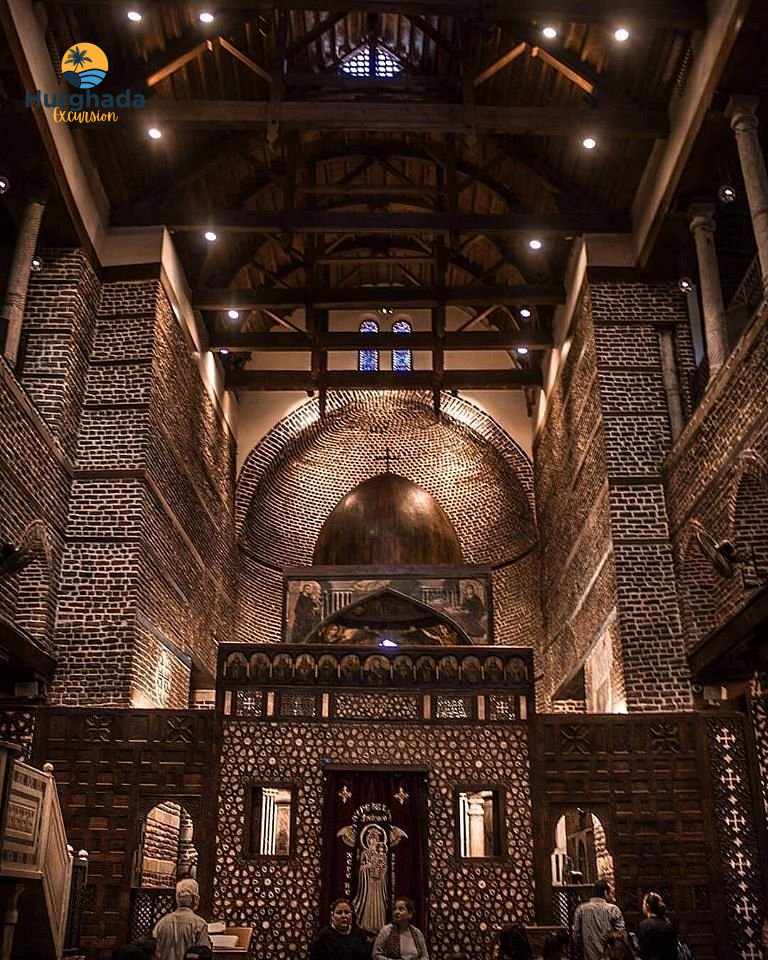
Cairo’s most famous and most visited church — built on the southern gatehouse towers of the Roman Babylon Fortress, its nave literally suspended above the gatehouse arch (hence “Hanging”). One of the oldest churches in Cairo (3rd–4th century CE), with a remarkable interior of 13 carved marble pillars (one black, representing Judas Iscariot), a magnificent 8th-century wood-carved choir screen, and extraordinary painted icon panels. The staircase approach through a narrow alley creates one of the finest entrances of any church in Egypt.
🕊️
2. Church of St Sergius — Holy Family Cave
The Church of Abu Serga (St Sergius and Bacchus) — one of the oldest churches in Cairo (4th–5th century CE) — is built over a cave in which Christian tradition holds that the Holy Family (Mary, Joseph, and the infant Jesus) sheltered during their flight from Herod’s massacre. The cave-crypt beneath the church is accessible to visitors and marks one of the most sacred sites in Egyptian Christianity. The guide delivers the complete Holy Family in Egypt story at this location.
🏛️
3. Coptic Museum — World’s Finest Collection
The Coptic Museum, founded in 1910 by Marcus Simaika Pasha, houses the world’s finest collection of Coptic art and artefacts — over 16,000 objects spanning the 1st to 19th centuries. Highlights include the extraordinary Nag Hammadi Library codices (the Gnostic gospels, discovered in 1945), magnificent textile collections, painted manuscripts, ivory carvings, and the finest examples of Coptic architectural elements from demolished Cairo churches preserved here. The museum building itself — with its traditional Cairene mashrabiyya-screened courtyard — is beautiful.
🏰
4. Babylon Fortress — Roman Egypt
The Roman fortress of Babylon, built by the Emperor Augustus (or earlier) on the east bank of the Nile — one of the most strategically significant Roman installations in Egypt, guarding the crossing point where the delta meets the Nile valley. The massive round towers of Babylon Fortress are still visible in Coptic Cairo, their lower sections surviving to significant height and incorporated into the foundations of the Coptic churches built upon them. The guide explains how a Roman fort became a Christian sacred precinct.
🕍
5. Ben Ezra Synagogue — The Cairo Geniza
The oldest synagogue in Egypt (9th century CE, on a site of earlier Jewish worship), restored to extraordinary beauty and housing one of the most remarkable stories in religious scholarship: the Cairo Geniza — a storage room discovered in 1896 containing approximately 300,000 Jewish manuscript fragments spanning 1,000 years. These documents revolutionised knowledge of medieval Jewish and Islamic history. The guide tells the complete geniza story at the site of the discovery.
🌸
6. The Coptic Cairo Alleyways
The narrow cobblestone alleyways of Coptic Cairo — connecting the churches, passing souvenir and icon shops, and leading to quiet courtyards where cats sleep in the afternoon sun — are among the most atmospheric pedestrian spaces in Cairo. The Coptic quarter has a distinctive quality of light and silence — separated from the city’s traffic noise by the Babylon Fortress walls — that makes it feel genuinely ancient and genuinely separate from the surrounding metropolis.
🎨
7. Coptic Icons — Living Byzantine Art
The Coptic icon-painting tradition is one of the oldest continuous artistic traditions in the Christian world — using the frontal, hieratic style inherited from ancient Egyptian funerary portraiture (the Fayum mummy portraits are the direct ancestors of Coptic icons). The churches of Coptic Cairo are filled with extraordinary painted icons, carved wooden iconostases, and painted ceiling panels that span fifteen centuries of Coptic artistic expression. The guide identifies the most significant examples and explains the iconographic programme of each church interior.
⛪
8. Church of St Barbara — Finest Interior
The Church of St Barbara (originally dedicated to St Cyrus and St John — 5th century CE) houses some of the finest surviving Coptic woodwork in Cairo — a magnificent carved choir screen of extraordinary delicacy, a painted apse in rich red and gold, and ancient marble columns reused from earlier Roman and Coptic buildings. The guide delivers the story of St Barbara (martyred by her own father for converting to Christianity) and the significance of her veneration in the Coptic tradition.
🕯️
9. The Atmosphere of Active Worship
Coptic Cairo is not a museum — it is a living religious community where the ancient churches are still used for daily and weekly services, where priests in traditional robes move through the alleyways, where candles are lit at ancient icon shrines, and where the sound of Coptic chanting occasionally drifts from a church interior into the courtyard outside. The guide is respectful of any active worship encountered — pausing when appropriate and explaining the liturgical context.
📚
10. Three Faiths in One Square Kilometre
Coptic Cairo is uniquely positioned to deliver an interfaith tour experience — within 500 metres, the walking tour visits the Coptic Christian Hanging Church, the Jewish Ben Ezra Synagogue, and the adjacent neighbourhood that transitions into Islamic Old Cairo toward Fustat. The guide delivers a complete account of the coexistence and interaction of Egypt’s three Abrahamic communities across 2,000 years of shared history in this specific district.
Complete Day Program — Professional Tour Itinerary
Here is the professional Coptic Cairo walking tour itinerary — a complete, hour-by-hour programme from Hurghada arrival to return:
✈️ COMPLETE COPTIC CAIRO TOUR FROM HURGHADA (By Flight · Full Day)
Depart Hurghada ~06:00 AM · 45-min flight · Transfer to Old Cairo ~08:15 AM · Coptic Cairo walking tour (08:30–13:00) · Lunch (13:00–14:00) · Optional: Islamic Cairo / Citadel afternoon (14:00–17:00) · Return flight ~19:00 PM · Arrive Hurghada ~20:00 PM
STOP 1 · 08:30 – 09:00 · Mar Girgis Station & Babylon Fortress
🏰 Arrival — The Babylon Fortress Towers & Coptic Cairo Gateway
Arrival at the Mar Girgis (St George) Metro station — the gateway to Coptic Cairo. The guide delivers the orientation from outside the Babylon Fortress south gate: the history of the Roman fortress (built approximately 1st century BCE to 2nd century CE), the surviving round towers still visible to their original height, and the extraordinary history of how a Roman military installation became the most sacred Christian district in Africa. The immediate transition from the modern Cairo metro to a 2,000-year-old Roman fortress is one of the most dramatic moments of arrival at any historic site in the city.
Coptic Cairo map overview: The Coptic Cairo complex is compact — all major sites within a 500-metre radius. The main entrance from the Metro (Mar Girgis station) brings visitors to the central courtyard. Clockwise from the entrance: Coptic Museum (left) · Hanging Church / Al-Mu’allaqa (straight ahead) · Church of St Barbara (right) · Church of St Sergius/Abu Serga (far right) · Ben Ezra Synagogue (far right corner). The guide navigates all sites in the optimal sequence.
STOP 2 · 09:00 – 09:30 · Coptic Museum
🏛️ Coptic Museum — 16,000 Objects, 2,000 Years of Christian Art
The guide leads the group through the Coptic Museum’s selected highlights — allocated 30 minutes for the most important objects. The guide’s selection prioritises: the Nag Hammadi Library codices (the Gnostic gospels discovered in 1945 — among the most significant manuscript discoveries of the 20th century), the Fayum mummy portraits (the direct precursors of Coptic icon painting), the carved ivory panels from the 4th–5th centuries, and the architectural fragments (columns, lintels, capitals) from demolished churches. The museum’s traditional Cairene courtyard — with its mashrabiyya screens — is one of the most beautiful museum spaces in Cairo.
Coptic Museum entrance fee 2026: approximately 200 EGP (~€4) per adult — included in the tour price. Open daily 09:00 AM – 05:00 PM. Photography permitted with mobile phones; professional camera permit required.
STOP 3 · 09:30 – 10:30 · The Hanging Church
⛪ Al-Mu’allaqa — The Hanging Church of Cairo
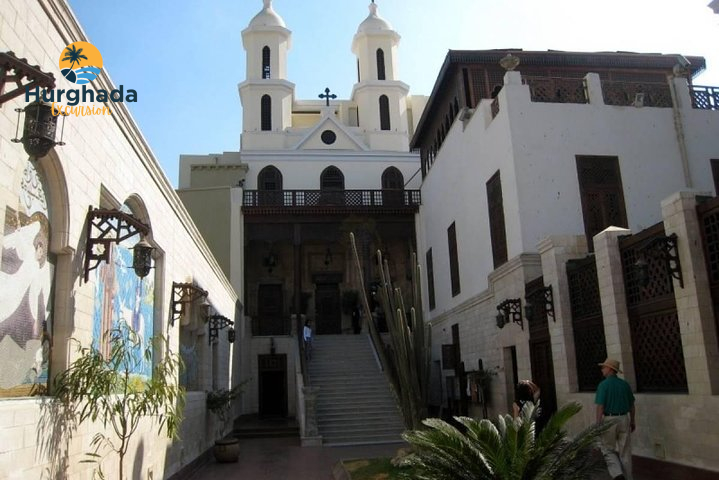
The Hanging Church is approached via a narrow alley and an external staircase — the approach itself one of the most characteristically Coptic spatial experiences. The guide delivers the full history at the entrance: the church’s construction on the south gatehouse of Babylon Fortress (3rd–4th century CE), its name from the suspended nave over the Roman gatehouse, and its role as the seat of the Patriarch of Alexandria in medieval Cairo.
Inside the church: the guide walks the group through the complete interior — the 13 marble pillars (identifying the single black marble pillar representing Judas Iscariot), the extraordinary carved wooden choir screen (khurus) with its inlaid ivory arabesque panels (8th century CE), the painted icon panels set into the choir screen, the ancient marble pulpit (ambon) supported on 14 columns representing Christ and the 13 Apostles, and the three sanctuaries (haykal) — each with its own altar and decorated with ancient icons. The ceiling, painted in alternating white and red stripes representing the souls of martyrs, is one of the most distinctive elements of the Coptic church interior.
Dress code: The Hanging Church requires modest dress — shoulders covered, no shorts for men or women. Headwear is not required for women inside Coptic churches (unlike mosques) but some visitors choose to cover their hair as a sign of respect. Remove hats as a gesture of respect. The guide provides guidance on etiquette at each church.
STOP 4 · 10:30 – 11:00 · Church of St Barbara
⛪ Church of St Barbara — Finest Woodwork in Coptic Cairo
The Church of St Barbara (5th century CE, dedicated to the martyred saint whose festival is on 4 December) is immediately adjacent to the Hanging Church complex. Its interior contains the finest surviving carved wooden choir screen in Coptic Cairo — three sections of inlaid ebony and ivory arabesque carving of extraordinary delicacy, considered among the finest examples of Coptic woodwork anywhere. The guide delivers the story of St Barbara (a 4th-century Christian martyr, her feast widely celebrated in Egypt and the Middle East) and the iconographic programme of the church’s apse paintings.
STOP 5 · 11:00 – 11:45 · Church of Abu Serga — Holy Family Cave
🕊️ Church of St Sergius — The Crypt of the Holy Family
The most spiritually significant site in the Coptic Cairo tour — the Church of Abu Serga, dedicated to the soldier-martyrs Sergius and Bacchus (4th century CE), built over the cave where the Holy Family is believed to have sheltered during their three-month stay in Old Cairo.
The guide delivers the complete Holy Family in Egypt narrative: the flight of Mary, Joseph, and the infant Jesus from Herod’s massacre of the innocents (c. 3–4 BCE), their journey from Bethlehem through Gaza and the Sinai into Egypt, their stay in various locations across Egypt (a route marked today by the Holy Family Trail — a series of churches and pilgrimage sites from the Sinai to Upper Egypt), and their time in Old Cairo. The Coptic tradition holds that the Holy Family rested in the cave now beneath the Church of Abu Serga for three months before continuing south.
Descent into the cave-crypt beneath the church — the actual bedrock cave accessible by a steep narrow staircase, now partially flooded in winter but accessible by raised walkway. Standing in the cave, the guide delivers the complete theological and historical context for this space — the most sacred square metres of earth in Egyptian Christianity.
STOP 6 · 11:45 – 12:30 · Ben Ezra Synagogue & St George Church
🕍 Ben Ezra Synagogue · Church of St George · Three Faiths
Ben Ezra Synagogue: The oldest surviving synagogue in Egypt — on a site where according to tradition the Prophet Jeremiah built an early Jewish house of prayer after the destruction of Jerusalem (586 BCE). The current building dates to the 9th century CE (restored in the 19th century). The guide delivers the extraordinary story of the Cairo Geniza: the discovery in 1896 by Solomon Schechter of approximately 300,000 manuscript fragments in the synagogue’s attic storage room, including medieval letters, business documents, Torah scrolls, and personal correspondence that revolutionised knowledge of daily life in the medieval Islamic and Jewish worlds.
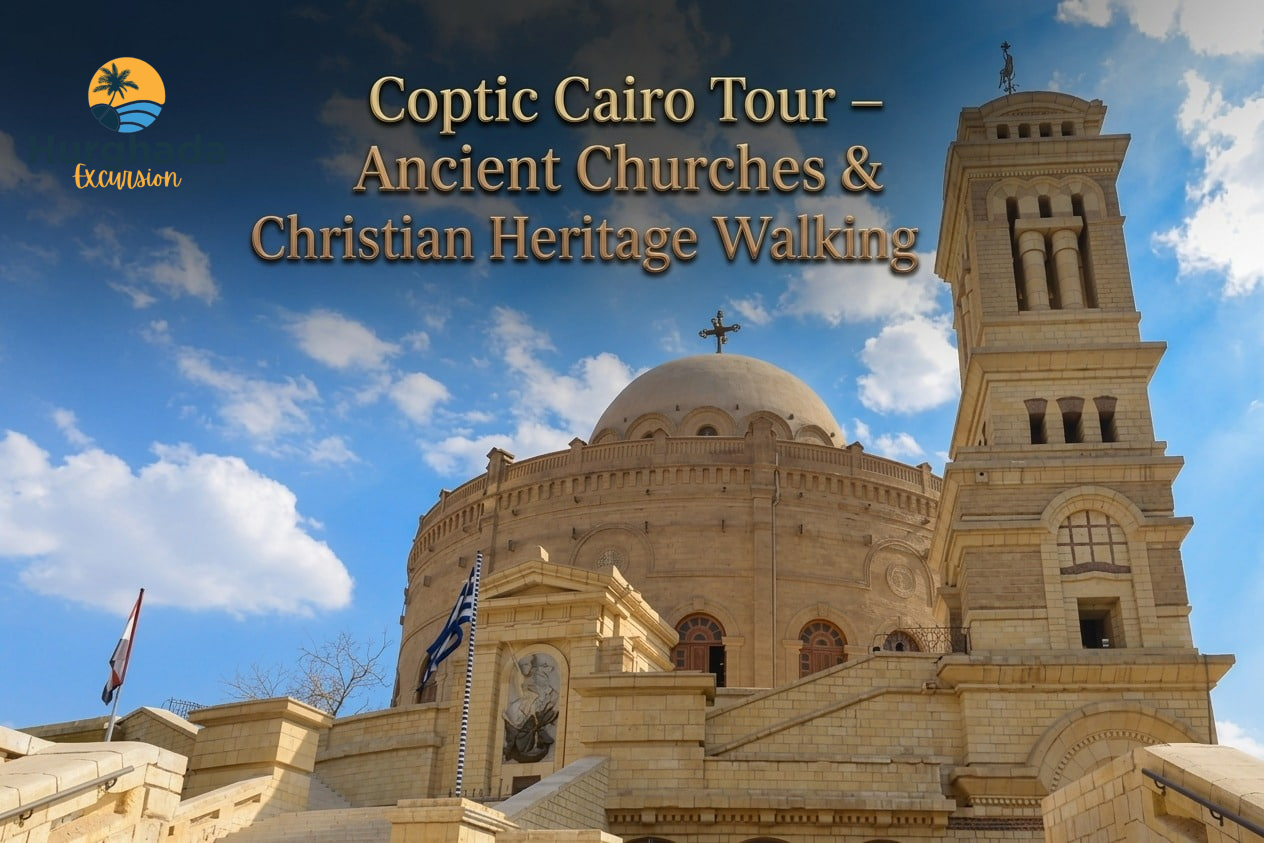
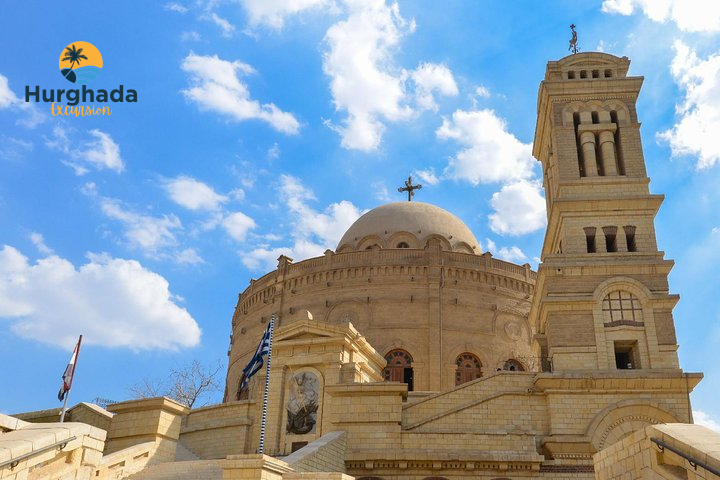
Church of St George (Mar Girgis): The circular Greek Orthodox church built over one of the Babylon Fortress towers — an architecturally unique building that traces the circular plan of the Roman tower within its 10th-century walls. St George is venerated throughout Egypt — both by Coptic Christians and (as Al-Khidr) by some Egyptian Muslims — making his church a genuinely interfaith pilgrimage site. The guide delivers the St George legend and its Egyptian-specific significance.
STOP 7 · 12:30 – 13:00 · Alleyways, Icon Shops & Tour Conclusion
🛍️ Coptic Alleyways · Icon Shops · Free Time & Photography
The final section of the walking tour — a 30-minute free period in the Coptic Cairo alleyways for photography, browsing the small icon shops (selling hand-painted Coptic icons, wooden crosses, religious books, and crafts), and the final questions addressed by the guide. The cobblestone alleyways of Coptic Cairo in mid-morning light — the cats on the walls, the incense drifting from a church doorway, the sound of a Coptic chant from within a sanctuary — are among the most beautiful photographic subjects in Cairo. Lunch follows at a restaurant near Old Cairo.
The Hanging Church — Cairo’s Most Famous Church
The Hanging Church (Arabic: Al-Mu’allaqa — The Suspended) is the most celebrated church in Cairo and one of the most important historic Christian buildings in Africa. Here is the complete guide:
Founded 3rd–4th Century CE
Why Is It Called the Hanging Church?
The Hanging Church (Al-Mu’allaqa) earned its name because its nave is literally suspended — built over the southern gatehouse of the Roman Babylon Fortress, with the floor of the church suspended above the vaulted gateway arch by iron bars and wooden beams. When you stand in the nave of the Hanging Church, you are standing above the entry to a 2,000-year-old Roman fortress, with approximately 9–10 metres of air between you and the Roman gatehouse below.
Interior Details
The 13 Columns & the Marble Pulpit
The 13 marble pillars of the Hanging Church nave represent Christ and his 12 Apostles — with one column in black marble representing Judas Iscariot. The extraordinary marble ambon (raised pulpit) is supported on 14 columns — representing Christ and the 13 Apostles in a slightly different theological arrangement. The wooden choir screen (khurus) is one of the finest examples of Coptic woodwork in Cairo, inlaid with ivory crosses in arabesque patterns.
Historical Role
Seat of the Patriarch in Cairo
The Hanging Church served as the seat of the Coptic Patriarch in Cairo for much of the medieval period — the spiritual and administrative centre of Egyptian Christianity during a time when Egypt was a Muslim-majority country. The church was a site of pilgrimage for Coptic Christians from across Egypt and the wider Christian world. Multiple famous religious councils were held here; it remains active as a place of worship today.
The Holy Family in Egypt — The Flight to Egypt Story
The Flight of the Holy Family into Egypt is one of the most important narratives in the Coptic Christian tradition — and Old Cairo (Coptic Cairo) is its geographic heart. Here is the complete story as delivered by the guide at the Church of Abu Serga:
🕊️ The Holy Family in Egypt — Complete Narrative
The Biblical Account (Matthew 2:13–23): Shortly after the birth of Jesus in Bethlehem, the Magi’s visit prompted King Herod to order the massacre of all male children under 2 years old in the Bethlehem region. An angel warned Joseph in a dream to flee to Egypt. The family left immediately and remained in Egypt until Herod’s death.
The Coptic Tradition: The Coptic Church has maintained detailed traditions about the Holy Family’s route through Egypt — a pilgrimage trail that passes through approximately 25 sites from the Sinai to Upper Egypt, including Heliopolis (modern Cairo), Hermopolis (Ashmunayn), Gabal al-Tayr, and Qusqam (Deir al-Muharraq). The stay in Old Cairo — specifically in the cave beneath the Church of Abu Serga — is held by the Coptic Church to have lasted approximately three months.
The Prophetic Significance: The Coptic tradition connects the Holy Family’s flight to Egypt with the prophecy of Isaiah 19:1 (“Behold, the Lord rides on a swift cloud and comes to Egypt”) — seeing in the infant Jesus’s arrival the fulfillment of the ancient prophecy that the Lord himself would come to Egypt. This interpretation gives Coptic Christianity its distinctive character: the conviction that Egypt has a unique role in the story of Christian salvation.
All Churches of Coptic Cairo — Complete Guide
| Church |
Founded |
Significance |
Tour |
| Hanging Church (Al-Mu’allaqa) |
3rd–4th c. CE |
Cairo’s most famous church · Patriarch’s seat · suspended nave |
Included · free |
| Church of Abu Serga (St Sergius) |
4th–5th c. CE |
Holy Family cave · most sacred site in Coptic Cairo |
Included · ~30 EGP |
| Church of St Barbara |
5th c. CE |
Finest carved woodwork in Coptic Cairo |
Included · free |
| Church of St George (Mar Girgis) |
10th c. CE |
Greek Orthodox · circular plan on Babylon tower · interfaith site |
Included · free |
| Church of the Holy Virgin (al-Adawiyya) |
c. 7th c. CE |
Active parish church · modern interior · important pilgrimage site |
Optional · free |
The Coptic Museum — World’s Finest Coptic Art Collection
Founded 1910
The Coptic Museum Collection
The Coptic Museum houses over 16,000 objects spanning 1st–19th century CE — manuscripts, textiles, metalwork, woodwork, ceramics, glass, ivories, and architectural elements. The collection was founded by Marcus Simaika Pasha in 1908 and opened in its current location in 1910. The museum building itself — incorporating traditional Cairene architectural elements including mashrabiyya wood-lattice screens and decorated courtyard fountains — is one of the most beautiful small museum buildings in Cairo.
The Greatest Treasure
The Nag Hammadi Library
In December 1945, near the Upper Egyptian town of Nag Hammadi, a farmer discovered 13 leather-bound codices containing 52 mostly Gnostic texts in Coptic translation — including the Gospel of Thomas, the Gospel of Philip, and the Gospel of Truth. These texts, written in the 4th century CE but preserving 2nd–3rd century Greek originals, revolutionised understanding of early Christianity. Several of the original Nag Hammadi codices are on display in the Coptic Museum.
Art History
Fayum Portraits to Coptic Icons
One of the most fascinating art historical narratives in the museum is the direct visual continuity from the Fayum mummy portraits (1st–3rd century CE painted encaustic portraits placed over mummies) to the earliest Coptic icons (4th century CE). The same frontal, direct-gaze style, the same large eyes, the same gold background — the Egyptian funerary portrait tradition was absorbed directly into the Christian icon tradition, making the Coptic icon the artistic child of the ancient Egyptian painting tradition.
The Babylon Fortress — Roman Egypt in Coptic Cairo
🏰
History of Babylon Fortress
Babylon Fortress was built on the east bank of the Nile at the point where the delta begins — guarding the ancient crossing to the Heliopolis road. Its name may derive from a Babylonian settlement here, or from the Persian period, or from the Roman renaming of the site. The current structure visible in Coptic Cairo dates primarily from the Roman emperor Diocletian’s reconstruction (c. 284–305 CE). The fortress’s massive round towers — still standing to significant height — are among the best-preserved examples of Roman military architecture in Egypt.
⚔️
The Arab Conquest at Babylon
In 640–641 CE, the Arab general Amr ibn al-As besieged the Babylon Fortress for seven months before it fell — the decisive military event that ended Byzantine rule in Egypt and brought the country into the Islamic world. The guide delivers this story at the fortress walls: how the Byzantine garrison of Babylon, weakened and outmaneuvered, surrendered to the Arab forces in April 641 CE, opening the whole of Egypt to Arab control within months.
Ben Ezra Synagogue & the Cairo Geniza
🕍 The Cairo Geniza — The Greatest Manuscript Discovery of the 19th Century
In Jewish religious law, documents containing the name of God cannot be destroyed — they must be preserved in a geniza (storage room) until they can be properly buried. The Ben Ezra Synagogue in Coptic Cairo accumulated manuscripts in its geniza for approximately 1,000 years — from the 9th to the 19th century CE.
In 1896, the Cambridge scholar Solomon Schechter visited the synagogue and recognised the extraordinary nature of the hoard he found in the attic geniza room — approximately 300,000 manuscript fragments, including Torah scrolls, business letters, personal correspondence, legal documents, marriage contracts, travel documents, liturgical poetry, and texts in Hebrew, Aramaic, Judeo-Arabic, and other languages. Schechter transported the bulk of the collection to Cambridge University Library, where analysis continues to this day.
The Cairo Geniza has been described as “the greatest manuscript discovery of the 19th century” — it has illuminated medieval Jewish community life, medieval Islamic economic history, the nature of Mediterranean trade networks, the social conditions of women in the medieval period, and the literary production of Jewish poets and scholars over 1,000 years. The guide tells this extraordinary story at the site of the original geniza room in the Ben Ezra Synagogue.
Coptic Cairo Entrance Fee 2026 & Opening Hours
| Site |
Entry Fee |
Opening Hours |
Tour Status |
| Hanging Church (Al-Mu’allaqa) |
Free |
09:00–17:00 daily |
Included |
| Church of Abu Serga (St Sergius) |
~30 EGP (~€0.50) |
09:00–17:00 daily |
Included |
| Church of St Barbara |
Free |
09:00–17:00 daily |
Included |
| Coptic Museum |
~200 EGP (~€4) |
09:00–17:00 (closed Fri AM) |
Included |
| Ben Ezra Synagogue |
Free |
09:00–16:00 (closed Sat) |
Included |
Tour Price from Hurghada 2026 — What’s Included
Coptic Cairo Walking Tour from Hurghada — From
€100
per adult · By flight · Hanging Church · Abu Serga · Coptic Museum · Ben Ezra Synagogue
✓ Flights · ✓ Transfers · ✓ Expert Guide · ✓ All Entry Fees · ✓ Lunch
Children 4–11: 50% discount · Combined with Islamic Cairo: from €110 · Combined with Giza: from €120
✅ Included
✓ Return flights Hurghada – Cairo – Hurghada (45 min each way)
✓ All transfers (Cairo Airport – Coptic Cairo – lunch – return)
✓ Expert guide (Coptic history and Christian heritage specialist) for full tour
✓ Coptic Museum entry (~200 EGP) · Church of Abu Serga (~30 EGP) · all other sites free
✓ Full lunch · Bottled water · Free cancellation 48 hours before
Combining Coptic Cairo with Islamic Cairo & Other Sites
✝️+🕌
Coptic Cairo + Islamic Cairo
Morning: Coptic Cairo (08:30–13:00) → Lunch → Afternoon: Khan el-Khalili + Al-Azhar Mosque + Al-Muizz Street (14:00–17:30). The most complete Old Cairo experience — two millennia of Christian history in the morning, one millennium of Islamic history in the afternoon. Coptic Cairo is only 3 km from Khan el-Khalili by road.
✝️+🏰
Coptic Cairo + Cairo Citadel
Morning: Coptic Cairo (08:30–12:30) → Lunch → Afternoon: Cairo Citadel, Muhammad Ali Mosque, Sultan Hassan (13:30–17:00). Three religious traditions (Christian, Jewish at Ben Ezra, then Islamic at the Citadel) in a single day — the most comprehensive religious heritage tour in Cairo.
✝️+🏺
Coptic Cairo + Giza Pyramids
Morning: Coptic Cairo (08:30–12:00) → Lunch → Afternoon: Giza Pyramids + Sphinx (13:30–17:00) → Optional GEM. From the Christian heritage of 2,000 years ago to the pharaonic heritage of 4,500 years ago — Egypt’s complete historical arc in a single day from Hurghada.
10 Expert Tips for Your Coptic Cairo Tour
Tip 1 — Visit the Coptic Museum first, then the churches. Starting with the Coptic Museum (30 minutes) provides the art historical and theological context that makes every subsequent church visit more comprehensible. The Fayum portrait to Coptic icon evolution, the Nag Hammadi codices, and the architectural fragments from demolished churches all make the living churches more legible. Most visitors who do the churches first and then the museum wish they had done it the other way around.
Tip 2 — Arrive at 09:00 when the churches open — Coptic Cairo is quietest in the morning. The Coptic Cairo churches attract both pilgrims and tourists throughout the day, but the morning hours (09:00–11:00) are consistently the quietest — fewer tour groups, calmer atmosphere, and more likely to encounter genuine worship rather than tourist crowds. The guide times the arrival precisely to maximise the morning tranquillity.
Tip 3 — Descend into the Holy Family cave at Abu Serga — it is the most sacred space in Coptic Cairo. The cave-crypt beneath the Church of Abu Serga (accessed by a steep staircase near the altar) is the most spiritually significant space in the Coptic Cairo tour — the actual bedrock cave where the Holy Family is believed to have sheltered. Not all visitors descend to the crypt. The guide accompanies the group and delivers the full Holy Family narrative in the cave itself.
Tip 4 — Ask the guide to explain the Coptic language — it is the voice of the pharaohs. One of the most extraordinary facts about Coptic Cairo is that the language heard in the liturgy of these ancient churches is the direct descendant of the language spoken by Ramesses II, Cleopatra, and the architects of the Great Pyramid. The guide can demonstrate Coptic pronunciation, explain the relationship to ancient Egyptian hieroglyphs, and show how specific Coptic words connect directly to ancient Egyptian roots.
Tip 5 — Dress modestly throughout — the churches are active places of worship. The churches of Coptic Cairo are in active religious use — services are held regularly, priests are present, and worshippers come to pray at icon shrines throughout the day. Dress conservatively (covered shoulders and knees for both genders) as a basic sign of respect. Headwear is not required for women in Coptic churches (unlike mosques) but modesty of dress is expected. Photography inside the churches is permitted but the guide will advise when it is inappropriate (e.g., during active prayer).
Tip 6 — The Ben Ezra Synagogue is closed on Saturdays — confirm the day before booking. The Ben Ezra Synagogue (being a Jewish institution) is closed on Saturdays (the Jewish Sabbath, from Friday sunset to Saturday sunset). If your Cairo day falls on a Saturday, the guide will confirm availability and, if the synagogue is closed, will deliver the Cairo Geniza story from the synagogue’s exterior courtyard and supplement with additional Coptic museum time.
Tip 7 — Buy a handmade Coptic cross from the icon shops — the most authentic Egypt souvenir. The small shops in the Coptic Cairo alleyways sell handmade Coptic crosses, hand-painted icons (by local craftsmen rather than mass-produced), Coptic manuscripts and prayer books, and religious jewellery. A genuine handmade Coptic cross (typically silver, iron, or wood with characteristic Coptic design) is one of the most authentic Egypt souvenirs available and connects the buyer directly to one of the world’s oldest continuous craft traditions.
Tip 8 — Combine the Coptic Cairo tour with the Islamic Cairo tour for the complete Old Cairo experience. Coptic Cairo (Christian heritage, 1st–19th century CE) and the Islamic Cairo district (Khan el-Khalili, Al-Azhar, Al-Muizz — 7th–19th century CE) are only 3 km apart. The combined full-day tour provides the most complete picture of Old Cairo’s 2,000-year religious heritage — Christian churches, Jewish synagogue, and Islamic mosques and madrasas in a single day that spans the complete arc of the three Abrahamic faiths in Egypt.
Tip 9 — The Coptic Cairo alleyways are among the finest photography locations in all of Cairo. The cobblestone alleyways connecting the churches — narrow, quiet, ancient, with whitewashed walls and the occasional glimpse of a church bell tower or a carved wooden door — are among the most beautifully atmospheric photography subjects in the city. The morning light in these alleys (from approximately 09:00–11:00) is perfect — warm, directional, and soft. Allow free photography time in these alleys as a deliberate part of the tour schedule.
Tip 10 — Coptic Cairo is the most undervisited major heritage site in Egypt — and the most rewarding for those who come. Most tourists who visit Egypt never visit Coptic Cairo — it does not appear on the standard pyramid-and-mosque itinerary, it generates less photogenic social media content, and it requires context to appreciate fully. But guests who do visit — guided by a specialist who brings the Holy Family story, the Coptic language, the geniza manuscripts, and the living tradition of the Coptic Church to life — consistently describe it as the most emotionally affecting and most intellectually surprising experience of their entire Egypt holiday.
Real Reviews from Travellers
★★★★★
“I am not particularly religious, but descending into the Holy Family cave beneath the Church of Abu Serga was one of the most genuinely moving experiences of our Egypt holiday. The guide’s story of the flight from Herod, delivered in the actual cave — the bedrock floor, the ancient walls, the candles at the shrine — was extraordinary. Coptic Cairo is completely unlike anything else in Egypt and unlike anything I have experienced anywhere.”
Dr. Sarah T. — Cambridge · March 2026
★★★★★
“We came to Egypt for the pyramids and added Coptic Cairo as an afterthought on our guide’s recommendation. It was the best decision of the trip. The guide’s explanation of the Coptic language as the living descendant of the pharaonic language was extraordinary — hearing the liturgy of the Hanging Church and being told it was the same language used in the Temple of Karnak changed how I understood everything else we saw in Egypt.”
James & Caroline W. — Edinburgh · February 2026
★★★★★
“The Cairo Geniza story at Ben Ezra Synagogue — the guide’s account of 300,000 manuscripts in an attic room, 1,000 years of Jewish community life hidden in a storage space in Old Cairo — is one of the most extraordinary stories I have ever been told at a historic site. The complete Coptic Cairo tour is a masterclass in how much history can exist in 500 metres of alleyway. Absolutely essential.”
Prof. Michael K. — Oxford · January 2026
Frequently Asked Questions
What is Coptic Cairo and where is it located?
Coptic Cairo (also called Old Cairo or Masr al-Qadima) is a historic district in Cairo, Egypt, located approximately 4 km south of Tahrir Square on the east bank of the Nile, in the Fustat neighbourhood.
Coptic Cairo location: accessible by Cairo Metro (Mar Girgis station, Line 1) or by road. It contains Egypt’s most important early Christian monuments, built within and on the remains of the Roman Babylon Fortress. The district is part of the UNESCO-listed Historic Cairo World Heritage Site.
What is the Coptic Cairo entrance fee?
Coptic Cairo entrance fee 2026: Most churches in Coptic Cairo are free — the Hanging Church, Church of St Barbara, St George Church, and Ben Ezra Synagogue all have no entry charge. The Church of Abu Serga (Holy Family cave) charges approximately 30 EGP (~€0.50). The Coptic Museum charges approximately 200 EGP (~€4) per adult. All entry fees are included in our tour package from Hurghada.
What is the best Coptic Cairo walking tour itinerary?
Best Coptic Cairo walking tour itinerary: (1) Mar Girgis Metro station – Babylon Fortress orientation (08:30–09:00) → (2) Coptic Museum highlights including Nag Hammadi codices (09:00–09:30) → (3) Hanging Church full interior visit (09:30–10:30) → (4) Church of St Barbara woodwork (10:30–11:00) → (5) Church of Abu Serga and Holy Family cave-crypt (11:00–11:45) → (6) Ben Ezra Synagogue and Cairo Geniza story (11:45–12:30) → (7) Church of St George and free alleyway time (12:30–13:00) → Lunch. Total: 4–4.5 hours for the complete programme.
What is the Coptic Museum and what is inside?
The Coptic Museum is the world’s finest collection of Coptic (Egyptian Christian) art and artefacts, founded in 1910 in Cairo. It houses over 16,000 objects from the 1st to 19th centuries CE including: Nag Hammadi Library codices (Gnostic gospels, discovered 1945), Fayum mummy portraits (forerunners of Coptic icon painting), carved ivory and woodwork, illuminated manuscripts, textiles, metalwork, ceramics, and architectural elements from demolished Cairo churches. Entrance fee ~200 EGP (~€4). Open daily 09:00–17:00 (closed Friday morning for prayers). Located at the entrance to the Coptic Cairo complex beside the Hanging Church.
Book Your Coptic Cairo Tour Today
From €100 per person by flight · Hanging Church · Holy Family Cave · Coptic Museum · Ben Ezra Synagogue · Babylon Fortress · Expert Heritage Guide · All Entry Fees · Lunch · Free Cancellation.
✝️ Book Now — From €100
The Coptic Cairo tour — ancient churches and Christian heritage walking delivers what no other Cairo experience provides: an encounter with Egypt’s most ancient living tradition, practised in the same churches and the same language for 2,000 years. The Coptic Church was here before the pyramids were covered in their last casing stones, before Islamic Cairo was founded, before the Crusades, before the Renaissance, before the modern world. Its liturgy is sung in the language of Cleopatra. Its icons were painted in the tradition of pharaonic funerary art. Its cave-crypt sheltered a family from persecution that the world has not forgotten. Walking through these alleyways and entering these sanctuaries is walking through the most intimate and most continuous thread of Egyptian spiritual life available to any visitor anywhere.
Book your Coptic Cairo tour today with Hurghada Excursion — return flights, expert Christian heritage guide, all entry fees, and the most complete encounter with Egypt’s ancient Christian heritage available from the Red Sea coast.