🏺 Grand Egyptian Museum · King Tut Gold Mask · Royal Mummies · Cairo · From Hurghada · Daily
Egyptian Museum Cairo – Treasures & King Tut’s Gold Mummy Tour
📅 Updated: May 2026 | ⏱️ Full Day · Cairo from Hurghada (Flight) | 💶 From €100 / person | ⭐ 4.9/5 Rated | 🏺 Daily Departures
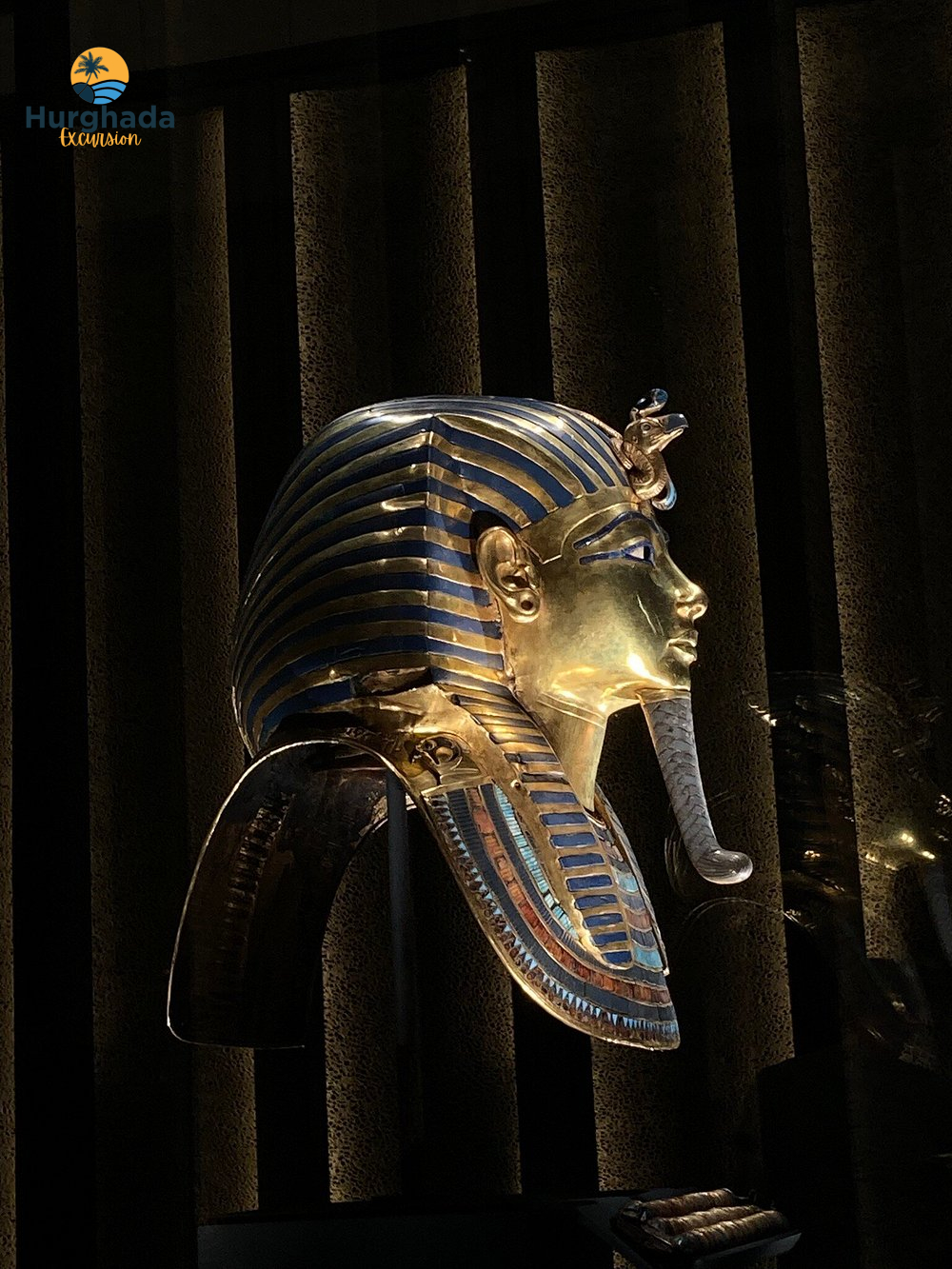
It is the most famous face in the ancient world — a death mask of solid gold, beaten by craftsmen 3,300 years ago into the serene features of a 19-year-old king who ruled Egypt for barely a decade and whose name was almost entirely forgotten until a November afternoon in 1922 when Howard Carter’s workman cut into the first step of a staircase in the Valley of the Kings and changed the history of archaeology forever. Tutankhamun’s gold death mask is the most recognised object in ancient Egyptian history, and from 2023, it is housed — together with the complete collection of 5,000+ objects from his intact tomb — in the Grand Egyptian Museum (GEM), the world’s largest archaeological museum, located adjacent to the Giza plateau in Cairo. Seeing it in person is genuinely, quietly, one of the most powerful experiences available to any traveller in Egypt.
The Egyptian Museum Cairo treasures and King Tut’s gold mummy tour from Hurghada combines a full guided visit to the Grand Egyptian Museum’s complete Tutankhamun collection — including the gold death mask, the golden throne, the golden shrine, the canopic jars, and the three nested coffins — with the Royal Mummies Gallery (22 pharaonic mummies including Ramesses II, Seti I, and Hatshepsut), the monumental Grand Staircase collection, and the highlights of a 100,000-object permanent collection that spans 5,000 years of Egyptian history. With a licensed Egyptologist guide whose expertise transforms every object from an artefact into a story, this is the most complete encounter with the treasures of ancient Egypt available from the Red Sea coast.
👑 Where is King Tut in the Grand Egyptian Museum? The complete Tutankhamun collection — all 5,000+ objects from his tomb (KV62) in the Valley of the Kings — is now housed in the dedicated Tutankhamun Gallery of the Grand Egyptian Museum (GEM) in Giza, Cairo. This is the first time the complete collection has been displayed together since its 1922 discovery. The famous gold death mask of Tutankhamun is in the innermost premium gallery, requiring a separate upgraded ticket (~1,500 EGP/~€27). Where is the Tutankhamun mummy now? His mummy remains in his original tomb (KV62) in the Valley of the Kings, Luxor — it was not moved to Cairo. What you see at the GEM are the extraordinary treasures buried with him, not the mummy itself.
The Grand Egyptian Museum — World’s Largest Archaeological Museum
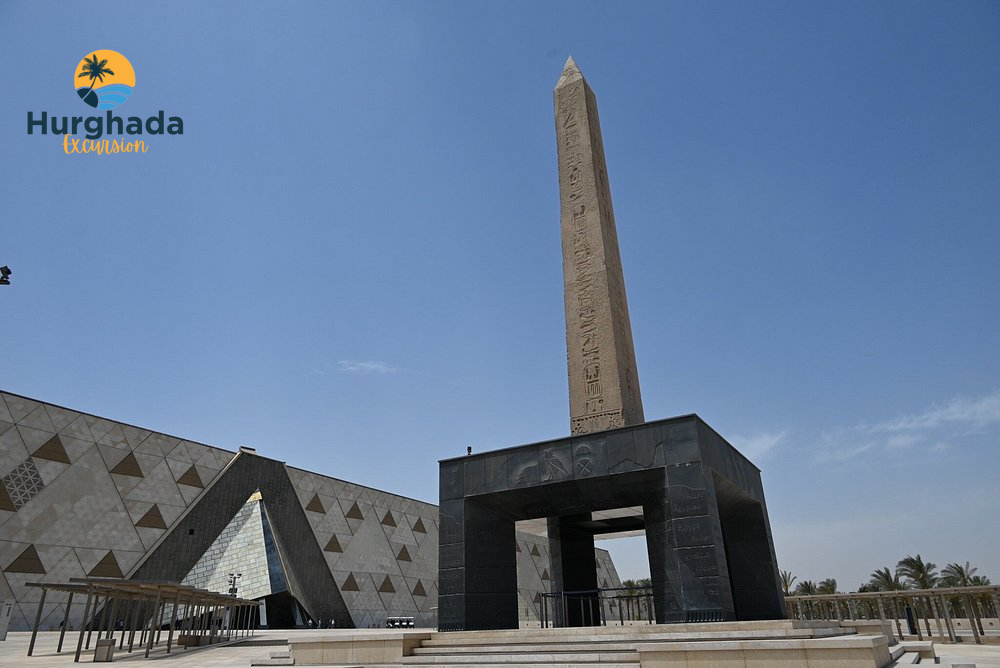
The Grand Egyptian Museum (GEM) is the most significant museum opening in the history of Egyptology — a 480,000 m² complex located at the foot of the Giza plateau, 2 km from the Great Pyramids, opened in stages from 2021 and fully open from late 2023. It houses over 100,000 ancient Egyptian artefacts — the largest collection of Egyptian antiquities in the world — and provides the first complete, dedicated, purpose-built home for the complete Tutankhamun collection, which was previously split between the old Egyptian Museum in Tahrir Square and storage facilities where most objects had never been publicly displayed.
| Detail |
Information |
| Full name |
Grand Egyptian Museum (GEM) — also called the Giza Museum |
| Location |
Kafr el-Gabal, Giza — 2 km from the Great Pyramids, adjacent to the Giza plateau |
| Opened |
Partial opening 2021 · Full opening late 2023 · Is the new Egypt museum open? Yes — fully open 2026 |
| Size |
480,000 m² total complex · World’s largest archaeological museum |
| Collection |
100,000+ objects · Includes complete Tutankhamun collection for the first time |
| Architect |
Heneghan Peng Architects (Dublin/New York) — won international competition 2003 |
| Standard ticket (2026) |
~1,000 EGP (~€18) per adult — included in tour price |
| Premium Tutankhamun gallery |
~1,500 EGP (~€27) per adult — includes gold death mask gallery |
| Opening hours |
09:00 AM – 05:00 PM daily |
Top 10 Highlights of the Egyptian Museum Cairo Treasures Tour
👑
1. Tutankhamun’s Gold Death Mask
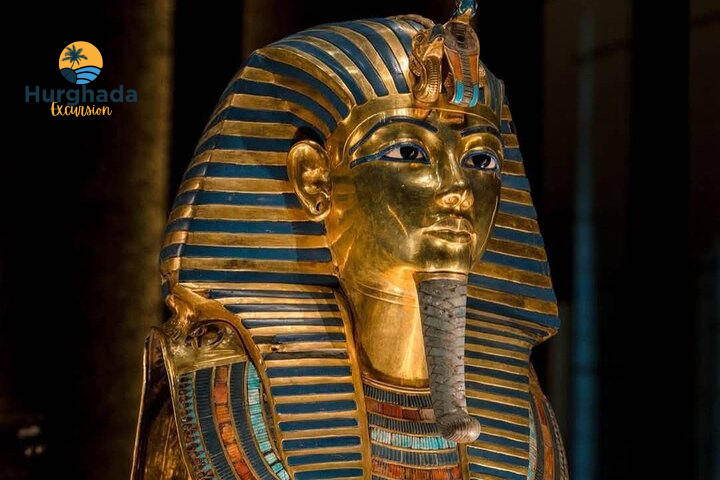
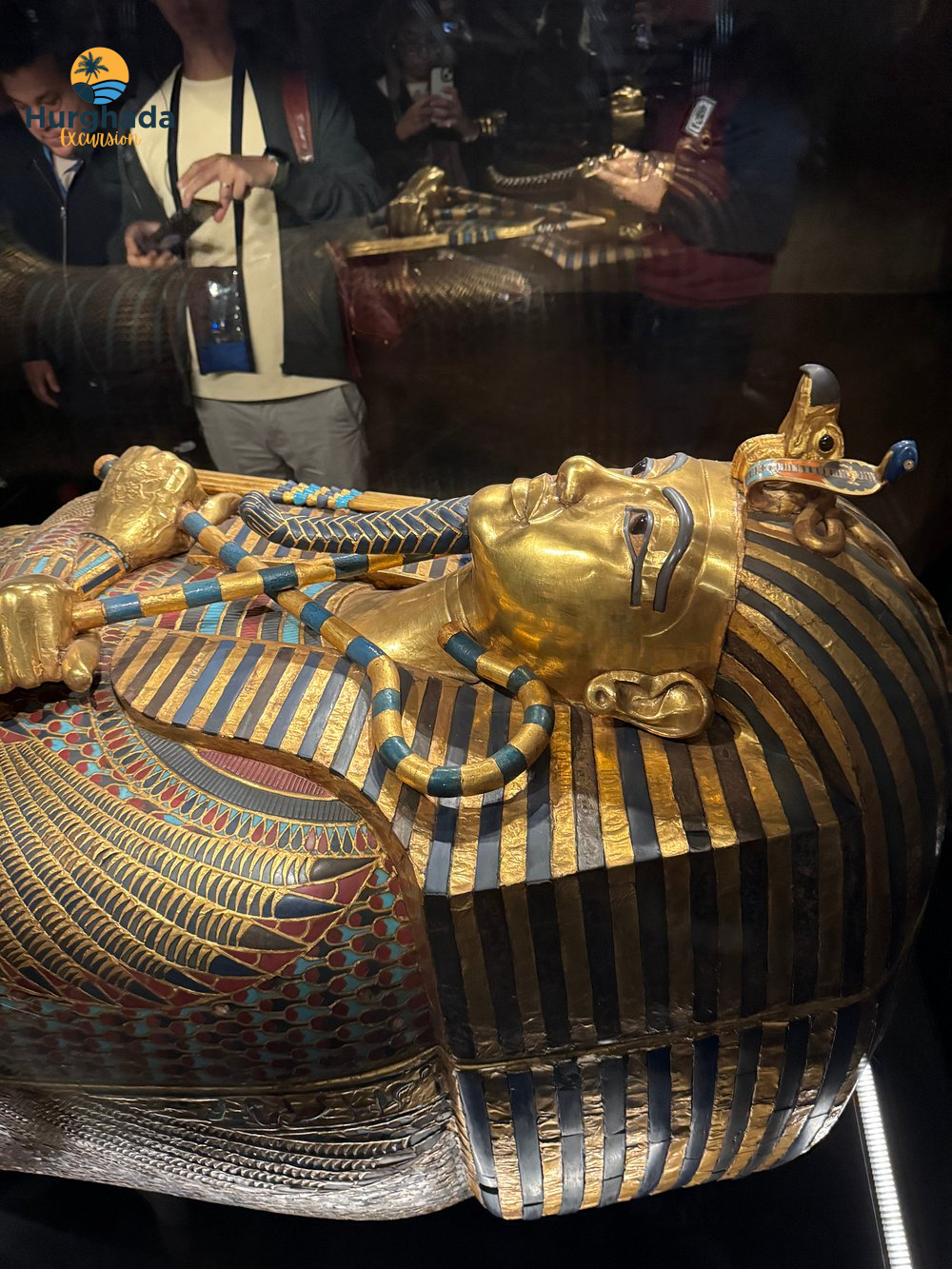
The most recognised object in ancient Egyptian history — a death mask of beaten solid gold, inlaid with lapis lazuli, obsidian, carnelian, and coloured glass, weighing 10.23 kg, crafted to the precise features of the boy king. Seeing the gold death mask of Tutankhamun in person — its serene expression, the extraordinary quality of its craftsmanship, the weight of the gold visible in the depth of its relief — is one of the most quietly powerful museum experiences in the world.
🛋️
2. The Golden Throne of Tutankhamun
The most beautiful single object in the Tutankhamun collection — a wooden throne covered in gold sheet and inlaid with coloured glass, faience, and semi-precious stones. The back panel shows Tutankhamun and his wife Ankhesenamun in a domestic scene of extraordinary intimacy and tenderness, painted in the Amarna artistic style that survived into the early years of Tutankhamun’s reign. Arguably the finest work of decorative art to survive from the ancient world.
⚰️
3. The Three Nested Coffins
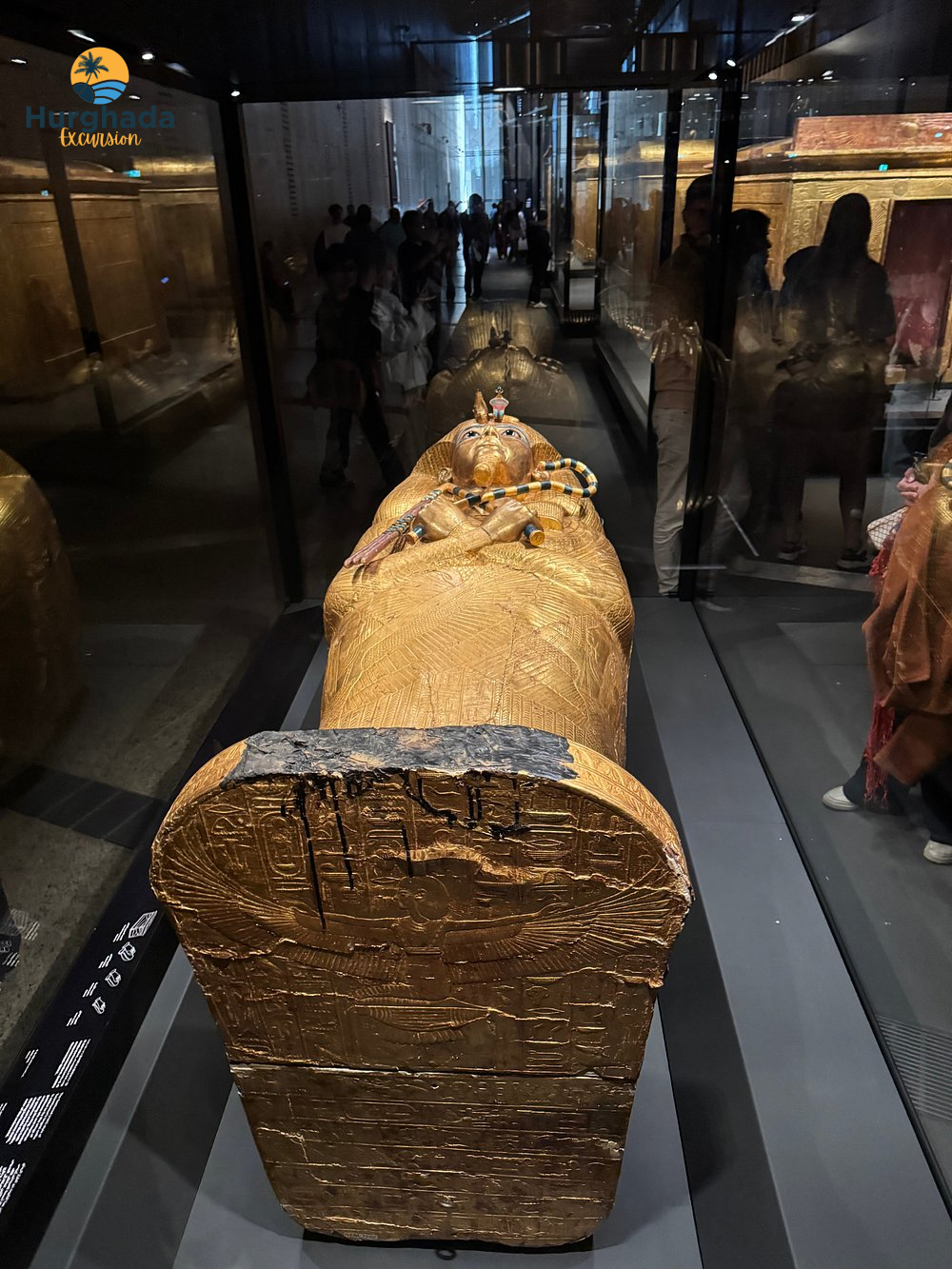
The three coffins that encased Tutankhamun’s mummy — the innermost of solid gold (weighing 110.4 kg), the middle of gilded wood, and the outer of gilded wood with coloured inlays — displayed together for the first time in the GEM. The innermost gold coffin alone required 110 kg of the finest quality gold; it is the heaviest and most valuable single object in the entire collection.
👼
4. The Four Canopic Jars & Chest
Four alabaster canopic jars — each containing the preserved organs of the king (liver, lungs, stomach, intestines) — sealed with miniature portrait lids of the king in gold, housed in a golden canopic chest supported by protective goddess figures. The craftsmanship of the golden goddess figures — Isis, Nephthys, Selket, and Neith — with their outstretched arms and their individual protective expressions is among the finest in the collection.
💀
5. Royal Mummies Gallery — 22 Pharaonic Mummies
The Royal Mummies Gallery of the GEM houses 22 mummies of ancient Egyptian pharaohs and queens — including Ramesses II (Egypt’s most famous pharaoh), Seti I (whose face is the finest preserved royal mummy in Egypt), Thutmose III, Ramesses III, and Hatshepsut. Standing before these physically preserved rulers who shaped 3,000 years of history is one of the most profoundly moving museum experiences available anywhere.
🗿
6. The 11-Metre Ramesses II Statue in the Atrium
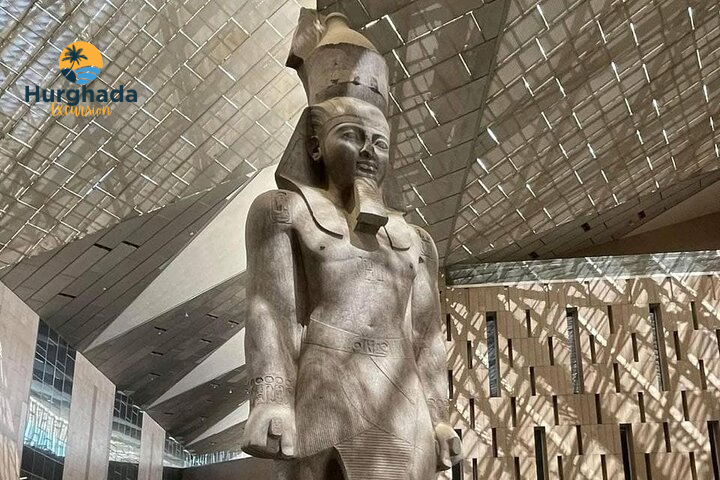
The centrepiece of the GEM’s Grand Staircase Atrium — an 11-metre red granite statue of Ramesses II, transported from Bab al-Hadid in Cairo (where it had stood for decades near a railway station) to anchor the museum’s spectacular entrance hall. Surrounded by artefacts from each period of Egyptian history as visitors ascend the stairs, this single object in its grand setting is one of the most dramatic museum entry sequences in the world.
🏛️
7. 5,000 Years of Egyptian History
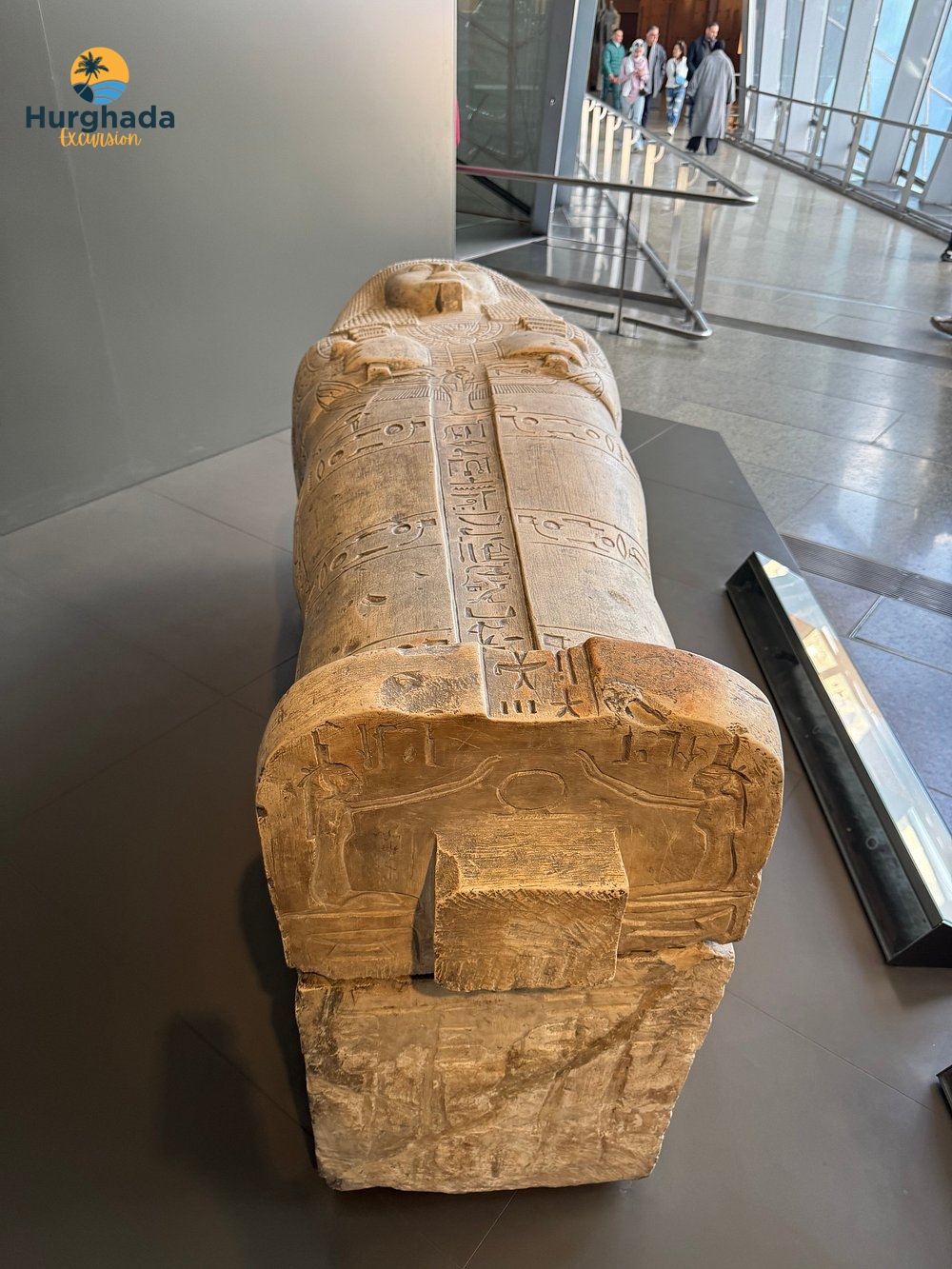
The GEM’s permanent collection spans Egypt’s complete documented history — from the Predynastic period (c. 4000 BCE) through the Old Kingdom pyramids, the Middle Kingdom renaissance, the New Kingdom empire, the Third Intermediate Period, the Late Period, the Ptolemaic era, and the Roman occupation. The guide selects the finest and most historically significant objects from each period for a chronological journey through Egyptian civilisation.
🔬
8. Objects Never Before Displayed
Among the GEM’s most significant contributions: approximately 2,500 objects from the Tutankhamun collection that were in storage and had never been publicly displayed — including military equipment, gaming pieces, personal clothing, sandals, musical instruments, and the extraordinary gilded chariot. For the first time, visitors see the complete world of the boy king rather than a selected highlights show.
🎓
9. Private Egyptologist Guide
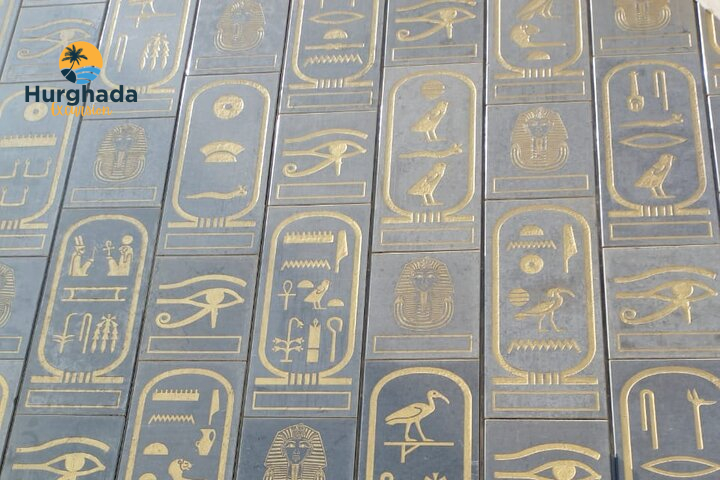
A licensed Egyptologist whose expertise transforms the GEM from an overwhelming 100,000-object collection into a curated, comprehensible, and profoundly engaging story. The guide selects the finest 30–40 objects, delivers the complete historical context for each, reads hieroglyphic inscriptions, and connects the individual objects to the pharaons, events, and beliefs that produced them.
📸
10. Photography — The Finest Display in Egypt
The GEM’s state-of-the-art lighting, spacious gallery design, and individual case illumination make it the finest photography environment of any Egyptian museum. The Tutankhamun objects in particular — individually lit against dark gallery backgrounds — photograph with a quality and drama impossible in any previous display environment. Personal photography is permitted in most galleries.
Complete Day Program — From Hurghada to Cairo by Flight
The Egyptian Museum Cairo tour from Hurghada is best done by flight — the 45-minute flight from Hurghada Airport to Cairo maximises time at the GEM and the optional Giza plateau. Here is the complete program:
05:30 – 07:30 · Departure & Flight
✈️ Hurghada Airport → Cairo International Airport (45 min flight)
Pickup from your Hurghada hotel at approximately 05:30 AM. Transfer to Hurghada International Airport for an early morning flight to Cairo (departure approximately 06:00–07:00 AM). The 45-minute flight arrives in Cairo at approximately 07:00–08:00 AM local time. Private air-conditioned vehicle meets the group at arrivals. The guide delivers the introduction to the Grand Egyptian Museum and the Tutankhamun story during the transfer to Giza.
08:00 – 08:30 · Optional — Great Pyramid Photography Stop
🏺 Giza Plateau Photography — The GEM’s Pyramid View
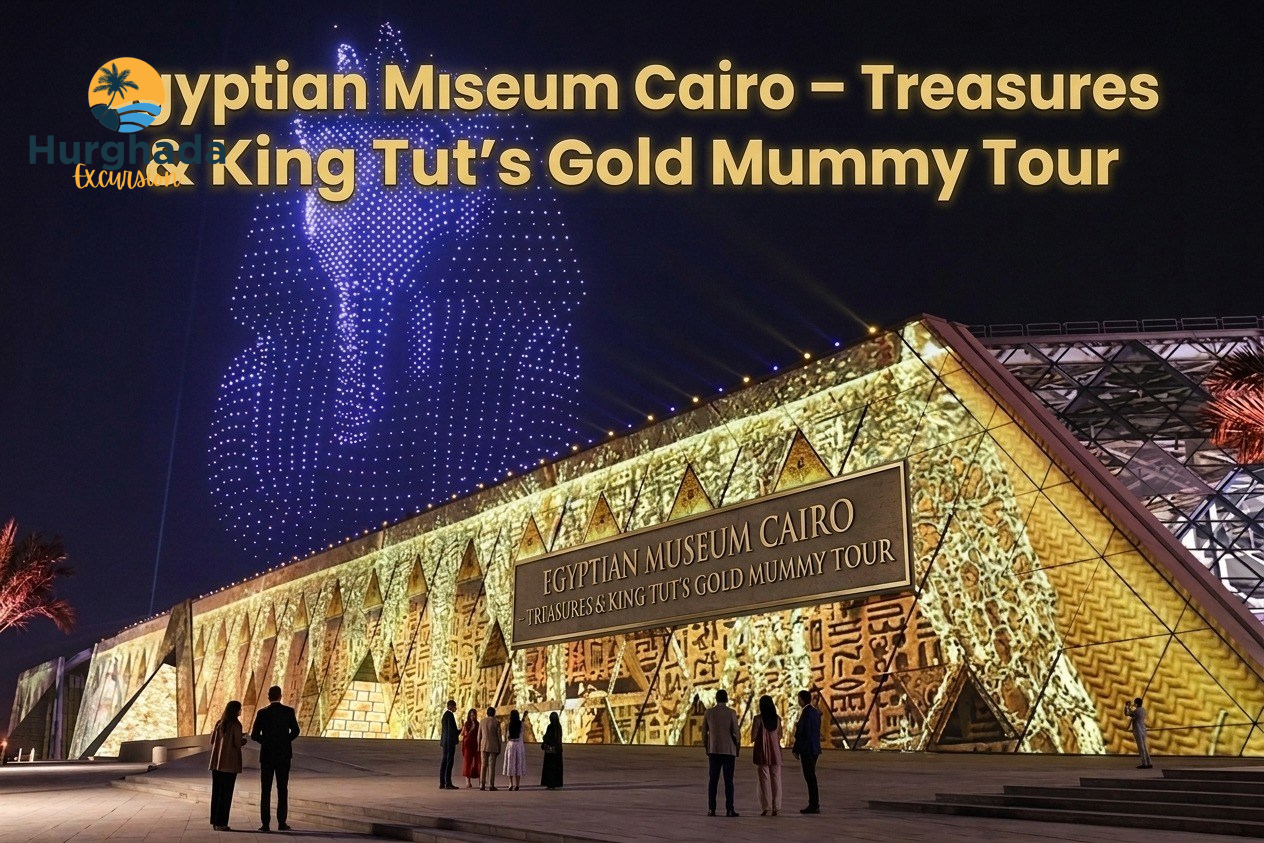
Optional brief stop at the GEM terrace viewpoint — the museum’s main entrance faces directly toward the Great Pyramid, creating one of the most dramatic architectural juxtapositions in the world: the 480,000 m² glass-and-limestone modern museum with the 4,500-year-old pyramid behind it. The guide points out the relationship between the museum and the plateau before the group enters.
08:30 – 09:00 · GEM Entry
🏛️ Grand Egyptian Museum — Entry & Grand Staircase Atrium
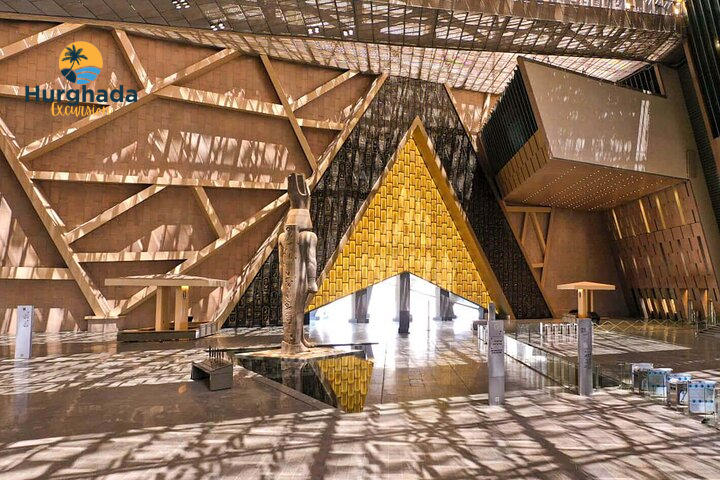
Tickets pre-purchased (skip the ticketing queue). The group enters the GEM at opening time — the most important timing decision of the day, as the Tutankhamun gallery fills progressively throughout the morning. Entry through the spectacular atrium — the 11-metre Ramesses II statue dominating the space from the Grand Staircase — with the guide’s introduction to the museum’s design philosophy and the story of how the collection came to be assembled here.
Strategy: Go straight to the Tutankhamun gallery and the premium gold death mask section first — before the tour groups arrive after 10:00 AM. The guide will lead the group directly there at opening time. Other galleries can be visited in the afternoon when the Tutankhamun section is more crowded.
09:00 – 11:00 · THE MAIN EVENT
👑 The Complete Tutankhamun Gallery — Gold Death Mask & 5,000 Objects
Two hours in the Tutankhamun gallery — the guide’s coverage of the complete collection follows the story of the discovery (Howard Carter, Lord Carnarvon, November 1922), the objects in the order they were found (the anteroom, the treasury, the annex, the burial chamber), and the significance of each major object. Key stops: the gold death mask (premium gallery), the golden throne, the three nested coffins, the canopic chest, the gilded chariot, the golden shrine, the shabtis (some of the finest miniature carvings in Egyptian art), the gaming boards, the ceremonial clothing, and the extraordinary gilded animal couches.
The guide delivers the complete biographical story of Tutankhamun: born c. 1341 BCE, son of Akhenaten and one of the secondary wives (possibly Kiya), came to the throne aged approximately 8–9, began the restoration of traditional religion reversed by his father, ruled for approximately 9–10 years, died c. 1323 BCE aged 18–19 (cause of death still disputed — malaria, femur fracture, both), was hastily buried in a small tomb not intended for a king, and was almost entirely forgotten until 1922.
11:00 – 12:30 · Royal Mummies & Broader Collection
💀 Royal Mummies Gallery & Permanent Collection Highlights
After the Tutankhamun gallery, the guide leads the group through the Royal Mummies Gallery — 22 pharaonic mummies in climate-controlled cases, including Ramesses II (the most famous pharaoh), Seti I (the best-preserved royal mummy, his facial features completely intact after 3,300 years), Thutmose III (Egypt’s greatest military commander), Ramesses III (the last great warrior pharaoh), and Hatshepsut (the female pharaoh).
The guide then selects the finest objects from the broader permanent collection for a 45-minute highlights tour: the Narmer Palette (earliest historical document from Egypt, c. 3100 BCE), the Khafre enthroned statue (Old Kingdom masterpiece), the seated scribe statue, the Akhenaten colossal statue from Karnak, the Book of the Dead papyri, and selected Middle and New Kingdom reliefs and sculptures.
12:30 – 13:30 · Lunch
🍽️ Lunch — GEM Restaurant or Nearby Cairo Restaurant
The GEM has its own restaurant and café facilities overlooking the Giza plateau and the pyramids. Alternatively, lunch at a nearby Cairo restaurant with views of the plateau. Full Egyptian cuisine, soft drinks included.
13:30 – 18:00 · Optional Pyramids + Return Flight
🏺 Optional Giza Plateau Visit → Return Flight to Hurghada
For guests who have booked the combined GEM + Pyramids package: the afternoon is devoted to the Giza plateau (2–3 hours). Return transfer to Cairo Airport for an evening flight back to Hurghada, arriving approximately 19:00–20:00 PM. For museum-only packages, departure from the GEM at approximately 13:30 PM and return flight from approximately 15:00–16:00 PM, arriving in Hurghada by early evening.
King Tut’s Gold Mummy — The Complete Tutankhamun Story
Tutankhamun — the boy king, the golden pharaoh, the face of ancient Egypt. Here is the complete story that the guide delivers beside the objects that tell it:
The Pharaoh
Who Was Tutankhamun?
Tutankhamun (born c. 1341 BCE, died c. 1323 BCE) was the son of the heretic pharaoh Akhenaten and an unknown secondary wife. He came to the throne aged approximately 8–9 as Tutankhaten (“Living image of the Aten”) and changed his name to Tutankhamun (“Living image of Amun”) as part of the restoration of traditional religion. He ruled for 9–10 years and died aged approximately 18–19. His short reign would have been forgotten entirely had his tomb not been sealed beneath the workers’ rubble of later burials and remained intact for 3,300 years.
The Discovery
Howard Carter & the 1922 Discovery
On November 4th, 1922, Howard Carter’s Egyptian workman Hussein Abdel Rassoul uncovered the first step of a buried staircase in the Valley of the Kings. Carter telegraphed his patron Lord Carnarvon: “At last have made wonderful discovery in Valley; a magnificent tomb with seals intact.” On November 26th, Carter made a small hole in the sealed door and held up a candle. Carnarvon asked if he could see anything. Carter’s reply: “Yes, wonderful things.” The most famous moment in the history of archaeology.
The Death
How Did Tutankhamun Die?
CT scans of Tutankhamun’s mummy (which remains in his tomb in the Valley of the Kings) have revealed several potential causes of death: a severely broken left leg (femur fracture that may have led to fatal infection), evidence of multiple strains of malaria in his DNA, and bone disease suggesting genetic complications from inbreeding. The leading current hypothesis: a combination of malaria and the physical effects of the leg fracture. He was not murdered — the supposed evidence for murder (a skull fracture) was re-examined and found to be post-mortem damage.
The Mummy
Where Is the Tutankhamun Mummy Now?
Where is the Tutankhamun mummy now? Tutankhamun’s mummy remains in its original tomb (KV62) in the Valley of the Kings, Luxor — displayed in a climate-controlled case in the outer coffin. The GEM in Cairo houses the treasures buried with him. His gold death mask was not on the mummy when Carter found it — it was placed over the wrapped mummy’s head inside the innermost gold coffin.
| Object |
Material |
Significance |
| Gold Death Mask |
Solid gold + inlays · 10.23 kg |
Most recognised ancient object in the world |
| Inner Gold Coffin |
Solid gold · 110.4 kg |
Heaviest single gold object from antiquity |
| Golden Throne |
Gold-covered wood + inlays |
Most beautiful single object in collection |
| Canopic Chest & Jars |
Alabaster + gold goddess figures |
Contains preserved organs of the king |
| Gilded Chariot |
Gold-covered wood, leather |
Finest surviving chariot from antiquity |
| Golden Shrine |
Gold-covered wood |
Intimate Amarna-style scenes of king and queen |
The GEM Collection — Gallery by Gallery Guide
🏺
Grand Staircase Atrium
The museum’s spectacular entry sequence — a 94-metre-wide atrium housing artifacts from every period of Egyptian history displayed chronologically along the ascending staircase, anchored at the top by the 11-metre Ramesses II statue. Designed as an architectural journey through 5,000 years of history before the visitor enters any specific gallery.
👑
Tutankhamun Gallery (Standard)
Included in standard entry (~1,000 EGP). Houses the majority of the 5,000+ Tutankhamun objects — the golden throne, the three coffins (the innermost gold coffin is here), the canopic chest, the gilded chariot, the ceremonial beds, the furniture, clothing, and the extraordinary range of everyday objects that give the most complete picture of New Kingdom royal life available anywhere.
💛
Premium Tutankhamun Gallery
Additional ticket (~1,500 EGP total). Houses the most precious and most delicate objects — the gold death mask, the miniature golden coffins for the canopic jars, the finest jewellery pieces, and the golden shabtis. Visitor numbers are limited and the display environment is the most controlled and dramatically lit in the museum. This is where the gold death mask is displayed.
💀
Royal Mummies Gallery
22 royal mummies in climate-controlled cases — formerly in the old Egyptian Museum, now transferred to the GEM. The finest preserved royal faces in Egypt: Seti I (whose features are completely intact after 3,300 years), Ramesses II (the Great, most famous pharaoh), Ramesses III (last great warrior pharaoh), Thutmose III, and Hatshepsut. Separate ticket may apply.
📜
Predynastic & Old Kingdom Galleries
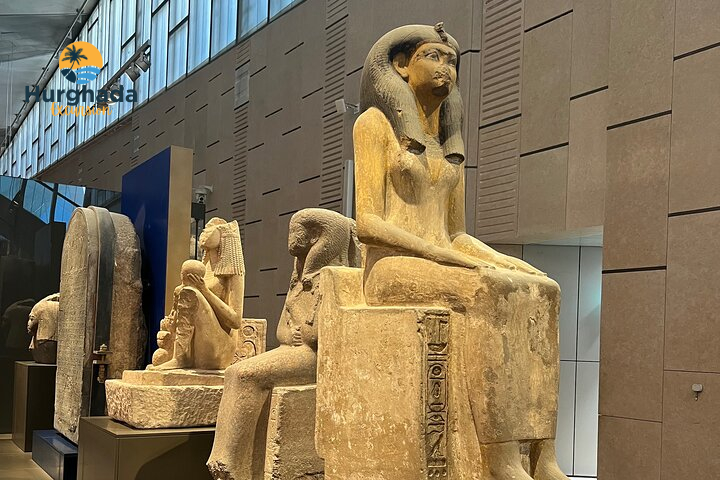
The Narmer Palette (c. 3100 BCE — the earliest historical document from ancient Egypt, recording the unification of Egypt by Narmer/Menes), the Khafre enthroned statue (one of the finest Old Kingdom royal portraits), the seated scribes, and the extraordinary reliefs from the 4th–6th Dynasty mastaba tombs.
⚡
New Kingdom & Amarna Gallery
The Akhenaten colossal statue from Karnak (showing the heretic pharaoh’s distinctive elongated artistic style), Nefertiti’s daughters, Amarna relief fragments, and the extraordinary range of New Kingdom art and personal objects that document the most productive period of Egyptian artistic achievement.
The Royal Mummies Gallery — 22 Pharaonic Mummies
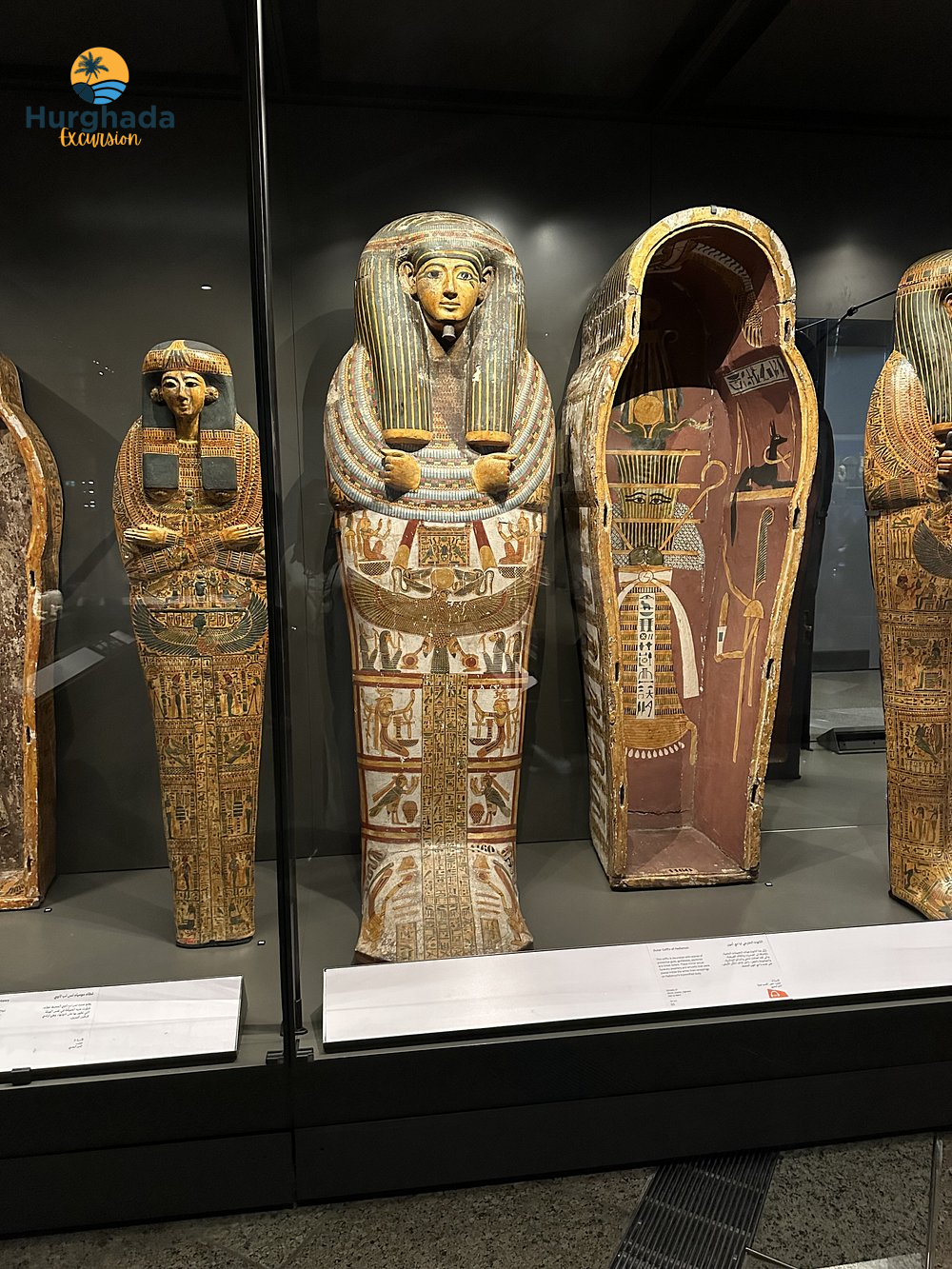
The GEM’s Royal Mummies Gallery houses the most extraordinary collection of preserved human history in the world. Here are the most significant mummies in the gallery:
🦅
Ramesses II — The Great
Egypt’s most famous and longest-reigning pharaoh (r. 1279–1213 BCE, 66 years). His face is the most recognised royal mummy in the world. Carried a temporary travel passport when flown to Paris for conservation in 1974 — the passport listed his occupation as “King (deceased).”
🌟
Seti I — The Most Beautiful
Father of Ramesses II, patron of the finest artists of the New Kingdom. His mummy is the best-preserved royal mummy in Egypt — his facial features are completely intact after 3,300 years, his eyelashes still visible, his expression serene. The guide delivers the complete story of how he was preserved so perfectly.
⚔️
Thutmose III — The Napoleon of Egypt
Egypt’s greatest military commander — 17 successful campaigns in 20 years, an empire from Nubia to Syria. His mummy shows the evidence of a long, active life. The guide explains how this physically small man (approximately 1.61m) became Egypt’s most successful military leader.
👸
Hatshepsut — The Female Pharaoh
One of the most powerful female rulers of the ancient world, identified from her mummy by a DNA match and a tooth found in her nurse’s tomb. The guide delivers the complete story of Hatshepsut — her 20-year reign as a male pharaoh, her extraordinary building programme, and how Thutmose III tried to erase her from history.
GEM vs Old Egyptian Museum — Which Is Better to Visit in Cairo?
Which is better — the Egyptian Museum or the Grand Egyptian Museum? Is the Egyptian Museum in Cairo worth visiting? Here is the complete comparison:
| Feature |
Grand Egyptian Museum (GEM) |
Old Egyptian Museum (Tahrir) |
| Tutankhamun collection |
Complete 5,000+ objects incl. gold mask |
Moved to GEM (some objects may remain) |
| Display quality |
State-of-the-art · spacious · perfectly lit |
Historic building · crowded · limited labelling |
| Collection breadth |
100,000+ objects · most comprehensive |
~170,000 objects (some transferred to GEM) |
| Royal Mummies Gallery |
22 mummies · modern climate-controlled display |
Mummies now transferred to GEM |
| Location |
Giza — adjacent to Great Pyramids |
Tahrir Square — central Cairo |
| Standard ticket |
~1,000 EGP (~€18) |
~400 EGP (~€7) — budget option |
| Best for |
Tutankhamun · Royal Mummies · Best display |
Historic atmosphere · budget visitors · also near Islamic Cairo |
🏛️ Our Recommendation
Which museum is better to visit in Cairo? For first-time visitors from Hurghada, the Grand Egyptian Museum (GEM) is unambiguously the better choice — it has the complete Tutankhamun collection including the gold death mask, the Royal Mummies Gallery, the most modern display environment in Egypt, and is located adjacent to the Great Pyramids allowing a combined day. The old Egyptian Museum in Tahrir Square retains historical atmosphere and some important objects but is best visited on a second Cairo day for guests who want the complete picture.
The GEM Building — A Monument Itself
The Grand Egyptian Museum building is itself a work of architecture worthy of the collection it houses:
🏗️
The Facade — Translucent Stone
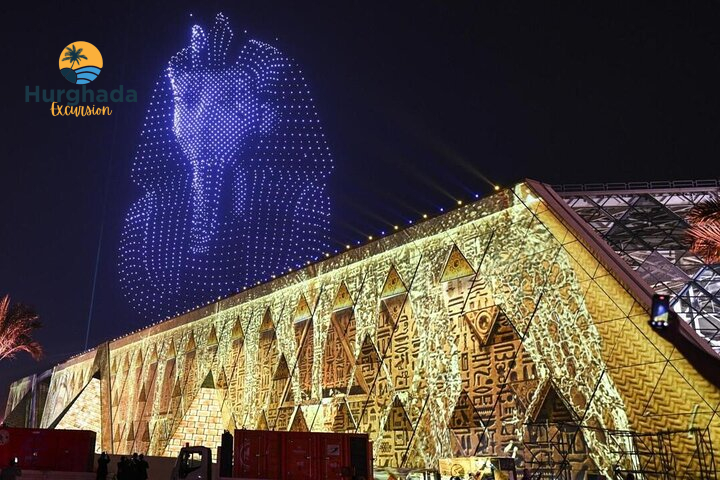
The GEM’s exterior facade is composed of 70,000 square metres of translucent alabaster and stone panels, creating a building that glows from within at night. The facade is oriented to provide a direct sightline from the main entrance to the apex of the Great Pyramid — one of the most deliberate architectural alignments in modern museum design.
🗿
The Atrium & Grand Staircase
The 94-metre-wide Grand Staircase Atrium houses 87 artifacts from across Egyptian history at its various levels, culminating at the 11-metre Ramesses II statue at the top. The design concept: visitors ascend through time, arriving at the New Kingdom (the pyramid era and the Tutankhamun collection) at the summit.
🌄
The Pyramid View Terrace
The GEM’s entrance plaza and terrace face directly toward the Great Pyramid of Khufu — creating the extraordinary visual relationship between the world’s largest archaeological museum and the ancient monument it was built to complement. The terrace is one of the finest photography locations for the pyramids available anywhere in Giza.
🌿
Facilities & Amenities
The GEM has significantly better visitor facilities than any other Egyptian museum — a large restaurant and café with pyramid views, a gift shop selling high-quality reproduction artefacts and scholarly publications, comfortable seating in all galleries, modern climate control throughout, and clean, well-maintained toilet facilities.
Grand Egyptian Museum Ticket Price 2026 & Opening Hours
| Ticket |
Price (EGP) |
Approx. EUR |
Notes |
| GEM Standard Entry (Adult) |
~1,000 EGP |
~€18 |
Included in tour price · Open 09:00–17:00 |
| GEM Premium (Tutankhamun Gallery + Gold Mask) |
~1,500 EGP |
~€27 |
Highly recommended — gold death mask access |
| GEM Student |
~500 EGP |
~€9 |
Valid ISIC card required |
| Old Egyptian Museum (Tahrir) |
~400 EGP |
~€7 |
Historical museum · still operating · Tahrir Square |
| Photography (GEM) |
Included |
Free |
Personal photography permitted in most galleries |
Tour Price from Hurghada 2026 — What’s Included
Egyptian Museum Cairo – GEM Treasures & King Tut Tour — From
€100
per adult · By flight · GEM + Tutankhamun Gallery + Royal Mummies + Pyramids
✓ Flights · ✓ Transfers · ✓ GEM Standard Entry · ✓ Egyptologist Guide · ✓ Lunch
Premium Tutankhamun gallery (gold mask): ~€27 extra · Children 4–11: 50% discount · GEM only (no Pyramids): from €90
✅ Included
✓ Return flights Hurghada – Cairo – Hurghada (45 min each way)
✓ Cairo Airport–GEM–Giza private transfers
✓ Grand Egyptian Museum standard entry (~1,000 EGP per adult)
✓ Giza plateau entry ticket (with Pyramids package)
✓ Licensed Egyptologist guide for the full day
✓ Full lunch · Bottled water · Free cancellation 48 hours before
Combining the GEM with the Great Pyramids — The Complete Cairo Day
The ideal Cairo day trip from Hurghada combines the Grand Egyptian Museum with the Great Pyramids of Giza — the two most significant experiences in Cairo and completely complementary:
🏺
Morning — Great Pyramids First
Arrive at the Giza plateau at 08:30 AM — the optimal timing for the best light, the fewest crowds, and the full skip-the-line advantage. Cover the three pyramids, Sphinx, Valley Temple, and panoramic view in 3–4 hours while energy and light are both at their best.
🍽️
Lunchtime Transition
Lunch at a restaurant near the plateau at 12:30–13:30. The 2 km drive from the Giza plateau to the GEM entrance takes approximately 10 minutes — the museum is directly adjacent to the plateau. The guide delivers the transition briefing: from the Old Kingdom of the pyramids to the New Kingdom of Tutankhamun.
🏛️
Afternoon — Grand Egyptian Museum
The GEM in the afternoon — after the outdoor pyramid experience — provides perfect contextual complementarity. The objects inside the GEM were created by the culture that built the pyramids; the pyramids outside are the monumental architecture of the same civilisation. Together they deliver the most complete encounter with ancient Egyptian civilisation available in a single day.
✈️
Evening Return Flight
Depart GEM at 16:00 PM for Cairo airport. Evening flight to Hurghada (approximately 18:00–19:00 PM departure), arriving back in Hurghada by 19:00–20:00 PM. A complete Cairo day that leaves a full evening at the hotel before any planned activities the following day.
10 Expert Tips for Your Grand Egyptian Museum Visit
Tip 1 — Upgrade to the premium Tutankhamun gallery to see the gold death mask. The standard GEM entry (~€18) provides access to the main Tutankhamun collection — the golden throne, the three coffins, the chariot, and thousands of other objects. The premium gallery upgrade (~€27 total) adds access to the innermost gallery containing the gold death mask, the finest jewellery pieces, and the most precious small objects. The gold death mask is the reason most people come to Cairo. Do not visit the GEM and miss it by not paying the premium.
Tip 2 — Go straight to the Tutankhamun gallery at opening time. The GEM opens at 09:00 AM. The Tutankhamun gallery fills progressively throughout the morning as tour groups arrive. Entering at opening time and going directly to the Tutankhamun section means 30–60 minutes in relatively uncrowded conditions before the crowds build. The guide manages this timing precisely.
Tip 3 — Ask the guide to tell the Howard Carter discovery story in the Tutankhamun gallery. The guide delivers the complete story of Howard Carter’s discovery of Tutankhamun’s tomb on November 4th, 1922 — including Carter’s telegram to Lord Carnarvon (“wonderful discovery”), the famous “Can you see anything? Yes, wonderful things” exchange on November 26th, the 10-year excavation process, and the death of Lord Carnarvon (from an infected mosquito bite, not “the Pharaoh’s curse”). Hearing this story while surrounded by the actual objects Carter found gives it an immediacy no book can replicate.
Tip 4 — Spend at least 5 minutes in silence before the gold death mask. Most visitors photograph the gold death mask and move on within 2 minutes. Allow yourself 5 minutes of deliberate silence — looking at the face, the expression, the quality of the gold, the craftsman’s fingerprints pressed into the glass inlays 3,300 years ago. This is one of the most beautiful objects ever made by human hands, and it was made to be looked at. Look at it.
Tip 5 — The golden throne is arguably more beautiful than the death mask — don’t rush past it. The Tutankhamun golden throne — with its back panel showing the king and queen in a domestic scene of extraordinary tenderness — is rated by many Egyptologists as the finest single work of decorative art to survive from the ancient world. The intimacy of the scene (the queen is applying perfume to the king’s collar), the quality of the coloured inlays, and the Amarna style of the figures make it completely unlike the formal, hieratic imagery of most Egyptian royal art.
Tip 6 — In the Royal Mummies Gallery, ask the guide to explain how mummies are so well preserved. The quality of preservation of the royal mummies — particularly Seti I, whose features are completely intact after 3,300 years — is the result of a combination of deliberate mummification techniques (70-day process, removal of organs, natron desiccation, linen wrapping) and the dry climate of the Valley of the Kings. The guide explains both the scientific process and the religious theology behind mummification at each case.
Tip 7 — The 11-metre Ramesses II statue in the atrium deserves 15 minutes. The monumental red granite statue of Ramesses II in the Grand Staircase Atrium — 11 metres tall, brought from Bab al-Hadid in Cairo and now displayed at the summit of the 94-metre atrium — is one of the most dramatic individual objects in any museum in the world. The guide tells the story of how it was moved (with enormous engineering complexity) from its railway station setting to the museum atrium.
Tip 8 — Photograph from the GEM terrace before entering — the pyramid view is extraordinary. The GEM’s entrance plaza faces directly toward the Great Pyramid of Khufu — creating the most dramatic museum-monument juxtaposition in the world. The terrace photograph of the modern museum with the ancient pyramid behind it is one of the finest images available in Giza and should be taken before entering the museum when light conditions are typically best.
Tip 9 — Allow 3–4 hours minimum for the GEM — not the 1–2 hours most tours allocate. The GEM’s 100,000-object collection is the world’s largest in its category. A genuine guided tour of the Tutankhamun collection plus the Royal Mummies plus the highlights of the permanent collection requires a minimum of 3 hours. Tours that allocate 1.5–2 hours are rushing through one of the world’s finest museums. Our programme allocates 3–4 hours for the museum visit.
Tip 10 — The GEM gift shop sells the finest museum reproductions in Egypt — browse it at the end. The GEM shop stocks the highest quality reproduction artifacts available in any Egyptian museum — museum-quality plaster casts of selected objects (including the Tutankhamun death mask in several sizes), gold-coloured jewellery reproductions, fine art photography books, and scholarly publications on the collection. Budget 20–30 minutes and EGP cash for the shop visit at the end of the tour.
Real Reviews from Travellers
★★★★★
“The gold death mask in person is one of the most genuinely moving experiences of my life. I thought I would see it and move on. I stood there for 15 minutes and couldn’t leave. The guide’s story of how Carter found it — standing there with the actual object in front of me — was extraordinary. The Grand Egyptian Museum is the finest museum I have visited anywhere in the world. Do not miss it.”
Dr. Rachel T. — Cambridge · March 2026
★★★★★
“We did the pyramids in the morning and the GEM in the afternoon — the guide’s concept of ‘the objects that built the pyramids are in the museum next door’ made the whole day make sense as one experience. The golden throne is the most beautiful object I have ever seen. The Seti I mummy — his face completely intact after 3,300 years — was genuinely profound. Unmissable.”
James & Sarah W. — London · February 2026
★★★★★
“I had visited the old Egyptian Museum in Tahrir Square 10 years ago. The comparison is extraordinary — the GEM displays its collection with a beauty, clarity, and intelligence that the old museum simply could not achieve. The 100,000 objects that were in crowded cases at Tahrir are here given the space and light they deserve. Particularly the Tutankhamun gallery — finally the complete story, all in one place.”
Professor Michael K. — Edinburgh · January 2026
Frequently Asked Questions
Where is King Tut in the Grand Egyptian Museum?
Where is King Tut in the Grand Egyptian Museum? The complete Tutankhamun collection — all 5,000+ objects from his Valley of the Kings tomb (KV62) — is housed in the dedicated Tutankhamun Gallery of the GEM. Standard entry (~1,000 EGP) provides access to the main gallery with the golden throne, three coffins, chariot, and most objects. The premium gallery (~1,500 EGP total) provides access to the innermost section containing the gold death mask, the finest jewellery, and the most precious objects. Tutankhamun’s mummy is not in the GEM — it remains in his original tomb in the Valley of the Kings, Luxor.
What is the Grand Egyptian Museum ticket price in 2026?
The Grand Egyptian Museum ticket price in 2026 is approximately 1,000 EGP (~€18) per adult for standard entry (includes access to main Tutankhamun gallery, permanent collection, and Royal Mummies Gallery). The premium Tutankhamun gallery upgrade (which includes the gold death mask section) costs approximately 1,500 EGP (~€27) per adult total. Student tickets are approximately 500 EGP. The GEM is open 09:00 AM – 05:00 PM daily. Both standard and premium tickets are included in options within our tour package from Hurghada.
Is the new Egypt museum open?
Is the new Egypt museum open? Yes — the Grand Egyptian Museum (GEM) is fully open in 2026. A partial soft opening began in 2021, with the complete opening (including the full Tutankhamun collection and all main galleries) completed in late 2023. The museum is fully operational for visitors in 2026 with all galleries, the complete Tutankhamun collection including the gold death mask, the Royal Mummies Gallery, and all facilities including restaurant, café, and gift shop.
Which is better — Egyptian Museum or Grand Egyptian Museum?
Which is better — the Egyptian Museum or the Grand Egyptian Museum? For first-time visitors, the Grand Egyptian Museum is unambiguously better — it has the complete Tutankhamun collection (including the gold death mask), the Royal Mummies Gallery (22 pharaohs), the world’s largest archaeological collection in state-of-the-art display conditions, and is located adjacent to the Great Pyramids. The old Egyptian Museum in Tahrir Square is worth visiting on a second Cairo day for its historical atmosphere and some remaining objects, but it cannot match the GEM for the quality of the visitor experience or the significance of the collection on display.
Where is the Tutankhamun mummy now?
Where is the Tutankhamun mummy now? Tutankhamun’s mummy remains in its original tomb (KV62) in the Valley of the Kings, Luxor, Egypt — displayed in a climate-controlled case in the outer coffin. The mummy was not moved to the Grand Egyptian Museum in Cairo. What the GEM houses are the extraordinary treasures buried with the king — the 5,000+ objects including the gold death mask, golden throne, golden coffins, and canopic jars. To see both the treasures (GEM) and the mummy (Valley of the Kings), book our combined Cairo and Luxor programme.
Book Your Egyptian Museum Cairo – King Tut Tour Today
From €100 per person by flight · Grand Egyptian Museum · Tutankhamun Collection · Gold Death Mask · Royal Mummies · Great Pyramids option · Egyptologist Guide · All Tickets · Lunch · Free Cancellation.
🏺 Book Now — From €100
The Egyptian Museum Cairo treasures and King Tut’s gold mummy tour brings you face to face with the most beautiful, most extraordinary, and most immediately moving objects that survive from the ancient world. The gold death mask of Tutankhamun was made by a craftsman who died 3,300 years ago for a king who died aged 18, whose tomb was buried and forgotten and rediscovered — and whose face now looks out of that golden mask with the serene expression of immortality. The golden throne shows a young couple in a moment of domestic tenderness so human and so immediate that 3,300 years collapse in an instant. These are not just historical objects. They are encounters with people.
Book your Grand Egyptian Museum tour today with Hurghada Excursion — private flights, licensed Egyptologist, premium Tutankhamun gallery access, and the most complete encounter with King Tut’s golden world available from the Red Sea coast.